post

MC-65 AIM65 compatible

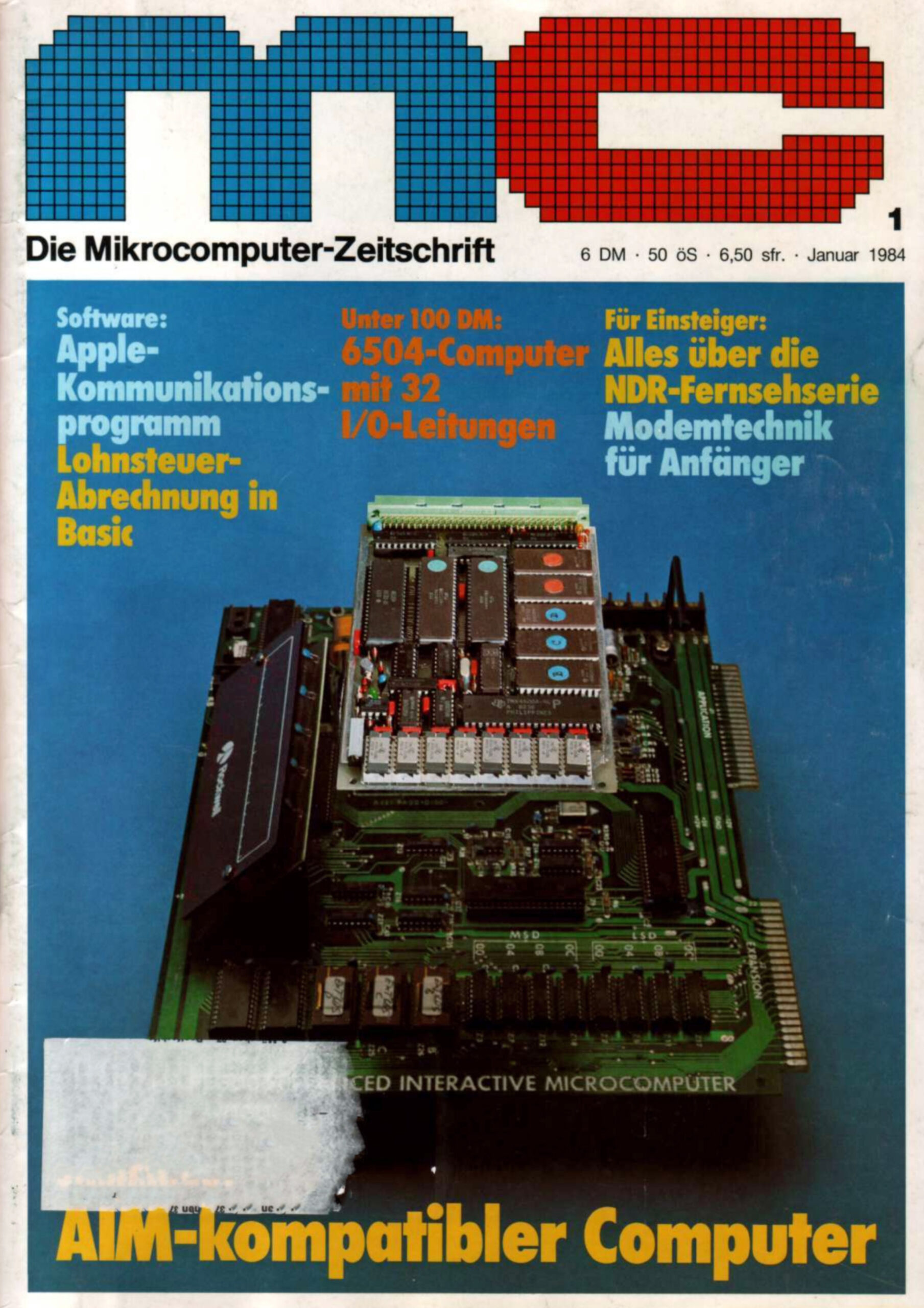
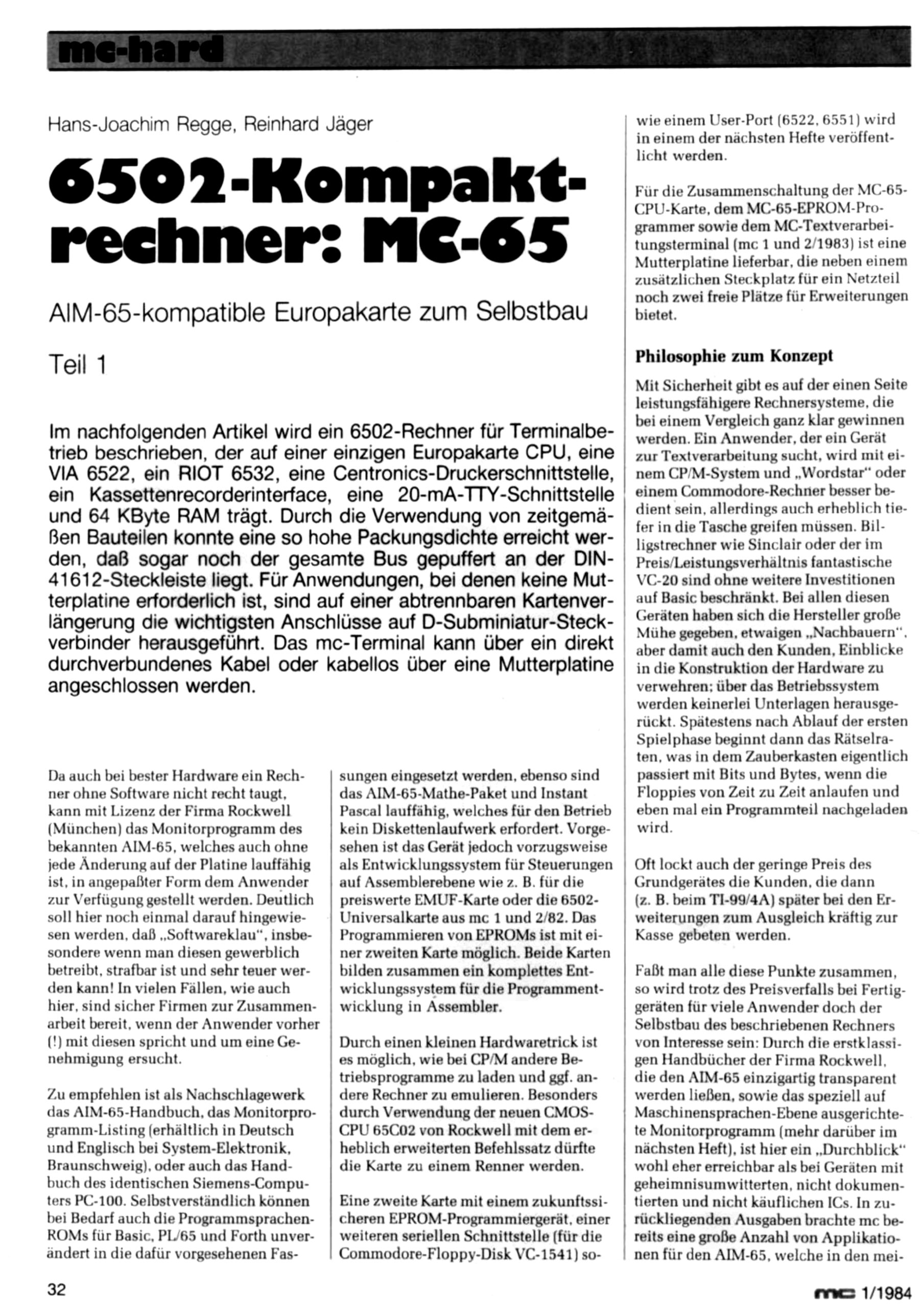
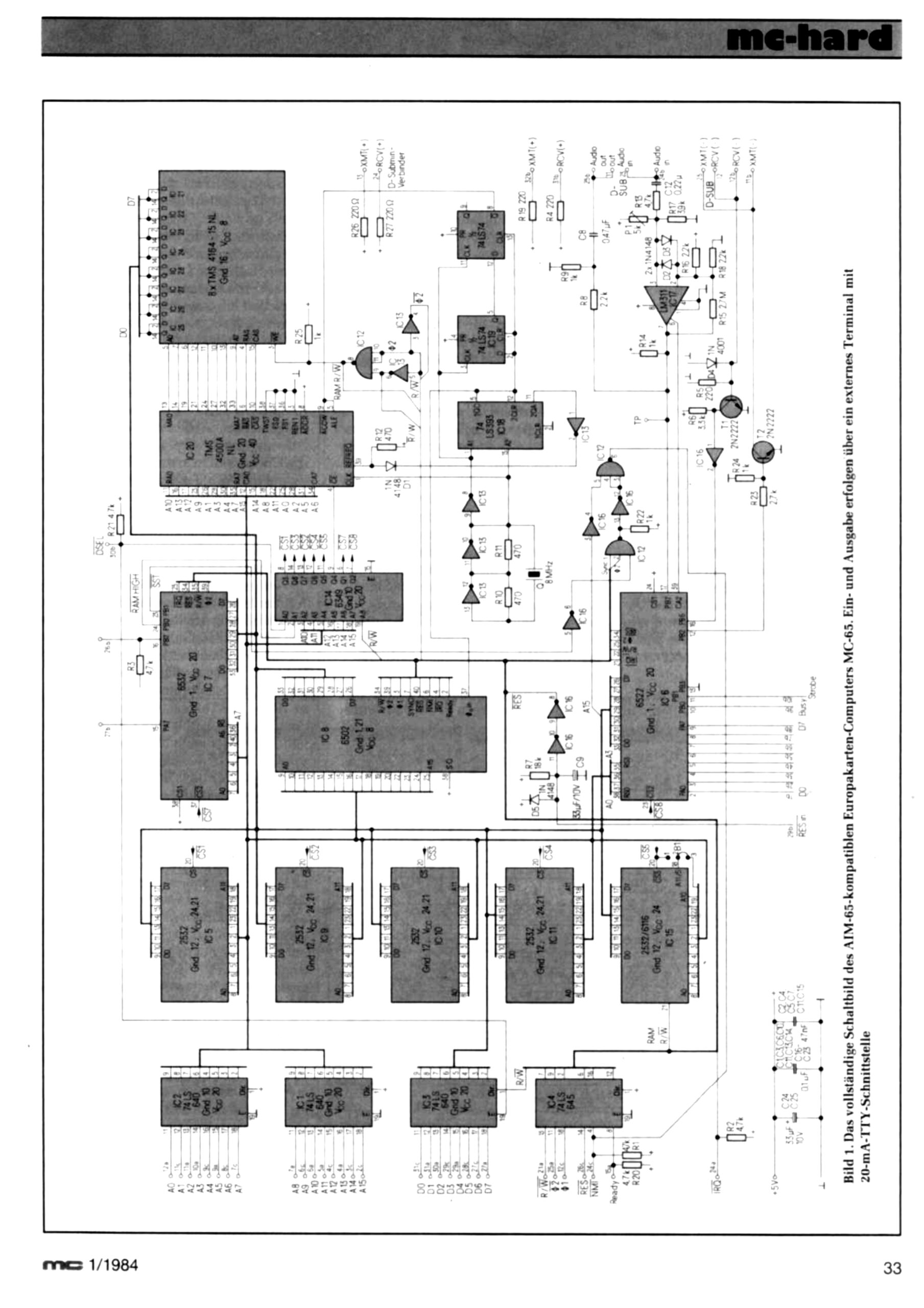
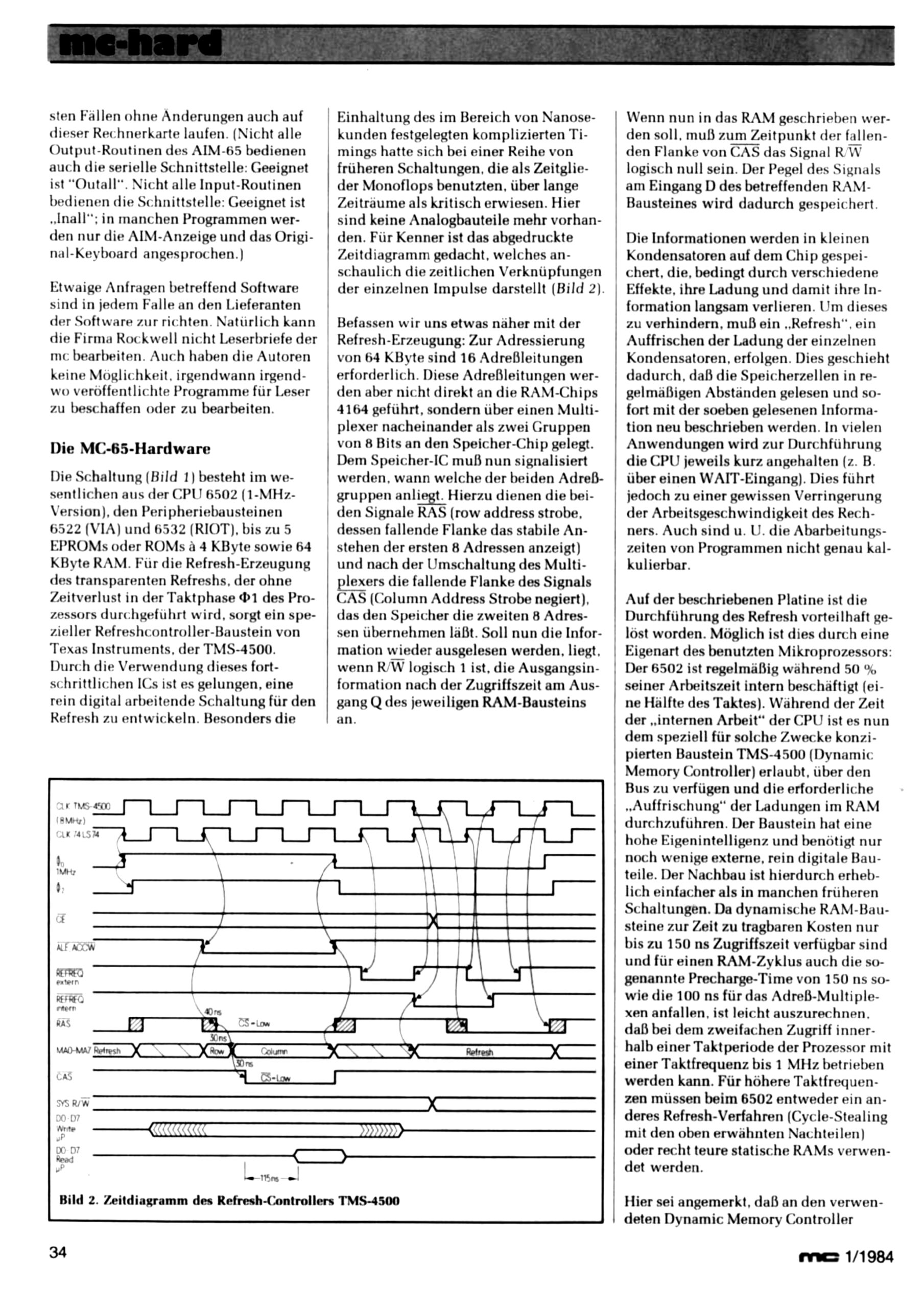
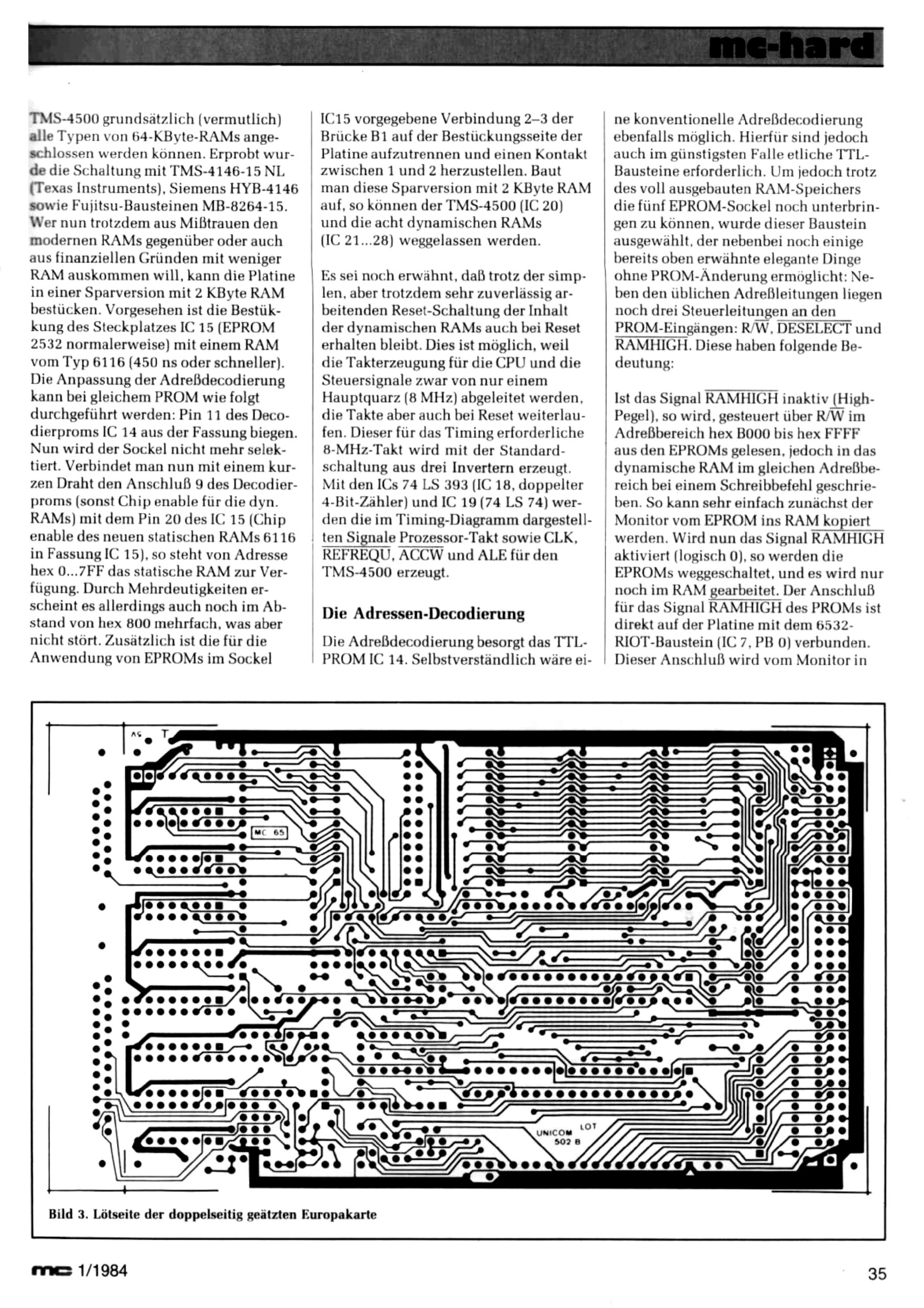
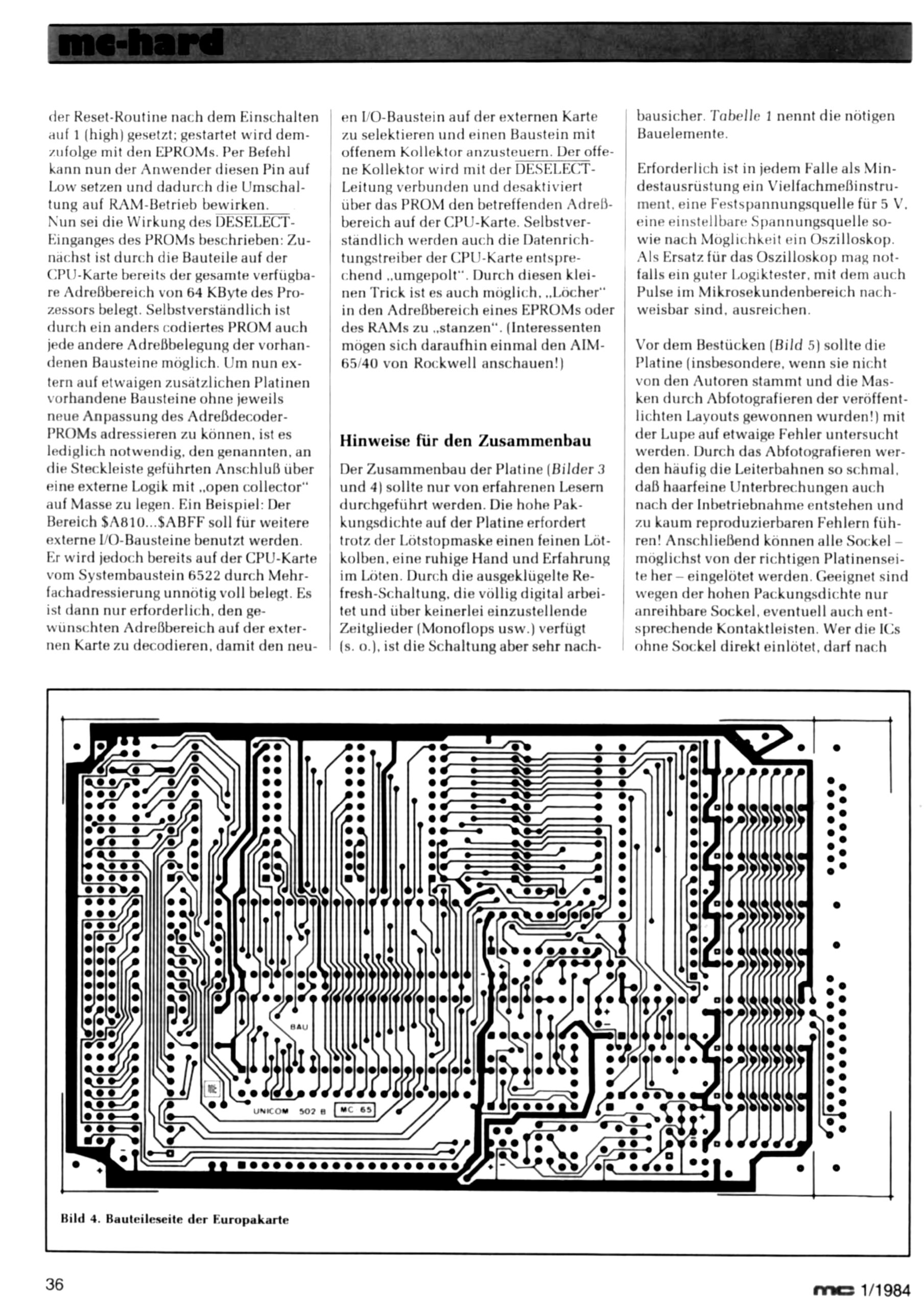
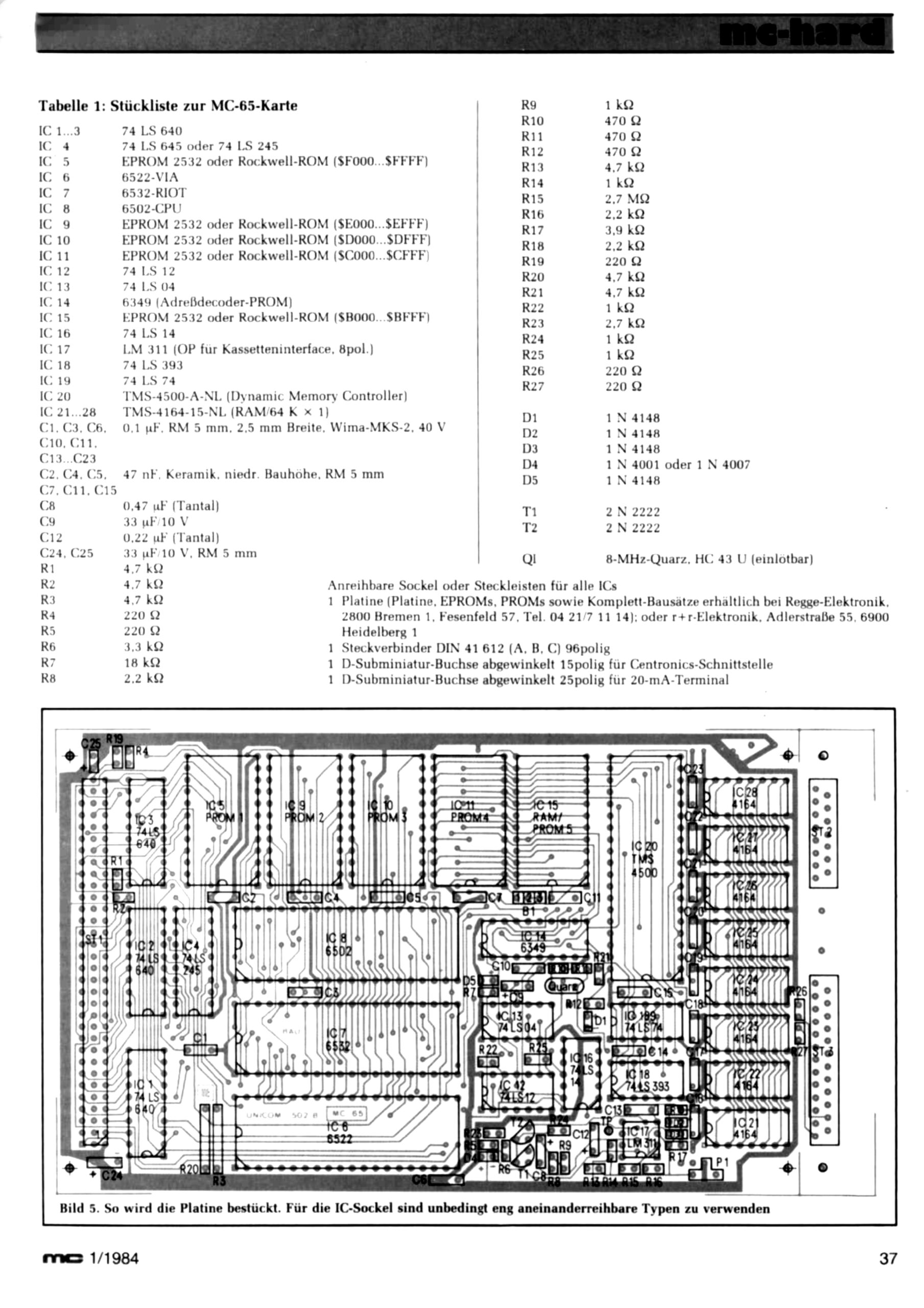
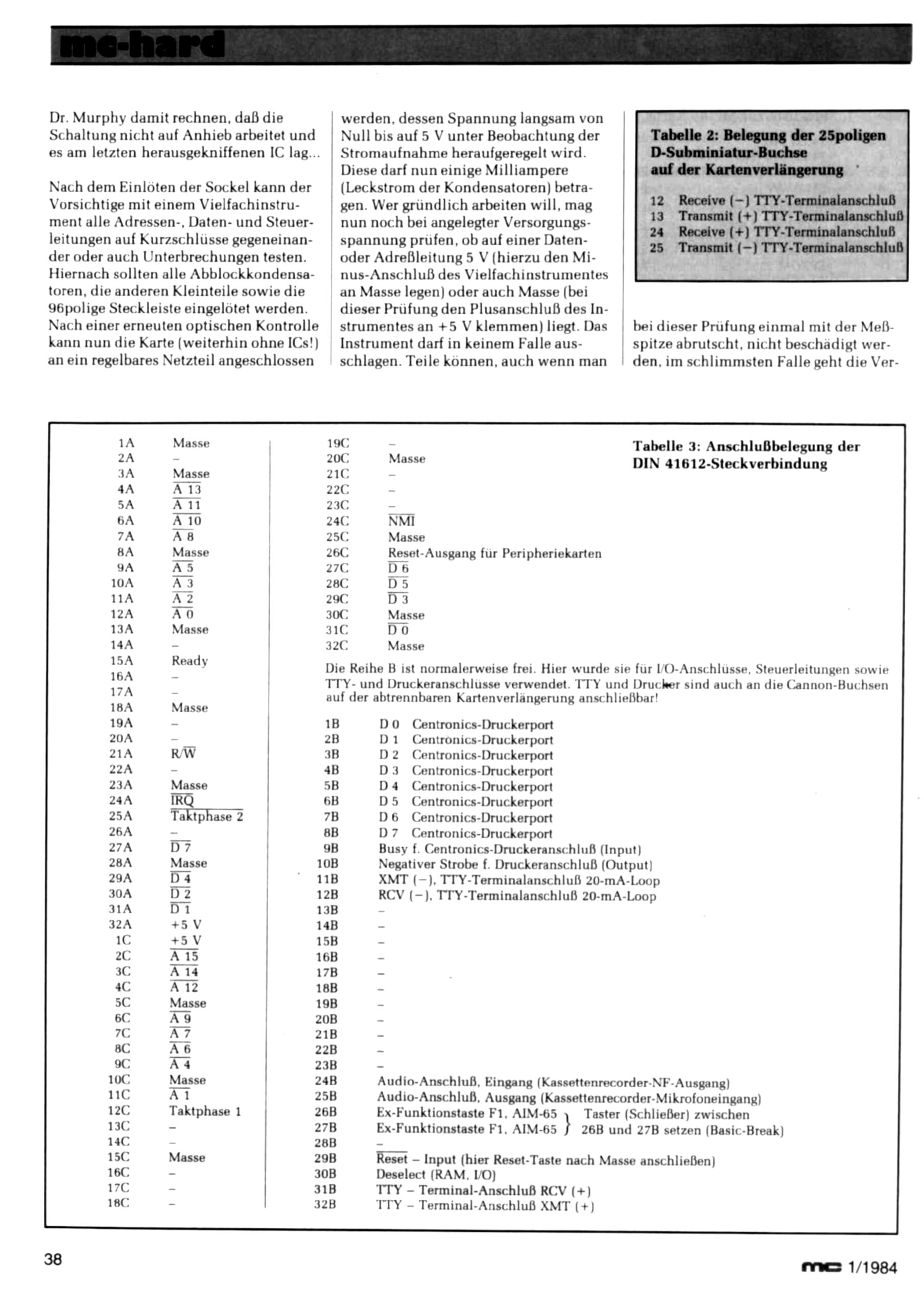
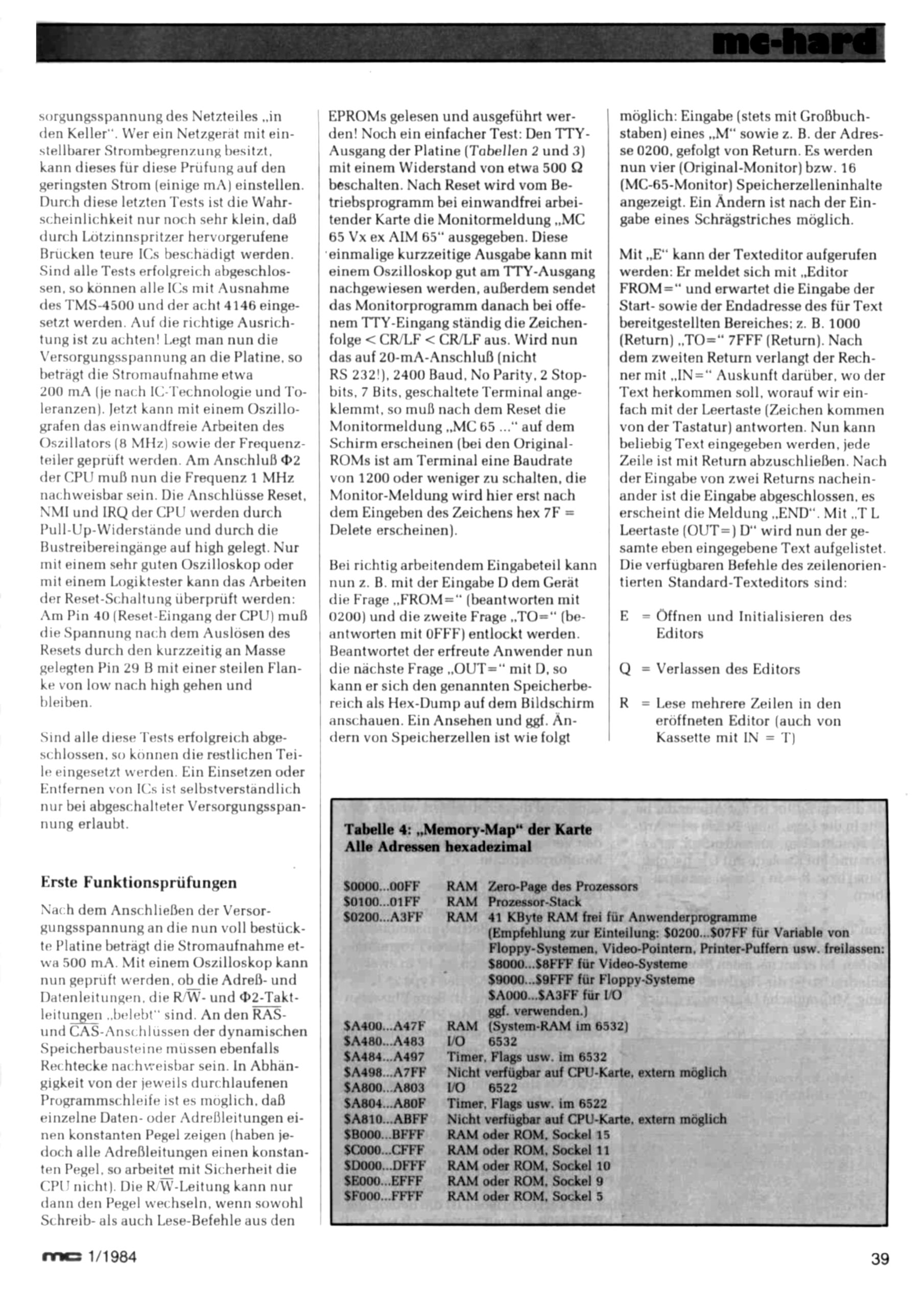
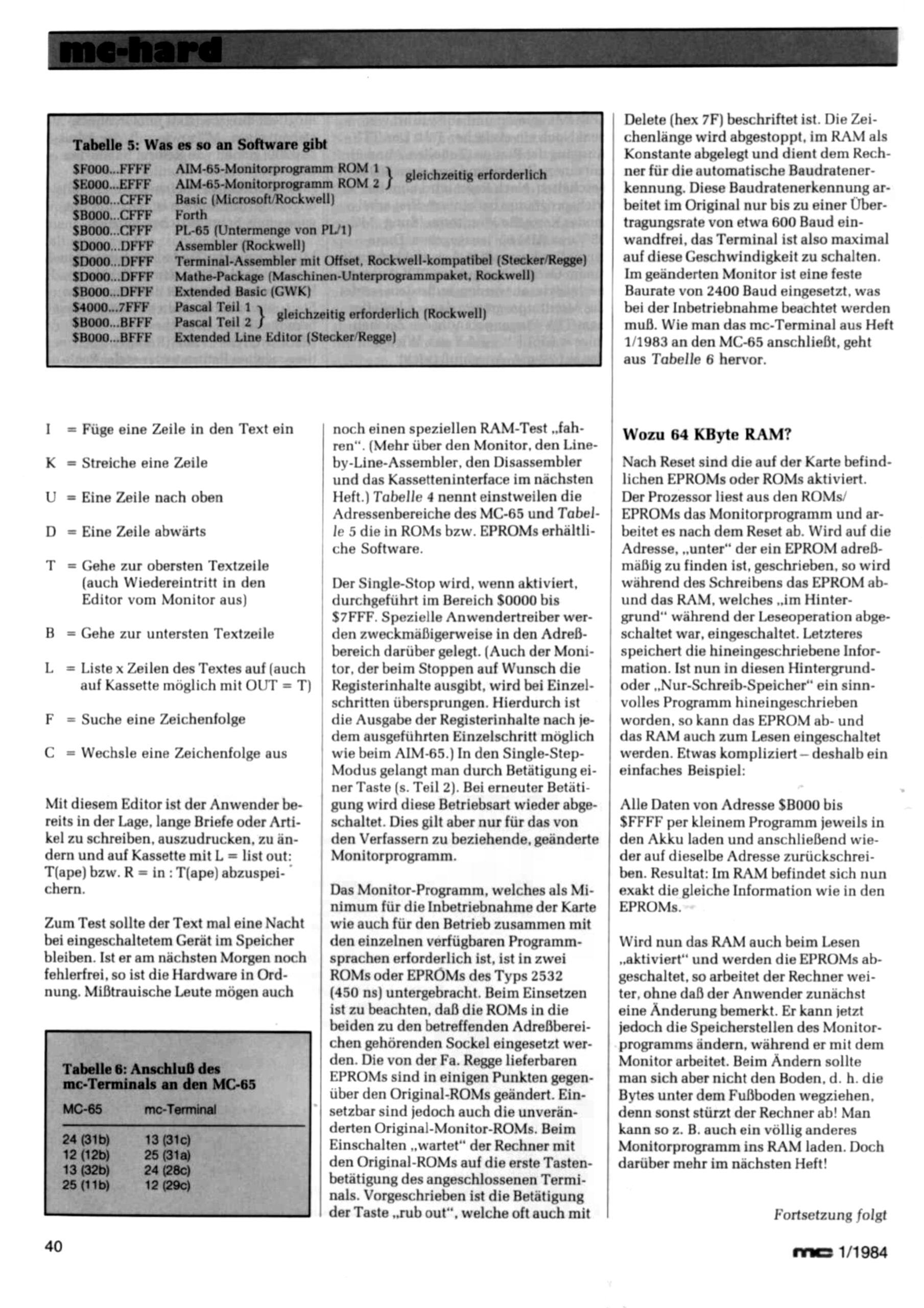
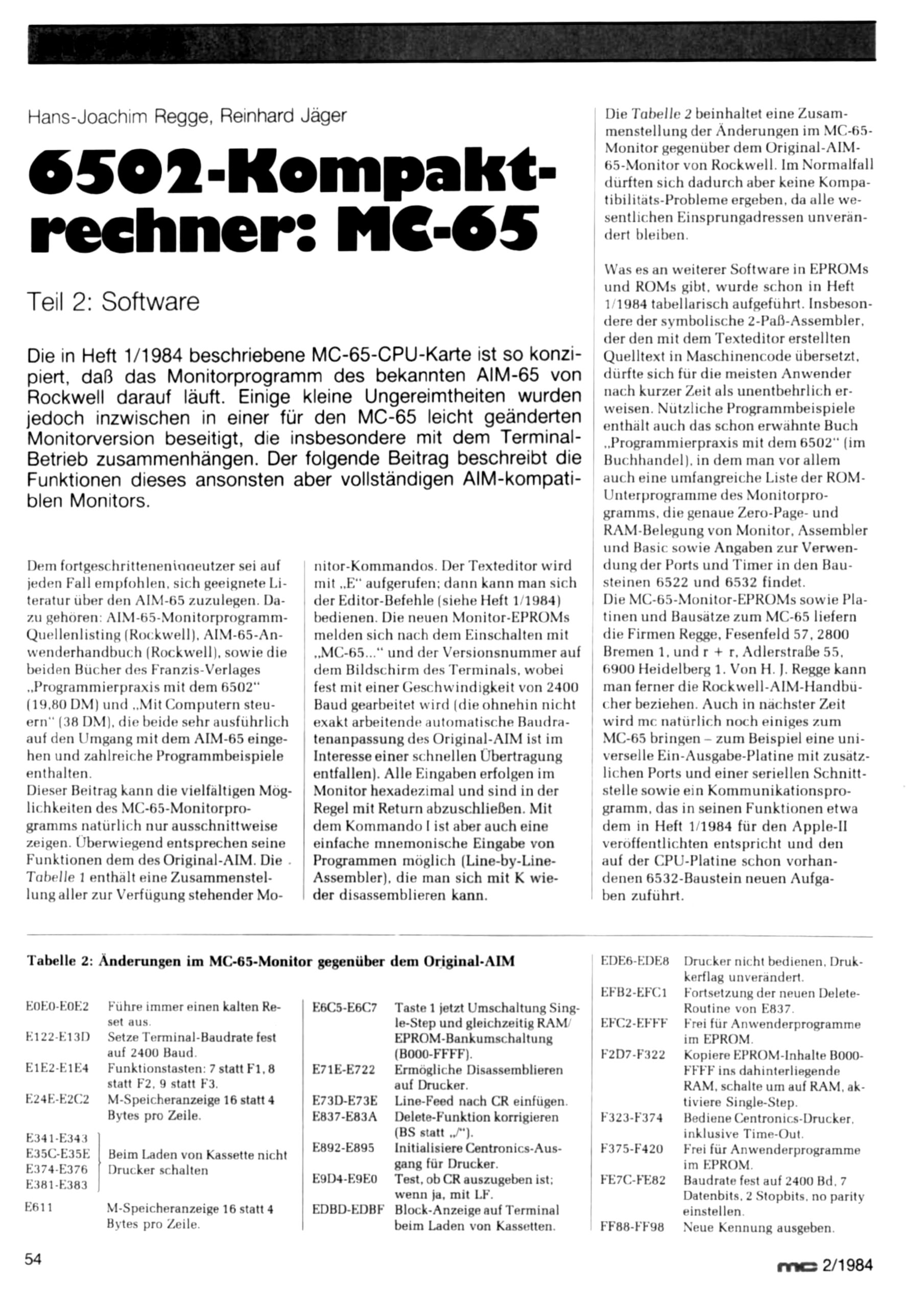
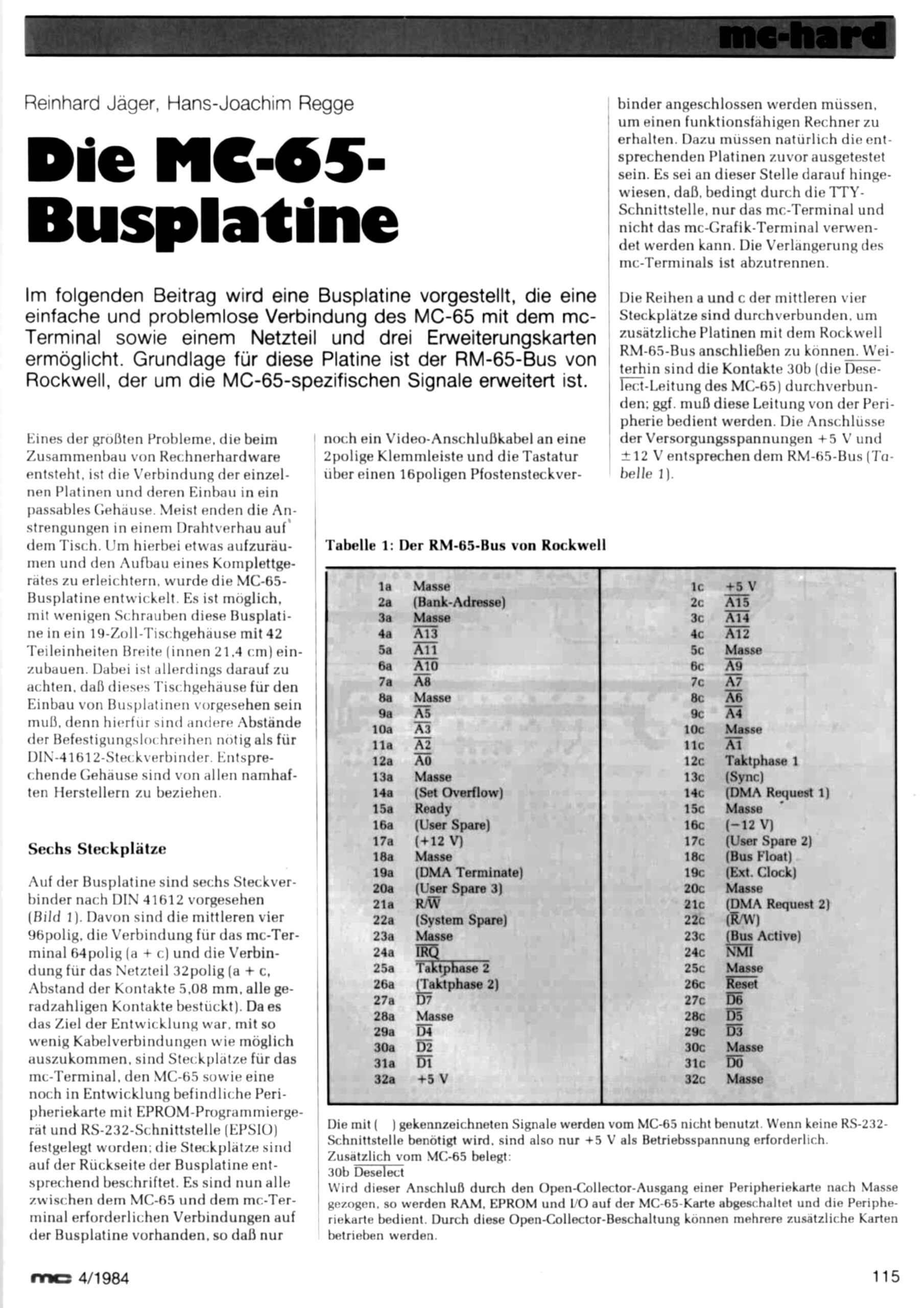
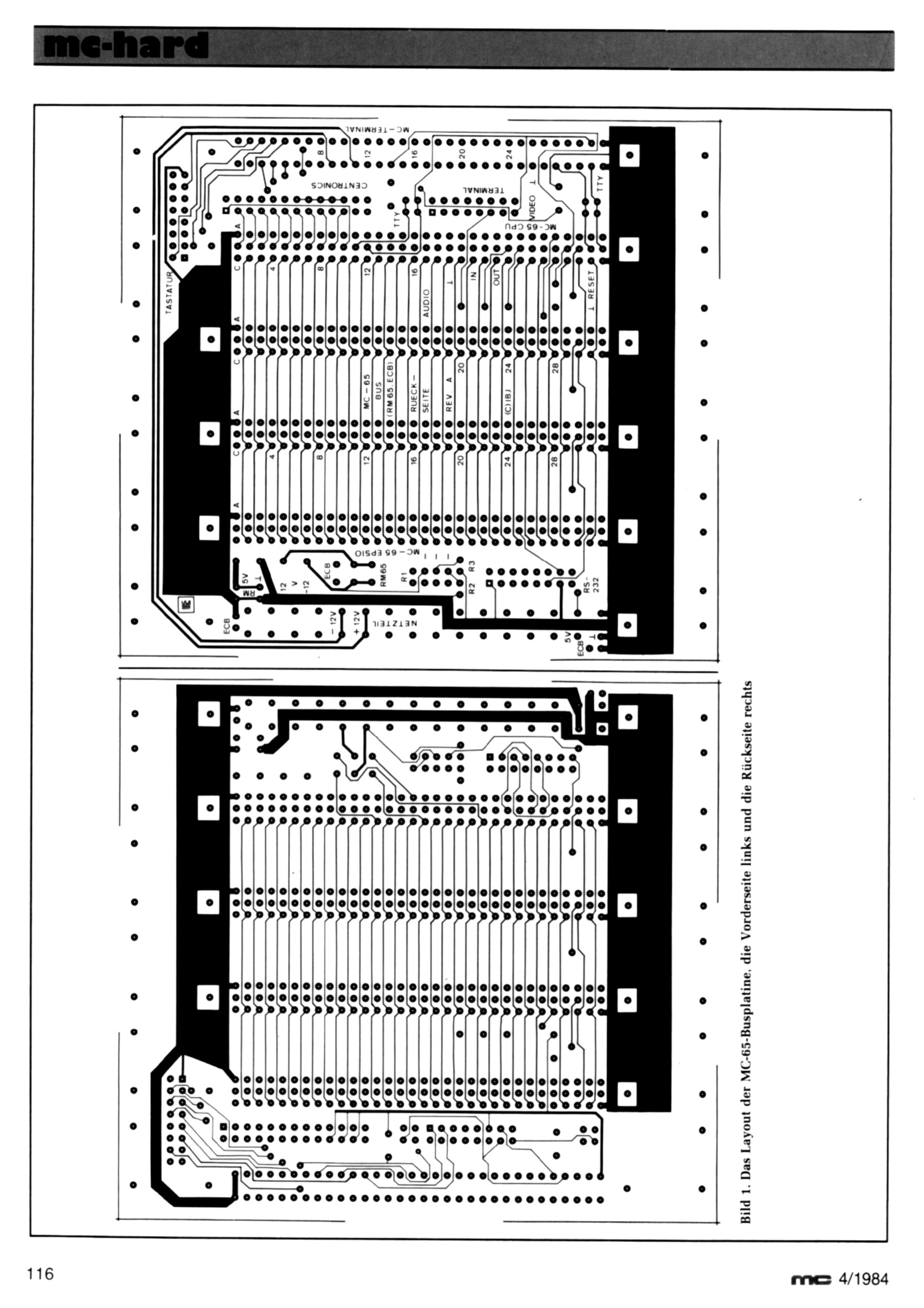
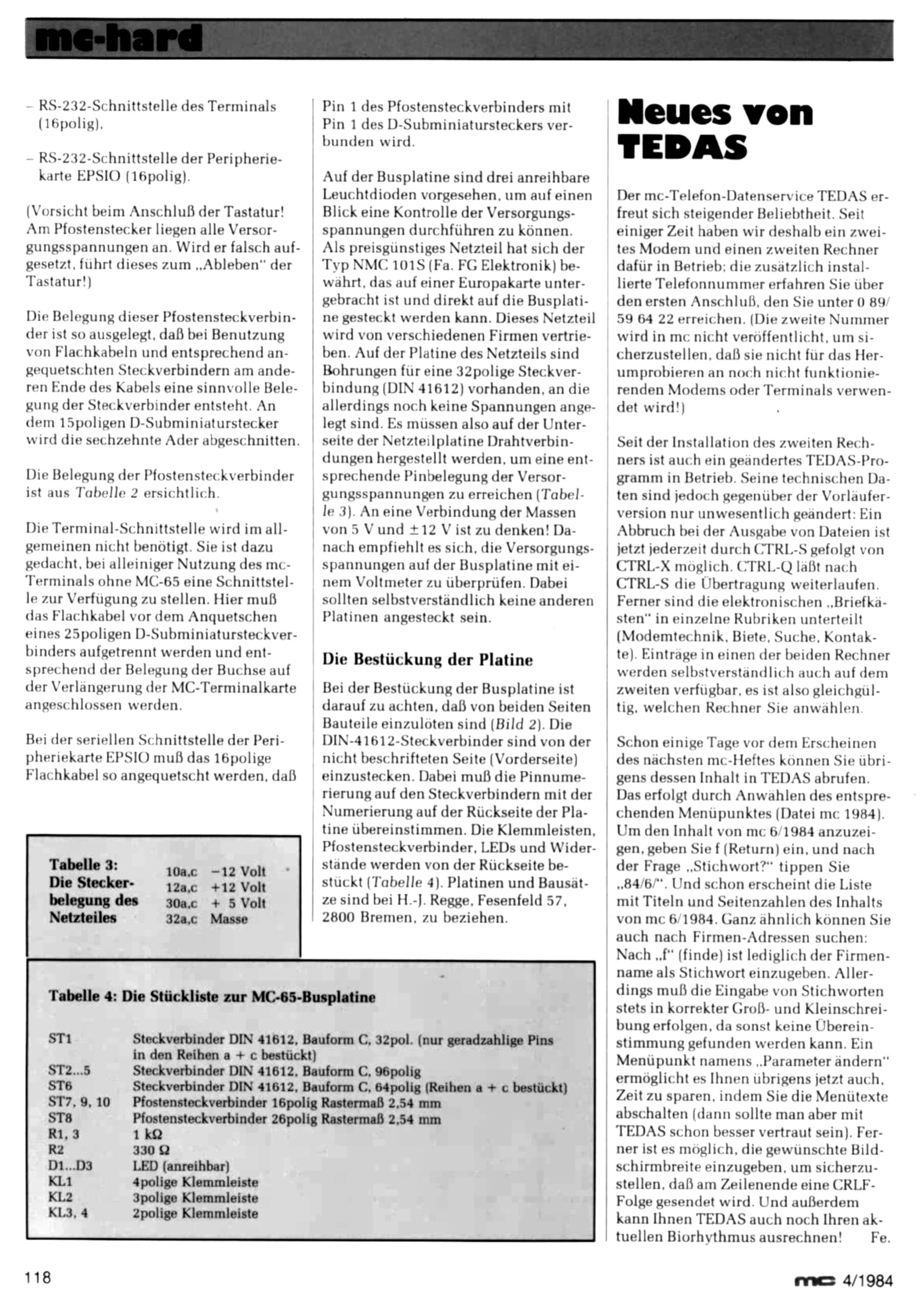
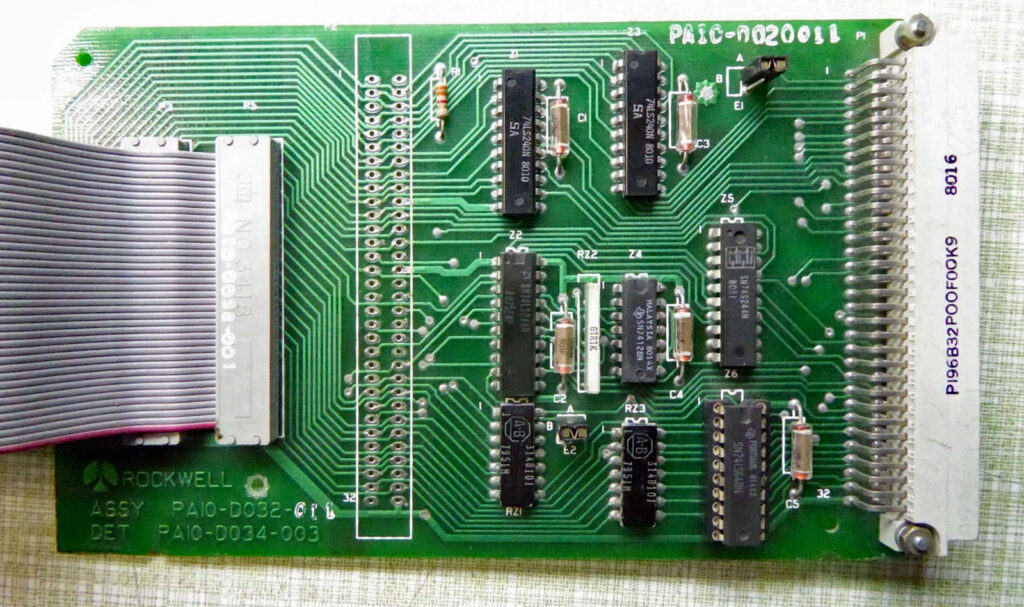
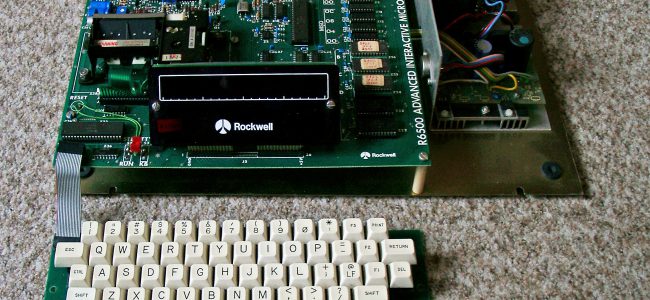
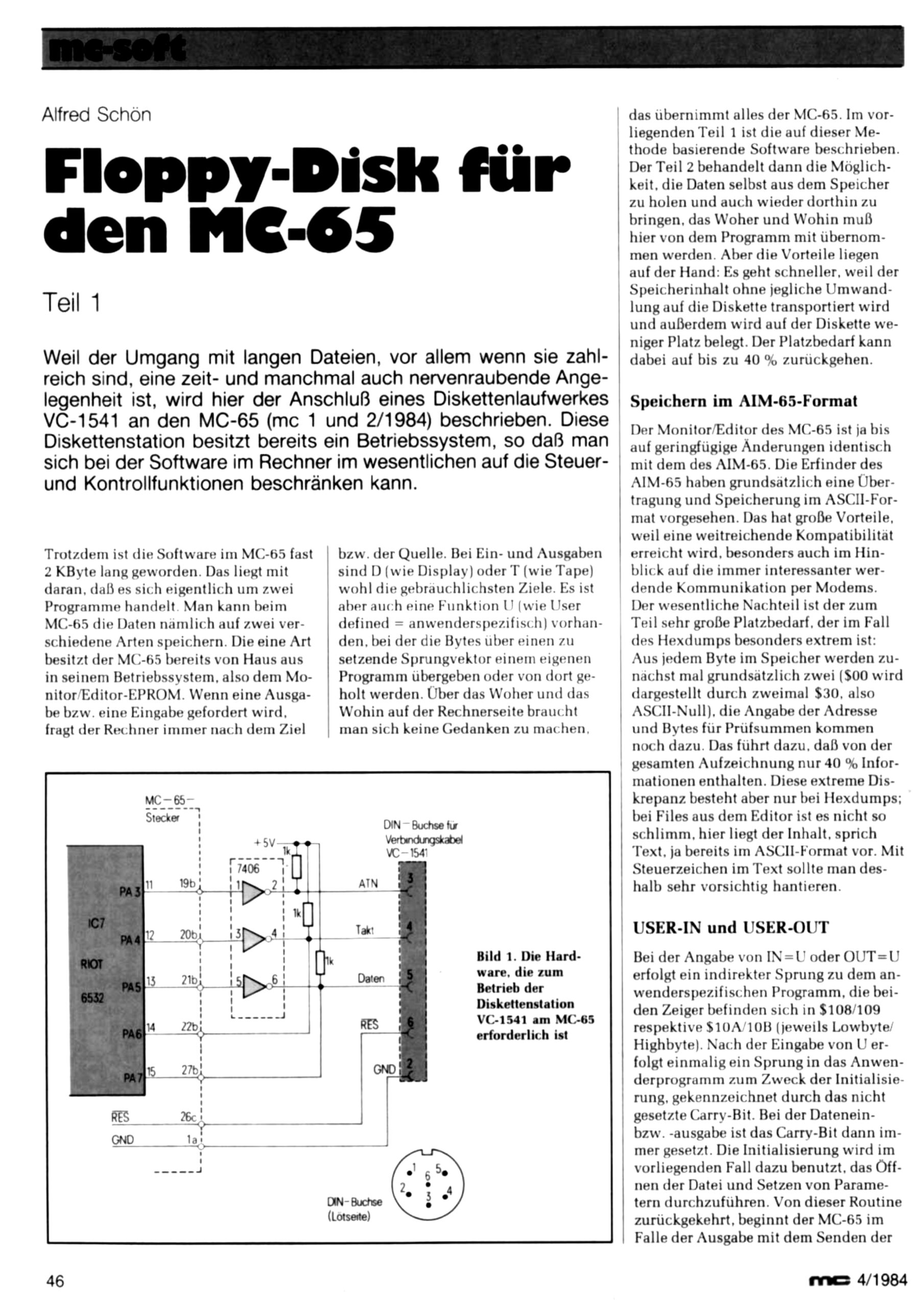
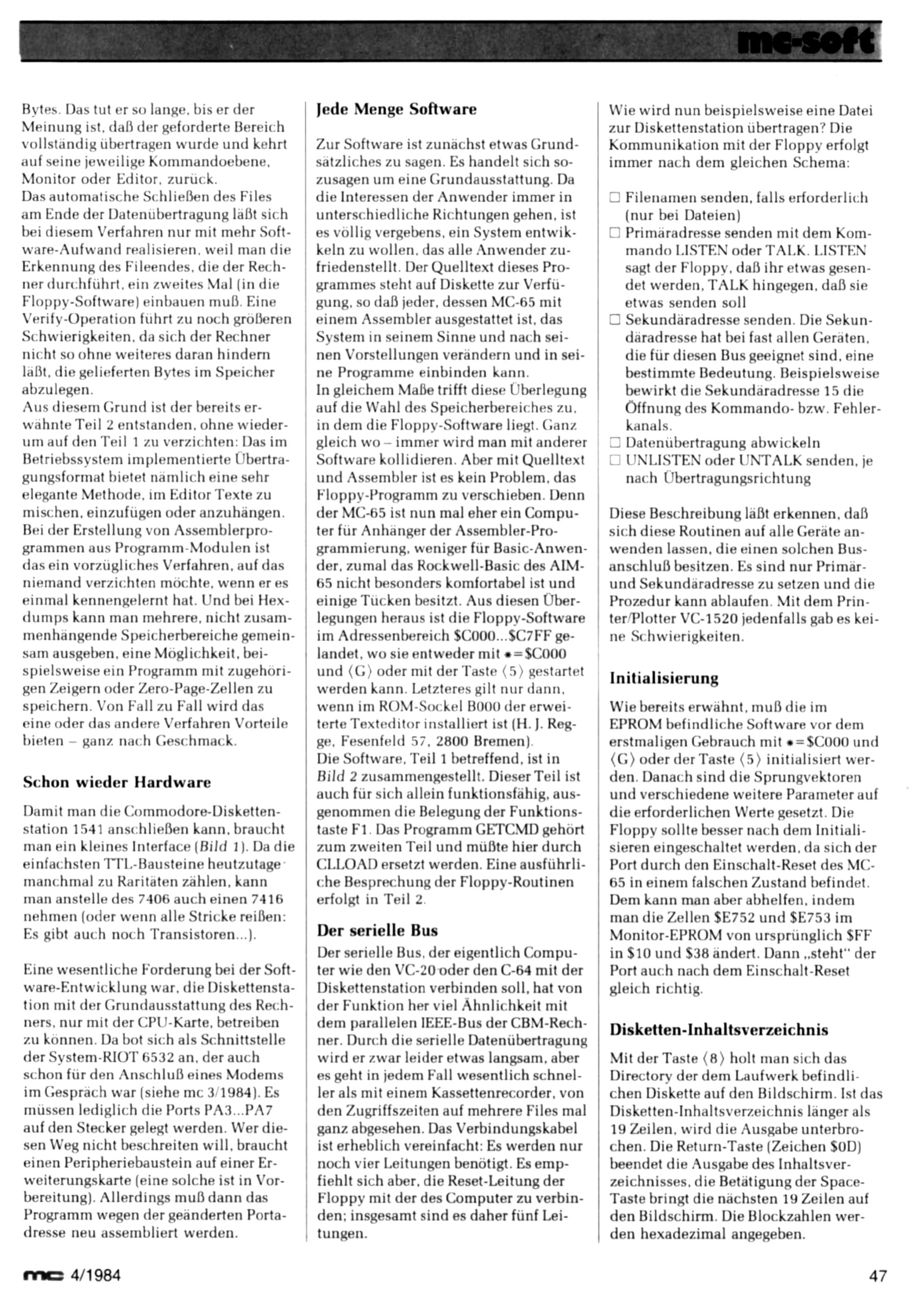
An AIM65 compatible 65C02 CPU based computer, the MC-65. With a 6532, 6522, terminal I/O, cassette interface, and in theory possible to run the original AIM 65 ROMs.

For AIM 65 ROMS and manuals, see the AIM 65 pages!


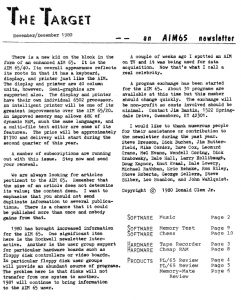
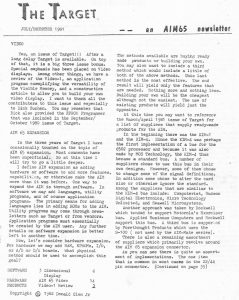
The Target AIM 65 Newsletter

an AIM 65 Newsletter

A bimonthtly newsletter published by Don Clem, 1979 to 1981

Scans by David Colglazier

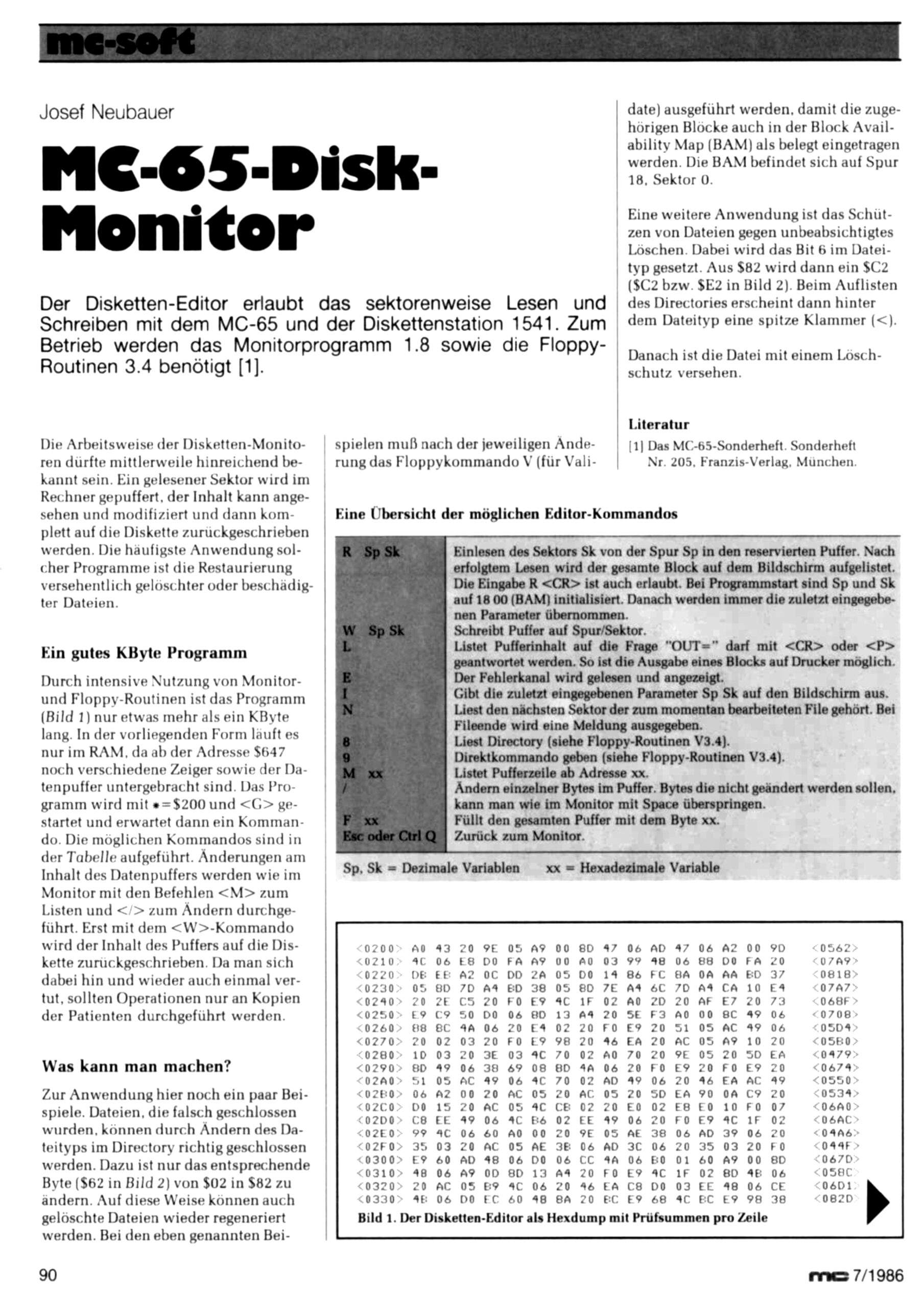
The Target julyaugust 1979
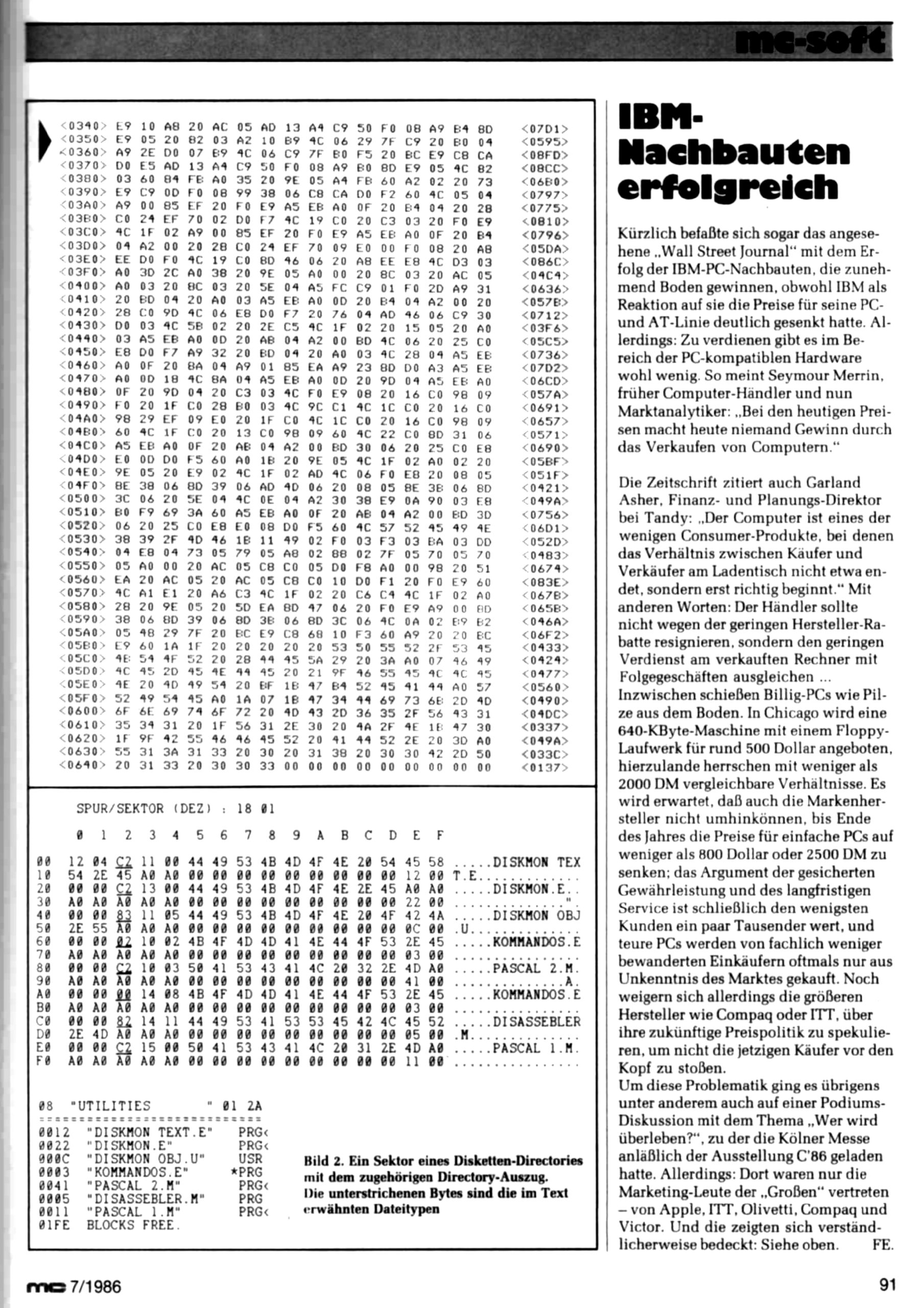
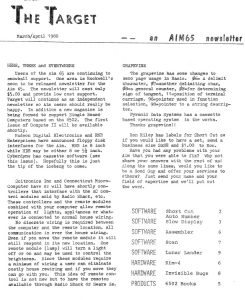
The Target January February 1980
The Target March April 1980
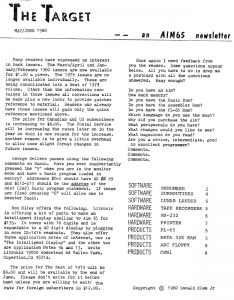
The Target May June1980
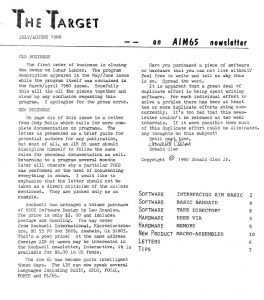
The Target July August 1980
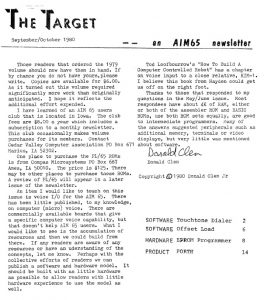
The Target September October 1980
The Target November December 1980
The Target July-December 1981

post

RB Specials

When I was an editor at Radio Bulletin we published several specials. Some were additions to the magazine, two specials were on sale.

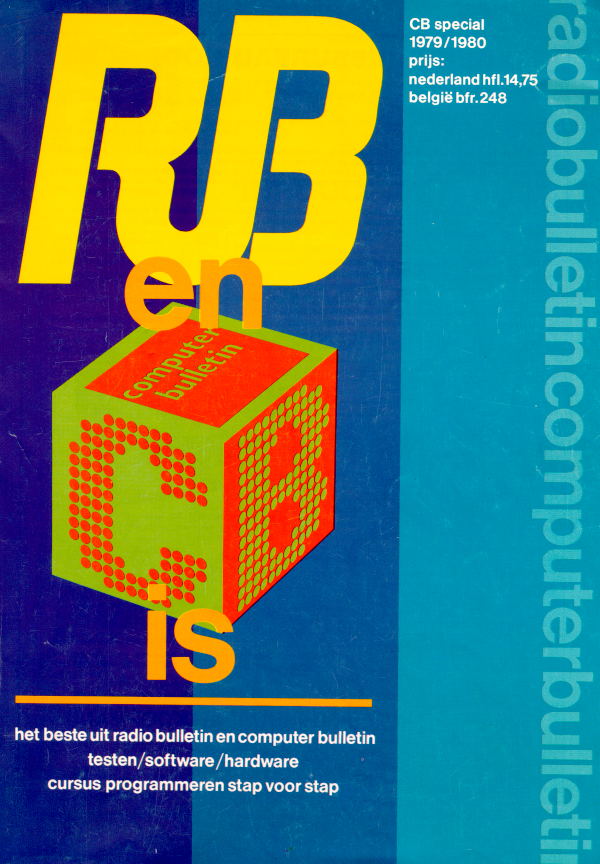
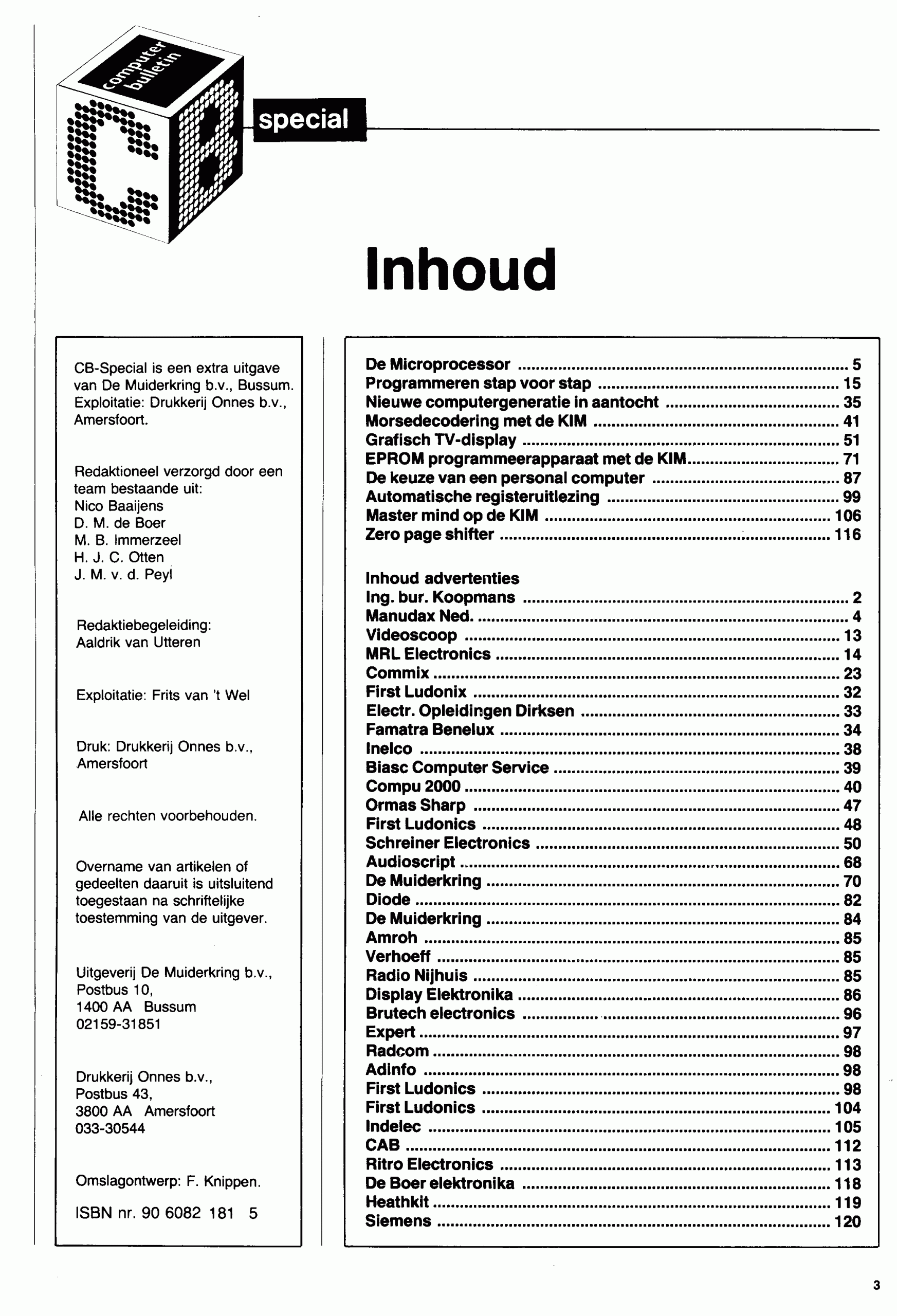
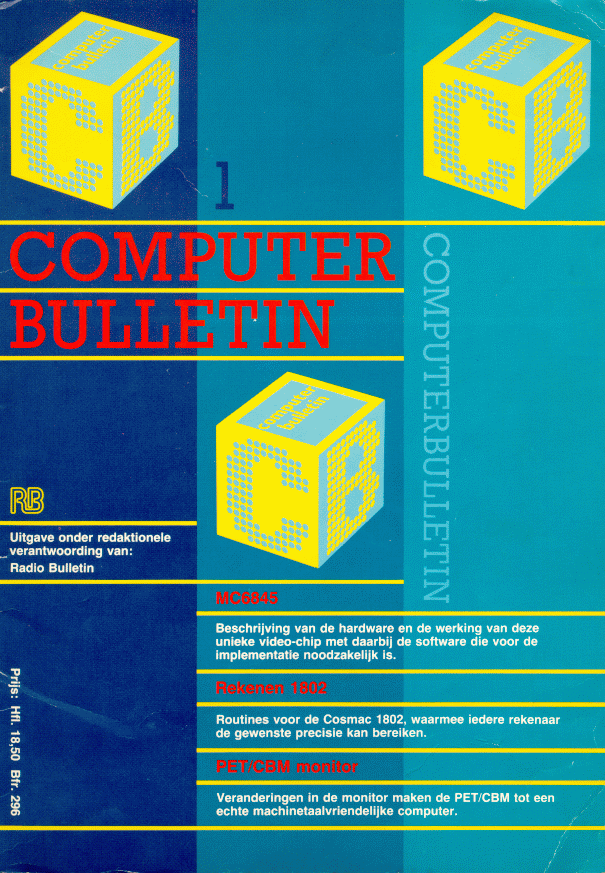
RB CB Special 1980. The early KIM-1 articles by Dick de Boer.
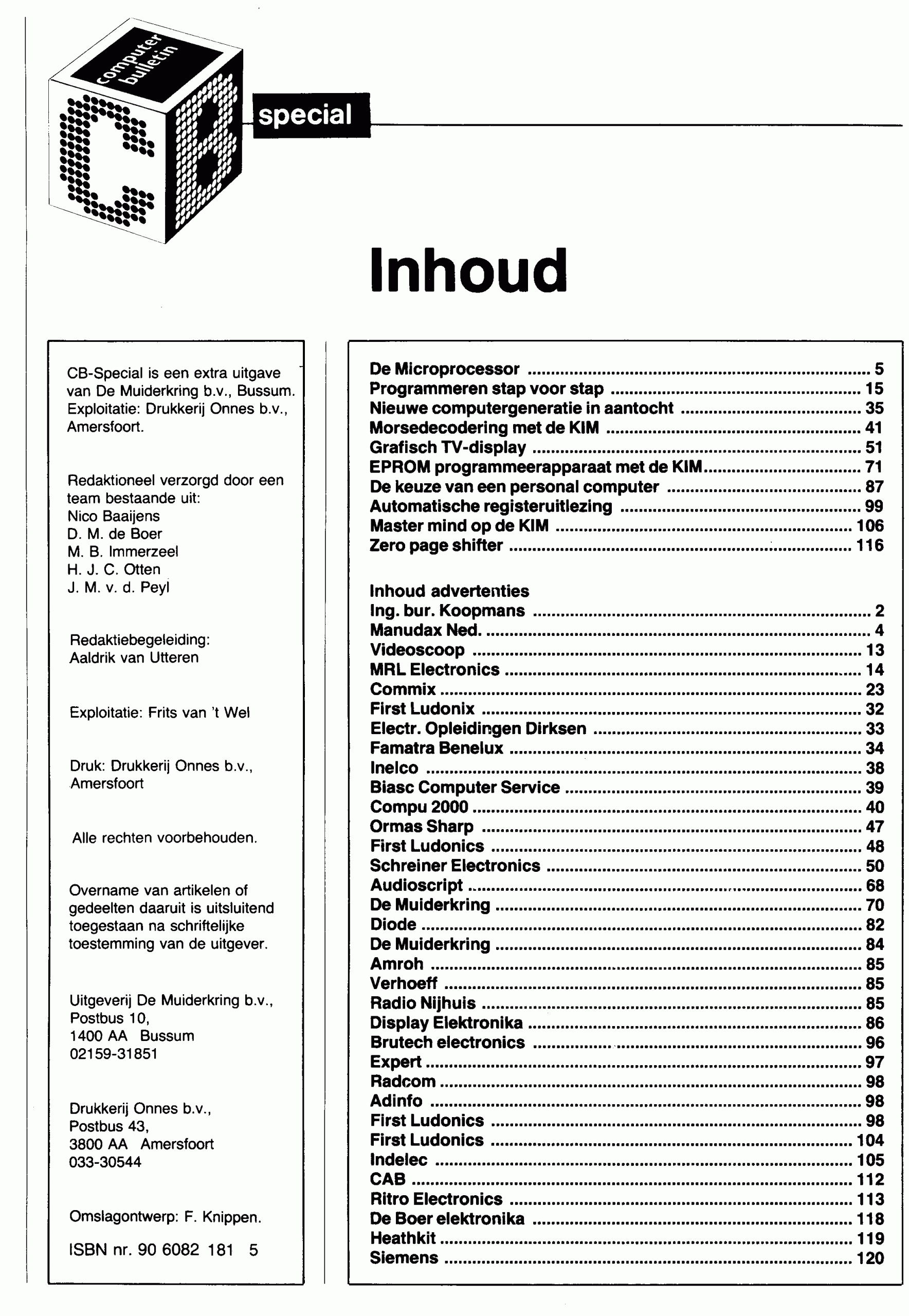
RB CB special inhoud
De Keuze van een Personal Computer, Hans Otten
rbspecialmicrocomputers, D.M. de Boer
EPROM programmeerapparaat met de KIM, J.M. v.d. Peijl
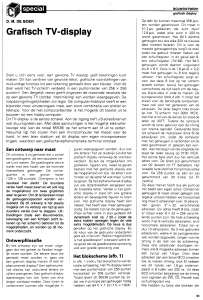
Grafisch TV-display, D.M. de Boer
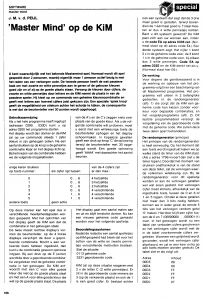
Mastermind op de KIM, J.M. v.d. Peijl
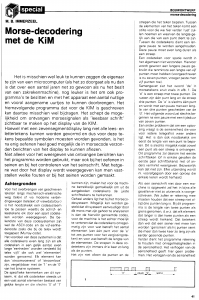
Morse-decodering met de KIM, M.B. Immerzaal
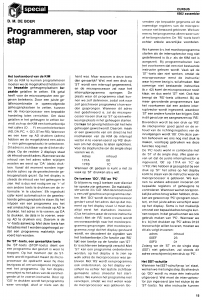
Programmeren, stap voor stap
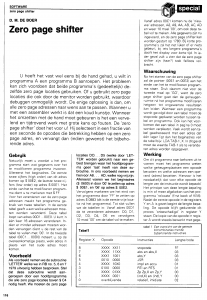
Zero page shifter. D.M. de Boer
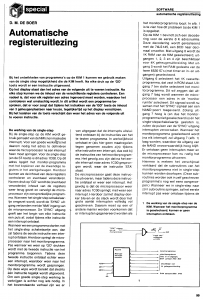
Automatische registeruitlezing, D.M. de Boer
CB Special 1982. KIM uitbreidingen Paul de Beer en Hans Otten.
Inhoud CB Special
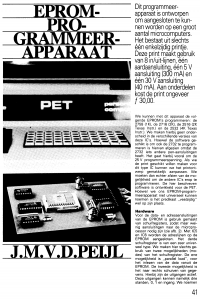
EPROM programmeerapparaat PET en KIM, J.M. v.d. Peijl, P.G.J. de Beer
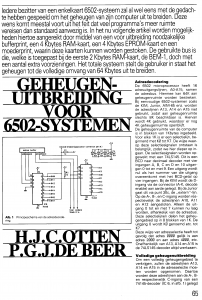
Geheugenuitbreiding voor 6502-systemen, H.J.C. Otten, P.G.J. de Beer
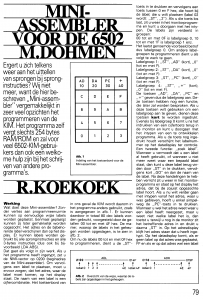
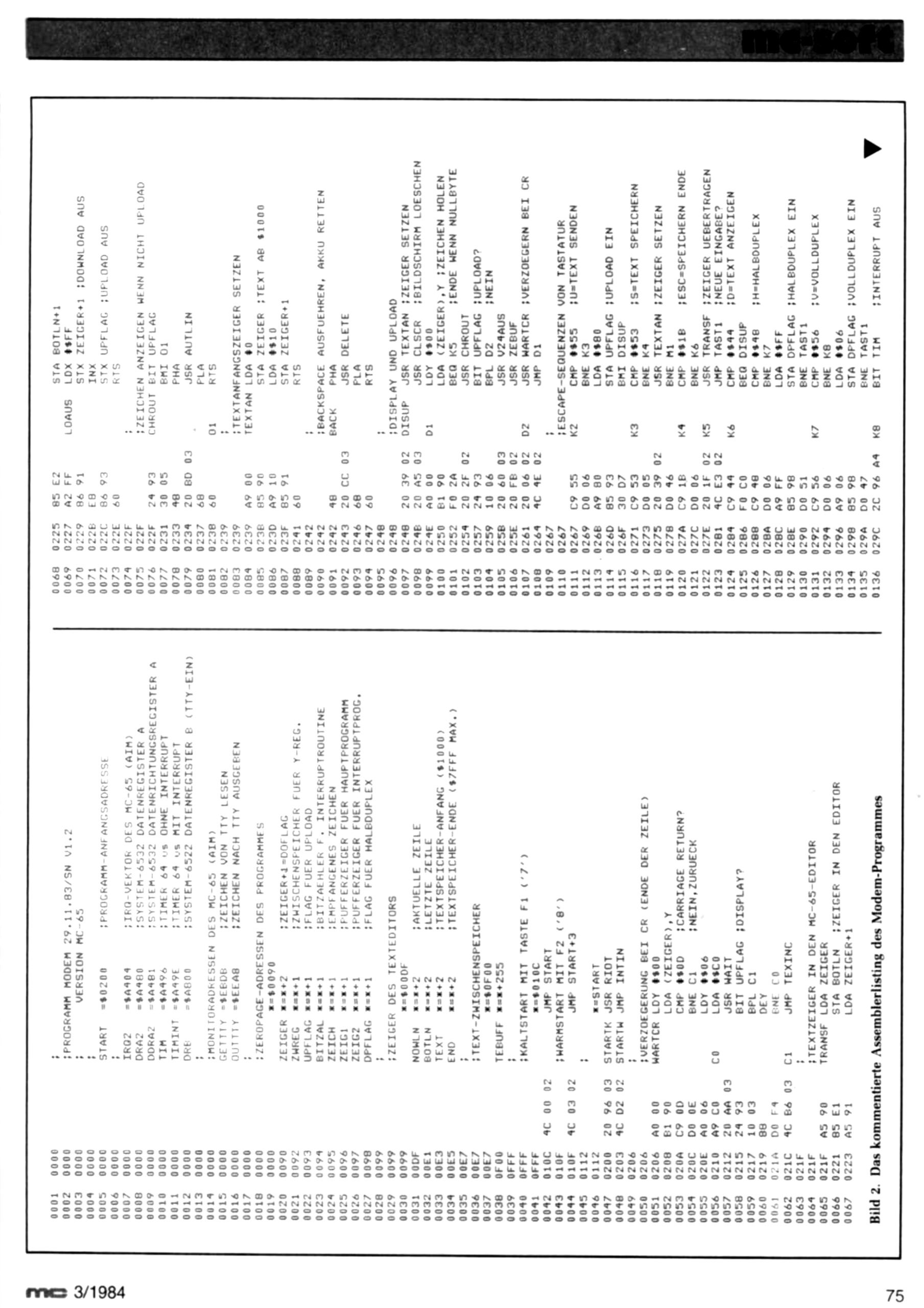
Mini-assembler voorde 6502, M. Dohmen, R. Koekoek
ASCII-toetsenbord UART-schakeling Baudrate generator, H.J.C. Otten
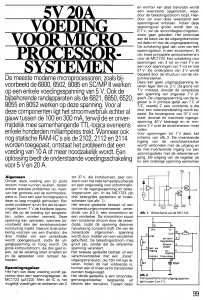
5V 20A Voeding voor microprocessorsystemen, Manudax
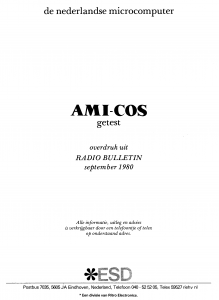
AMI-COS getest, overdruk Radio Bulletin Sepember 1980, H.J.C. Otten
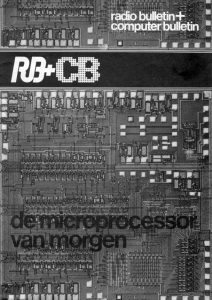
De microprocessor van morgen, P.G.J. de Beer, H.J.C. Otten
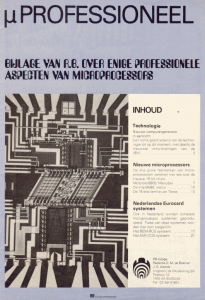
uprofessioneel bijlage 1980, BEM Brutech

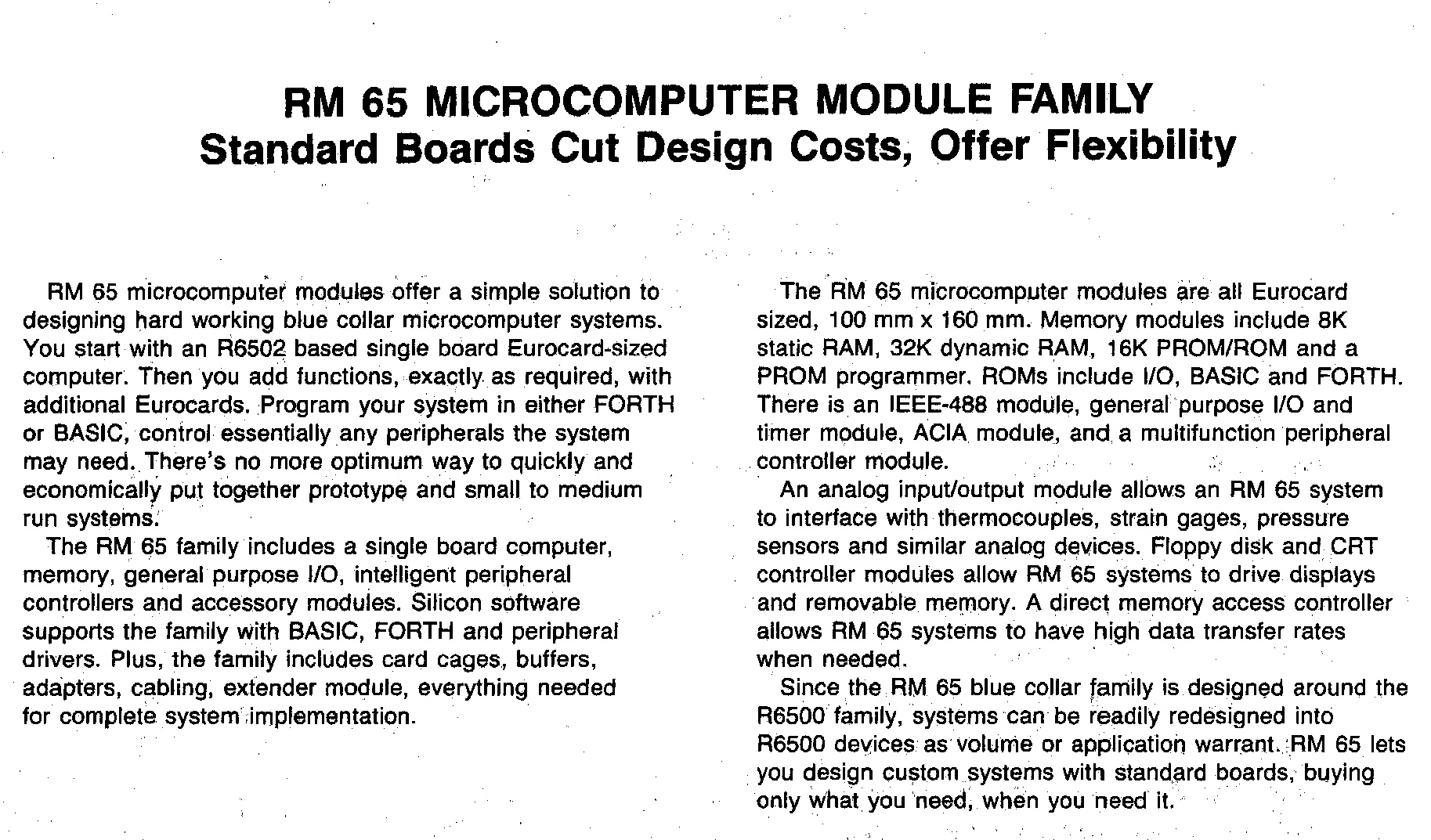
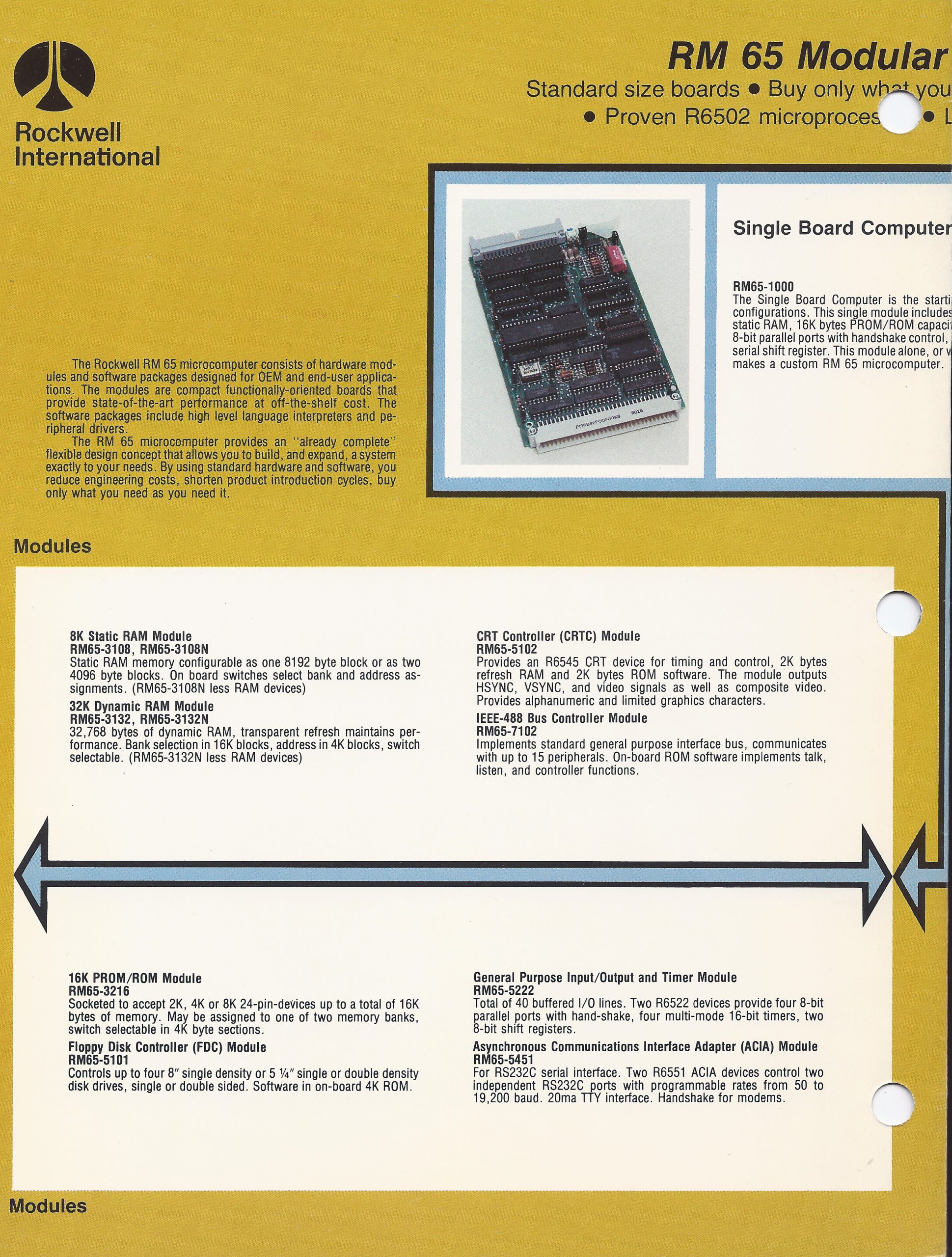
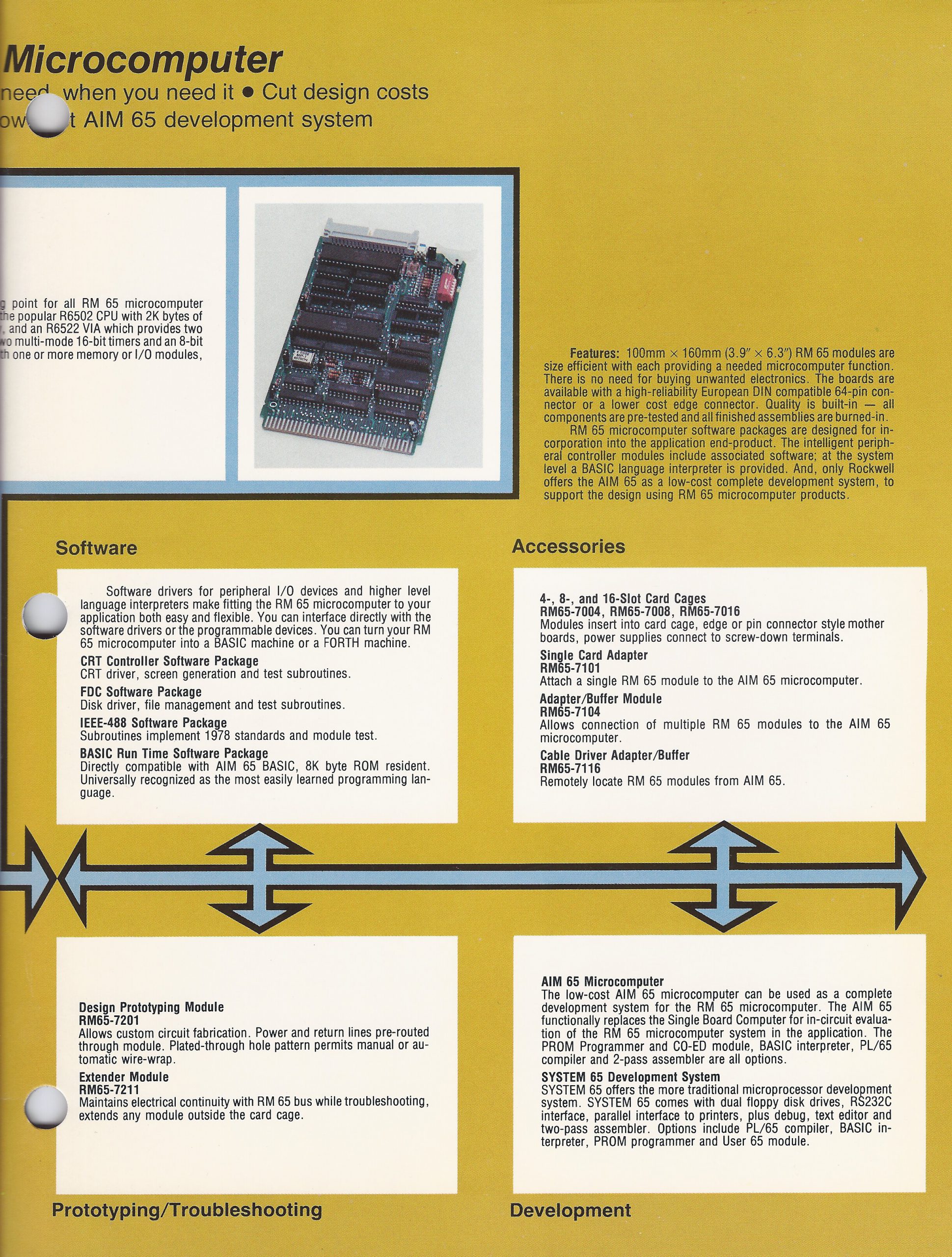
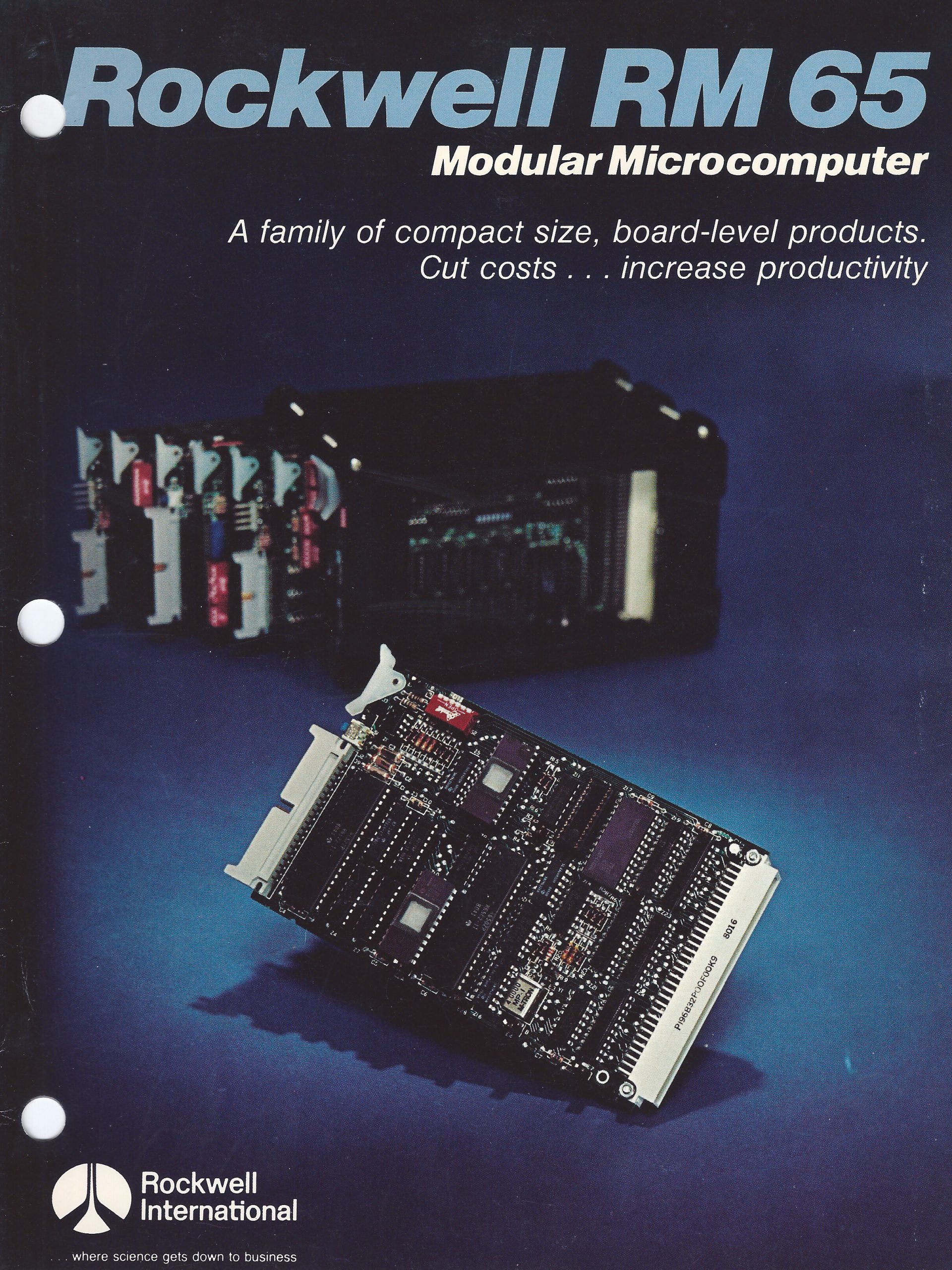
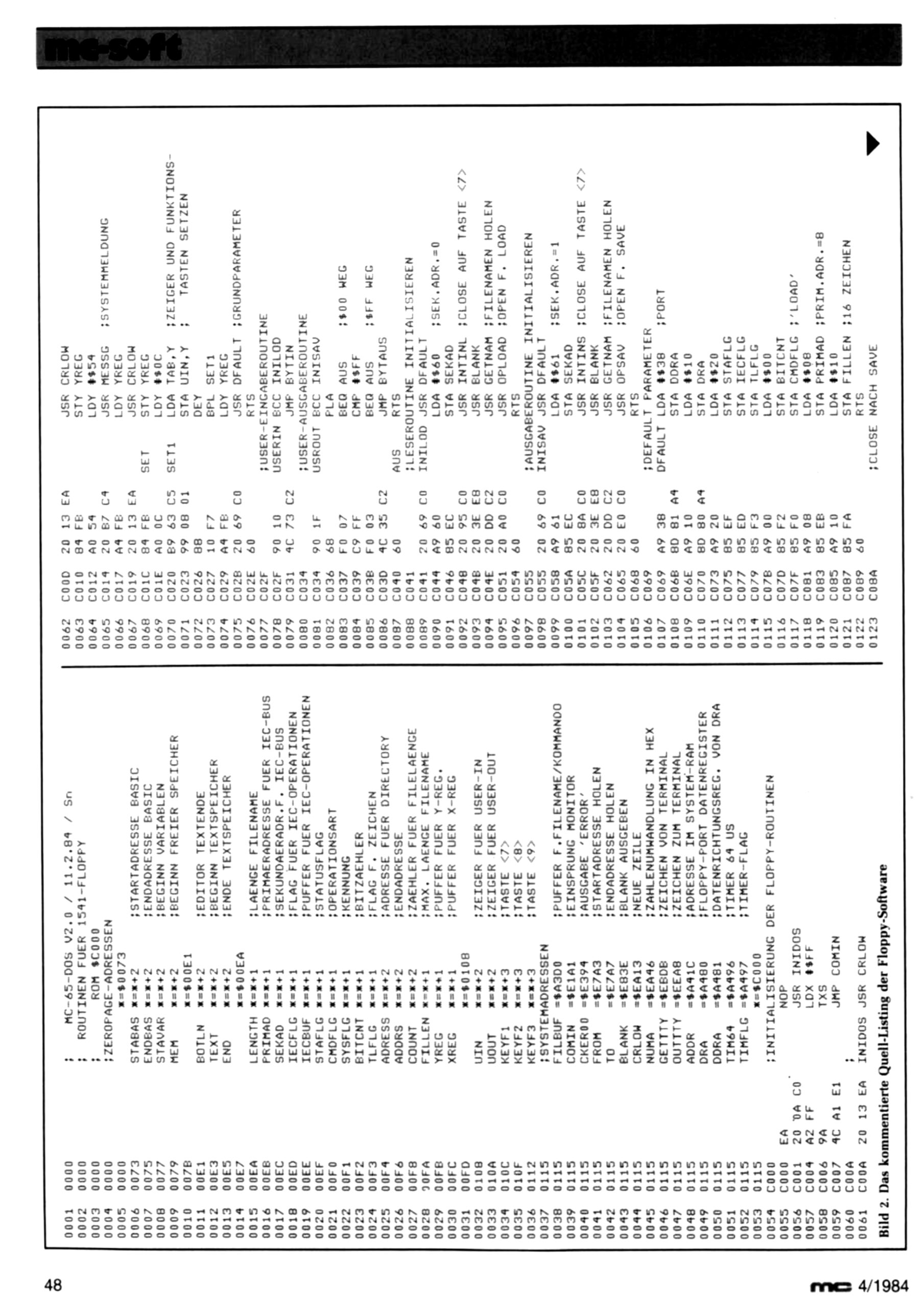
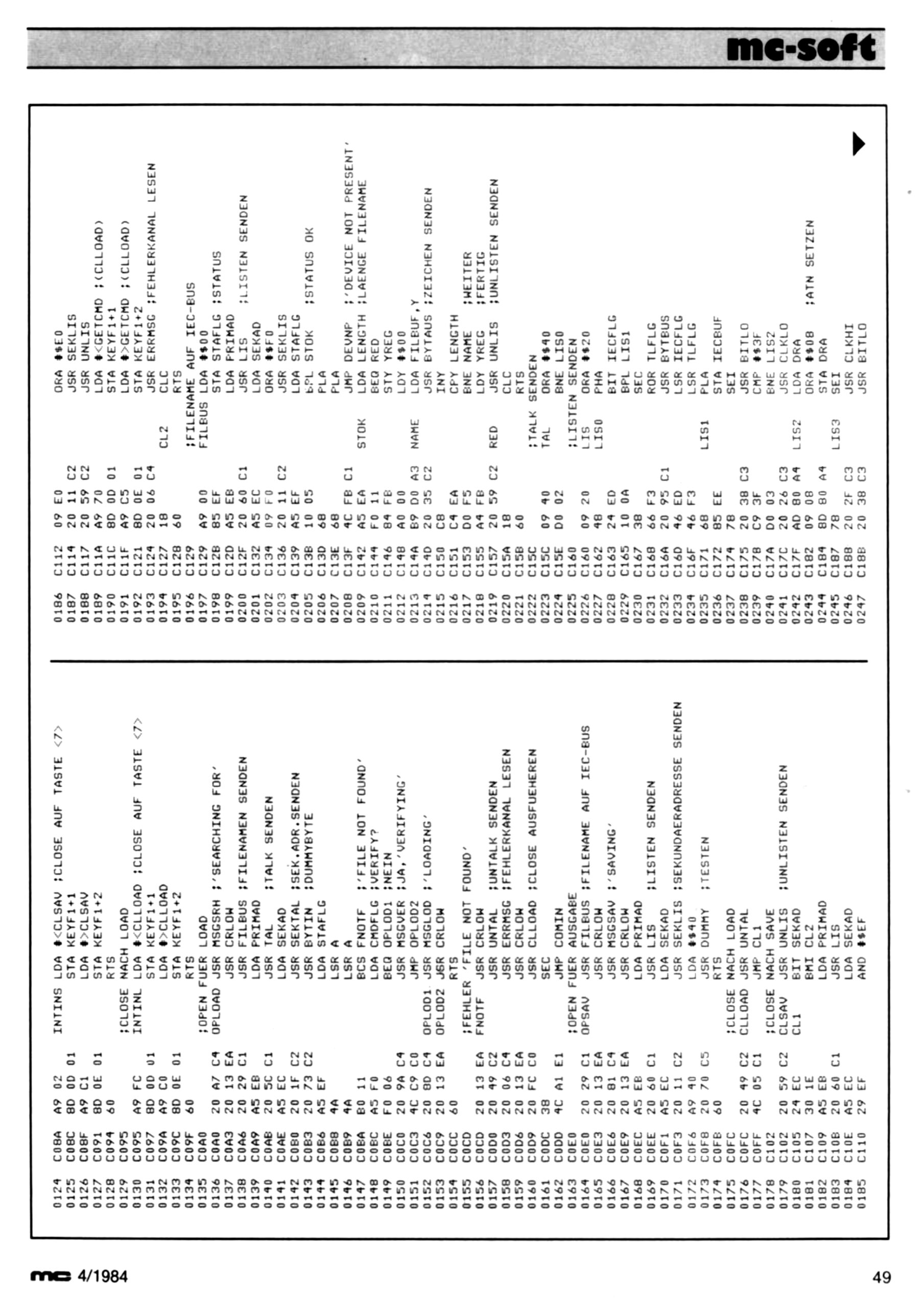
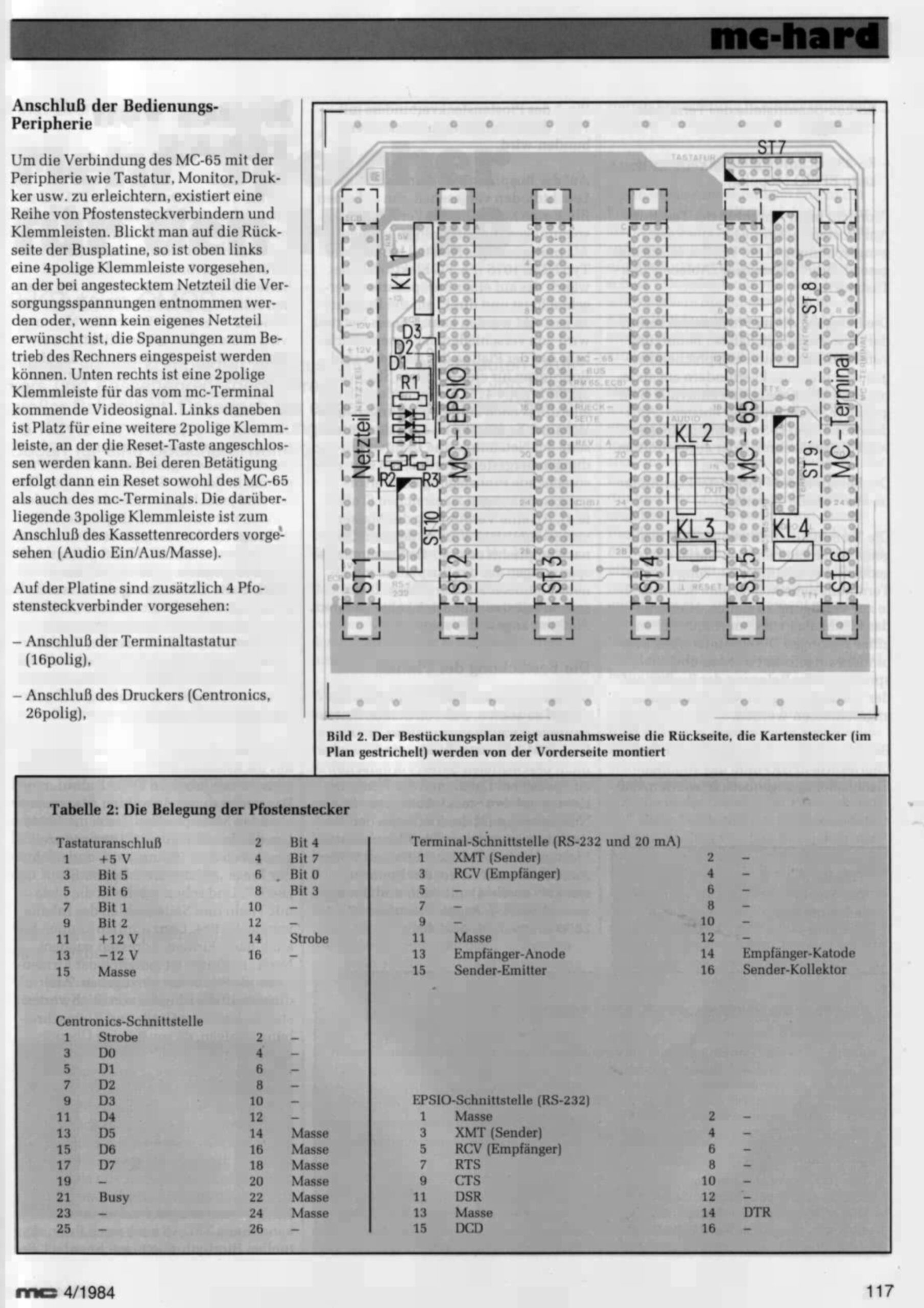
RM 65


Downloads

Datasheets of all available RM 65
modules are described in Chapter 9
of the 1984 Rockwell Databook
16 Slot Card Motherboard and Cage RM65
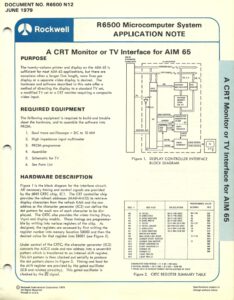
A CRT or TV interface for AIM 65
RM 65 32K Dynamic RAM module
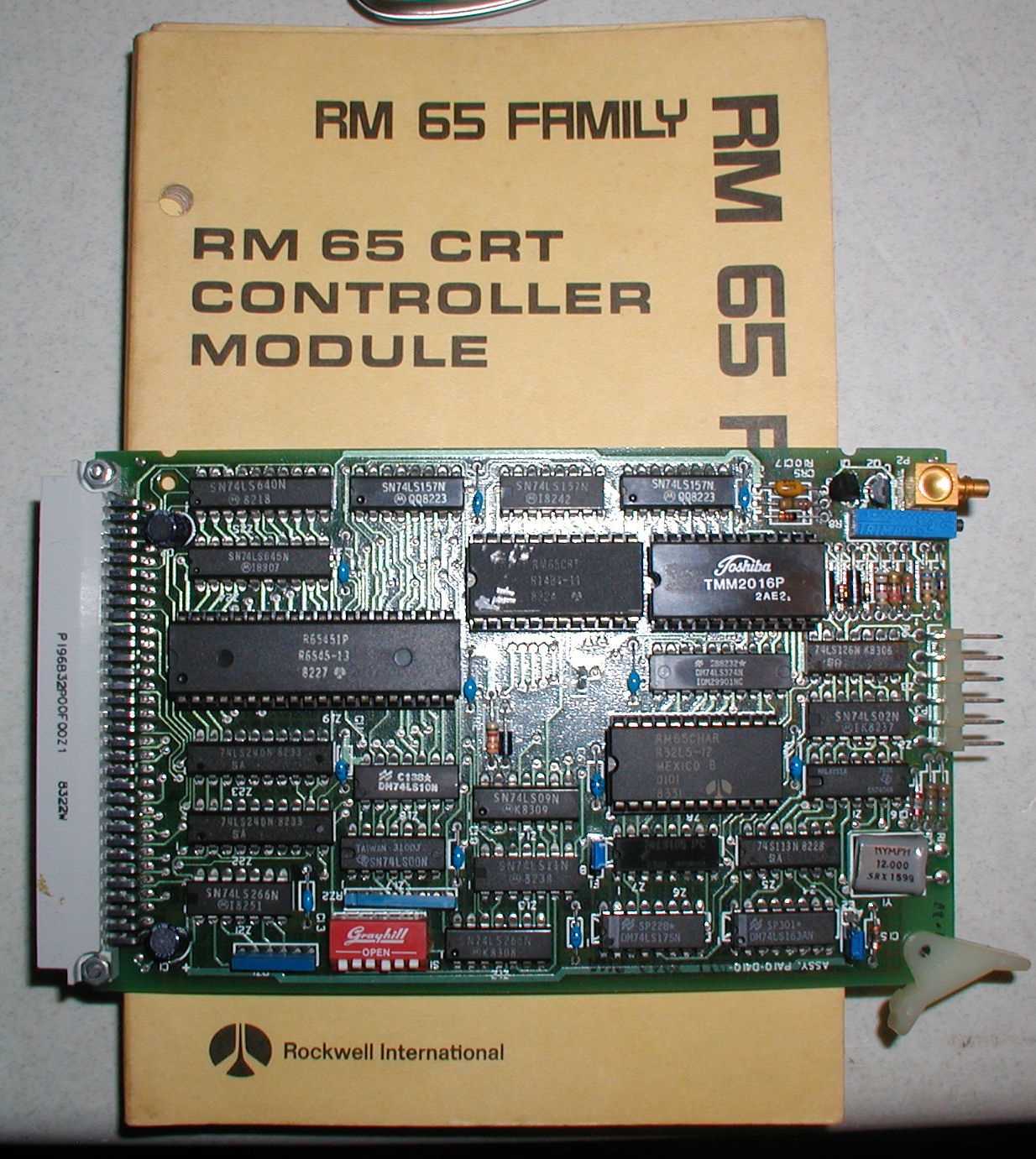
RM 65 CRT Controller
RM 65 Floppy disk Controller Module Users manual
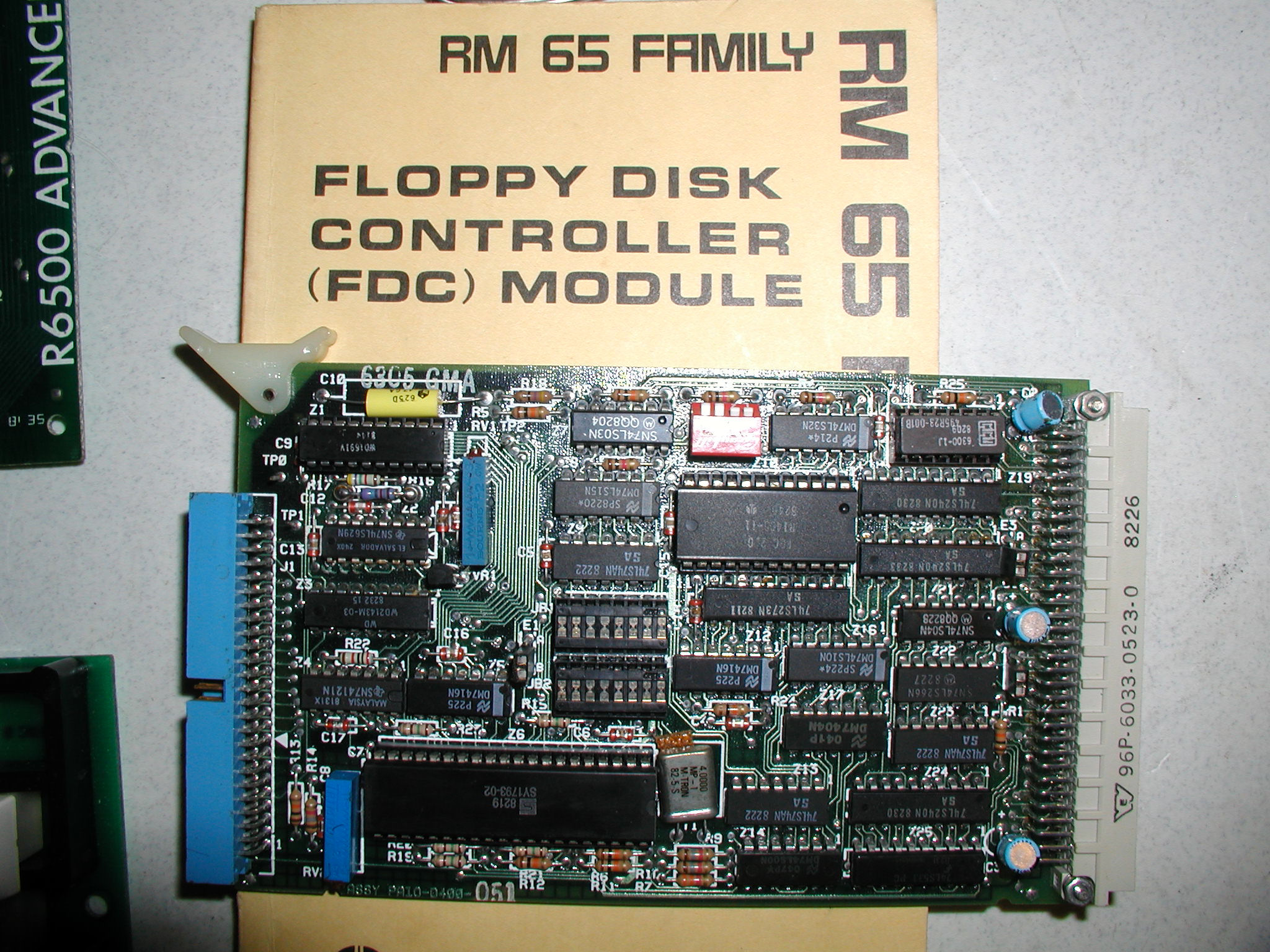
RM 65 Floppy Disk Controller Module
RM65 8K Static RAM Users Manual
RM65 16K PROM ROM Module Users Manual
RM65 32K Dynamic RAM Module Users Guide
RM65 General Purpose Input Output and Timer Module Users Manual
RM65 Run-time BASIC Users Manual
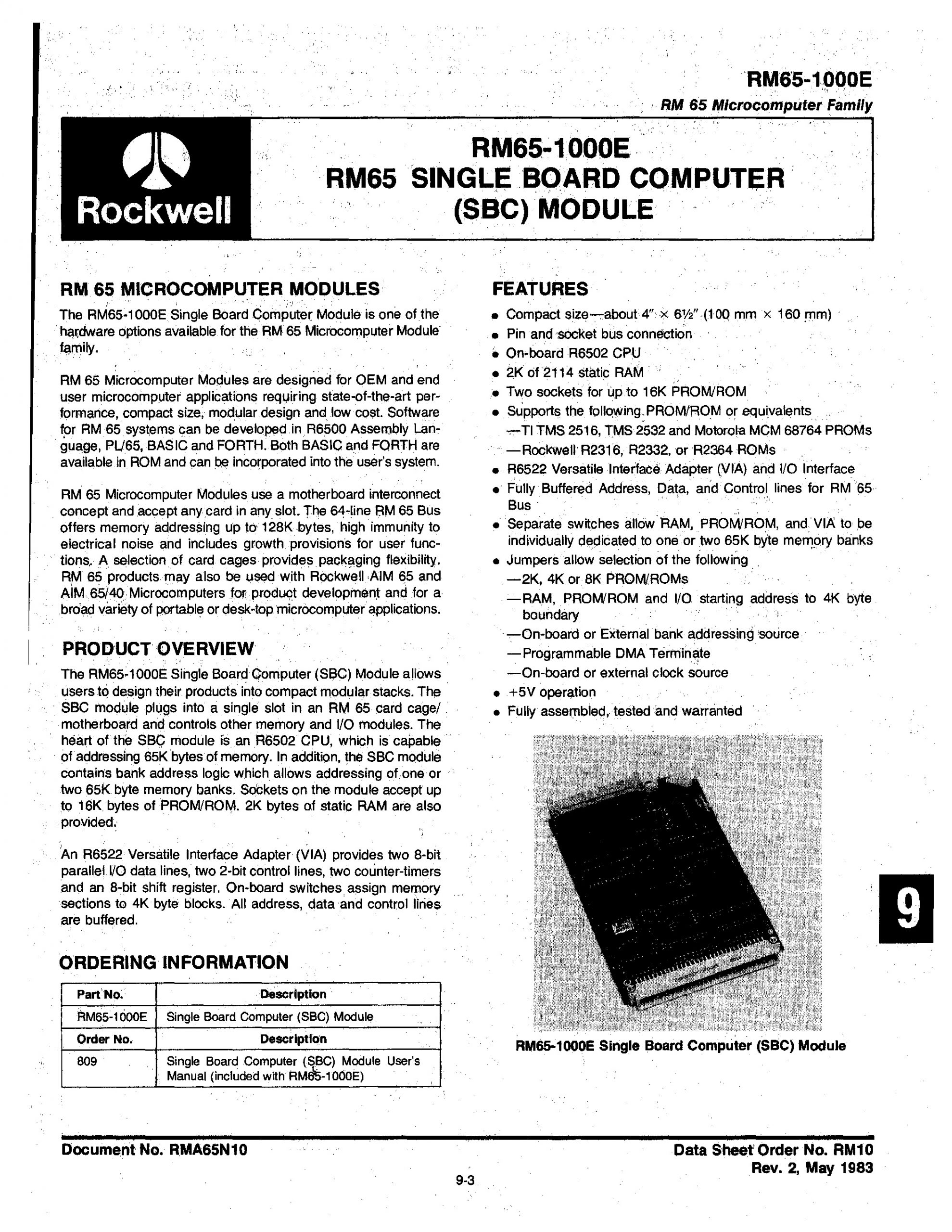
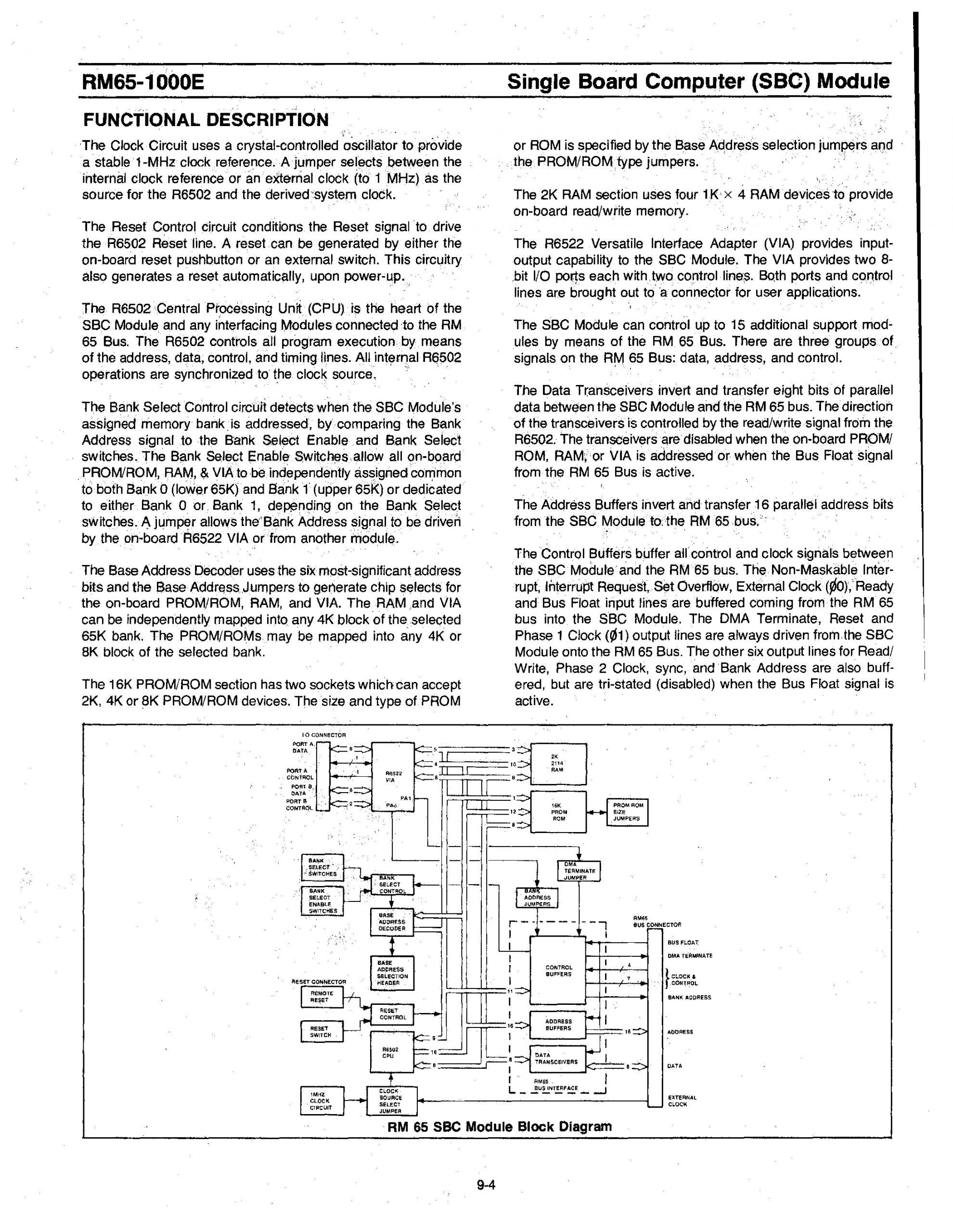
RM65 Single Board Computer (SBC) Module Users Guide
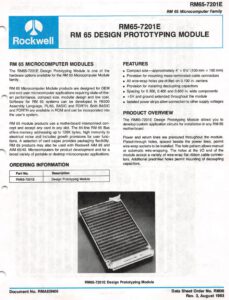
RM65-7201E Design Prototyping Module
FDC Module user’s manual
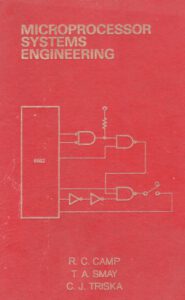
Microprocessor Systems Engineering
R.C. Camp, T.A. Smay, C.J. Triska
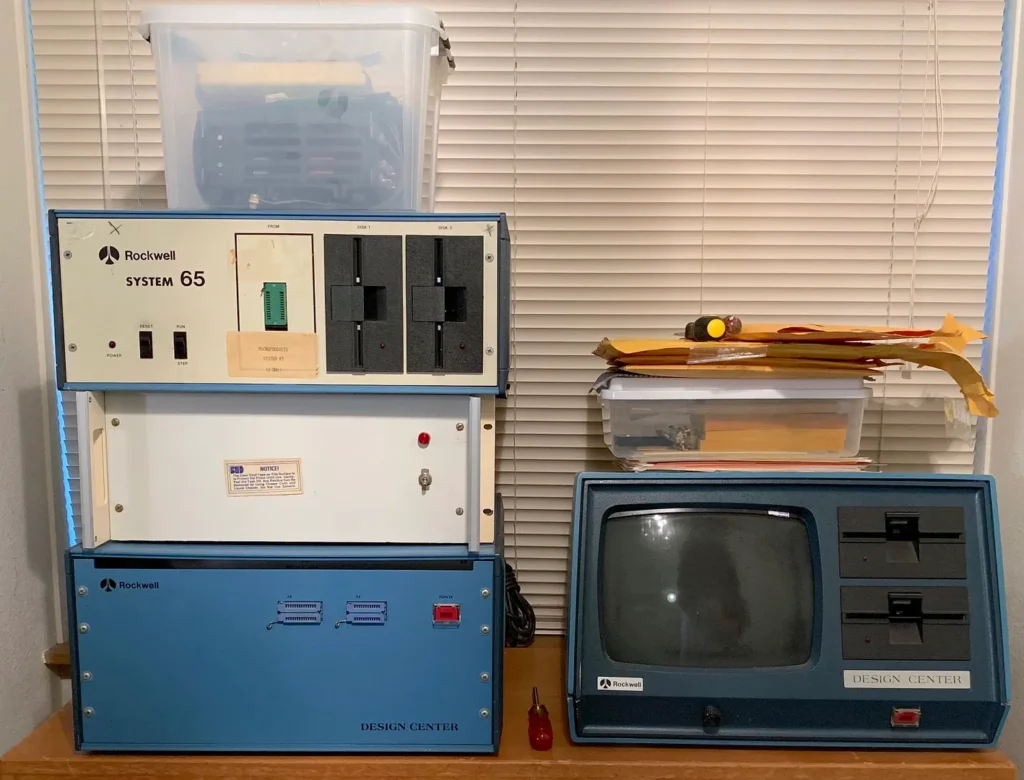
AIM 65 System 65 parts


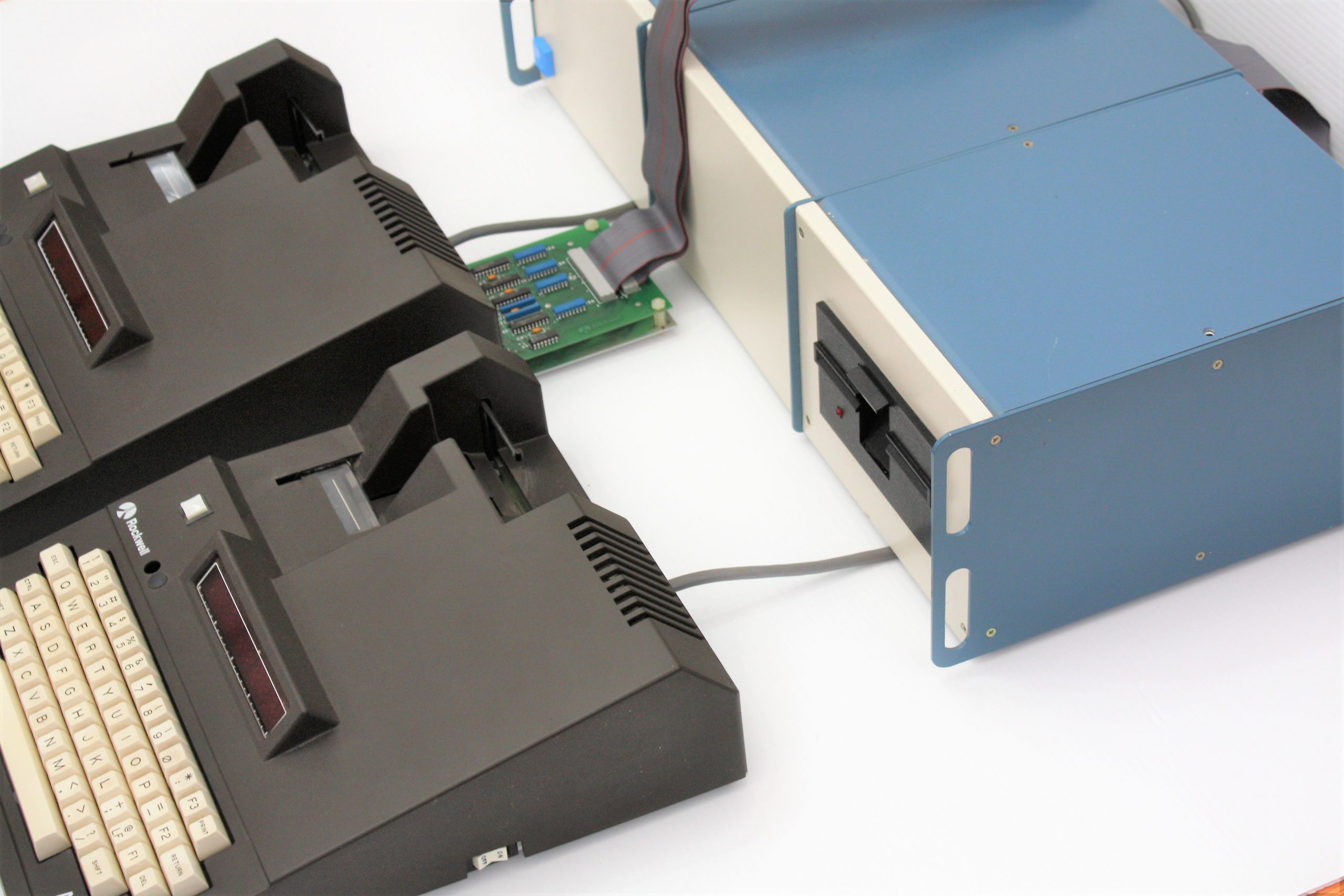
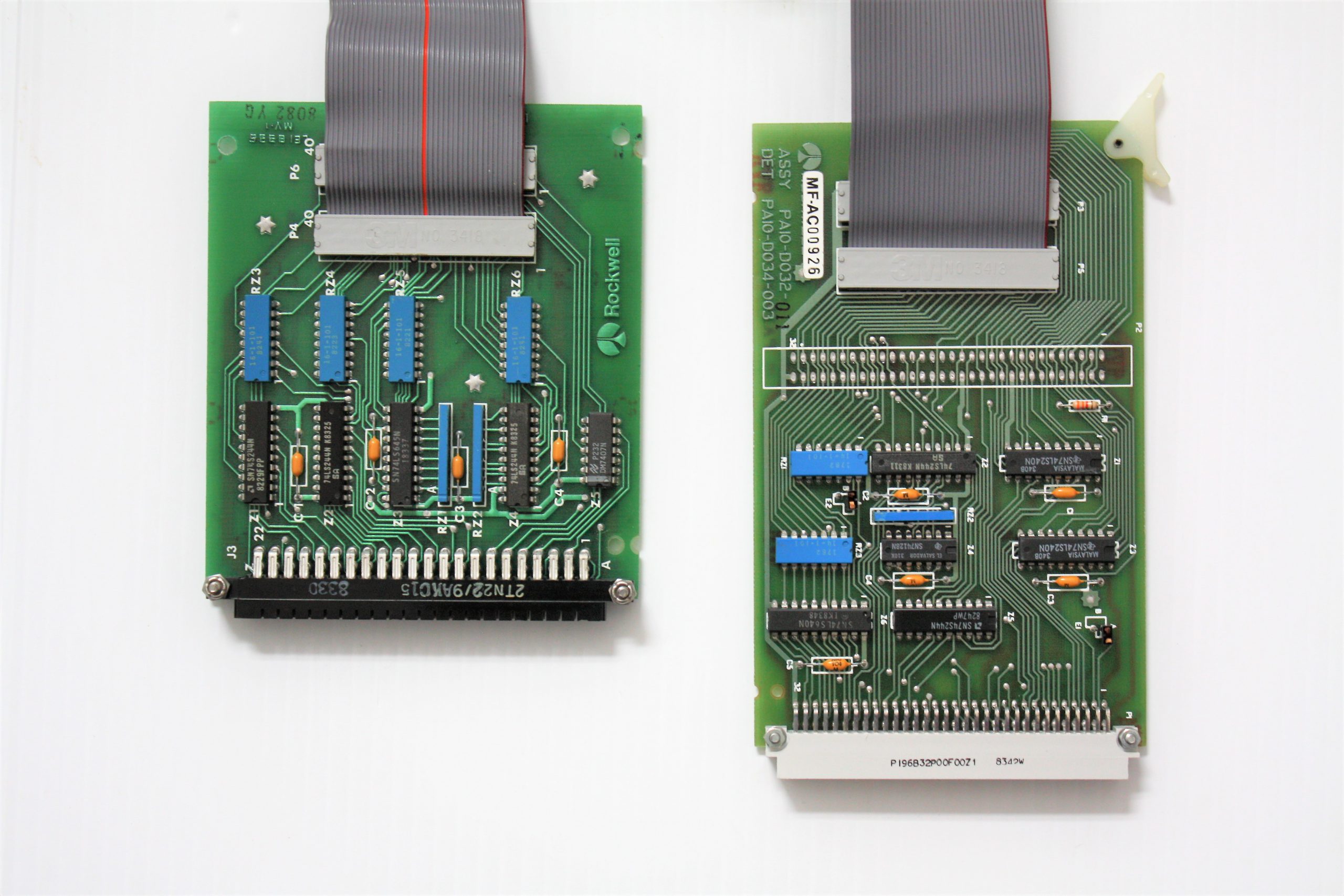
Photos from VintageComputer.ca

Development System

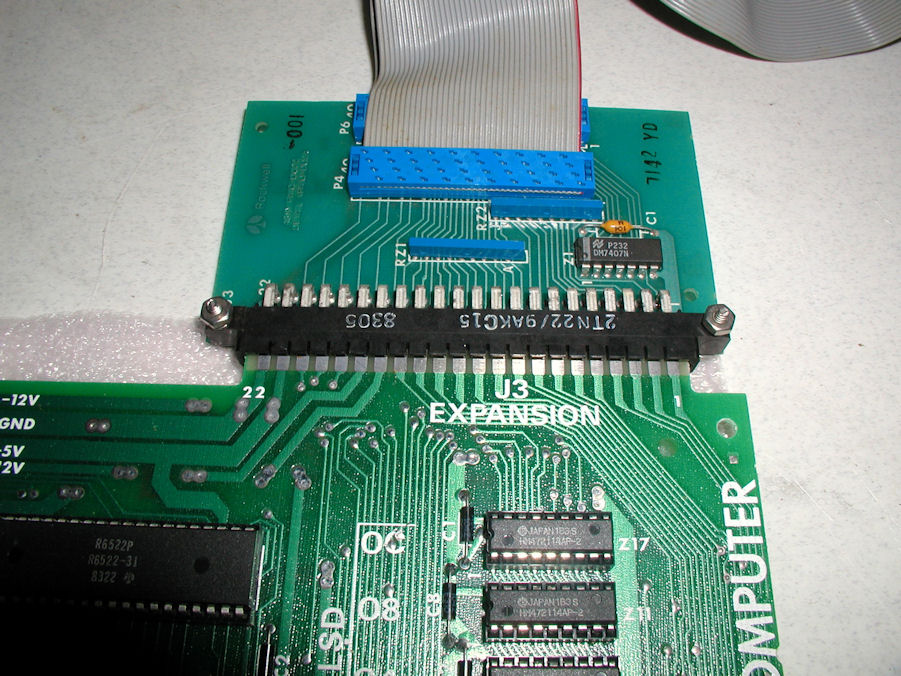
RM 65 to AIM 65 Interface card

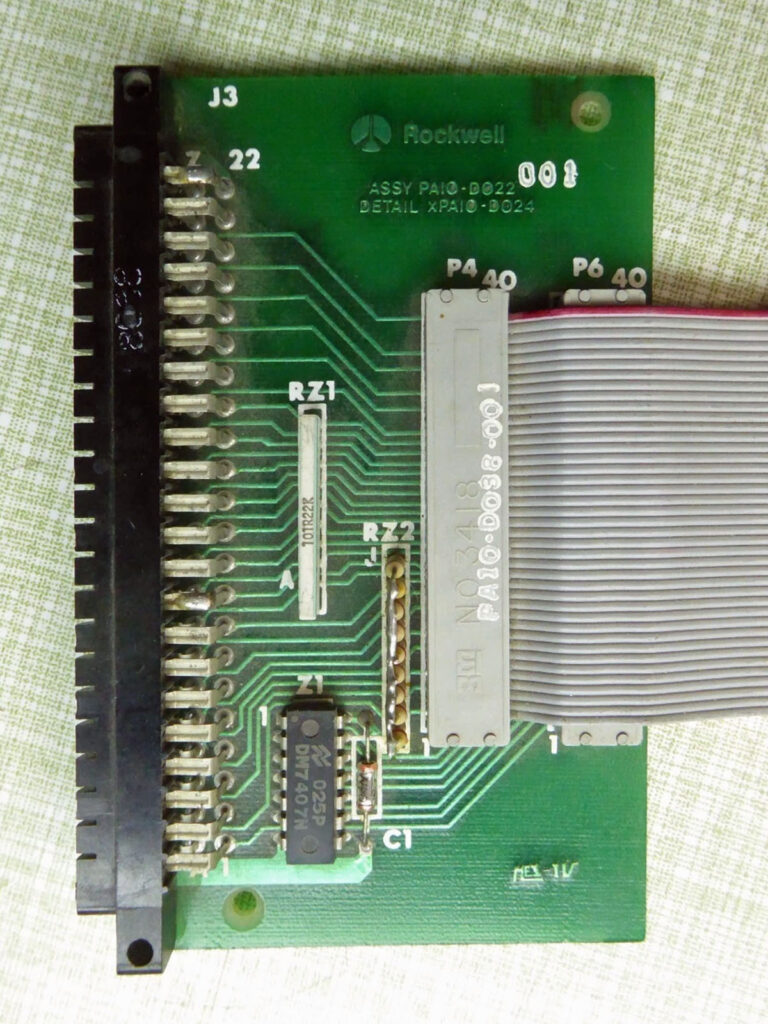
RM65 interface on AIM 65 expansion connector

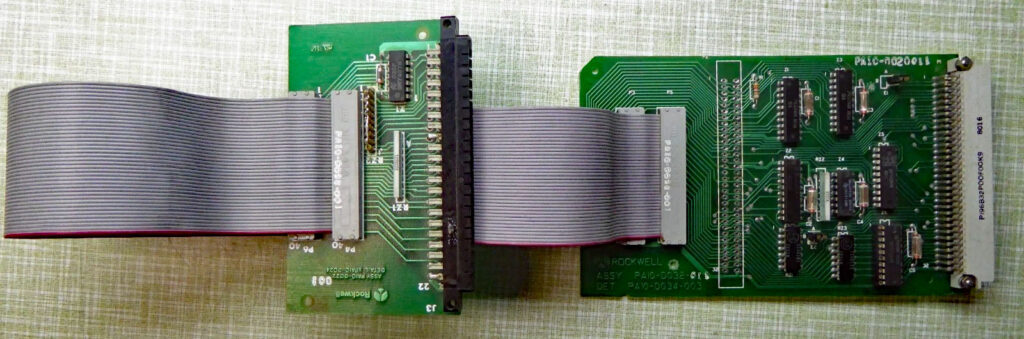
Interface card between RM65 and AIM 65

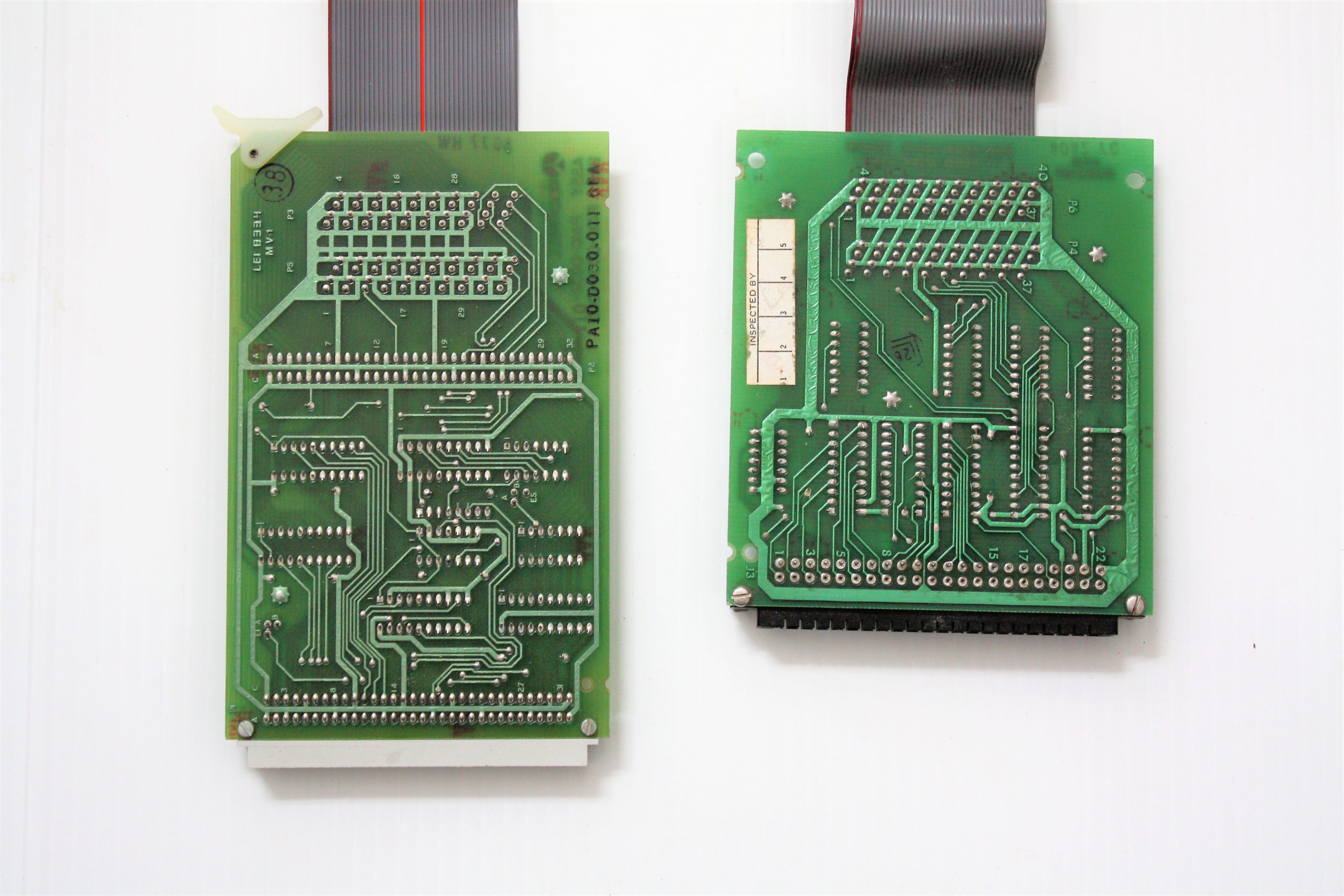
General Purpose I/O Timer interface

Rear of General Purpose I/O Time interface card

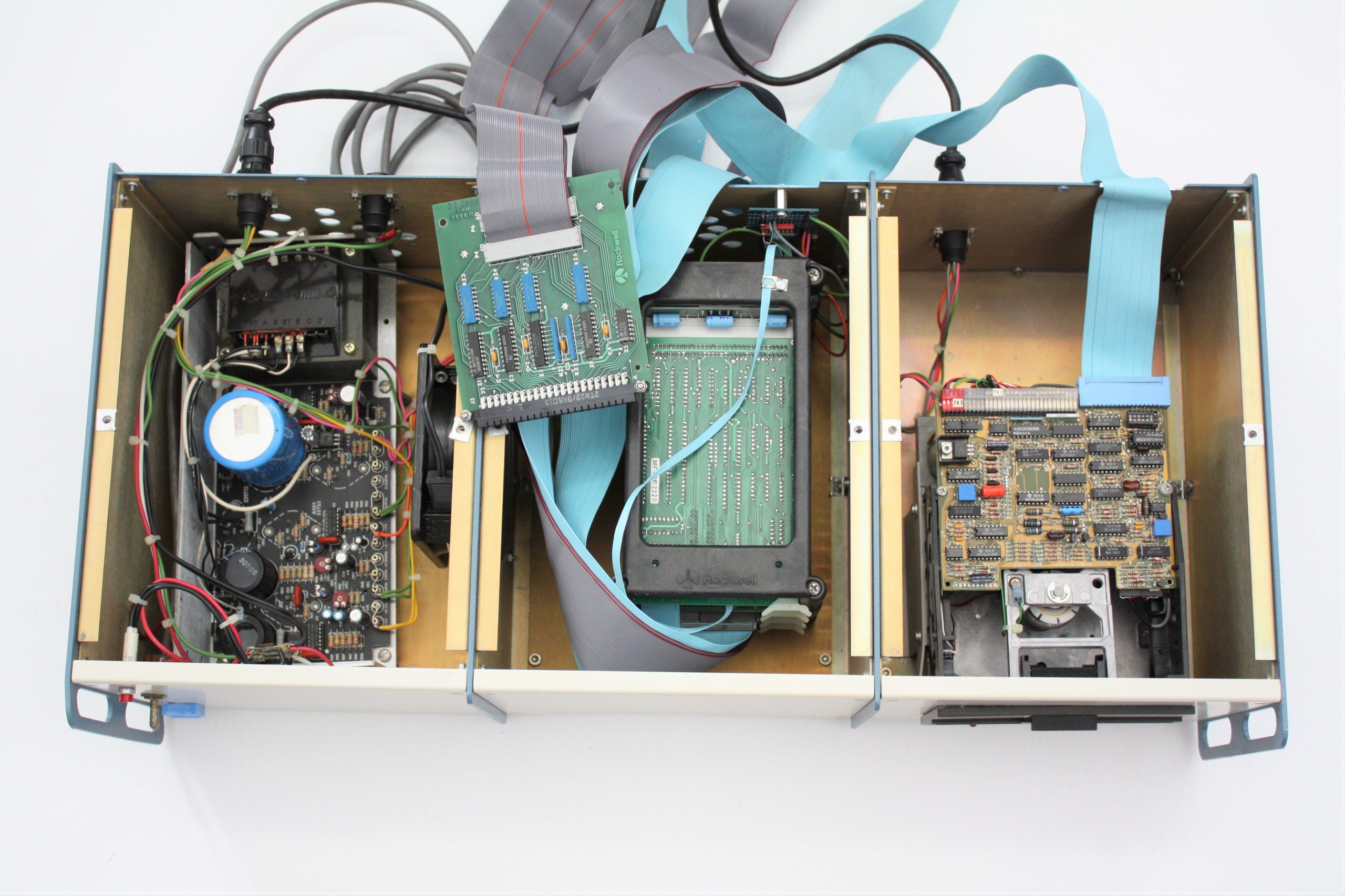
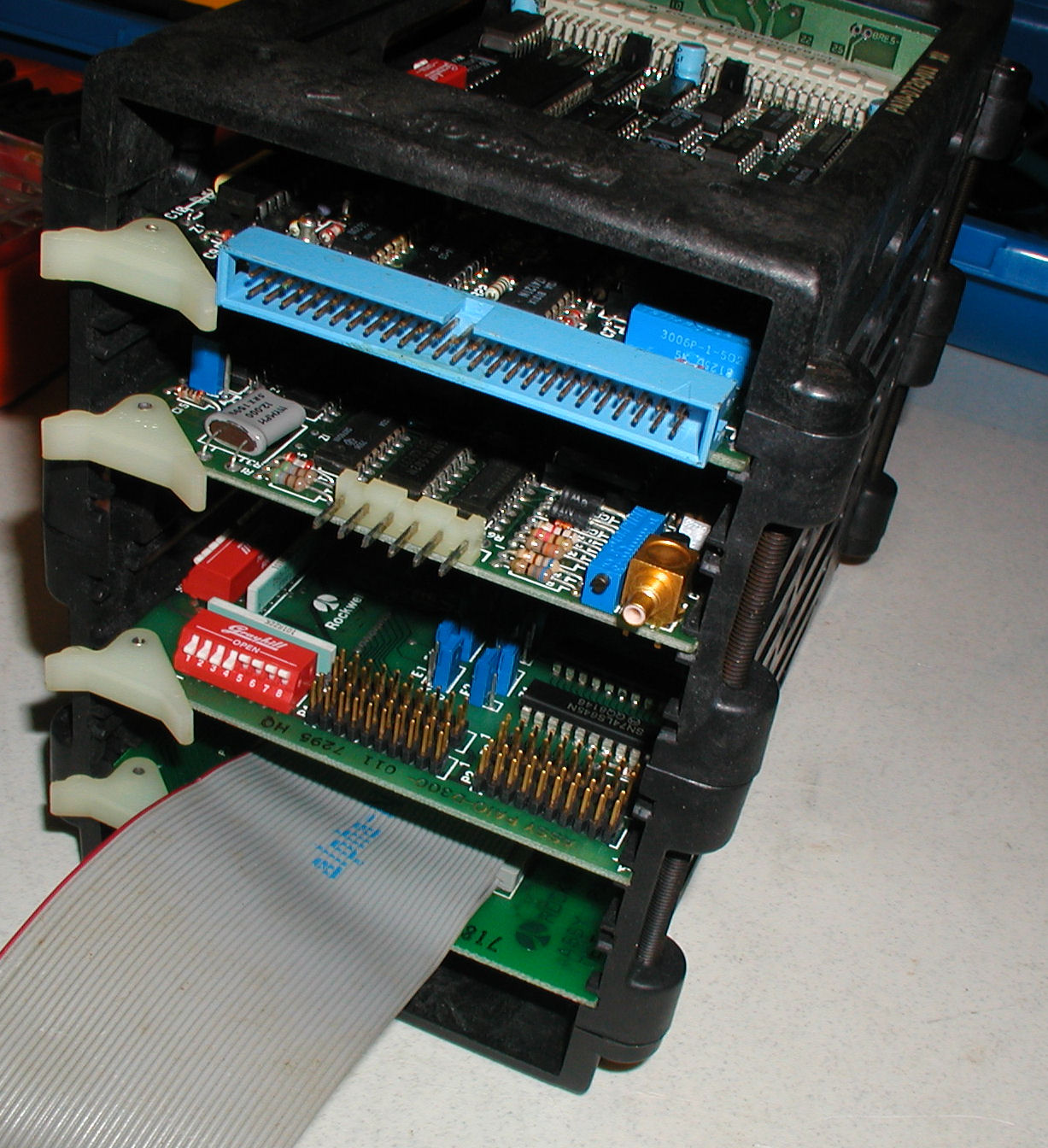
RM65 top

Cage with cards

CRT Controller

FDC Controller

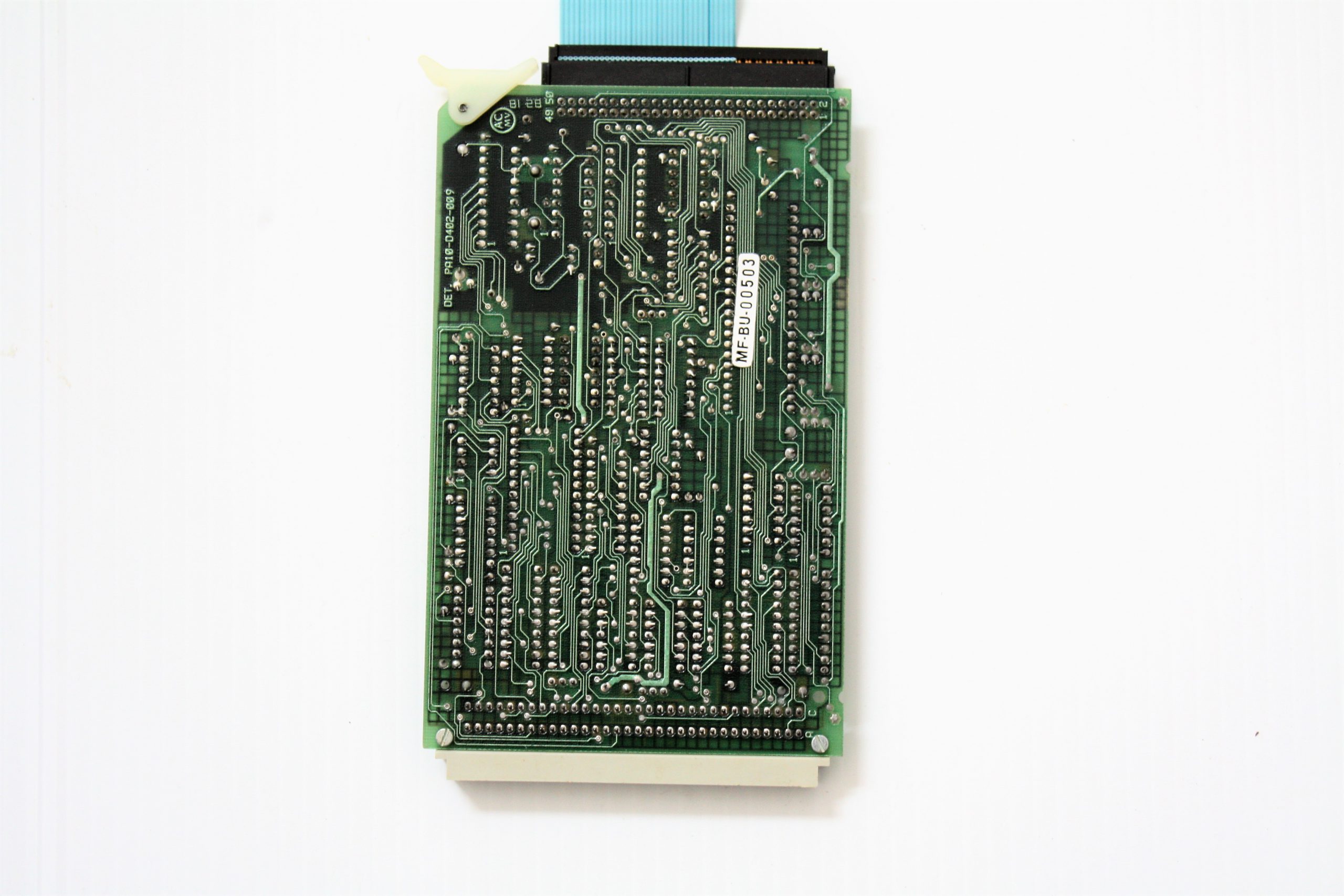
Rear of Floppy disk interface card

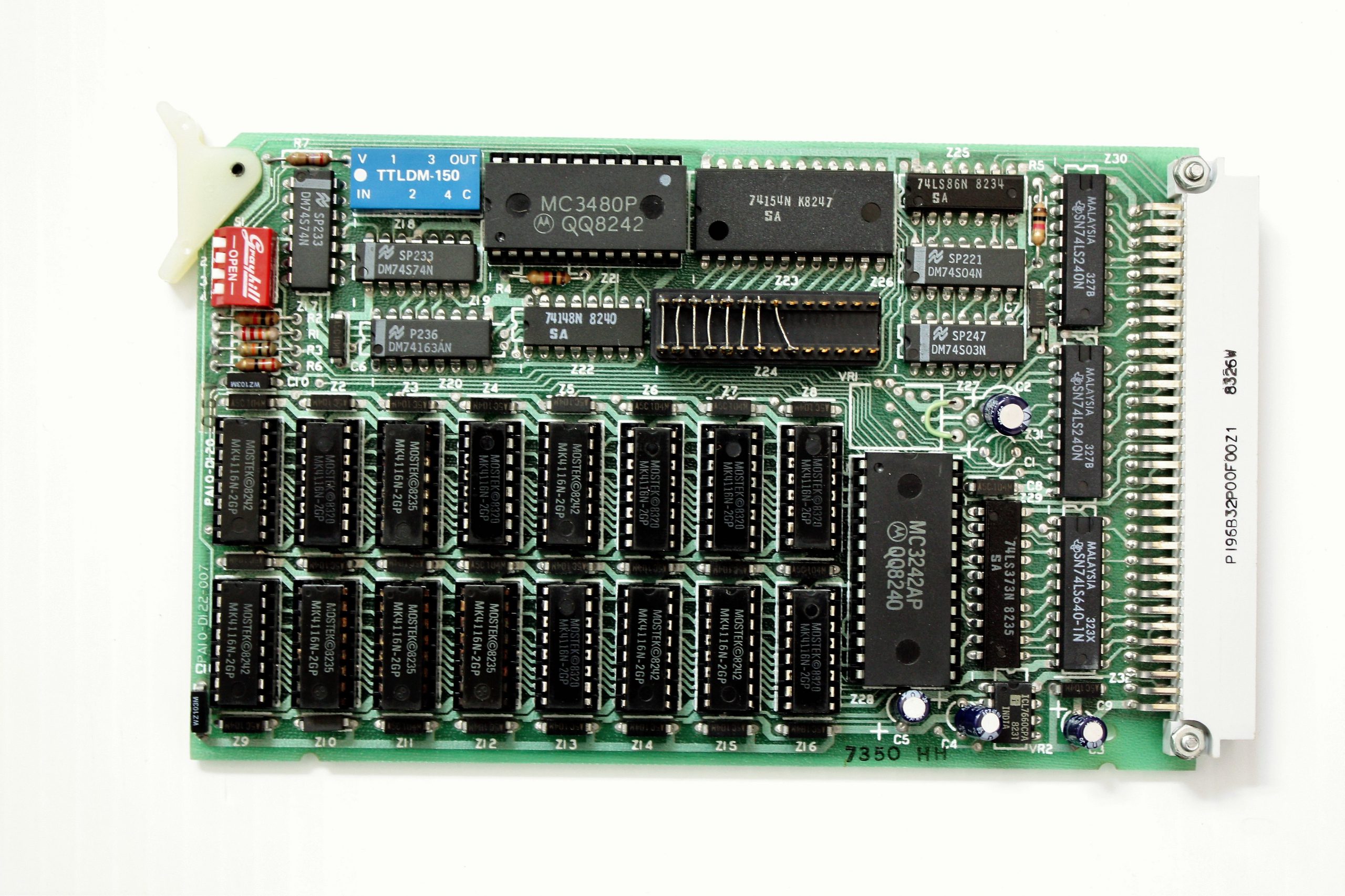
32K RAM Memory card

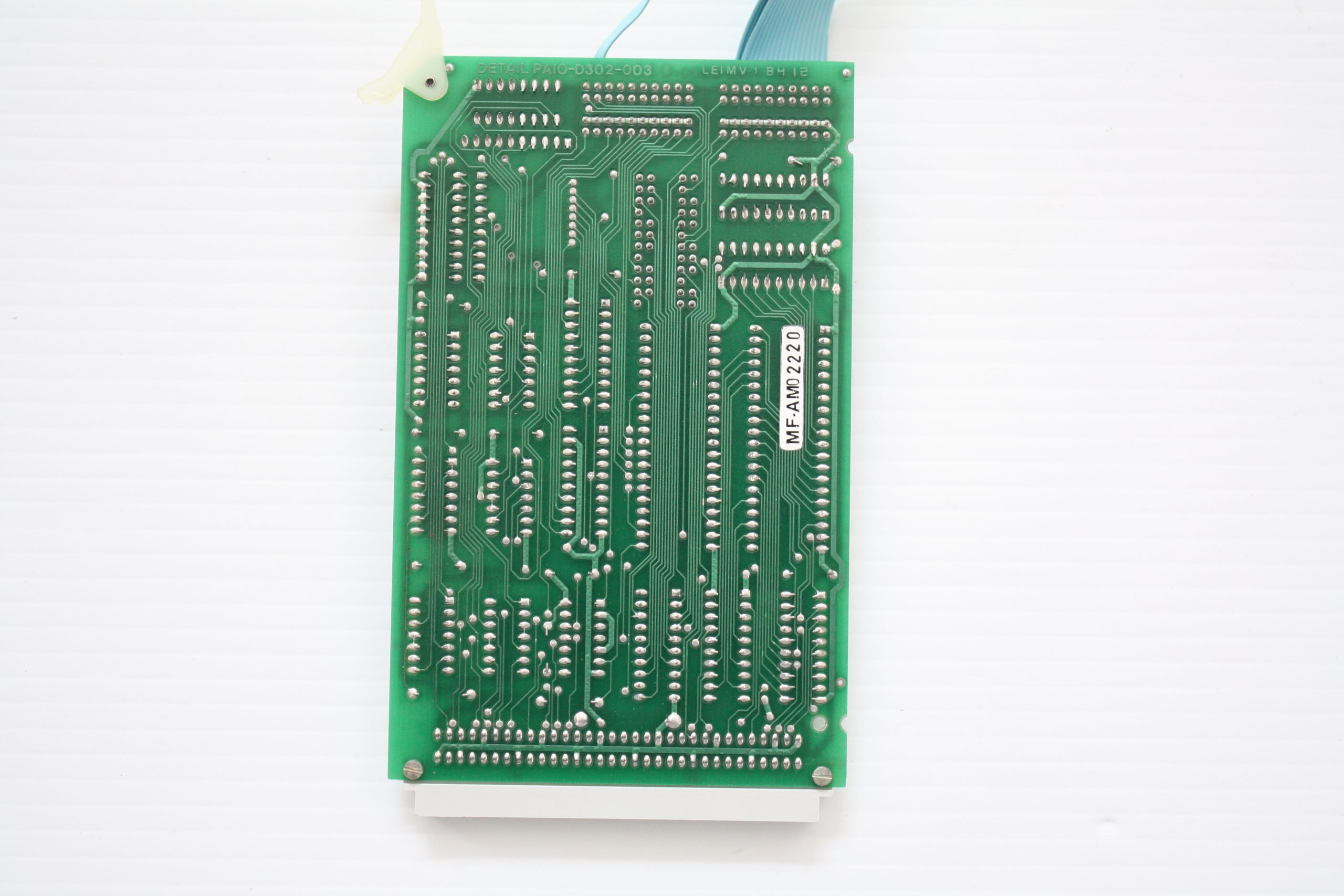
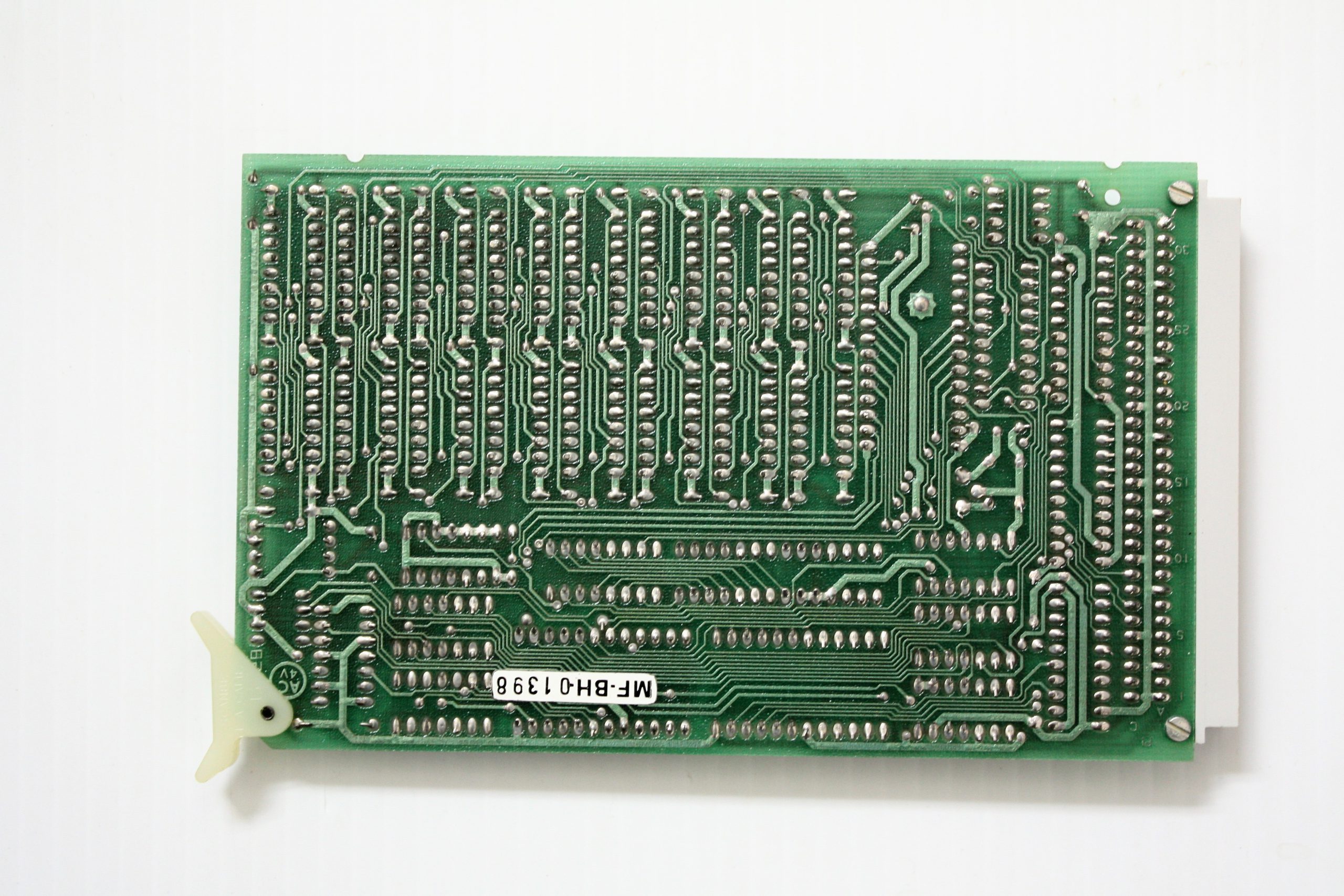
Rear of 32K RAM memory card

post

My AIM 65s

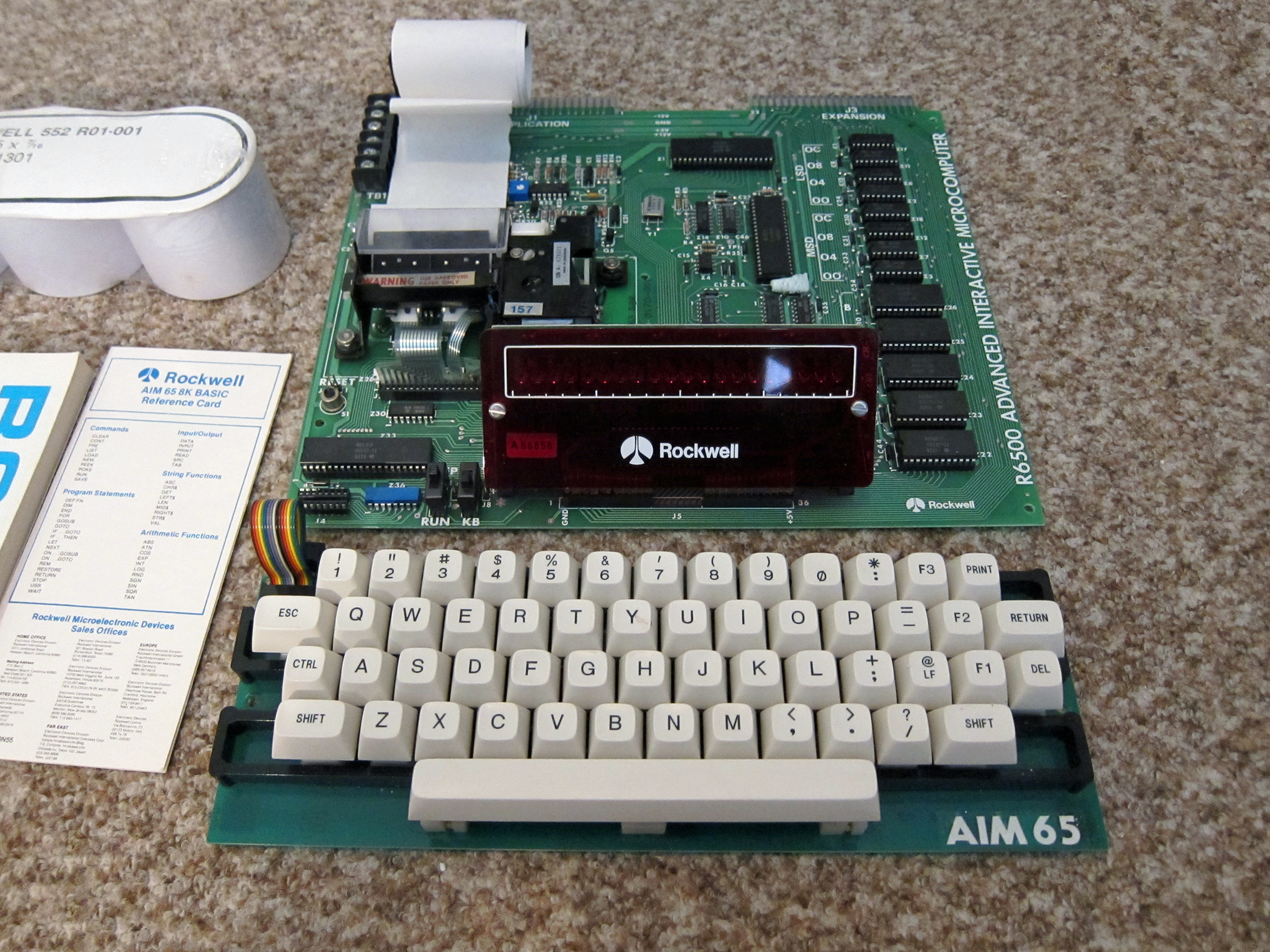
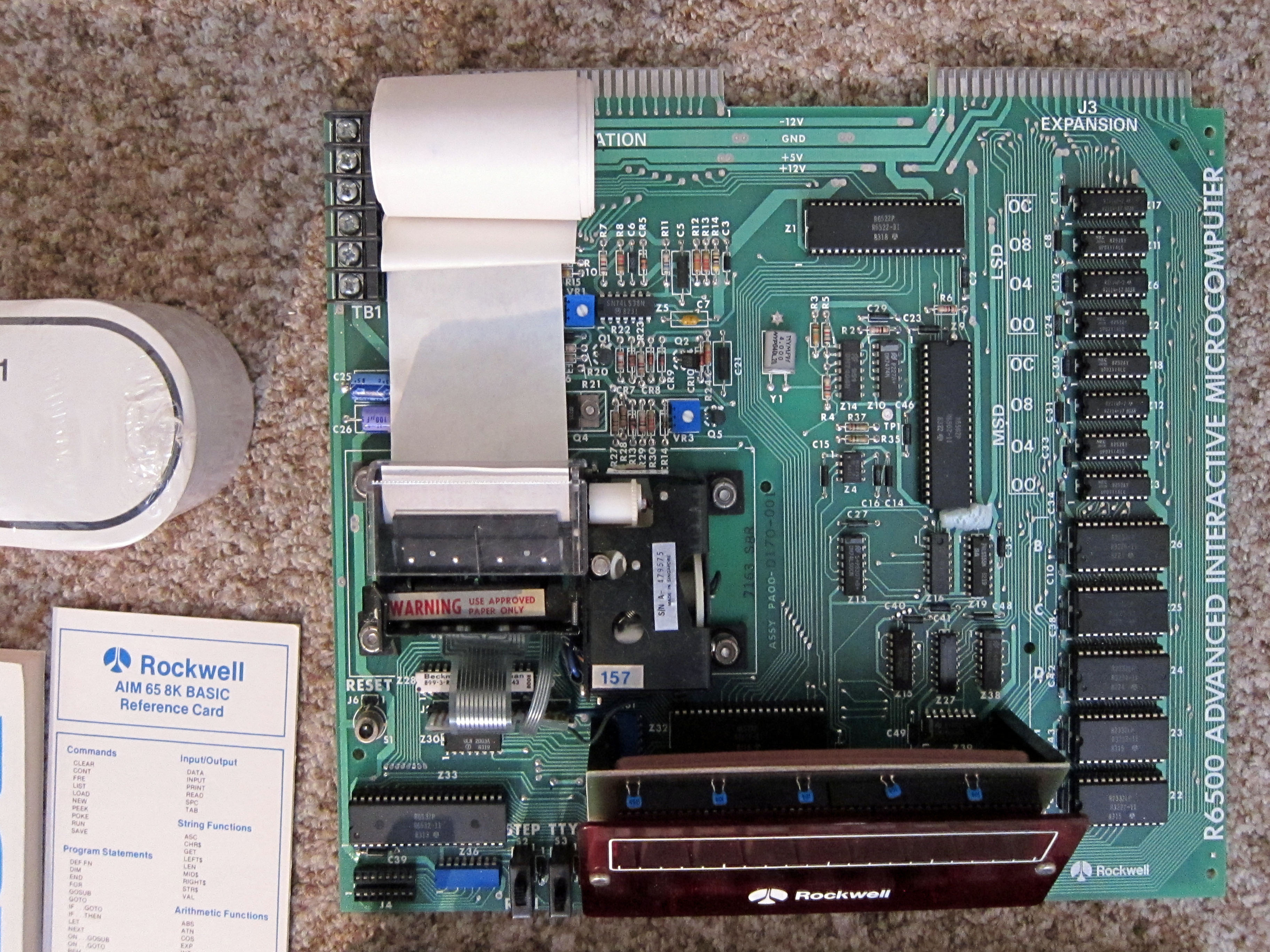
My current AIM 65

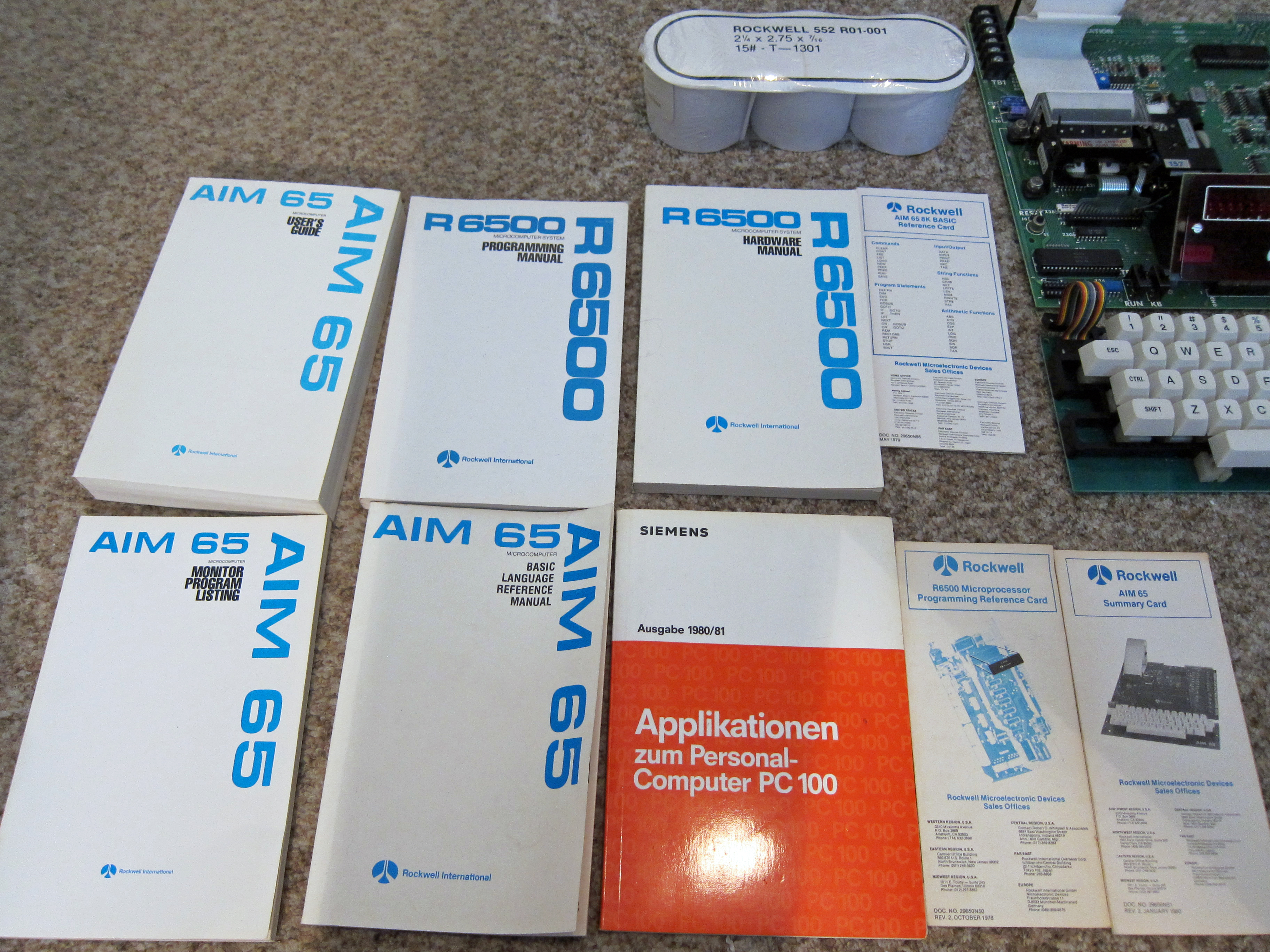
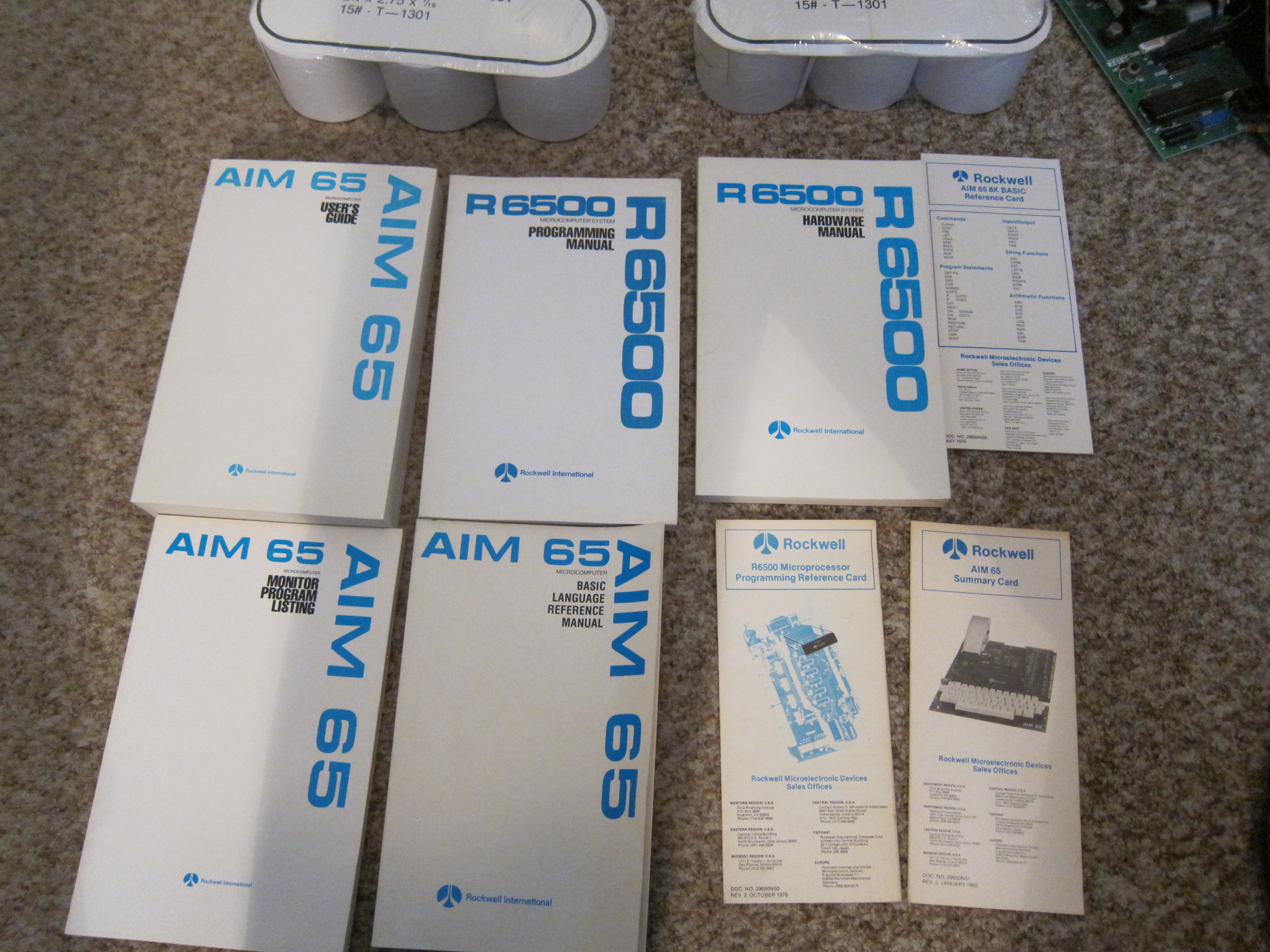
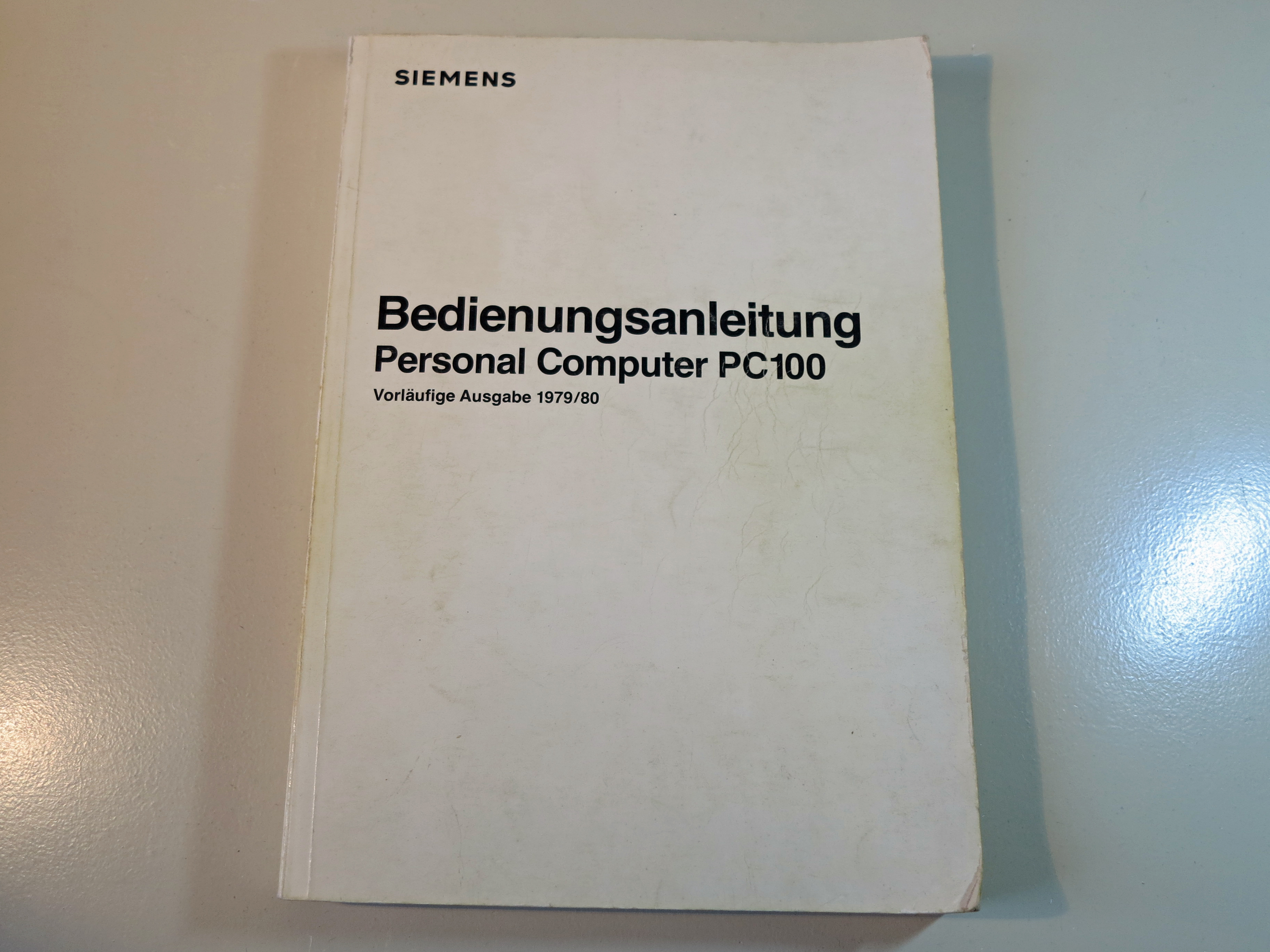
My (former) AIM 65 collection, a PC100 Siemens OEM with custom software and a German manual, and a stock AIM 65 with full documentation.


AIM 65 Rockwell Hardware

Application Notes, datasheets, other articles

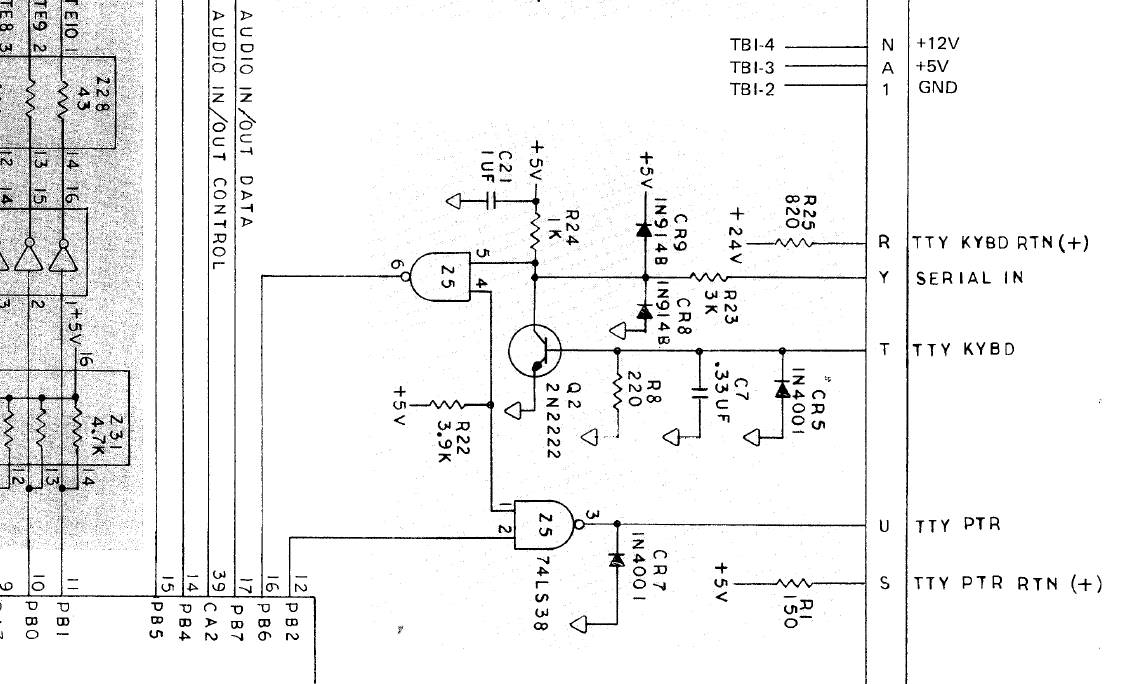
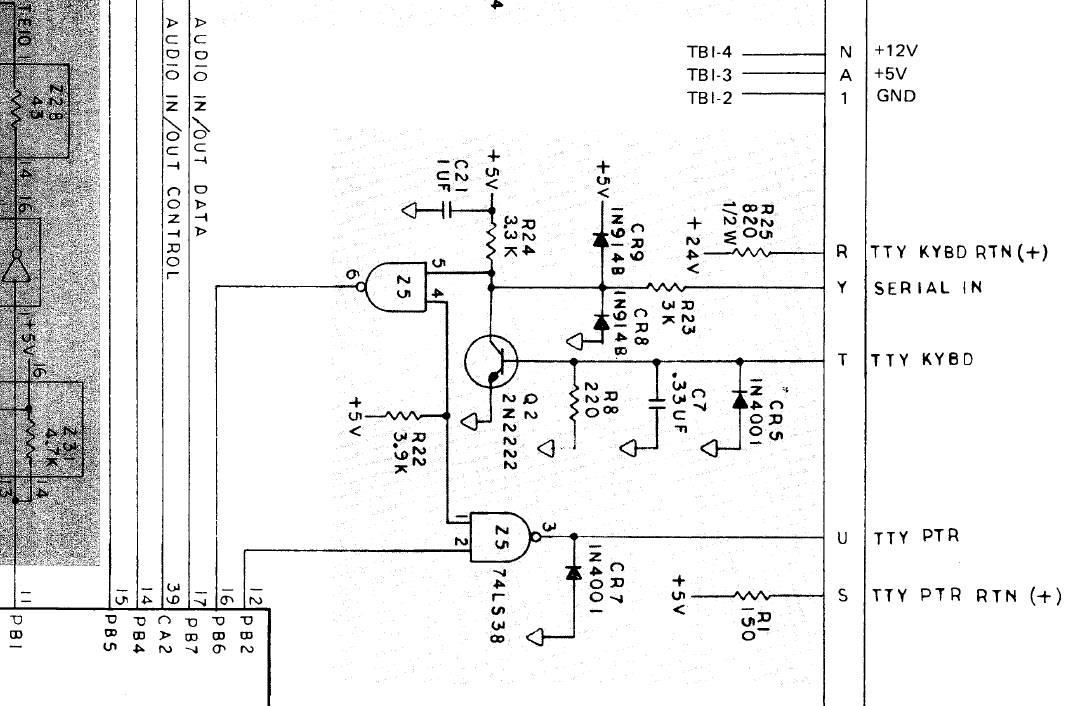
RS-232C Interface for AIM 65
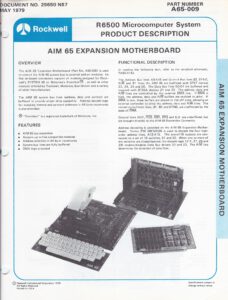
AIM 65 Expansion Motherboard
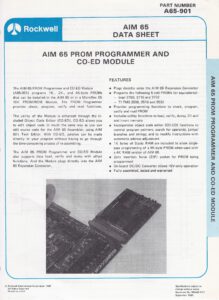
AIM 65 PROM Programmer and CO-ED
AIM-65 CRT Monitor or TV interface
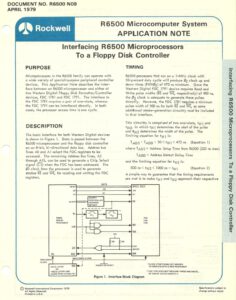
Interfacing R6500 to Floppy Disk Controller
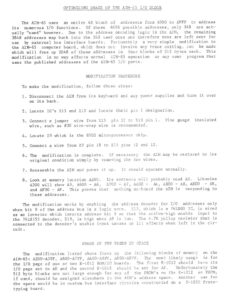
Optimzing usage of the AIM 65 I/O block
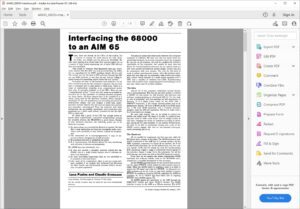
Interfacing the 68000 to an AIM 65
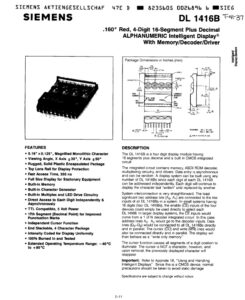
DL1416B_datasheet
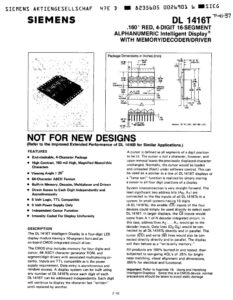
DL1416T datasheet
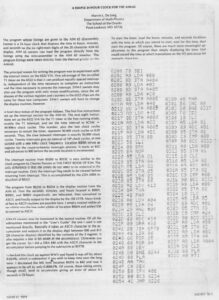
A simple 24 hour clock for the AIM 65
Micro March 1979

Errata of the simple 24 hour clock for the AIM 65
Micro March 1979
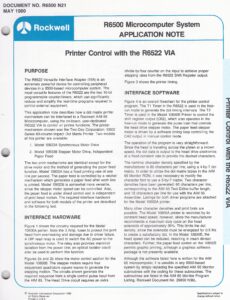
Printer Control with the R6522 VIA
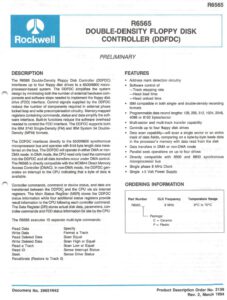
R6565 Floppy Disk Controller Double Density
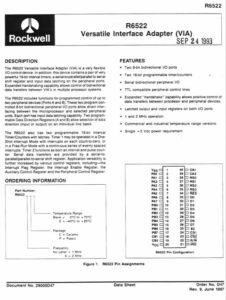
Rockwell R6522 VIA datasheet
Serial AIM 65 rev1
Serial AIM65 rev2
AIM 65 enclosure

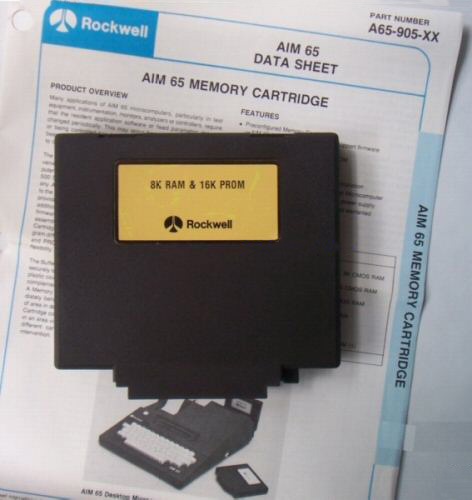
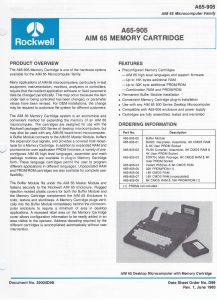
Rockwell AIM 65 MEMORY CARTRIDGE

(Part No. A65-905-08) with 8K CMOS RAM (4x2K) and four sockets for 4 x 4K PROM/ROM for use with the Rockwell packaged 500 Series of desktop microcomputers or any AIM 65 board-level microcomputer with Buffer Module. Document No. 29000D98

Many applications of AIM 65 microcomputers, particularly in test equipment, instrumentation, monitors, analyzers or controllers, require that the resident application software or fixed parametric data be changed periodically. This may occur because the item under test or being controlled has been changed, or parameter values have been revised. For OEM installations, the change may be required to customize the system (or different customers).
The AIM 65 Memory Cartridge system is an economical and convenient method for expanding the memory of an AIM 65 microcomputer. The cartridges are designed for use with the Rockwell packaged 500 Series of desktop microcomputers, but may also be used with any AIM 65 board-level microcomputer. This Memory Cartridge is ideal to be used for swapping to the Buffer Module needed to connect to the AIM 65 Master Module. This Memory Cartridge has 8K CMOS RAM and the PROM/ROM part is unpopulated for complete user flexibility.
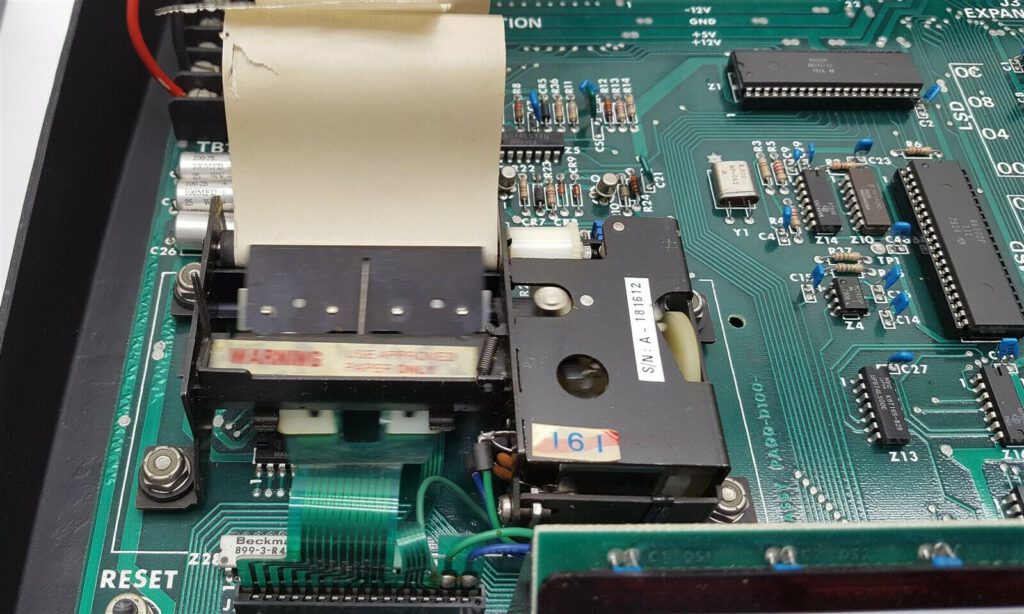
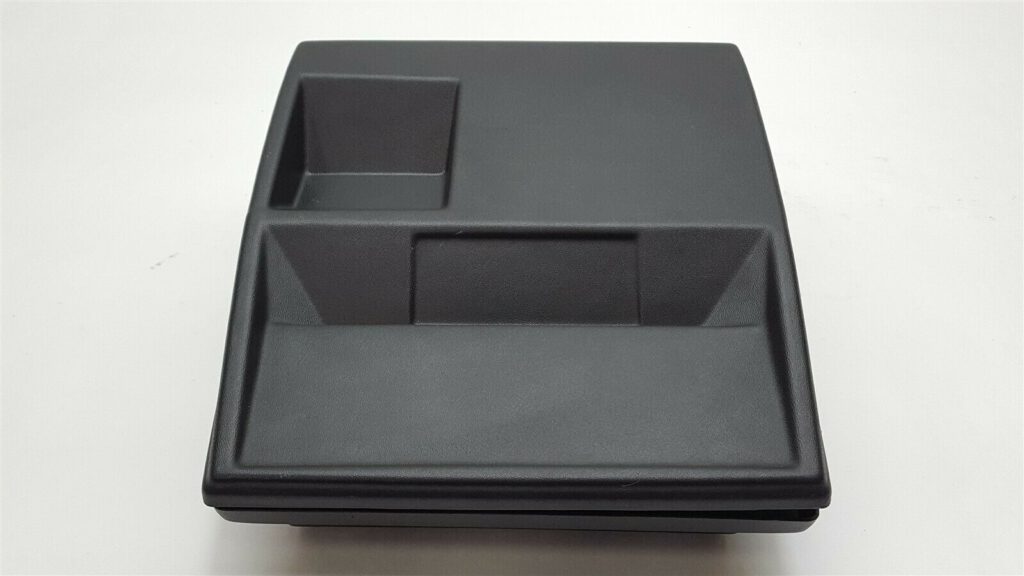
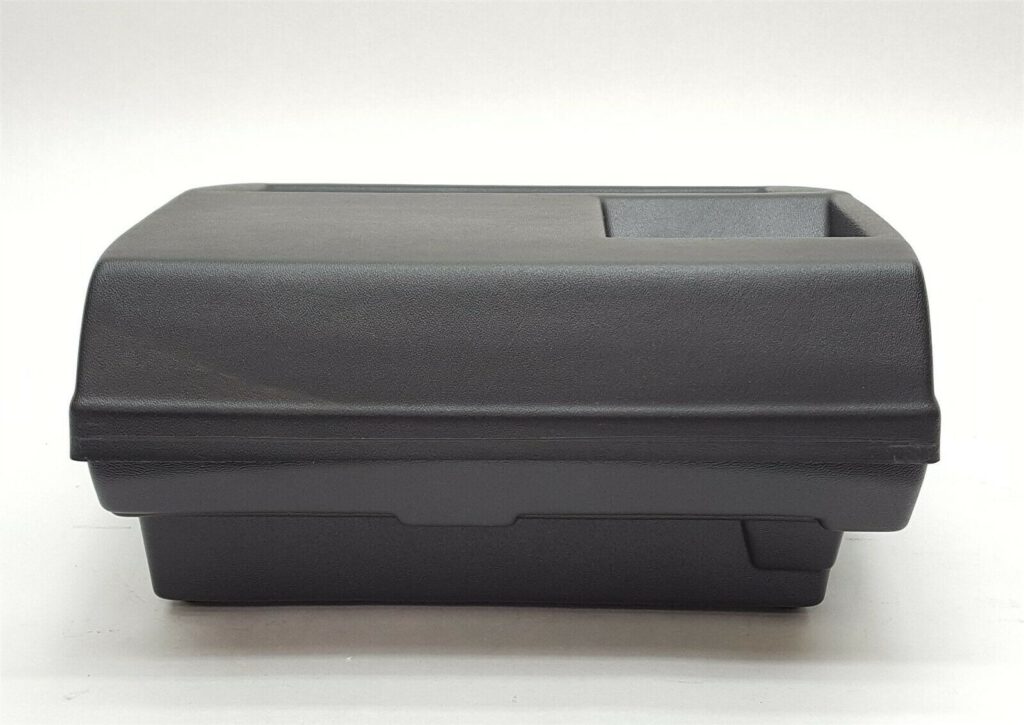
Rugged injection molded plastic covers the Memory Cartridge complementing the AIM 65 Enclosure in color, texture and sturdiness. A Memory Cartridge plugs vertically into the Buffer Module which is needed immediately behind the microcomputer enclosure to require a minimum of area in desktop applications. A recessed label area on the Memory Cartridge cover allows configuration information to be neatly added in an area visible to the operator (see picture). Address decoding required by the different cartridges is accomplished automatically without user intervention.

Features:
• Preconfigured Memory Cartridge Combination RAM and PROM/ROM sockets
• Convenient Memory Cartridge plug-in installation to Buffer Module (needed)
• Use with any AIM 65 500 Series Desktop Microcomputer
• Compatible with A65-006 enclosure and power supply
• Cartridges are fully assembled and tested

AIM 65 Memory Cartridge

Bubble Memory Products

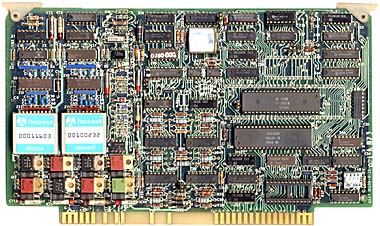
AIM-65 Single board bubble memory system
Bubble memory R3288-11 ROM
post

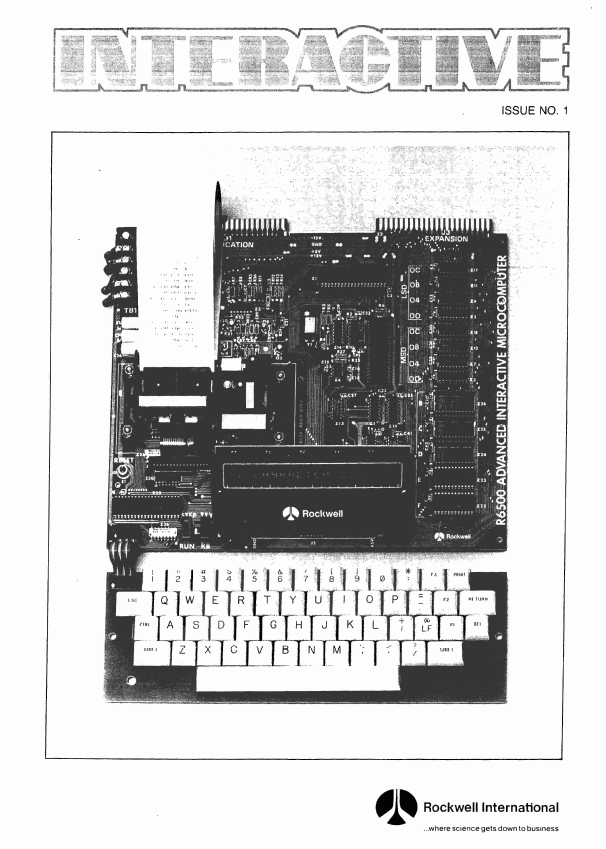
Interactive newsletter

Newsletter, published by Rockwell, with as editor the well known Eric Rehnke. Last issue april 1982.

Interactive Issue 1
Interactive Issue 2
Interactive Issue 3
Interactive Issue 4
Interactive Issue 5
Interactive Issue 6
Interactive Issue 7
Interactive Issue 8

AIM 65 Manuals

Datasheet AIM 65 A65-100 A65-400
User’s Guide
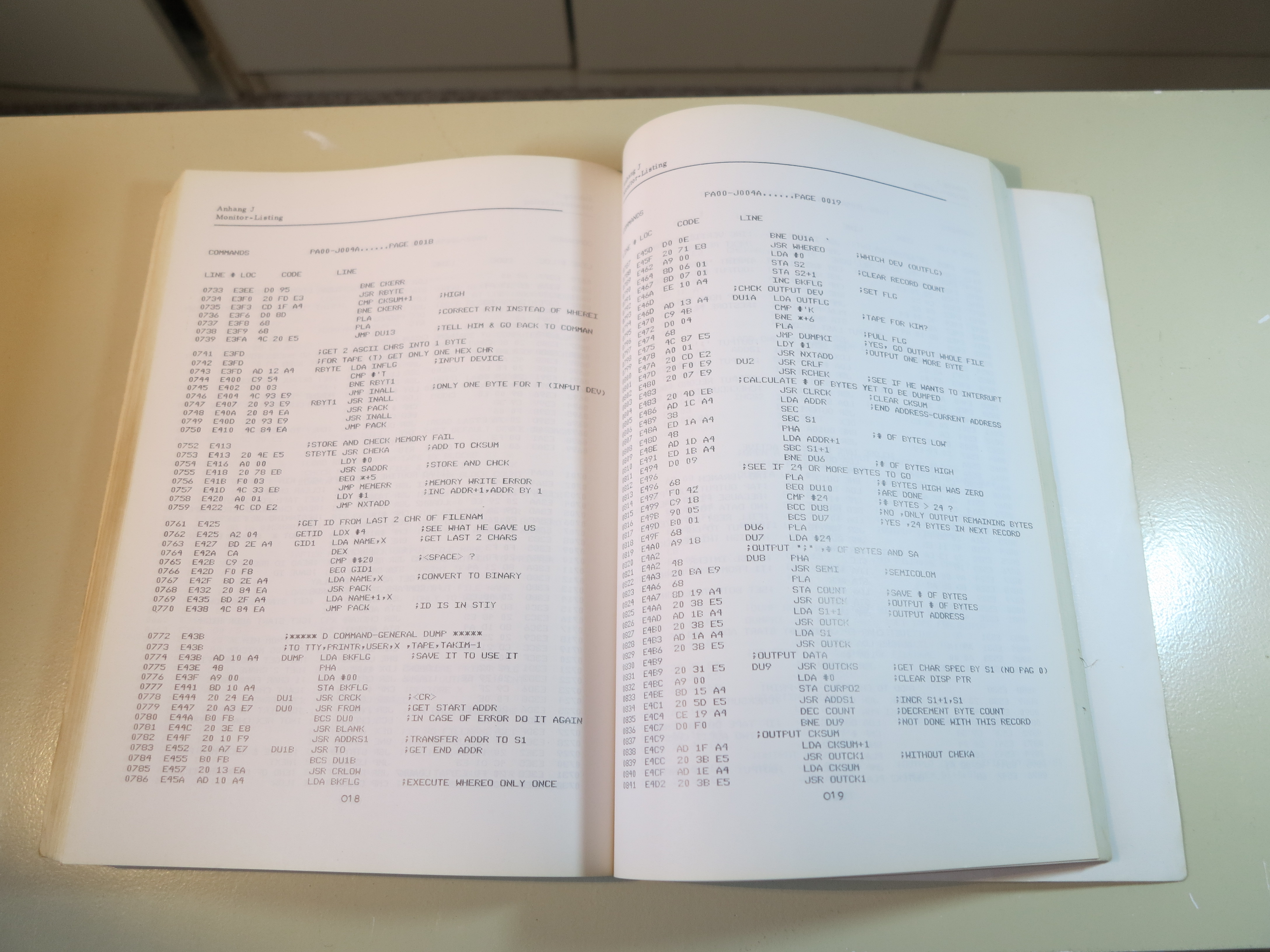
Contains the monitor, Editor and Assembler ROM functionality, see also below for Monitor listings, and the ROM page for sources
User’s Guide corrections
Programming Manual
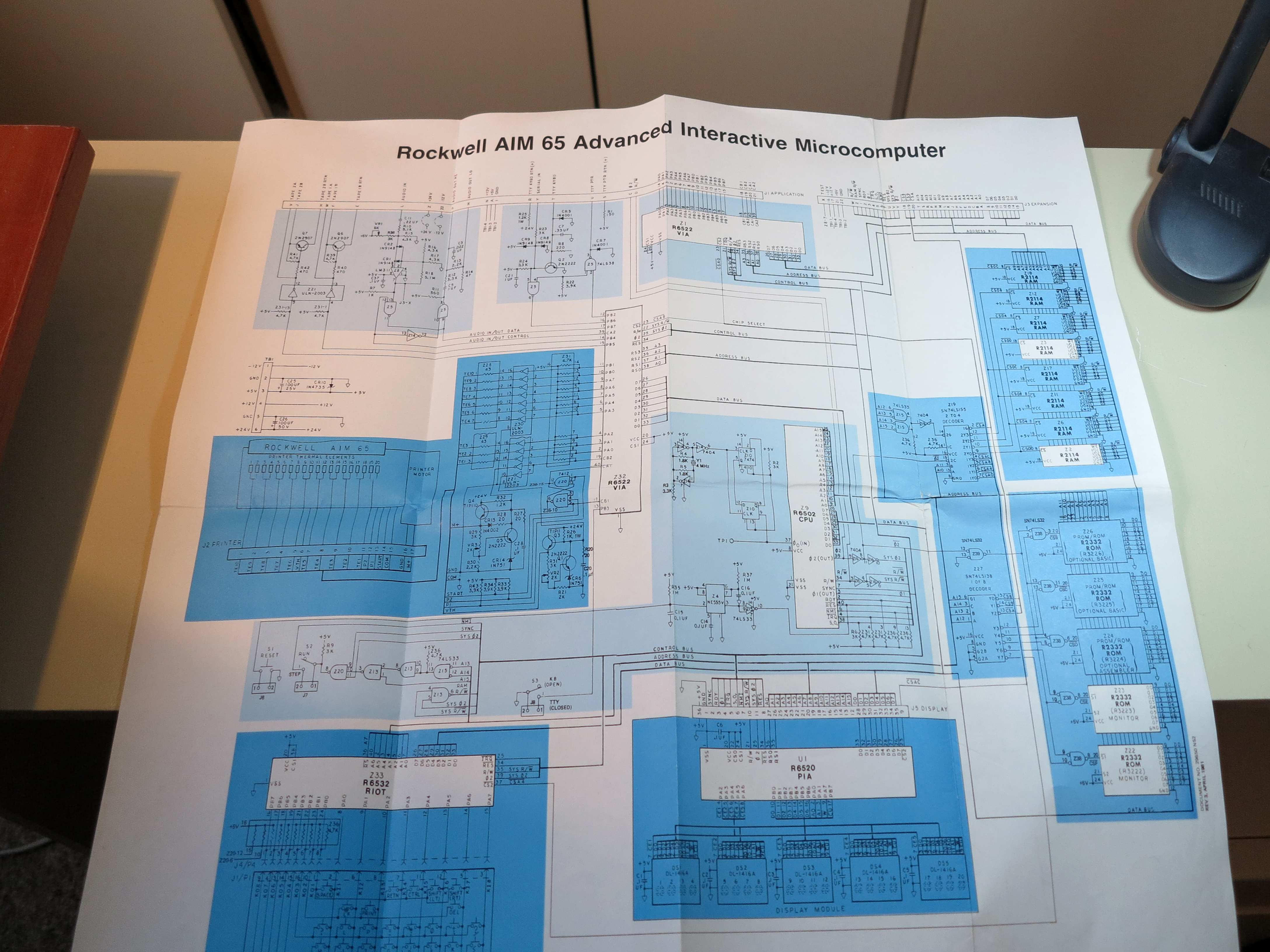
Hardware Manual
Siemens Personal Computer PC 100 Bedienungsanleitung,
Ausgabe 1981/1982
Applikationen zum Personal Computer PC100
Ausgabe 1980/81
Assembler Handbuch 1979/80
Assembler Handbuch 1980/81
Monitor-Editor-Betriebssystem
PC100 Bedienungsanleitung 197/80
Personal Computer PC100 Ausgabe 1980/81

Reference cards

AIM 65 8k BASIC Reference Card
MCS6500 Instruction Set Summary
R6500 Microprocessor Programming Reference Card
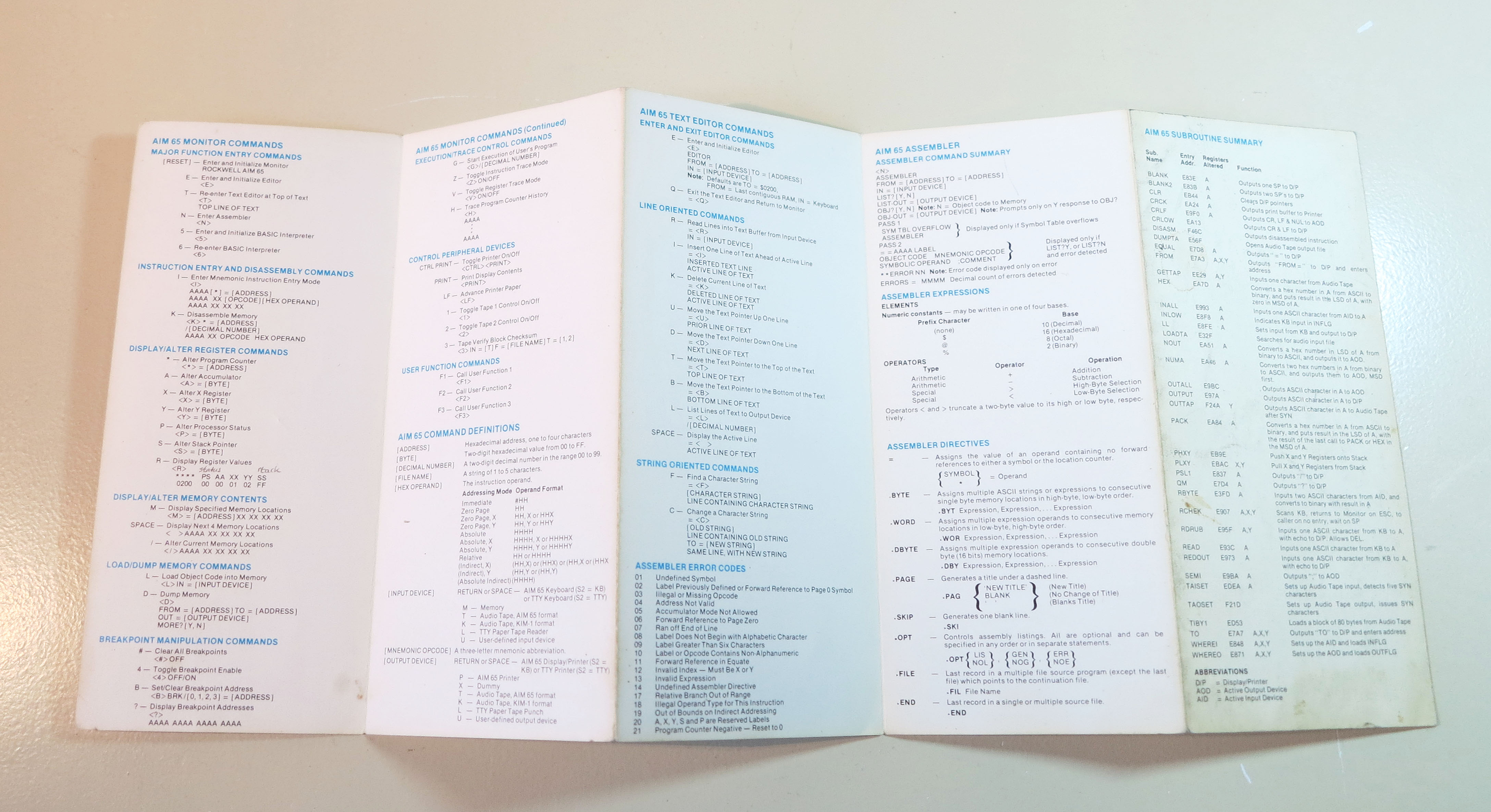
Rockwell AIM 65 Summary Card


PC utilities KIM Simulator Convert hex etc

To aid in the handling of KIM-1 program and dataformats I have written some programs for Windows and Linux (Raspberry Pi), sources included.

Convert 8 bit hex formats
KIM-1 simulator
Pascal-M cross compiler
KIM Tape WAV to BIN conversion
KIM Tape Convert BIN and BIN to WAV
KIMPaper
KIMPoser Tape Convert hex to WAV online

All programs come with source (Free Pascal Lazarus), compiled for Windows but thanks to Freepascal and Lazarus also compiled and tested on Linux (Ubuntu and Raspberry PI OS).

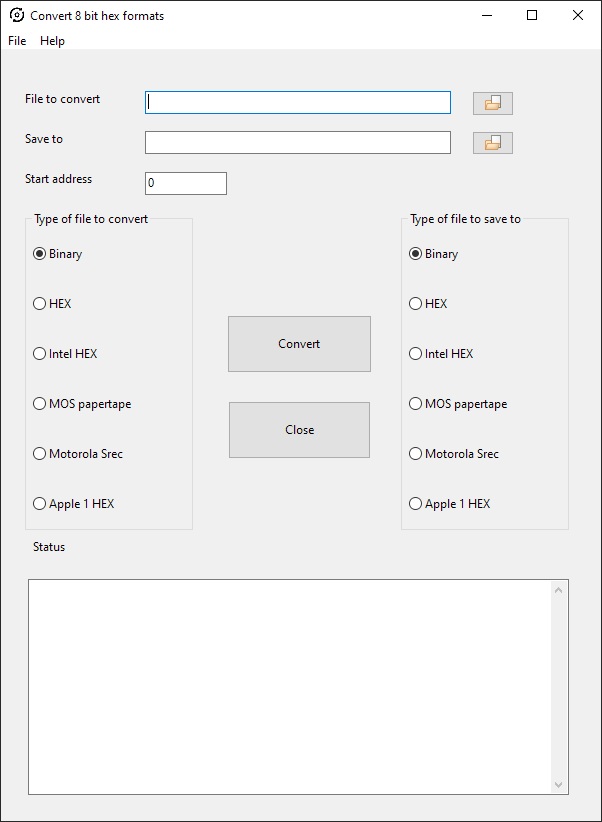
Convert 8 bit hex formats

A general purpose utility to convert common 8 bit hex and binary formats, such as Intel HEX, Motorola S records, MOS Papertape, hex format, and binary files.
Version 2.9, June 2024. Define assembler output and bugfix MOS papertape format, PRG Commodore file format, TIM papertape format

Convert8bithexformat source files (Freepascal Lazarus).
Convert8bithexformat Setup for Windows, Executables for Ubuntu and Raspberry PI OS
Available formats:
– BIN binary, raw data, no formatting, no information on start address.
– HEX formatted as hex numbers raw data, no start address included.
– IHEX Intel hex 8 bit format, multiple memory block, start address included.
– PAP MOS Technology papertape format, multiple memory blocks, start address included.
– SREC Motorola 8 bit S record, contiguous memory block, start address included.
– A1hex Apple Woz monitor hex format, start address included.
– KIM Tape as used in the KIM-1 Simulator as emulation of audio tape files.
– assembler formatted bytes as .byte or your prefix text
– PRG files (binary with start address)
– TIM papertape format (MOS Papertape with simple end record)

KIM-1 Simulator

6502/65C02 CPU emulation, disassembler, TTY, KIM-1 keypad and LEDs.

See the KIM-1 Simulator page for more information.

KIM Paper

Note that the Conver8bitHexFormat program is also capable of converting to and from Papertape format from many more formats.
Originally written for the launch of the MicroKIM, an older version is on the support CD.

When you attach a serial device like the teletype or a modern PC with Hyperterminal you can use the KIM monitor of the KIM-1. One of the functions is loading from and saving to a papertape device on the teletype. Now since this is a way to load and save data as a textfile this is in fact quite useful.
The Micro-KIM triggered me to modernize my conversion utility for MOS Technology papertape format dating from 1983, VAX/VMS and Turbo Pascal. A Windows and a commandline/console version are available.

KIMPAPER for Windows

A program for Windows to convert between papertape and binary format.

Windows setup KIMPAPER
Sources (Freepascal Lazarus, build also on Linux)

KIMPAPER V1.1 for DOS

Not too modern, but handy, a commandline utility. Does exactly the same as the Windows program KIMPAPER. Runs fine in a commandline DOS box. Can also be compiled for Linux with Freepascal. In the KIMPAPER DOS archive the program, source and information on the program and papertape format can be found.
C:\MICROKIM\kimpaper
KIM-1 MOS Technology BIN papertape format conversion utility, Hans Otten, 2007 v1.1
Syntax is:
KIMPAPER [-[b|p] filename [startaddress]
C:\MICROKIM\kimpaper -h
KIM-1 Mos Technology BIN papertape format conversion utility, Hans Otten, 2007 v1.1
Syntax is: KIMPAPER [-[b|p|h] filename [startaddress] first parameter switches
-h help
-p convert to papertape
-b convert to binary
second parameter (first if no parameters, assumed binary to papertape)
name of file to convert
.BIN for binary, forces conversion to PAPertape
.PAP for papertape, forces conversion to BINary
third parameter (assumed 0000 if not present)
startaddress for BIN to papertape conversion
Files of type .BIN wil force conversion to papertape.PAP
Files of type .PAP wil force conversion to binary .BIN

Examples:
C:\MICROKIM\kimpaper mastermind.bin 0200
KIM-1 Mos Technology BIN papertape format conversion utility, Hans Otten, 2007 v1.1
C:\MICROKIM>kimpaper mastermind.pap
KIM-1 Mos Technology BIN papertape format conversion utility, Hans Otten, 2007 v1.1
Start address 0200 in file mastermind.BIN

Convert KIM tape to text


KIM Tape to Text is a utility to convert between binary format of a KIM-1 tape dump to a DOS text file.
The KIM tape dump is a binary file and is just a dump of part of the memory of the KIM-1.
This binary file can be a text file as used in editors Micro Ade or CW Assm/TED.
By using the tape write routine in the KIM-1 one can write an audio file on cassette.
When this audio file is captured on a PC as WAV file (22K, mono) this can be converted back to a binary memory dump with ED’s Utility KIMTape
These text files can be converted to DOS text files with this utility.

First open the binary file. If this is recognized as Micro Ade or CW Moser format, the Save as text file can be used.

Windows program.
Full source for Freepascal and Lazarus, no Windows dependencies. Compiled on 64 bits Windows 10 as 32 bit application.

Note on detection of assembler editor type
1. Micro Ade file must start with CR: when present this is Micro Ade
line nr follows 2 byte
line ends with $0D
file ends with $40
2. Assm/Ted by CW Moser starts with line number $10 $00
end of line is high bit set
There may be rare situations that a file starts with a $0D or a different line nr. You can force CW Mose detection by changing this to a sequence of $10 $00 $0D and if necessary blanks $20 to make it consistent. If in doubts: use an editor that shows the file in hex (Ultra Edit, or the free Notepad ++, Text editor PRO) and study the tape file.

Methods to get the binary file out of a Junior or KIM-1.
Read the record tape into a binary with Ed’s KIMTAPE conversion *see below). It is MS-DOS and runs fine in VDOS (https://www.vdos.info/) or DOsbox (slow).
Make a note of start address as shown by KIMTAPE.
Non-printing ASCII characters are filtered out of the resulting text file.

KIM Tape Convert WAV to BIN and BIN to WAV

Not my program, but so handy!

KIMTAPE v0.5 – tape conversion utility for KIM-1 and SYM-1 (2004-05-17) Local copy of http://dxforth.mirrors.minimaltype.com/#kimtape)

KIMTAPE allows programs stored on cassette tape to be decoded to a program file. It handles both MOS Technology KIM-1 and Synertek SYM-1 tape formats including HYPERTAPE. The reverse process – converting a program file to an audio wavefile is also possible, allowing one to produce perfectly regenerated cassettes. KIMTAPE works with 8-bit mono WAV, VOC or RAW audio files recorded
at 22050 samples per second.

Download: kimtap05.zip (MS-DOS) It is MS-DOS and runs fine in VDOS (https://www.vdos.info/) or DOSbox (slow).

The binary files in the KIM-1 program archives have been reproduced, from the original cassette recordings, with the tool KIMTAPE on a PC in a DOS box. See Eds DX-Forth and Utilities Page for this and other nice programs.
This program also makes it possible to reproduce the original cassette recordings that can be read by a KIM-1.

The files were made as follows: The KIM-1 cassette audio was connected to the PC audio input and (with e.g. Audacity) recorded as a wave file (mono 22KHz).
For example: qchess.wav
The wave file was then converted with KIMTAPE to a binary file (the exact content of of the KIM-1 memory when recorded).
And the KIMTAPE utility then displays load address (for example and tape ID

c:\kimtape qchess.wav qchess.bin
KIMTAPE version 0.5 17-May-04
infile: qchess.wav
outfile: qchess.BIN
Program 01 address 0200 checksum OK xxxx bytes done

This .bin file (any extension is fine!) is NOT a wave file! It contains the exact content of the KIM-1 memory when recorded. The size is exactly the number of bytes as stored in the memory of the KIM-1 and much smaller than the wave file. This binary file can be converted back to a wave file with KIMTAPE or converted to a papertape file with KIMPAPER:

C:\kimtape -M -A0200 -D01 -B2 qchess.bin qchess.wav 

As you can see: you have to specify the load address and the program ID. The B parameter indicates hypertape speed (2 here, slow)
The resulting wav file should be acceptable for the KIM-1. It is (as I have tested) acceptable as input for KIMTAPE!

All command parameters can be seen by typing KIMTAPE without parameters:

Pascal-M Cross compiler

Executables of cross compiler, workflow, sources, command line utilities.

Rockwell AIM 65 and RM65

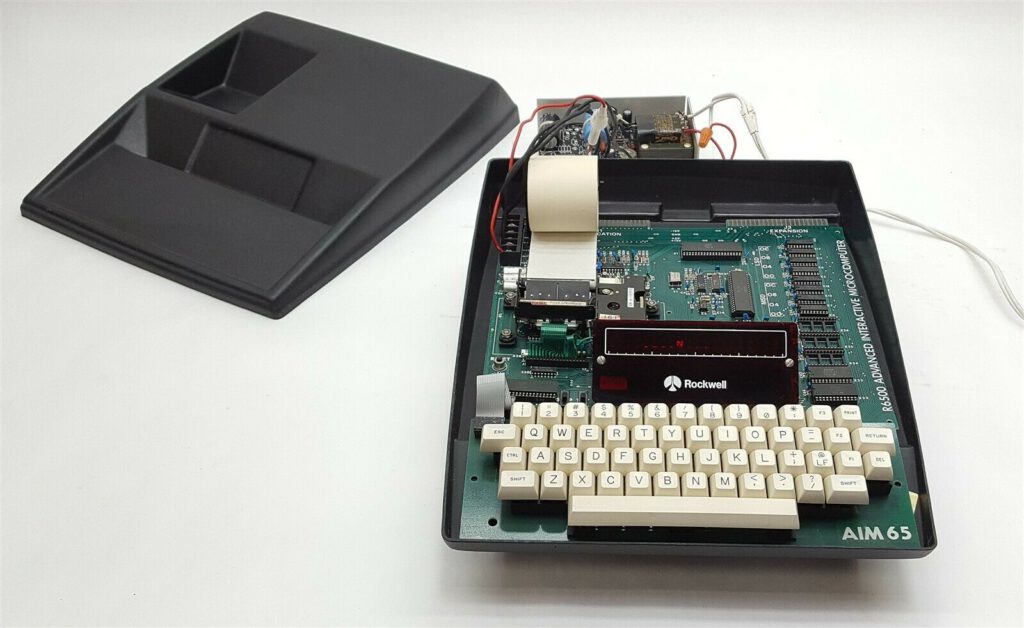
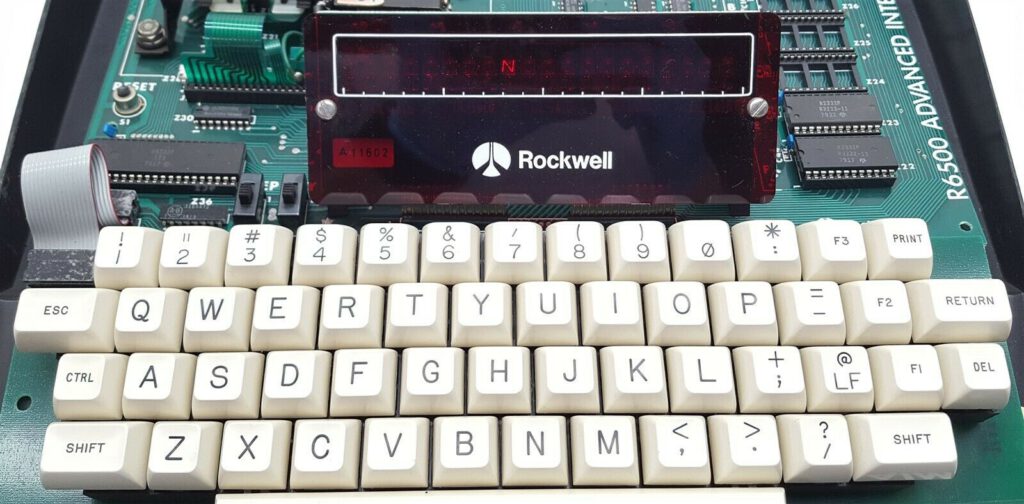
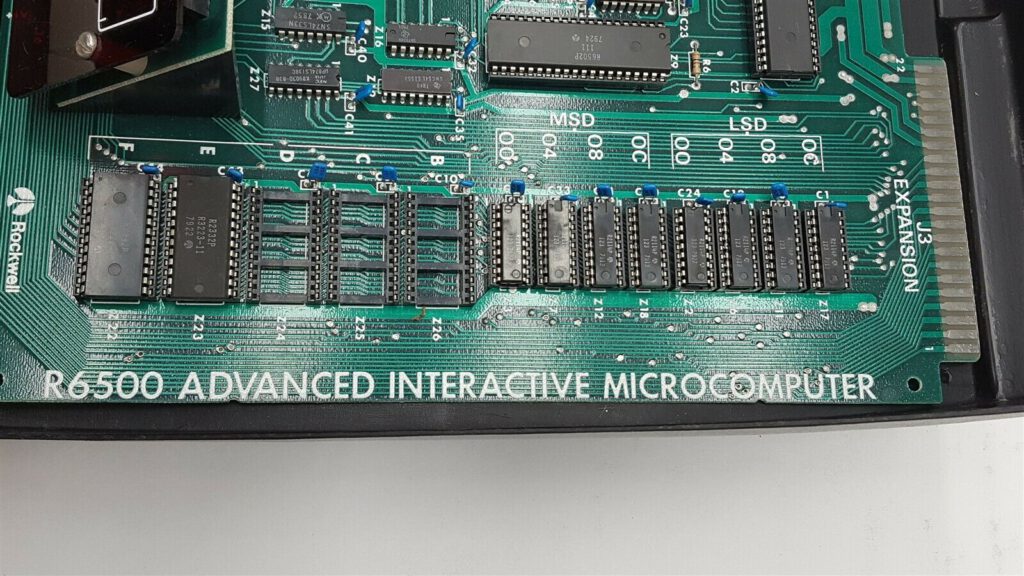
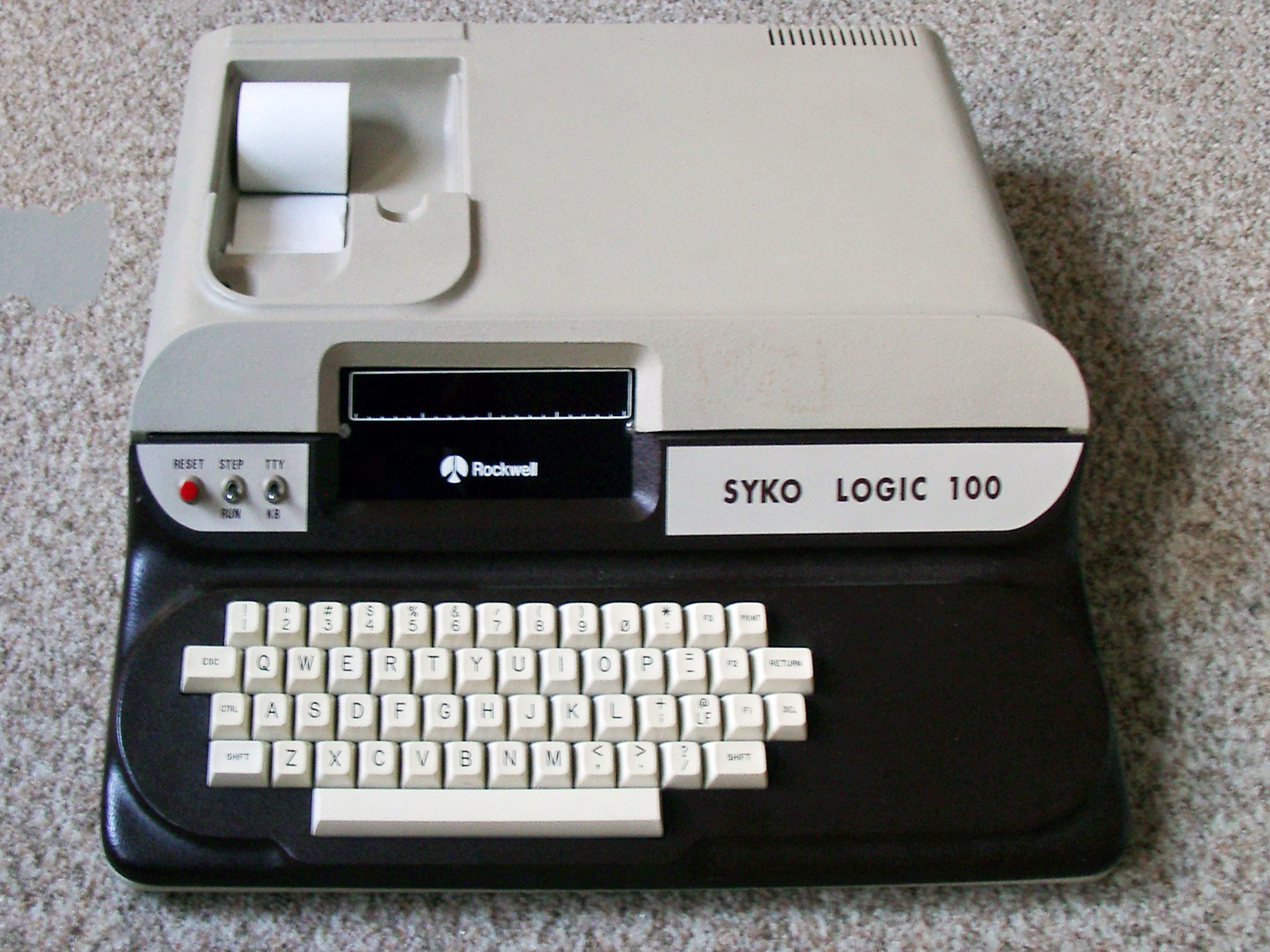
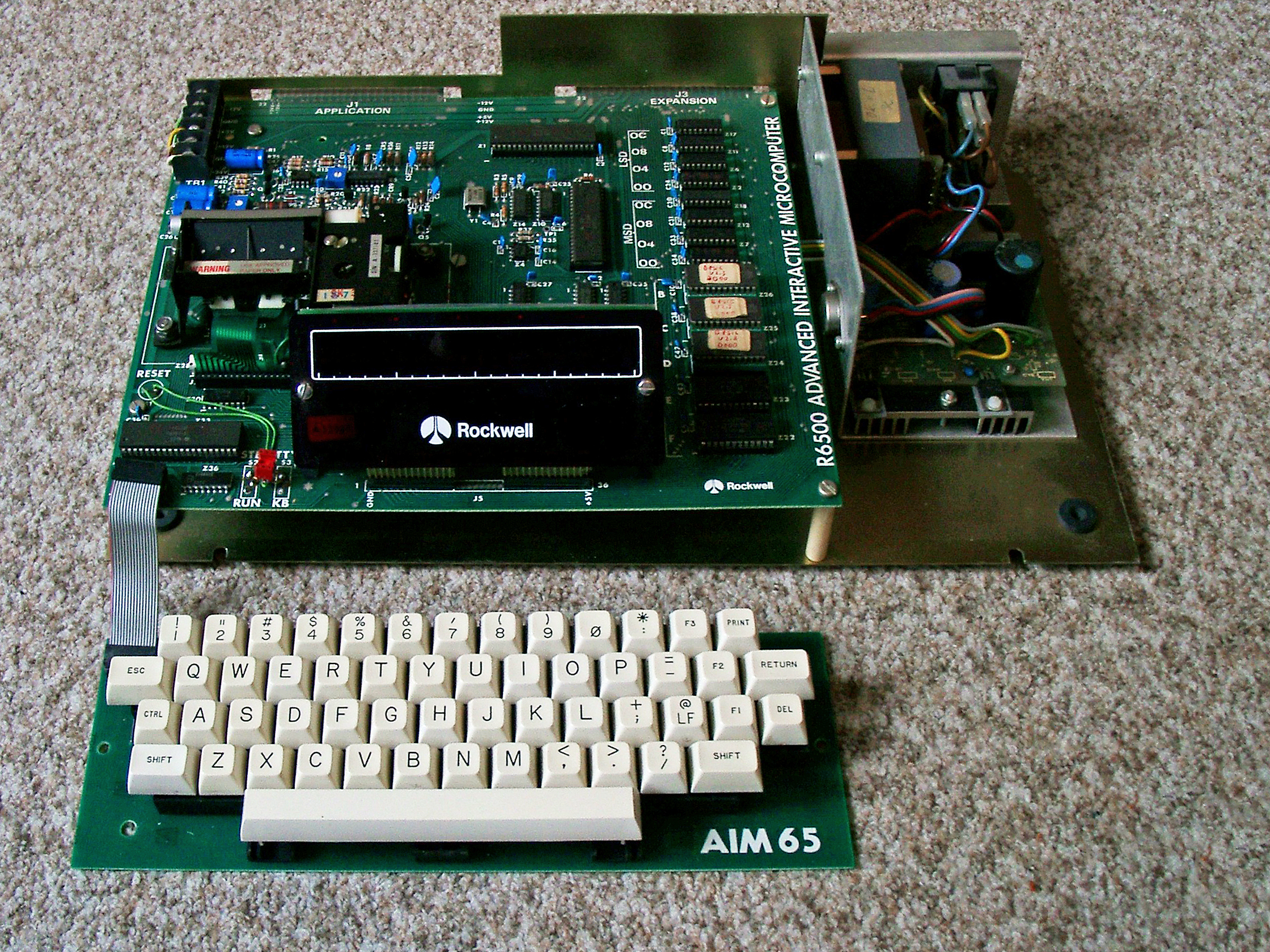
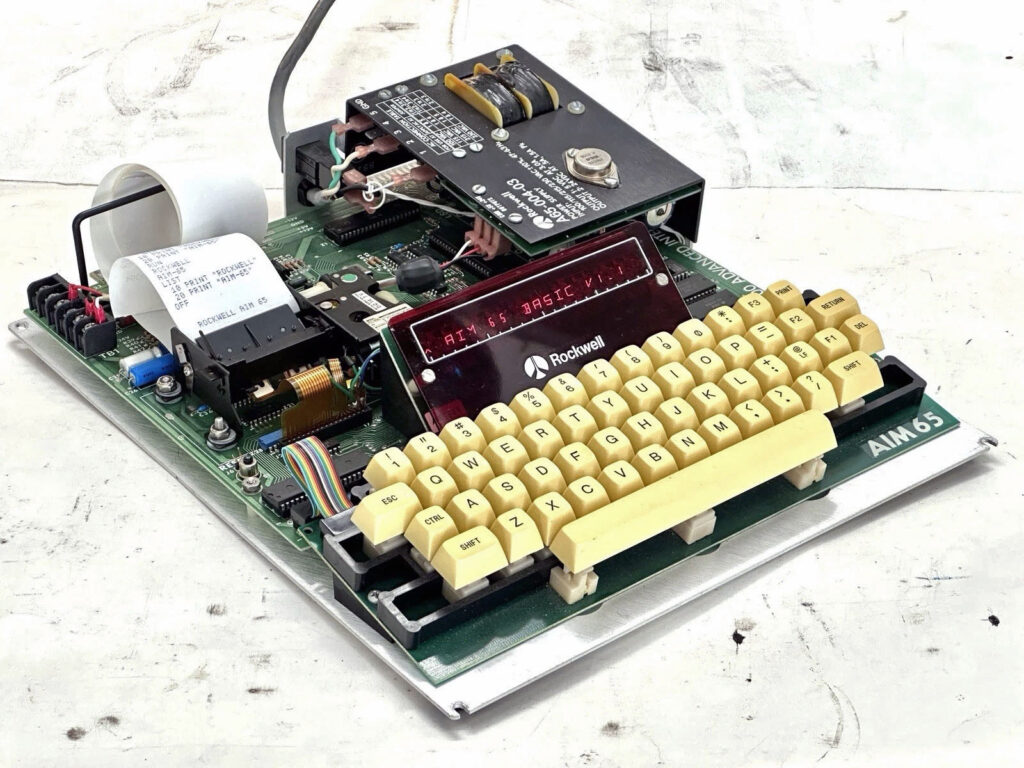
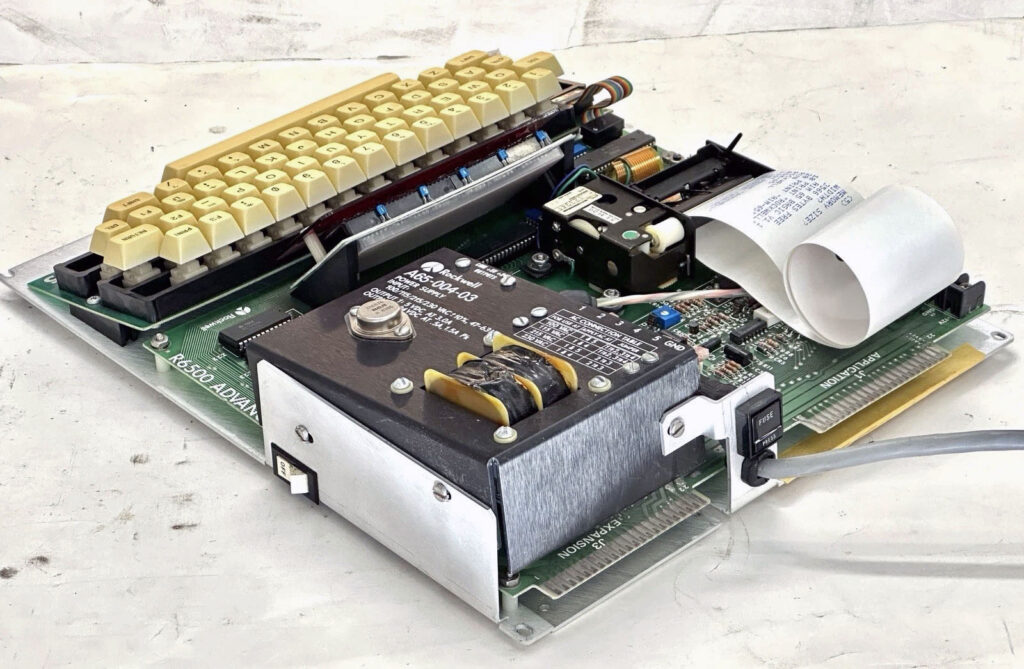
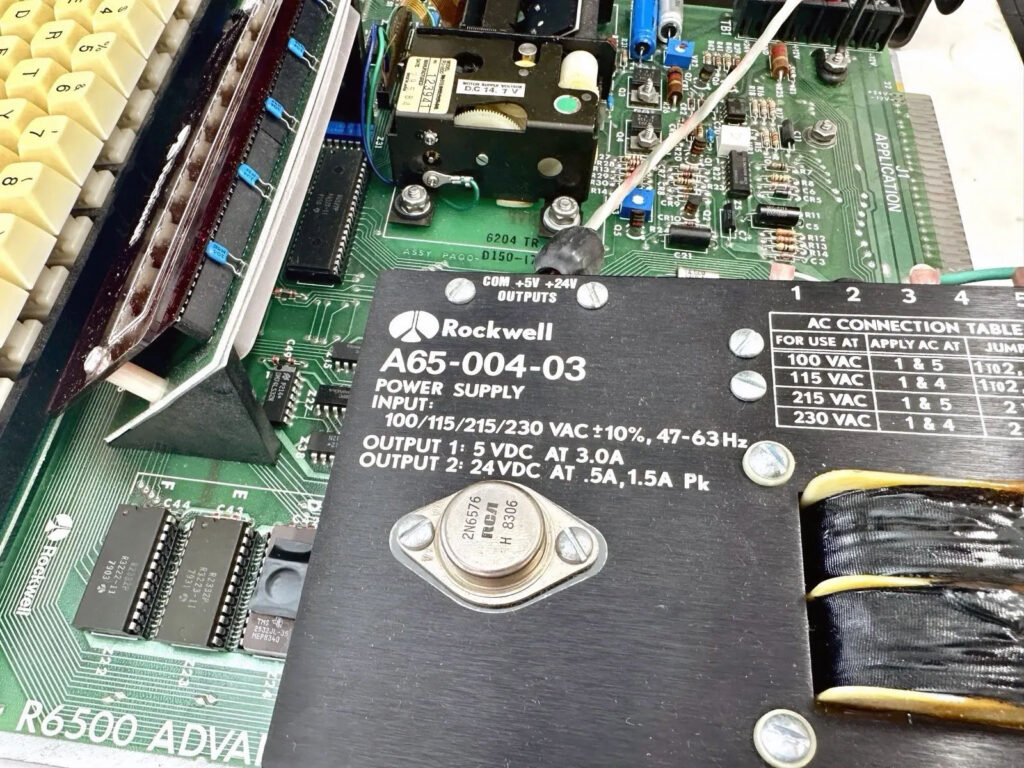
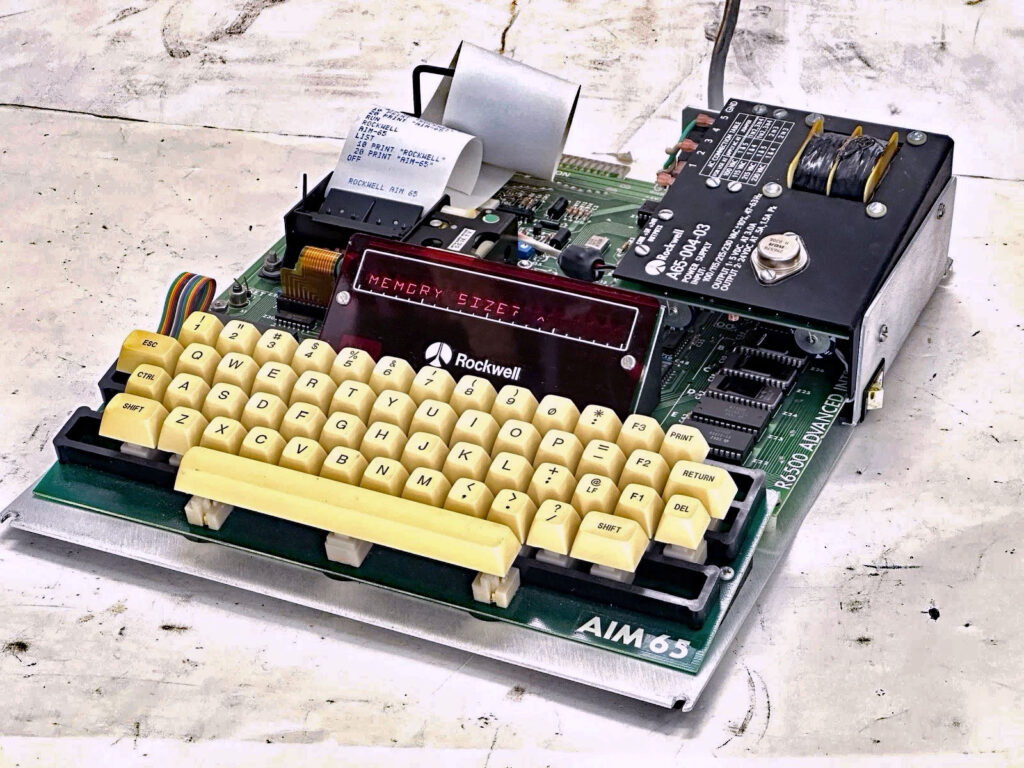
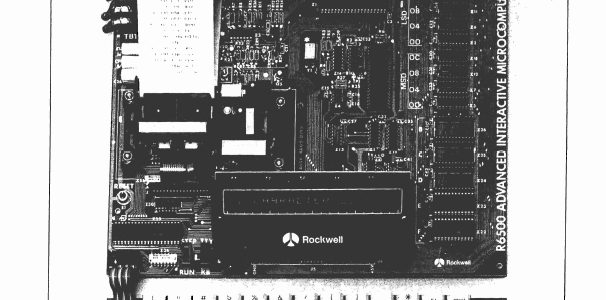
AIM 65 was Rockwell’s SBC, in the tradition of KIM-1 and VIM/SYM-1, sharing the Application and Expansion connector designs, so add-ons could be used on all three. The Keypad/LED was replaced with a full keyboard and a 20 character display, making it more like a desktop computer than a SBC.
The AIM 65 (Advanced Interactive Monitor 65) has a 6502 CPU at 1 MHz and 1-4K RAM

The Rockwell AIM 65 computer is a development computer, introduced in 1978, based on the MOS Technology 6502 microprocessor. Available software included a line-oriented machine code monitor, BASIC interpreter, assembler, Pascal, PL/65, and FORTH development system.
Later developments were the AIM 65/40 (40 character display, memory banks) and the RM 65 card based development system.
After 1984 Rockwell discontinued the AIM 65 and RM 65 product lines.

De PC 100 getest, an article by me, Hans Otten, August 1980,
in Radio Bulletin about the Siemens PC100, an AIM 65 with a case,
German documentation and sold by Siemens, Brutech in the Netherlands.