Developed by Mos Technology. later acquired by Commodore, to show the possibilities of the 6502 microprocessor but quickly discovered as the first mass-produced personal computer. Easy to extend, lots of detailed documentation. With assembler/editors, first Microsoft Basic on cassette and even a Pascal compiler, it could do a lot. The first have an original Mos Technology logo, later versions have the Commodore logo on the board, small technical differences other than more recent 6502 IC’s without the infamous ROR omission.
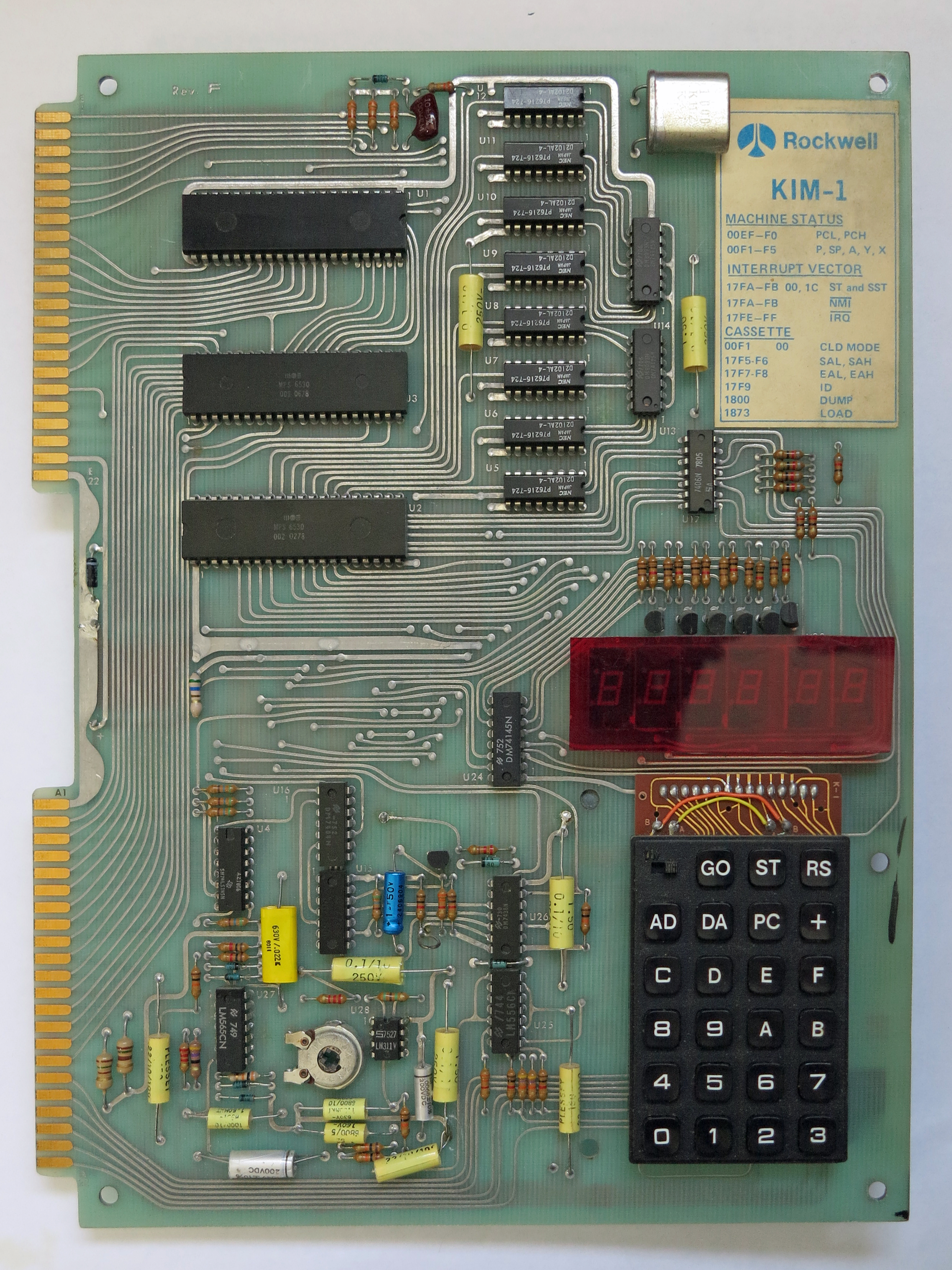
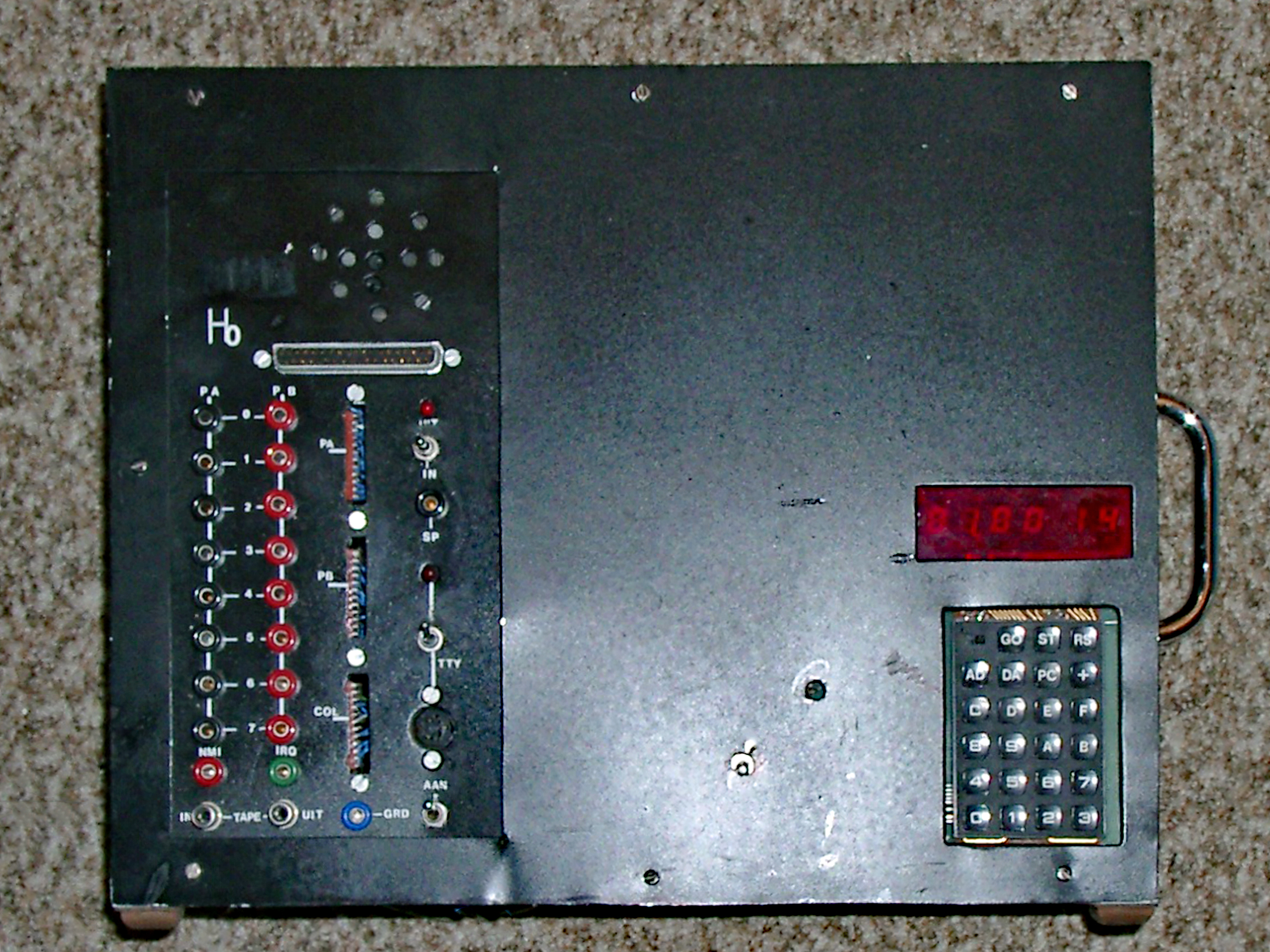
This prehistoric computer has no “real” keyboard and no video output, program are entered by the small hexadecimal keyboard (located in the lower right part of the picture) and results are displayed on the small LED “screen” (it can display only 6 digits). It has a simple monitor that allows one to examine, modify memory, load and save paper tape, load and save cassette tape, run and debug programs through a ‘single step’ mode. The monitor works with the built in keypad and LEDs, or a terminal like the Teletype ASR33. This 20 mA current loop is easy to adapt to RS232C and so any videoterminal can be used.
The KIM-1 design inspired many designers of 6502 systems, mimicking either the unique LED and keypad setup or by having the same application and expansion connector
Notable are:
– SYM-1 Application and expansion connector, LED and keypad display, tape format
– AIM 65 Application and expansion connector, tape format
– MCS Alpha 1 LED and keypad display, tape format
– Elektor Junior LED and keypad display, tape format
Information on the KIM-1, also reachable from the menu on the right:
- Me and my first KIM-1
- My KIM-1 collection
- The story of the KIM-1
- KIM-1 manuals and MOS Technology documents
- KIM-1 ROMs
- The KIM-1 explained
- KIM-1 monitor source
- KIM-1 monitor data storage
- KIM-1 memory layout
- Expanding the KIM-1
- KIM-1 PCB Edge connectors
- NMI and IRQ and BRK
- TTY operation summary
- Startup of the KIM-1: RESET
- The TTY CLI
- KIM-1 and RUB OUT
- TTY DELAY routines
- Sigma, KB/TTY selection
- GETCH read a character from TTY
- OUTCH send a character to TTY
- PRTBYT, GETBYT and PACK
- Serial file transfer issues
- Suppress the KIM-1 echo
- Serial interface with RTS CTS handshake
- Execute a program: GOEXEC
- SST Single step debug
- Debugging using the monitor
- LED display and keyboard command summary
- LED Display and keyboard
- Main LED display and keyboard
- Audio tape read and write indicator
- Save to papertape format
- Load papertape format
- Print string, the NULL character and X-OFF
- Audio tape hardware and ROM
- Dump to tape
- Subroutines DUMP to tape
- LOAD from tape
- Subroutines LOAD from tape
- Hypertape DUMP and LOAD
- Tape copy
- Recording programs with the KIM-1 and the cassette recorder
- Reading tapes from other KIM-1
- PLL Test
- Programming tips
- KIM System Products
- Books for the 6502: KIM-1 and more
- Johnson McShane brochures
- MOS Technology KIM-1 Brochures and Newsletters
- The Rockwell KIM-1
- KIM-1 articles
- KIM-1 and 6502 in magazines
- KIM-1 revisions images
- KIM-1 revisions, what changed?
- Transistors in the KIM-1
- Amazing it works!
- Hardware expansions
- KIM-1 projects by Eduardo Casino
- KIM-1 Software
- KIM-1 PAL-1 KIM Clone KIM MicroKIM Reproduction resources
- KIM-1 Simulator
- KIM-1 emulators
- PC utilities KIM Simulator Convert hex etc
- KIM-1 first clones
- The KIM-1 clones
- KIM-1 replica’s and clones
- My other KIM-1 systems
- KIM-1 videos
- KIM-1 6530 Replacements
- KIM-1 Diagnostic board
- KIM-1 keyboard repair
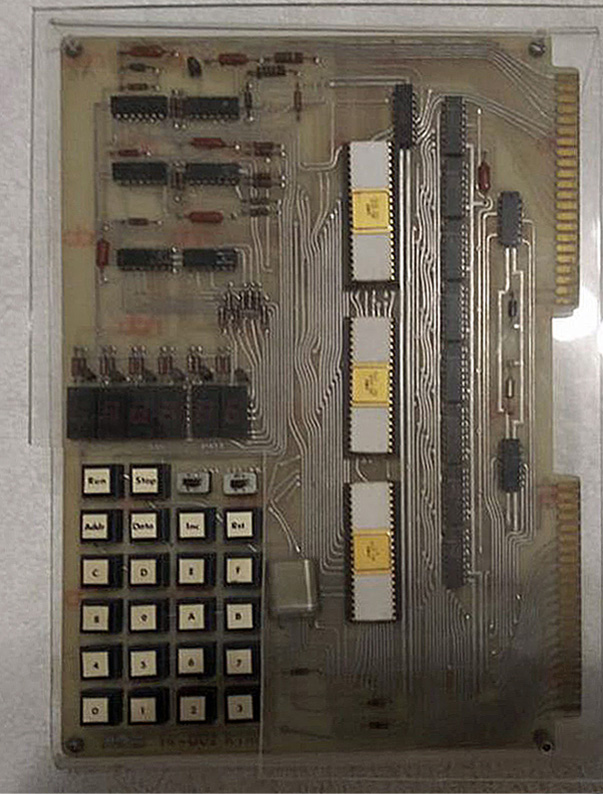
Prototype KIM-1
On team6502 I found a photo of a prototype KIM-1 at MOS Technology, Terry Holdt has this in his office.
The layout is different from the final product, everything seems to be present on this prototype.
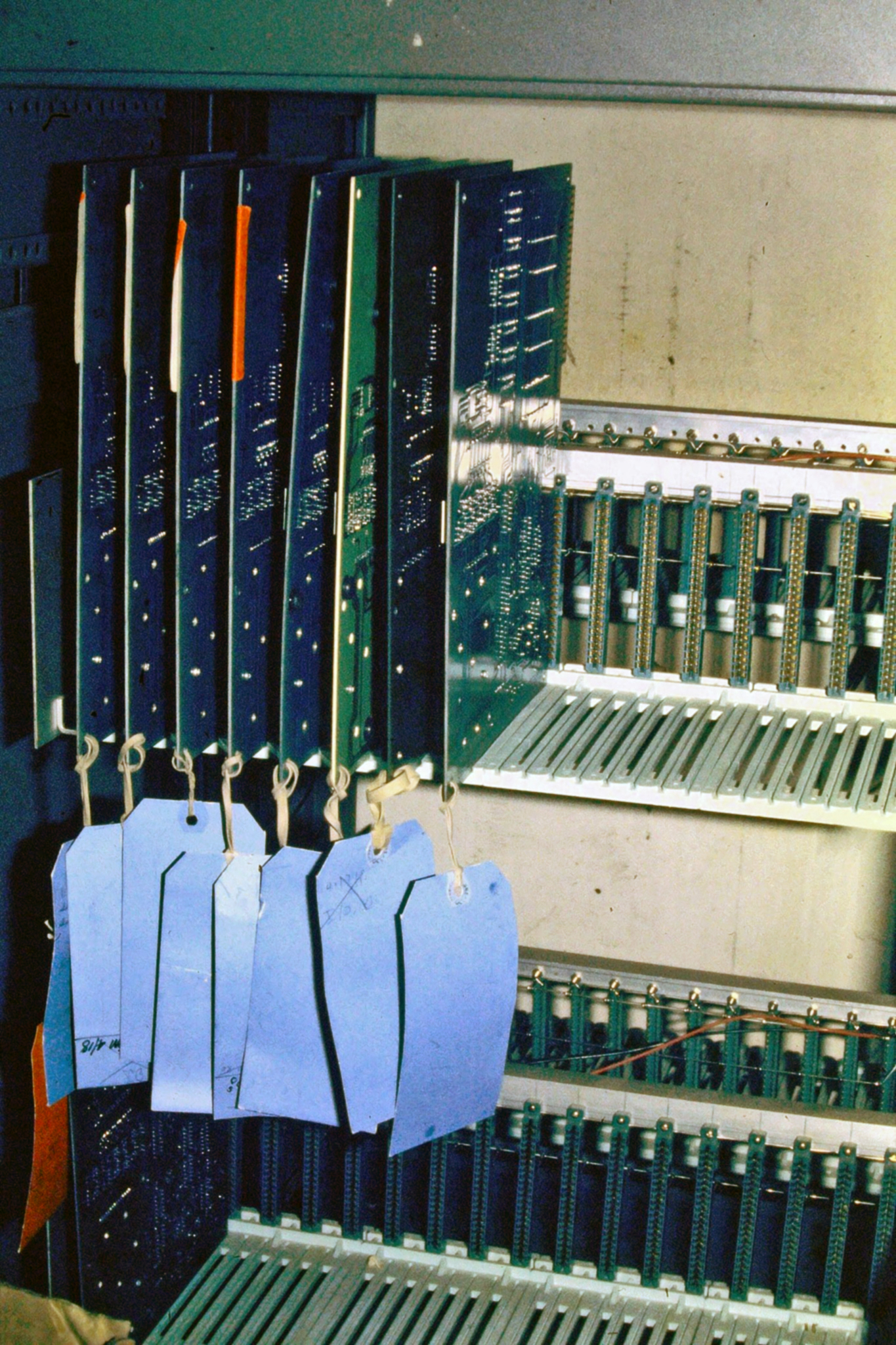
KIM in test frame at a MOS Technology facility (John Feagans)
See also:
My KIM-1 expansions in Radio Bulletin
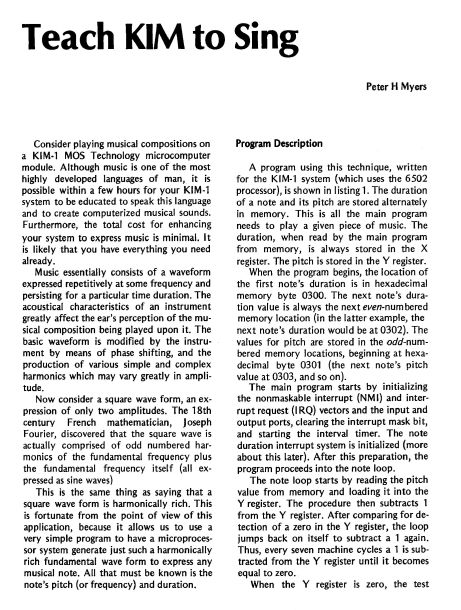
Teach KIM to Sing
Radio Bulletin articles in English