c’T-Terminal

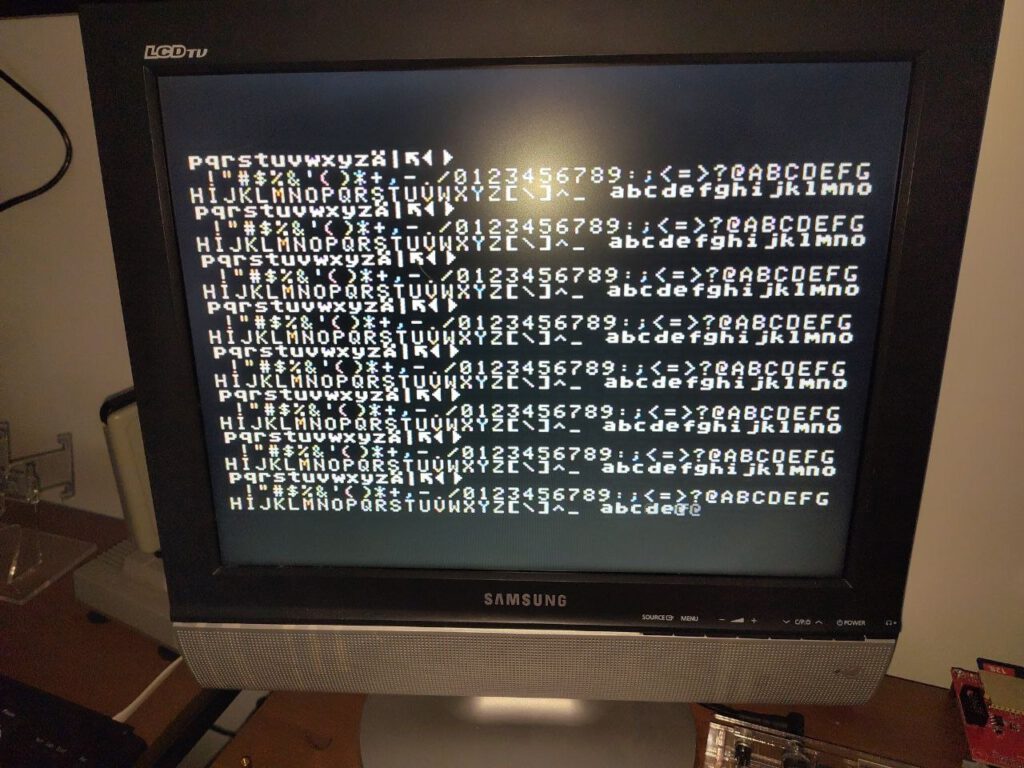
A computer terminal based on the Rockwell 6511Q microprocessor.
All scans, ROM dumps and circuit diagram thanks to Robert Offner!
c’T 1983 Heft 12, 1984 Heft 1

MTU documentation and MTU-130 software update

Vintagetech (Dave Williams) has scanned and dumped more MTU material in 2026:

MTU K-1008 Visable Memory KIM-1 Introduction
MTU Catalog October 1978 A1
INSMUS-8 INSNOTRAN Music compiler
Datamover-256 Hardware Manual 1982-06 Rev A
MTU-130 MACASM Release 1.2 User Manual 1982-10
Preliminary KGP Doc
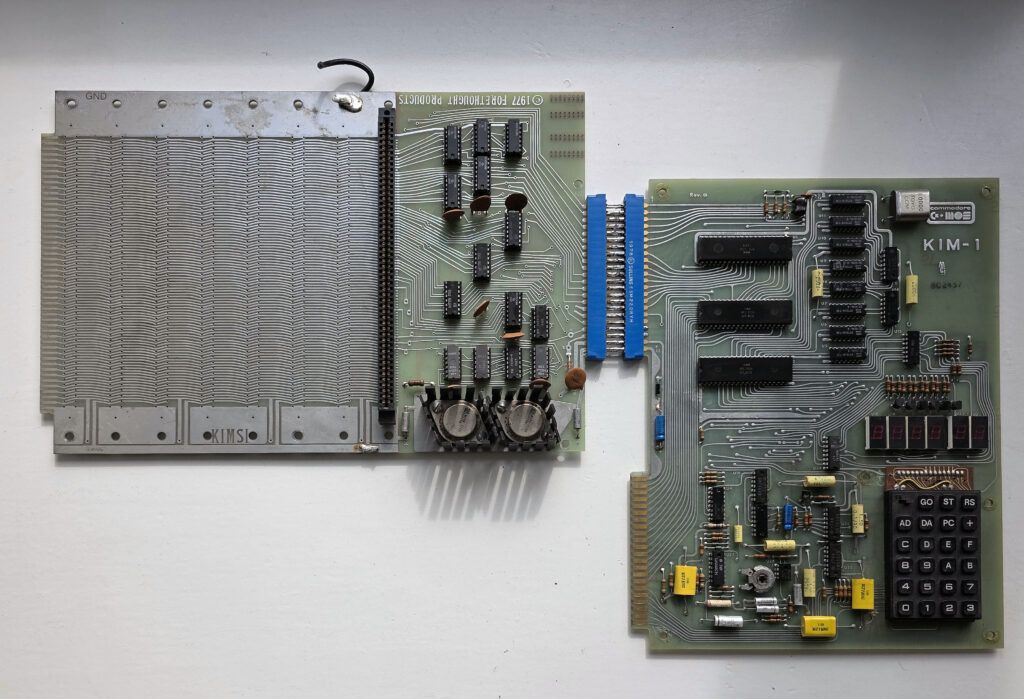
MTU K-1032 Banker RAM ROM manual
Rev E

Optional Software (added May 2026, thanks VintageTech again)

Jolt replica with ‘time period correct’ old parts

Eduardo Casino has done a great job replicating the PCB of the Jolt. And he proved the PCB was OK by building a Jolt and setting it to work.

I have populated a replica PCB with as much as I have in my junk boxes ‘time period correct’ parts. It does look good compared to photos of the original Jolt.
I am waiting for a ‘white’ 6502 to arrive, the purple one is already period correct.
This Jolt is meant to be a ‘museum’ part and will end up above my desk next to an original SuperJolt.
The next Jolt I will build will be a functional one with ‘black’ ICs and less attention to perfection.

R65 – A late seventies computer built with a KIM-1

R65 – A late seventies computer built with a KIM-1 by Rene Richarz.
An amazing showcase of how far a KIM-1 and Pascal as programming language can go!

All information on the R65 and the emulator of this computer on the github archive of Rene Richarz, a work in progress!
Including sources and full documentation.

Original Job computer built 1977-1979
The R65 computer has been built 1977-1979 by Rene Richarztogether with Rudolf Baumann, who has built his own JOB computer at the same time with similar hardware. The picture above shows the open JOB computer. The original R65 computer has not survived. The floppy disks have also not survived.

Hardware specifications of the original R65 Computer:
– 6502 8-bit microprocessor
– 1 MHz clock speed
– 17 kByte, 33 kByte, 49 kByte RAM (expanded 2 times between 1977 an 1979)
– 2 kByte graphics RAM
– 10 kByte ROM
– 40 x 16 char monochrome display
– 224 x 118 dot monochrome graphics display (switchable with char display)
– 2 floppy disk drives. Formatted capacity 199680 bytes each.
– Interfaces: Teletype, RS232, parallel printer, audio tape, golf-ball typewriter, tv

More on the R65 system here!

Commodore Chessmate by Stephen Crane

Stephen Crane designed a Chessmate hardware emulator some time ago.

He updated his archive on github with a PCB for a low cost variant.

Improved keypad case and button

The DIY KIM-1 keypad case and button 3D designs have been slightly improved:

The case has a small cutout around the top edges as the original.

The button has some ribbles as the original has.

A second white KIM-1 enters the collection

After cleaning up and repairing the keyboard of a white KIM-1 Rev D I found a second one, as new!

MTU K-1013 FDC with CODOS emulation added to the KIM-1 Simulator.

MTU K-1013 FDC emulation added to the KIM-1 Simulator.

Eduardo Casino added the FDC support. Now not only the SD Shield but also the upd765 based FDC support allows to run CP/M-65 and the native CODOS for KIM-1 operating systems.

KIM-1 case

The KIM-1 came from MOS Technology and Commodore without a case or power supply. So you either build your own housing or looked at what other firms sold for the KIM-1.
There was a lot on offer, mostly targeted at system expansion with large cases.

One of the cases you saw quite often was this case. It came with one of my KIM-1’s. Small, simple and effective

A perfect solution for an unexpanded KIM-1. Quite popular in education. Add a power supply and you can start using it without exposing the electronics. The LED display was behind a red plexiglas cover, so that improves readability.

B.E.M. photos made by Gerben Voort

Brutech, a small Dutch company, made industrial quality microprocessor systems. 6502, 6809, process control.

Gerben Voort acquired a 6502 system and made photos of the system. A backplane, the BEM bus, a 6502 based CPU card, a double VIA card, a battery backed up memory card.
Read more about Brutech here.