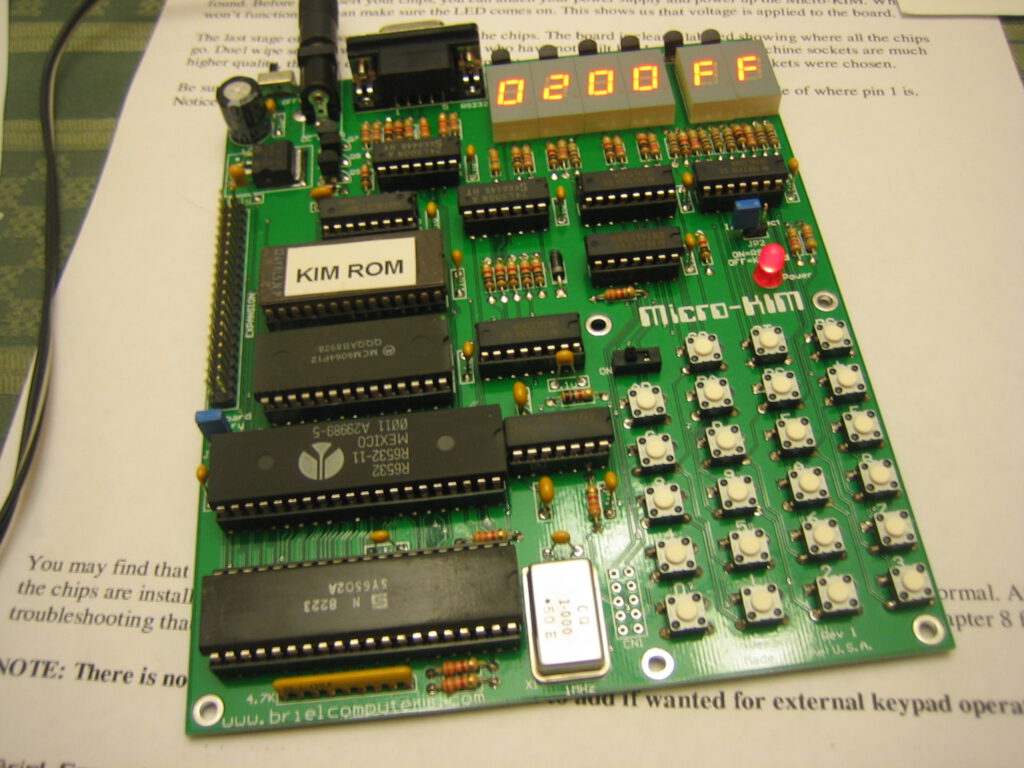
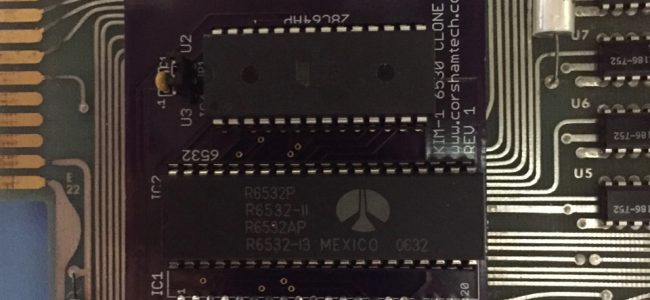
My drawer is full with a supply of 65XX IC’s. Some bought, some donated, some salvaged. From old to quite recent.
Category Archives: 6502
65XX IC’s
In my boxes with electronic parts I have many IC’s. Partly new bought, lots also rescued from obsolete boards. The 65XX parts present a large part in the microprocessor corner! Recent inventory revealed some unique and older types. So here I present photos of unique 65XX IC’s in my collection, duplicates left out.
Some older ceramic IC’s are from photos from other sources, like the Jolt archive.
MOS Technology dated the IC’s with the number string WWYY, where WW is weeknumber padded with zero, and YY are the last two digits of the year.
Example is my oldest part is 6530, date 1476 white case, stamped week 14 year 1976. The youngest parts are Rockwell R6522s from 2007! And the 65c102 dates 0843, which means 2008?
Other manufacturers reversed week and year, like the 6507 8222, year 1982, week 22.
IC’s in this gallery:6501AQ,65(S)(C)02, 6503, 6504, 6507, 6510,R65F11, 6520, 65(C)22, 6524, 6526 6530, 65(SC)32, 6540, 6545 6550, 65(C)51, 6569, 6581, 65C102, 65802, 65816, 8501, CO14806 , CM630P
6501aq
6502
CM630P
Bulgarian unofficial clone, pin compatible

6503
6504
6507
6510, 8501 (6510 equivalent of later Commodore C64)
6520
6521
R65F11
6522
6524 I/O + timer
6526 (CIA, mostly found in Commodore systems)
6530


See the 6530 page for more information


(in my KIM-1)


(in my KIM-1)


A 6530-005 (TIM without ROM program) as sold on ebay, obviously rebranded since the SY6530-005 text is still visible. Hard to see, but the Synertek date code also seems not to be 8114.

A 6530 TIM recently acquired:

A mystery 6530, image from IC seller

6532
6540
6545
6550
6551
6552
6569 Video
6581 SID
65C102
65802
65816
CO14806 Sally Atari 65C02
See also:
TERC KIM-1 Interface set
6502 tester NMOS CMOS 1-8MHz
680x/650x Test system
Backbit Chip Tester PRO V2
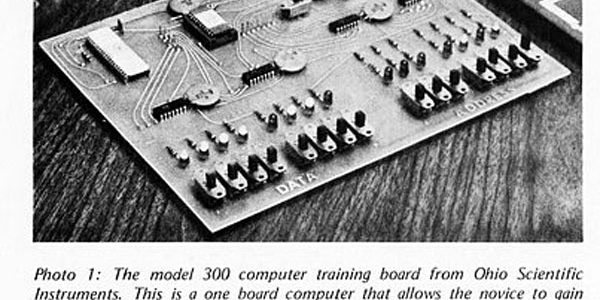
OSI Model 300 trainer
For a long time I have been looking at the photos of this, o so simple 6502 trainer, to see how it works and be able to build one myself.
Now that the circuit diagram has become available I have added a page on the OSI 300 on what I have found out about this simple 6502 system: photo’s, manual and circuit.
See also:
A demo of the new facilities in the KIM-1 Simulator 2.2.1
KIM-1 connectors: beware the Chinese cheap variants!
Magazines: Compute! and Compute II
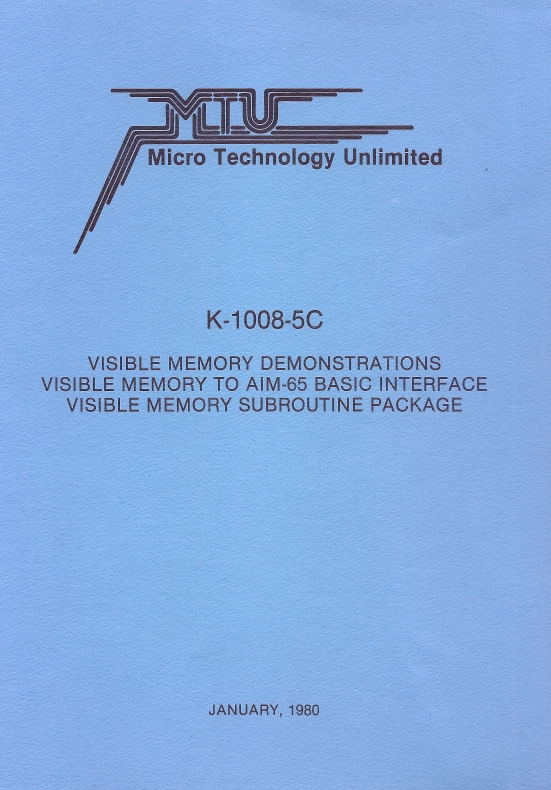
All documents in the MTU pages are now clean and higher quality, about 50 new PDFs.
My 6502 systems
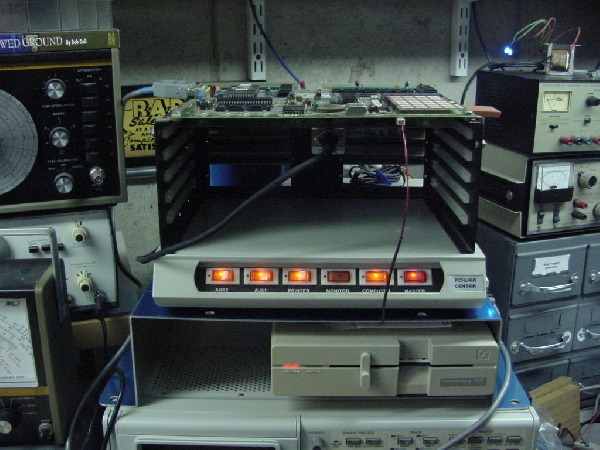
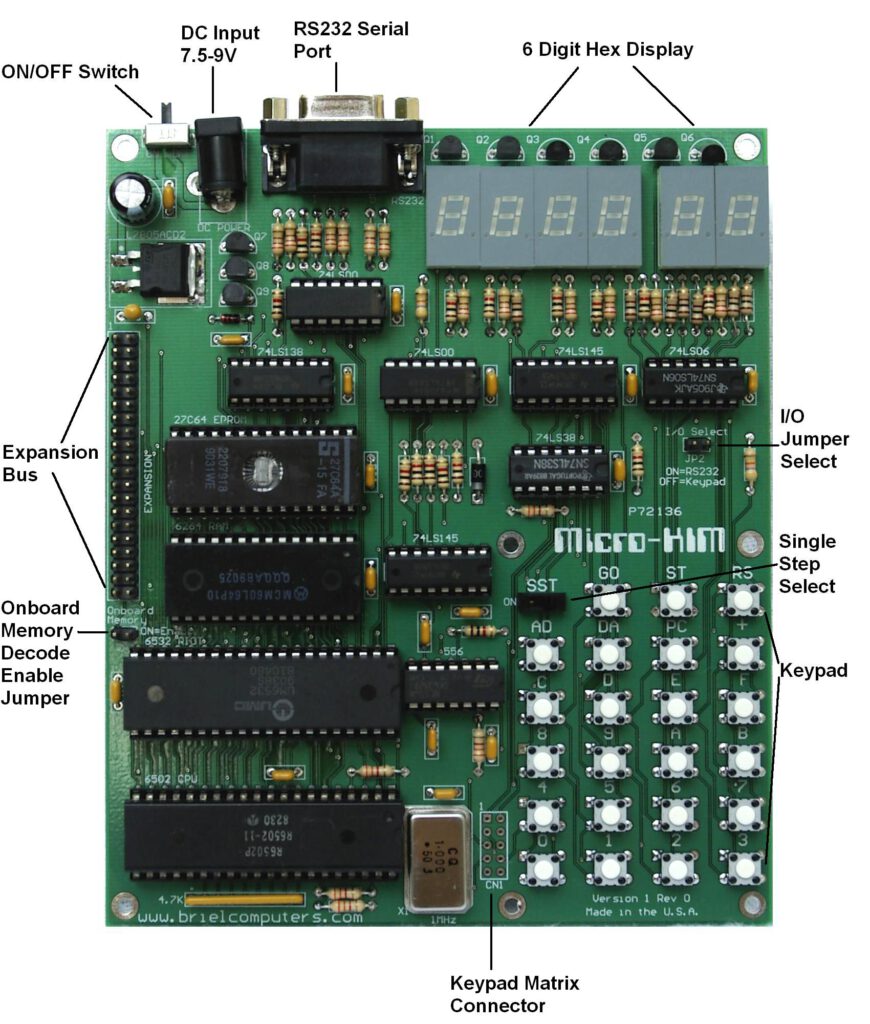
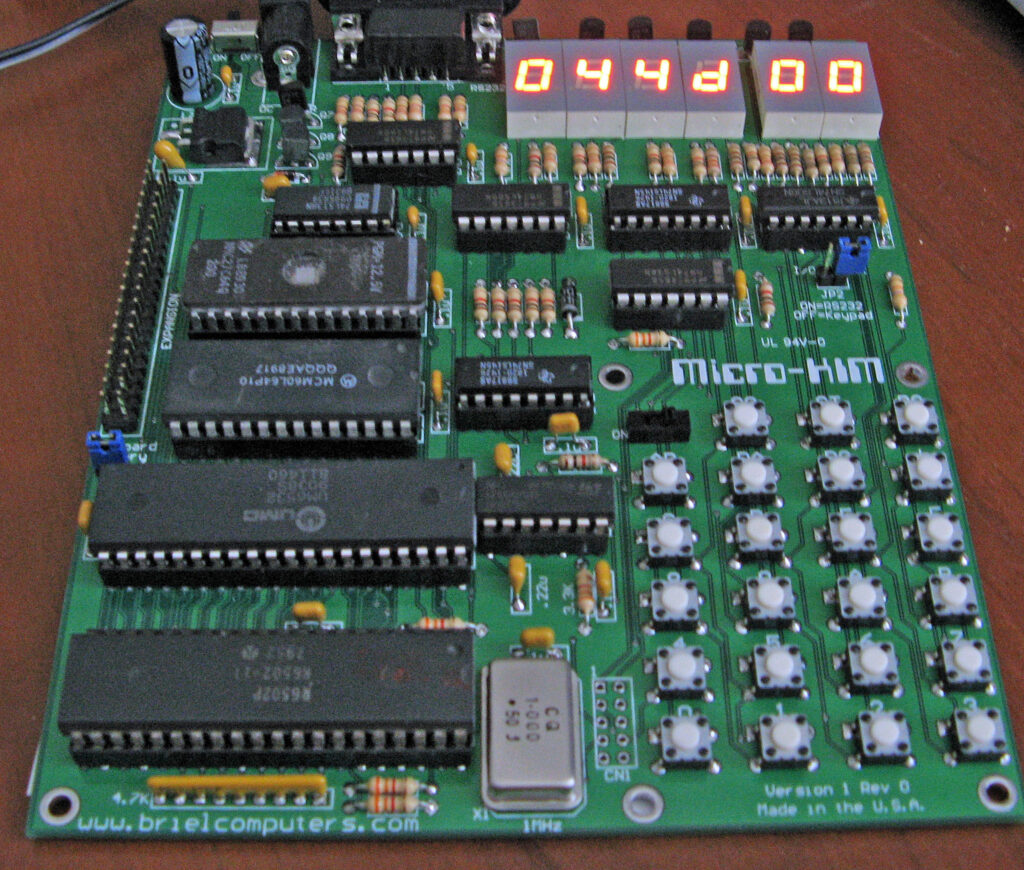
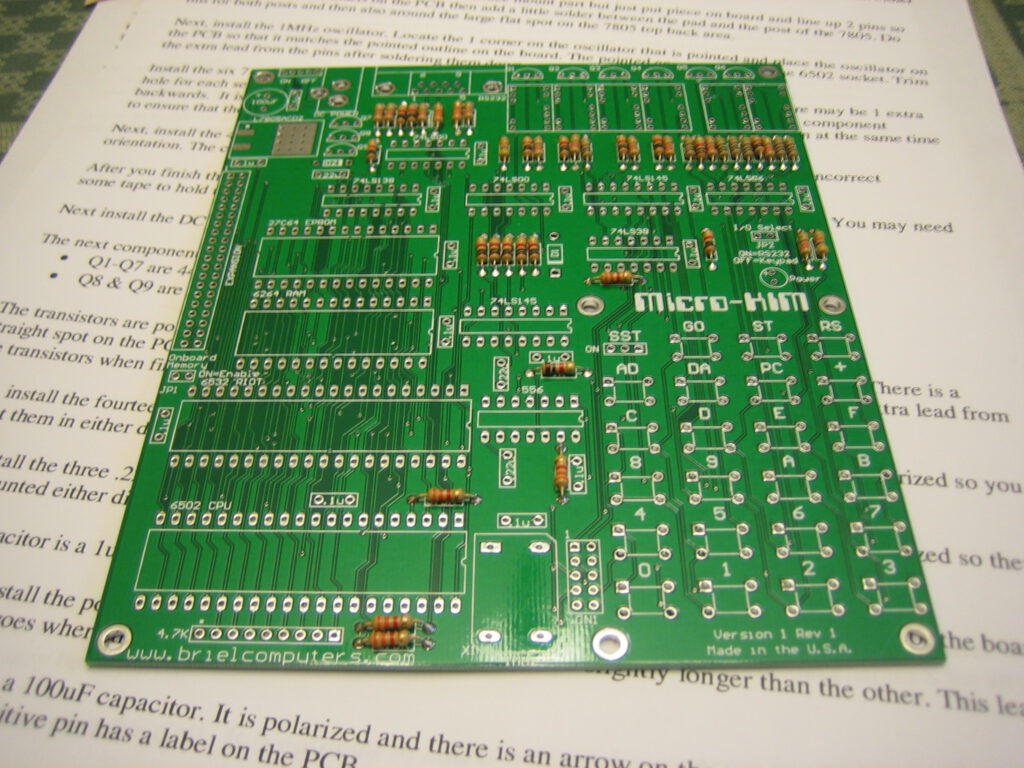
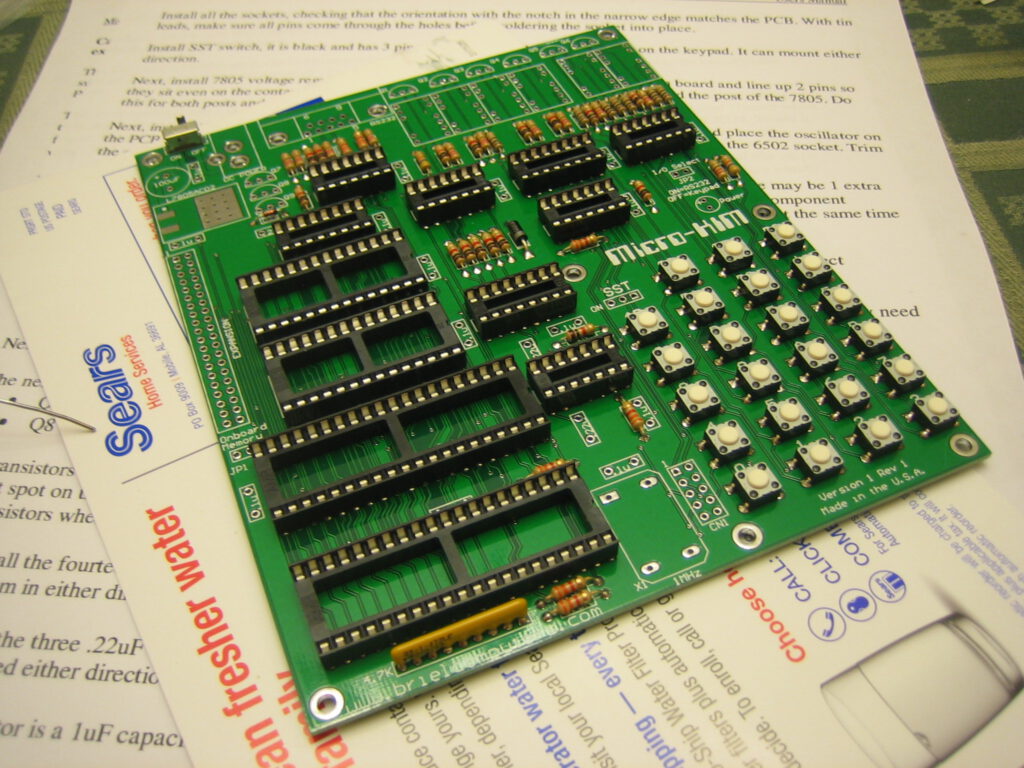
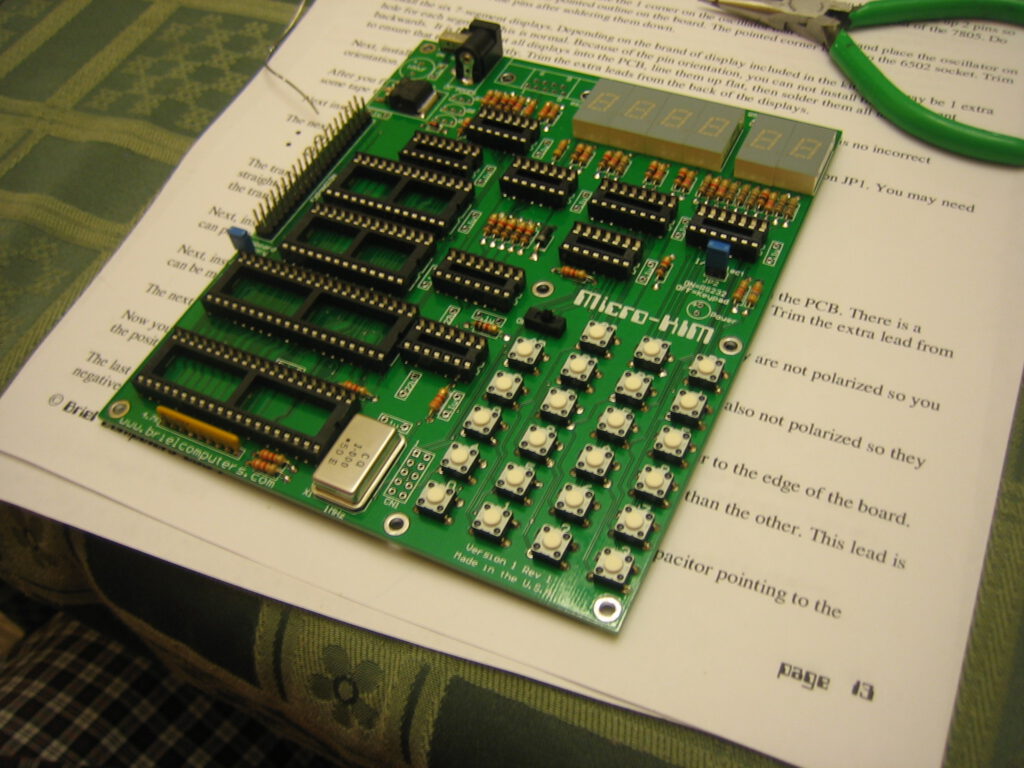
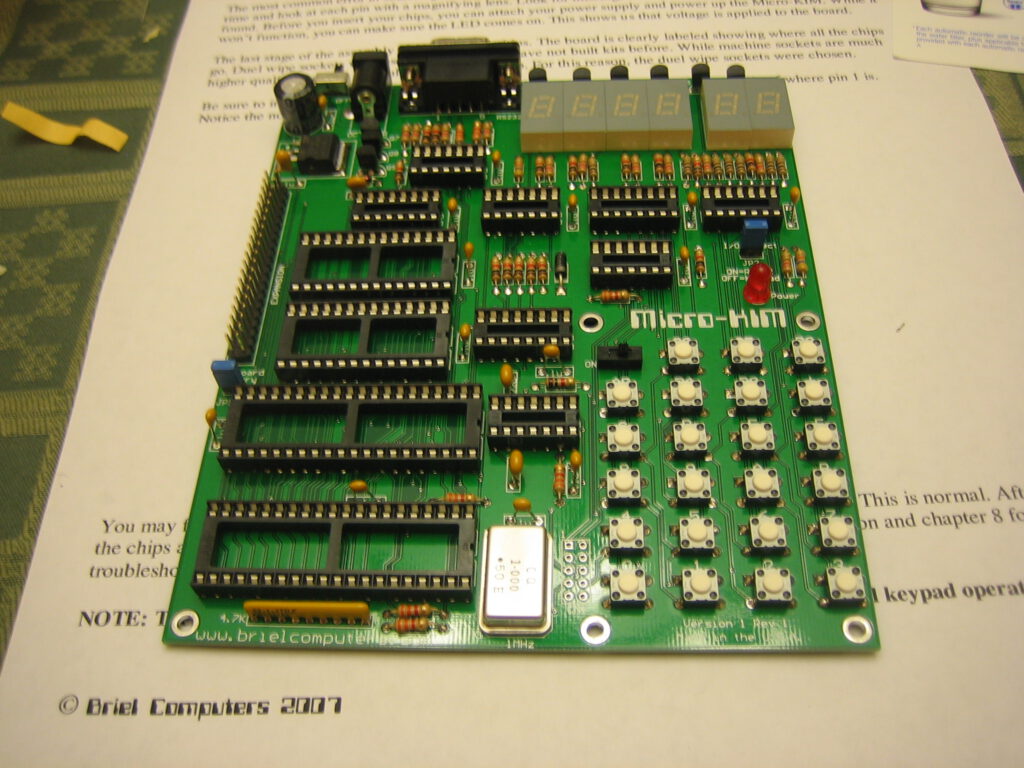
I have added a page with photos of my 6502 systems. From the KIM-1 to the A-One extended and Micro KIM to the Pocketerm. Includes Junior and Elektuur bus systems like EC65/Octopus.
See also:
A demo of the new facilities in the KIM-1 Simulator 2.2.1
KIM-1 connectors: beware the Chinese cheap variants!
Magazines: Compute! and Compute II
All documents in the MTU pages are now clean and higher quality, about 50 new PDFs.
6530 6532 TIM 6530-004

The KIM-1 has two 6530 IC’s, the 002 and 003. From some research I have found that this factory mask rommable I/O RRIOT has been produced in more versions.
An interesting one is a relative of the KIM, the Terminal Interface Monitor 6530-004. Meant for a minimal 6502 development system, it contains a teletype oriented monitor program and a serial interface via bit banging.
See the TIM 6530-004 page for more information.
But there were more 6530’s produced (and the list must be incomplete since lots of sequence numbers are missing. like 001.
6530-002 KIM-1 listing in KIM-1 Users manual
6530-003 KIM-1 listing in KIM-1 Users manual
6530-004 TIM Terminal Monitor, see the TIM page
6530-005 According this OSI appnote this is an unprogrammed version of the 6530. I have seen ads for this part without description of what this is.
6530-009 Allied Leisure pinball (IC5)
6530-010 Allied Leisure pinball (IC6)
6530-011 Allied Leisure / Fascination pinball (IC3)
6530-013 ?
6530-024 Commodore CHESSmate (based upon Peter Jennings MicroChess)
Commodore diskdrives
901466-01 6530-??? DOS 1.0 Shugart SA390 2040, 3040 and 4040
901466-02 6530-028 DOS 1.2 Shugart SA390 2040, 3040 and 4040
901466-04 6530-034 DOS 2.0 DOS 2.1 Shugart SA390
901483-02 6530-036 DOS 2.5
901483-03 6530-038 DOS 2.5 Micropolis 1006-II (8050)
901483-04 6530-039 DOS 2.5 Tandon TM100-3M (8050)
901884-01 6530-040 DOS 2.7 Tandon TM100-3M (8050) Tandon TM100-4M (8250)
901885-01 6530-044 DOS 2.7 Micropolis ???
901885-04 6530-047 DOS 2.7 Micropolis 1006-II (8050) Micropolis 1006-IV (8250) Micropolis 1106-II (Safari, mit Garagentor, 8050) Micropolis 1106-IV (Safari, mit Garagentor, 8250)
901869-01 6530-048 DOS 2.7 M.P.I. 101SM (8050)M.P.I. 102?? (8250)
251256-02 6530-050 DOS 2.7 Matsushita JU-570-2 (8250LP)
251257-02A 2716 DOS 2.7 Matsushita JU-570 (SFD-1001) Matsushita JU-570-2 (SFD-1001)
251474-01B 2716 DOS 2.7 Matsushita JU-570-2 (8250LP)
See also:
A demo of the new facilities in the KIM-1 Simulator 2.2.1
KIM-1 connectors: beware the Chinese cheap variants!
Magazines: Compute! and Compute II
All documents in the MTU pages are now clean and higher quality, about 50 new PDFs.
TIM 6530-004

Terminal Interface Monitor, short TIM, with codename 6530-004, is a 6530 with a monitor program in the mask ROM.
No systems were sold by MOS around it, just a kit with manual and the IC.
The Jolts use a TIM IC, Micro Associates, who designed the jolts write the TOM monitor for MOS Technology and called TIM DeMon.
The DATAC 1000, a single-board computer based upon a 6502 and a TIM RRIOT, designed in 1976 by Philadelphia Area Computer Society club members Carmen DiCamillo and Roland James.
Many hobbyists build themselves 6502 SBCs around a TIM IC.
Information on this page
- Jolt and Superjolt, by Micro Associates and later Synertek Systems
- The story of the TIM
- Functions of the TIM software in ROM
- TIM MOS folder and pricelist
- TIM Manuals
- TIM ROM and sources
- TIM bytes the Apple
- 3 articles from Micro journal on the TIM
- Article on how to expand TIM
- TIM and OSI 400
- Breakpoint routine for 6502s TIM
- Lunar Lander for TIM and Jolt
- Bill Mensch on the creation of the 6530
- TIM Jolt Superjolt Simulator
- 6530-004 dissected
- A Christmas Story About A Tiny TIM
- THE-RC 41523 CPU-4
- TIM-1 SBC
- TIM-2
TIM DeMon Manuals
|
MOS TIM folder with pricelist |
|
MOS TIM manual Rev 6500-20 |
![]() |
User manual in HTML format The OCR process has left some errors in the text |
![]() |
Jolt DeMon software manual, the same as TIM (this manual has an alternative listing of the TIM 6530-004 monitor), only the first page is different. |
TIM mask programming Memory layout
$7000 ROM 1Kb
$6E00 I/O + Timer
$FFC0 RAM 64 bytes
TIM sources
Here the machine readable and ready to assemble source, listing and binary of TIM (Thanks Martin Hoffmann-Vetter)
Note that this contains a corrected version! While testing the TIM Simulator I found an error in the papertape loader LH command, the ‘;’ start of a record seems to be OCR’ed to ‘:’ .
The resulting binary is identical to the ROM dumped from a real 6530-004.


The story of the TIM (from Ch.1.5 of “On the Edge: the Spectacular Rise and Fall of Commodore”)
The first development system offered by MOS, the TIM IC, was in kit form, which reduced the selling price to only $30. Since the unit was designed primarily to instruct the user on the workings of computer systems in general and the 6502 in particular, MOS Technology contracted Microcomputer Associates of Santa Clara, California to write the unit’s internal program. The two founders, Ray Holt and Manny Lemas, taught engineers how to use microprocessors. Peddle relates, “You have to understand how little the world knew of microprocessors in 1974, ‘75 and ‘76. There were guys making big money selling classes on microprocessors during that time.” Manny Lemas had worked for Peddle during his GE days, while Ray Holt had an impressive background working on the F-14 Tomcat project for the Navy.
The technicians developed the system in a special research area on the second floor of MOS Technology. The lab was a room within a room, with a large sign on the door in capital letters warning NO ADMITANCE. Inside, the team stared intently at oscilloscopes or sat over hot irons soldering components onto circuit boards. Small pieces of circuitry were scattered chaotically across the room. Since the 6502 microprocessor and supporting chipset contained almost everything necessary for a computer, the design was minimal. When assembled, it could be connected to a teletype machine or a computer terminal.
The biggest job was programming the built-in ROM code for the computer. This consisted of a debugger and monitor program, appropriately called the DeMon. According to Peddle, DemMn was programmed by Manny Lemas and Mike Quarter, who previously developed Peddle’s time-sharing system. The programmers used this time-sharing system to develop the code, which they burned into a 6530-004 RRIOT chip. This little powerhouse included RAM, ROM , I/O and timer capabilities.

The system was named simply. Peddle and his team liked acronyms, thus the Terminal Interface Monitor, or TIM was christened. TIM would begin a predilection at MOS Technology and Commodore for assigning friendly three-letter names to their products.
Those ordering the $30 development kit received the grey-ceramic 6530-004 chip and a manual consisting of 14 sheets of 11×17 paper, folded and stapled in the middle. Included in the manual were a suggested schematic, the TIM monitor commands, a few sample programs and a listing of the monitor code. It was up to the user to provide the resistors, transistors, capacitors, wire, and even the 6502 microprocessor.
Though receiving a computer in the form of a kit does not seem particularly user friendly now, hobbyists at the time clamored to build their own computer. Nonetheless, a good portion of the kits failed to operate upon completion. Rather than using a prepared circuit board, many buyers simply wire-wrapped the chips together on a piece of generic perf board or prototyping board, often termed a kludge board. After placing the required components on the board, builders hand wired the chips one pin at a time, resulting in a snarl of fine multicolored wires. Once the chips were in place, the user then had to construct or purchase a separate power supply for the TIM. Finally, the TIM was (as the name suggests) able to interface with a standard ASCII terminal or teletype machine.
As hoped, the do-it-yourself nature of the kits spawned familiarity with the products, and once hobbyists had invested time learning about the chip, they often remained loyal to the 6502. Many hobbyists ended up using their TIM computer as a small development system, since it was ideal for creating small programs. For their part, MOS Technology continued to sell TIM computer kits to diehard hackers, even after the Commodore acquisition. Ultimately, TIM was just a stepping-stone to developing and marketing a fully assembled computer.
Functions of the TIM software in ROM
• Self adapting to any terminal speed from 10-30 cps,
• Display and Alter CPU registers,
• Display and Alter Memory locations,
• Read and Write/Punch hexadecimal formatted data,
• Write/Punch BNPF format data for PROM programmers,
• Unlimited breakpoint capability,
• Separate non-maskable interrupt entry and identification,
• External device interrupts directable to any user location or defaulted to DeMon recognition,
• Capability to begin or resume execution at any location in memory,
• Completely protected, resident in Read Only Memory,
• Capability to bypass DeMon entirely to permit full user program
control over system,
• High speed 8-bit parallel input option, and
• User callable I/O subroutines.
DeMon’s Command Set Includes:
.R Display registers (PC,F,A,X,Y,SP)
.M ADDR Display memory (8 bytes beginning at ADDR)
: DATA Alters previously displayed item
.LH Load hexadecimal tape (socalled MOS papertape format)
.WB ADDR1 ADDR2 Write BNPF tape (from ADDR1 to ADDR2) (Intel papertape format)
.WH ADDR1 ADDR2 Write hexadecimal tape (from ADDR1 to ADDR2)
.G Go, continue execution from current PC address
.H Toggles high-speed-reader option (if it is on, turns it off; if off, turns on)
I know of several commercial systems using the TIM:
– The Jolt and Superjolt, Microcomputer Associates/Synertek (also information on the origin of the TIM-1 program!)
– the first Brutech BEM bus system, A small Dutch company, Vinkeveen, that produced professional 6502/6809 and more, industrial systems.
– Datac 1000
Frank Wolf has decapped a TIM 6530-004 to study it and maybe do a FPGA clone.
Here the photo’s:


Expand your TIM
TIM BYTES THE APPLE
(Design by Fred Hatfield, scans and transcription by Tom Owad, https://www.applefritter.com/node/2833)
For those of you that would like to have hard copy capability and much better control over program development on the Apple 1, the following hardware addition will accomplish it.
Using a 6530-004 (‘TIM’ chip) costing about $12.00 gives many superb features such as a variable baud rate serial input/output, a high speed parallel input (high speed paper tape reader), an excellent breakpoint processor, paper tape dump and load routines, etc.
The TTY port is located at locations 6202H and 6203H. Date at that port should be 00H and 16H respectively. The baud rate is stored at 00EAH and 00EBH and 110 baud is represented by 10H and 46H at those locations. It’s a fun addition to the Apple 1. Try it!
Fred Hatfield K8VDU

Teletype connection schematic.


Teletype Pinouts (connections 6530-004 and Apple bus):

TIM APPLE
6530-004 6502
33 D0 33
32 | 32
31 | 31
30 | 30
29 | 29
28 | 28
27 \/ 27
26 D7 26
5 A9 18
6 | 17
7 | 16
8 | 15
10 | 14
11 | 13
12 | 12
13 | 11
14 | 10
15 AO 9
16 RES 40
17 IRQ 4
1 - GND
20 - +5V -----------------------
3 / PIN25 | FRED HATFIELD K8VDU |
\ 6820 | |
18 - +5V | 7/77 |
-----------------------
TIM articles in the Micro journal in pdf format:
– Micro 1: Terminal Interface monitor (TIM), introduction and description, with am alternative system circuit diagram.
– Micro 3: TIM meets the S100 bus.
– Micro 9: Two short TIM programs. First a program to chage the baudrate, the second is a small operating system.

TIM and OSI 400
Application note by OSI how to add a TIM to an OSI 400 board.


Breakpoint routine for 6502s
Lunar Lander for TIM
Demo of TIM
Demo of TIM connected to OSI400
See also:
TERC KIM-1 Interface set
6502 tester NMOS CMOS 1-8MHz
680x/650x Test system
Backbit Chip Tester PRO V2
MCS6530 and MCS6532
MOS Technology designed in 1975 two ICs that look very similar, the MCS6530 and later the MCS6532.
The 6532 is called RIOT, for RAM I/O and Timer. The 6530 is called RRIOT, for ROM RAM I/O and Timer.
The timer and I/O is (nearly) identical on both IC’s. RAM is 64 byte on a 6530, 128 byte on the 6532.
The ROM is where the big difference is, it is a 1K so called mask programmed ROM. This means the contents of the ROM are determined in the factory.
Besides the ROM, also at the factory choices can be made about the Chip and Register Select lines and such.
The 6532 is a general purpose I/O IC and widely used because of its versatility.
Of the 6530 a limited number of variants were made by the factory. The 6530 variant is often indicated by a number, 6530-XXX. Rockwell also used R3XXX and for Commodore diskdrives 9xxxxxx numbers were used also,
Well known variants are the 6530-002 called KIM and 6530-003 are used in the KIM-1 computer. The 6530-004, called TIM, is used in the Jolt and Datac computers. A ROMless variant is the 6530-005.
Pinball machines from Gottlieb and Allied Leisure used many 6530’s.
The Commodore Chessmate use a 6530 024 for I/O and chess openings. The early Commodore disk drives used 6530 in many variations.
Early Commodore disk drives used the 6530 also.
These ICs are hard to obtain now, production ceased in the 80ties. Clever persons created 6532 to 6530 adapters.
Information on this page:
- RIOT 653X datasheets
- Known 6530 variants and ROM dumps
- Images of the 6530s I have
- 6530 replacement with a 6532
- Testing the 6530
- TIM 6530-004
- 6530 hardware emulator in FPGA in 40 pin DIP
- Commodore Chessmate: 6530-024 RRIOT
- Difference in time count between R6532 and G65SC32
- Commodore Chessmate, Novag II, TEC
- The TIM 6530-004 based Jolt and Superjolt, designed by Micro Associates and later sold by Synertek Systems
- DATAC 1000, A TIM 6502 SBC
The 6530, nick named RRIOT is quite a special IC in the 65xx family.
Timer, RAM (64 byte), ROM, I/O, Counter in one IC. It has a factory mask programmed ROM and the locations of its I/O and RAM and ROM are determined also in the factory.
The 6530 is found in among others the KIM-1 (6530 02, 6530 03), a Chess system with MicroChess by Peter Jennings (6530 24) and variants are used in Commodore disk drives.
The 6532 has no ROM and RAM size is 128 byte versus 64 in 6530. I/O and timer are functional identical to the 6530. The nickname is RIOT, and it is a general purpose I/O device in the 6502 family. Very popular in e.g. the Atari 2600, and many clone KIM-1’s.
There is a datasheet for an IC called the 6531, RRIOC for RAM ROM I/O Counter. I have never seen it in the wild though, but seen references to pinball machines using it.


A mistery 6530, 021 unknown sofar.

See also:
TERC KIM-1 Interface set
6502 tester NMOS CMOS 1-8MHz
680x/650x Test system
Backbit Chip Tester PRO V2
DOS65
The DOS65 system, designed by the KIM Gebruikers Club, based upon an Elektuur Octopus design, augmented with a better floppy controller is now documented on the DOS65 page.
See also:
A demo of the new facilities in the KIM-1 Simulator 2.2.1
KIM-1 connectors: beware the Chinese cheap variants!
Magazines: Compute! and Compute II
All documents in the MTU pages are now clean and higher quality, about 50 new PDFs.
VAE T4 system
The dutch company Visser Assembling Electronics, Alkmaar, working for and in cooperation with the dutch carpet-factory Forbo Krommenie, developed a system based upon the KIM-1.
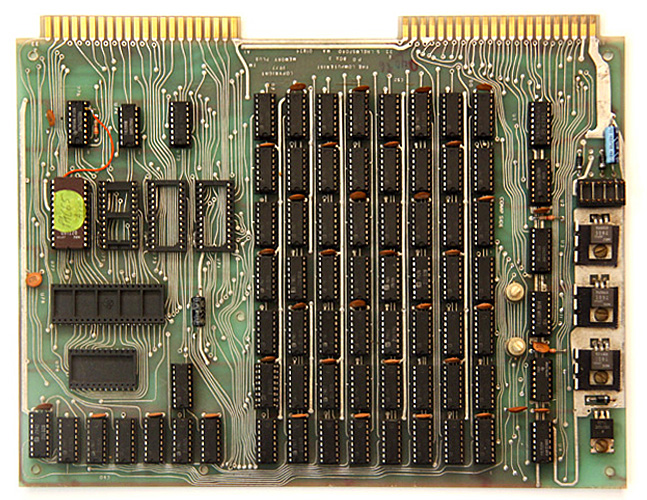
The T4 system consist of a large portfiolio of RAM, ROM, EPROM, input (Analog and Digital) and Output boards. Also a videoram card was developed.
Scanned documentation and all photos of the system


See also:
TERC KIM-1 Interface set
6502 tester NMOS CMOS 1-8MHz
680x/650x Test system
Backbit Chip Tester PRO V2
MCS Alpha 1
MCS Alpha 1
The ALPHA-1, made by Berliner Unternehmens MCS (“Micronic Computer Systeme GmbH”) is an early computer, produced in 1977. The design is influenced heavily by the KIM-1 with many improvements and enhancements.
It is ready to run, has a KIM-1 compatible cassette file format. The system exist of an external CPU board and a cased display/keyboard I/O system.

Documents in PDF format:
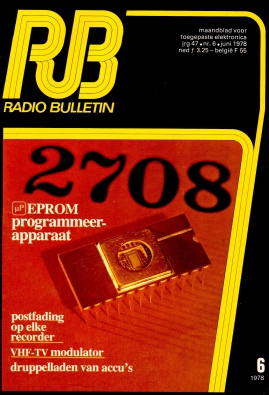
– Article in Radio Bulletin, August 1979, written by me
– User guide Band 1 and Band 2 (scanned by me)
– Alpha Handbuch Okt 1977 (different scan, missing 6532 appendix
– Mona 2 listing
– Mona 2 in hex format
– Von Alpha bis Omega MCS Alpha 65, CHIP 1978
Other MCS products around the MCS-bus
– MCS Basic V2.0
– M622 CPU card
– M628 I/O card
– M628 sockets
– M639 Floppy interface
– M677 Floppy interface
– FDOS V2.0 Floppy disk system
– M660 SBC 6502 card with MONA 4 ROM listing
– M6660 Connectors
– Mona 4 in hex format
– DRDIS V4 in hex format
– Loader V41 in hex format
– M687 A/D converter
– M688 D/A converter
– M707 32 K DRAM
– M764 6522 I/O card


Thanks Micha288 classic-computing.de

Thanks Micha288 classic-computing.de