post

KIM-1 Clone

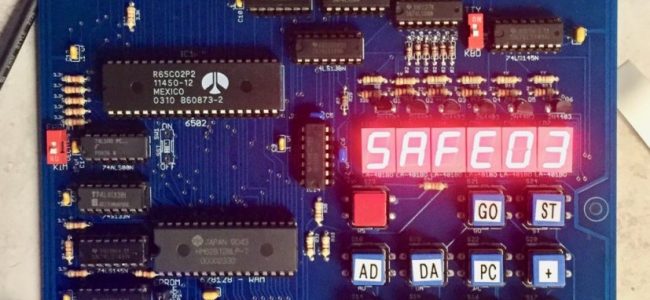
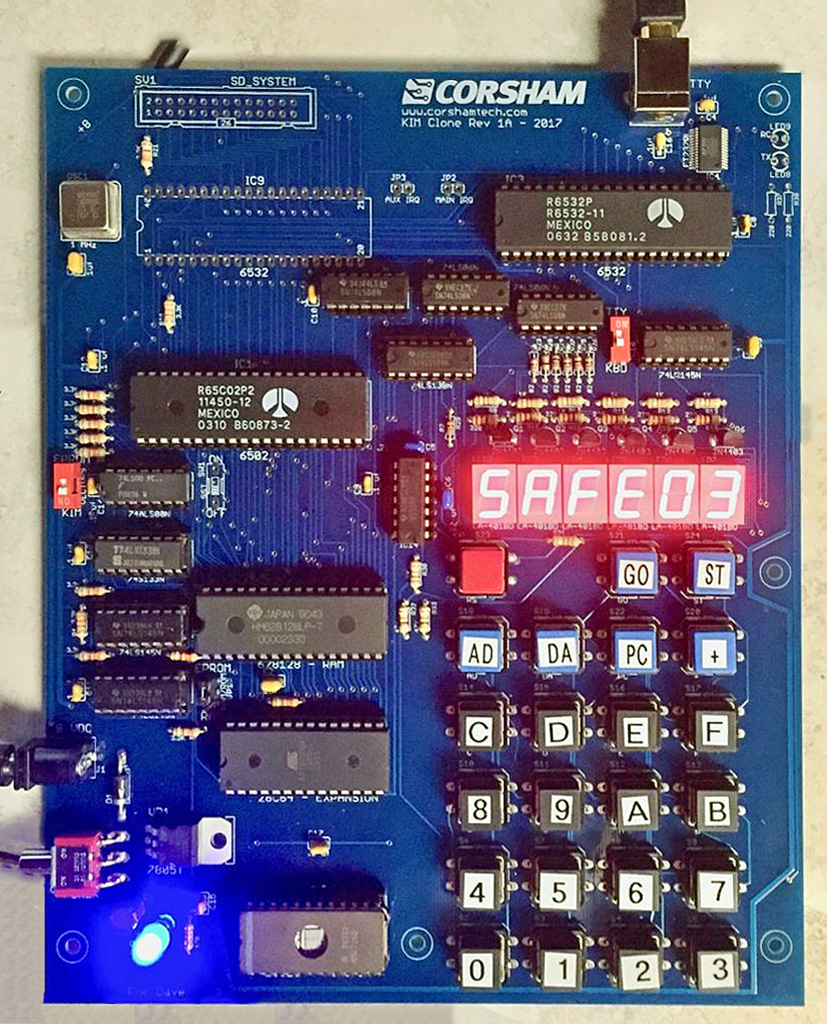
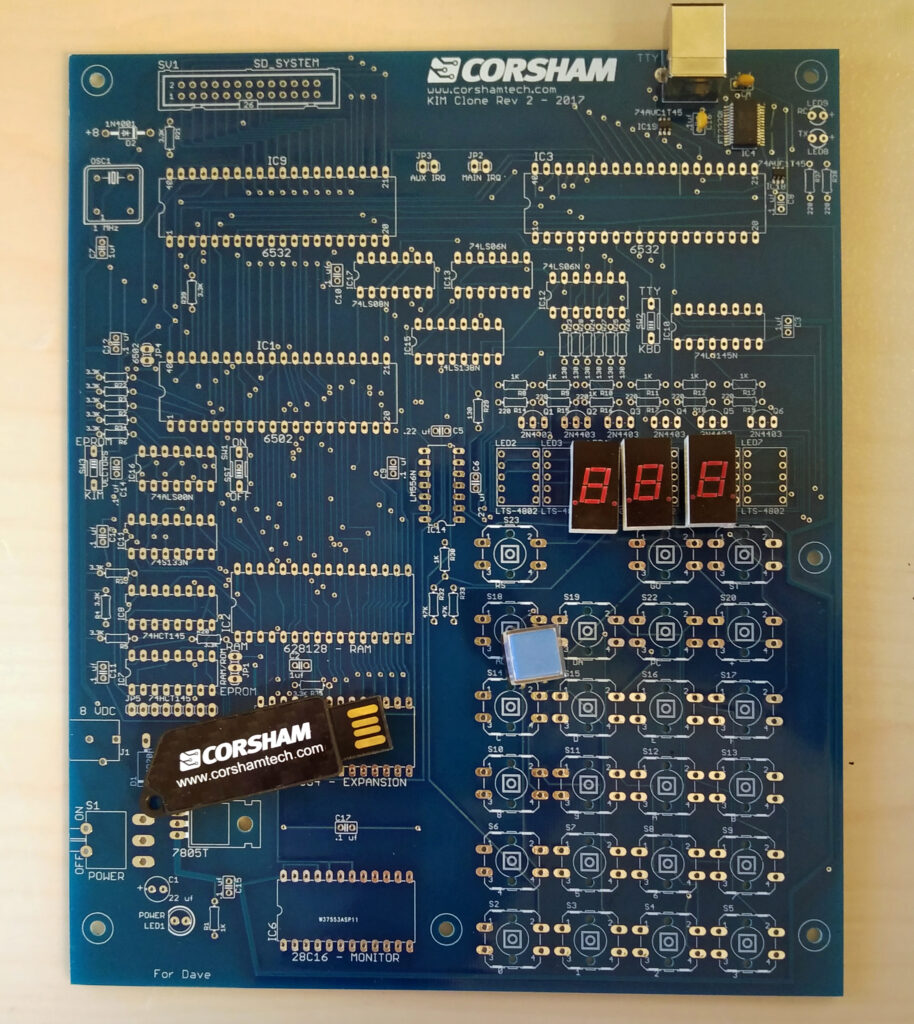
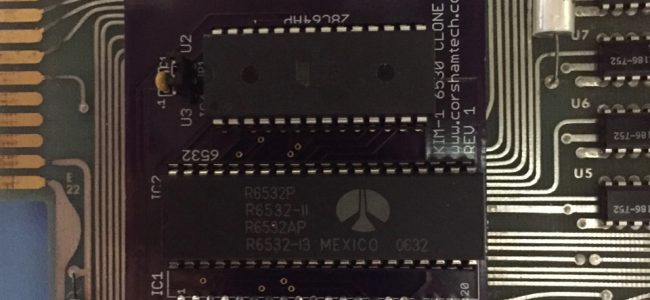
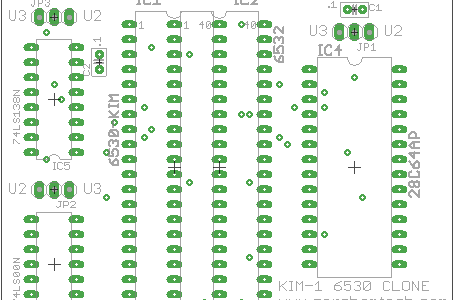
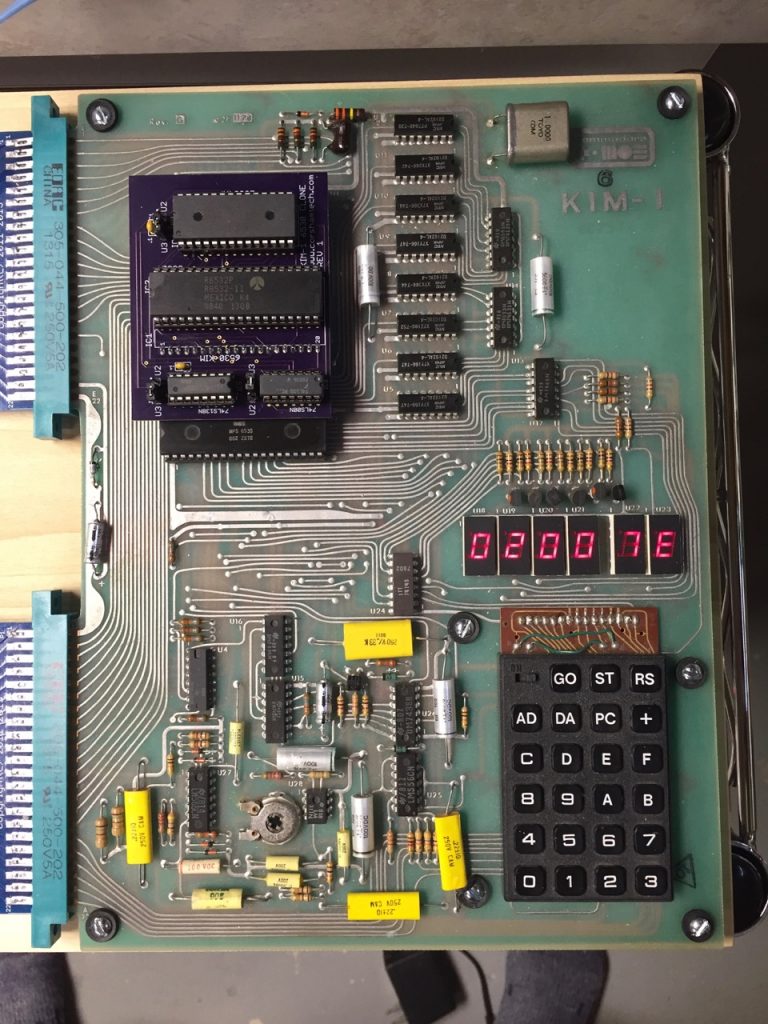
A KIM-1 clone build by Bob Applegate of Corsham technologies.

Somewhat inspired by the microKIM by Vince Briel, who was inpired by Ruud Baltissen! The idea is replace the 6530’s with 6532 and by carefull memory decoding have the I/O, timer and RAM of the 6532s appear at the same locations as the 6530-002 and -003. ROM is added with an EPROM.

Not an exact copy, the ROM has been changed/enhanced with a KIM Monitor by Bob, though the original KIM-1 ROM should work also.

post

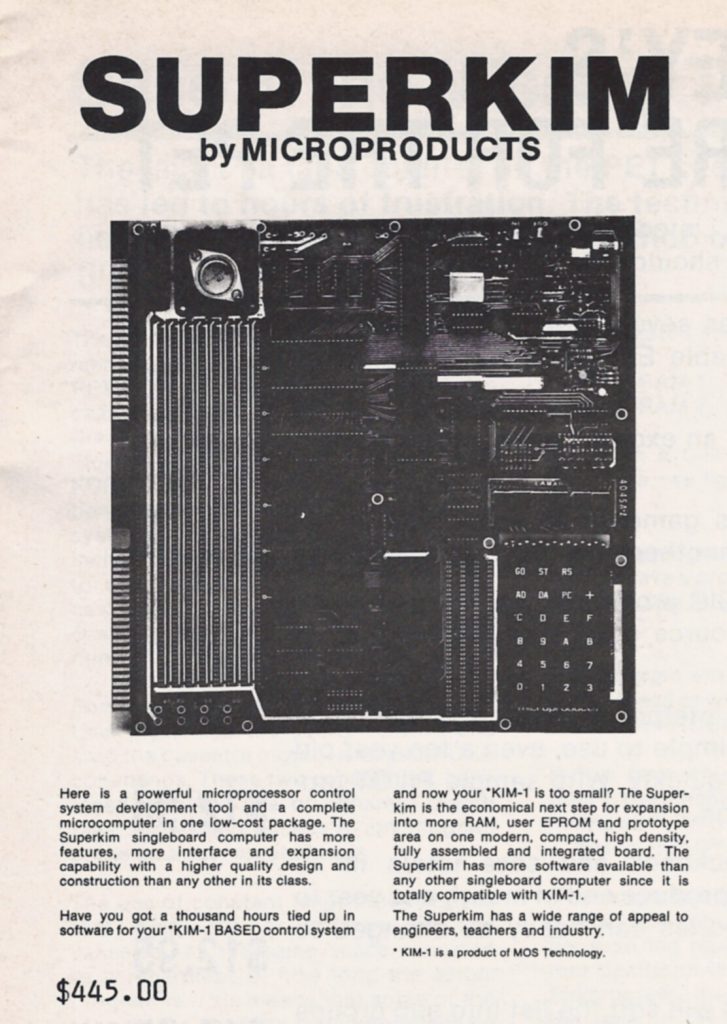
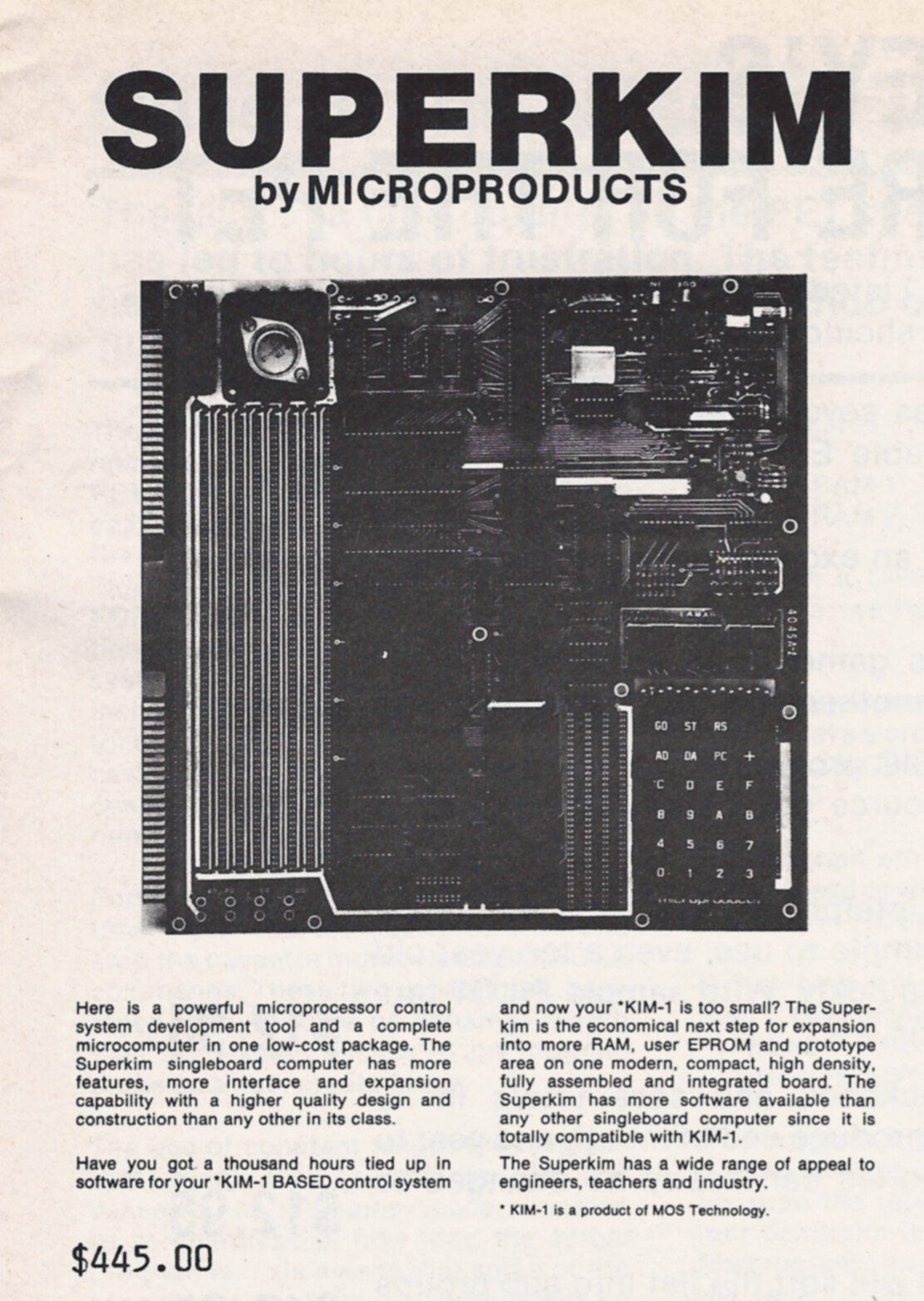
SUPERKIM

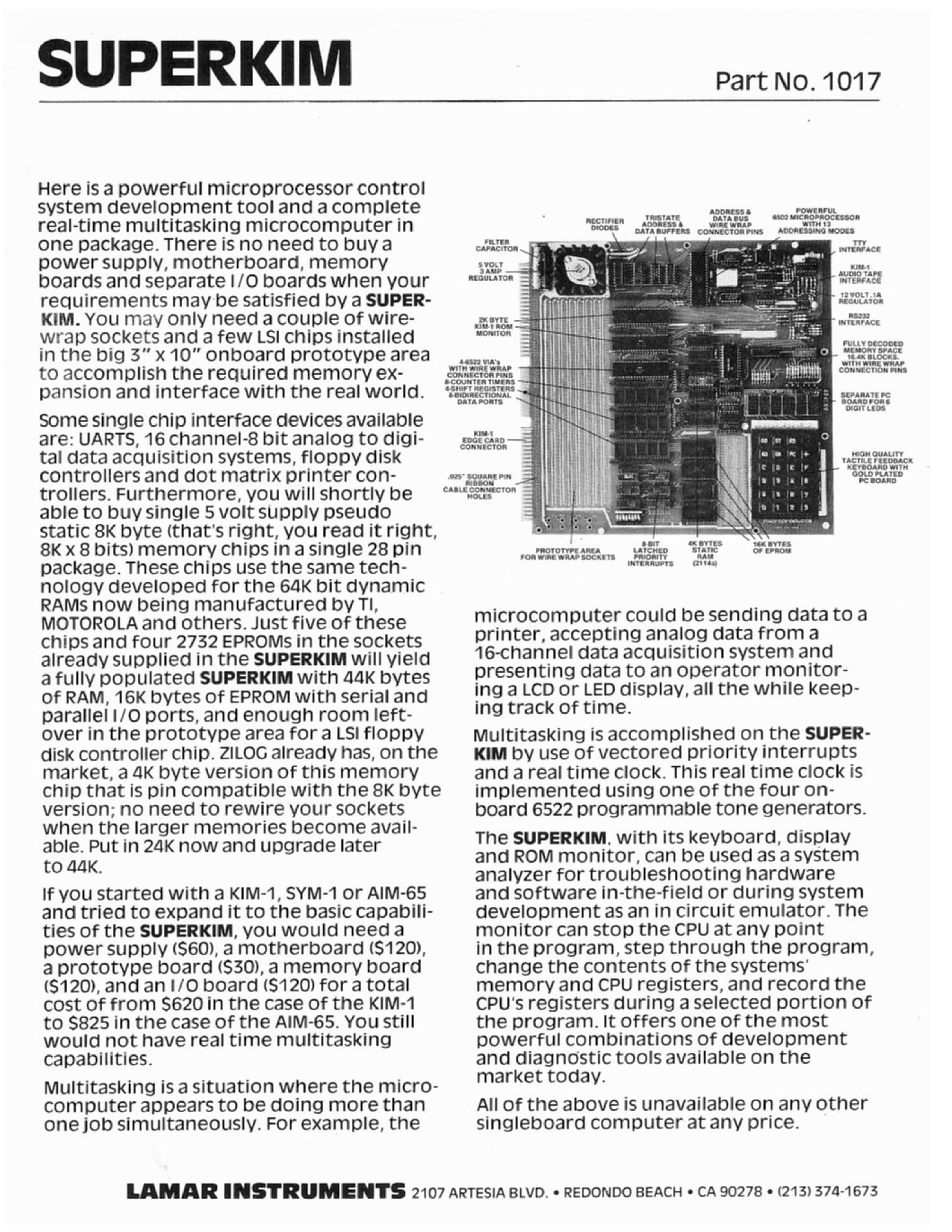
A KIM clone developed by Paul Lamer for track testing at car races. The Super KIM was sold us board also, as advertisements show.
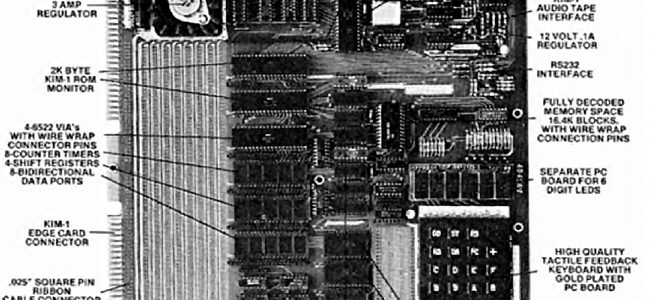
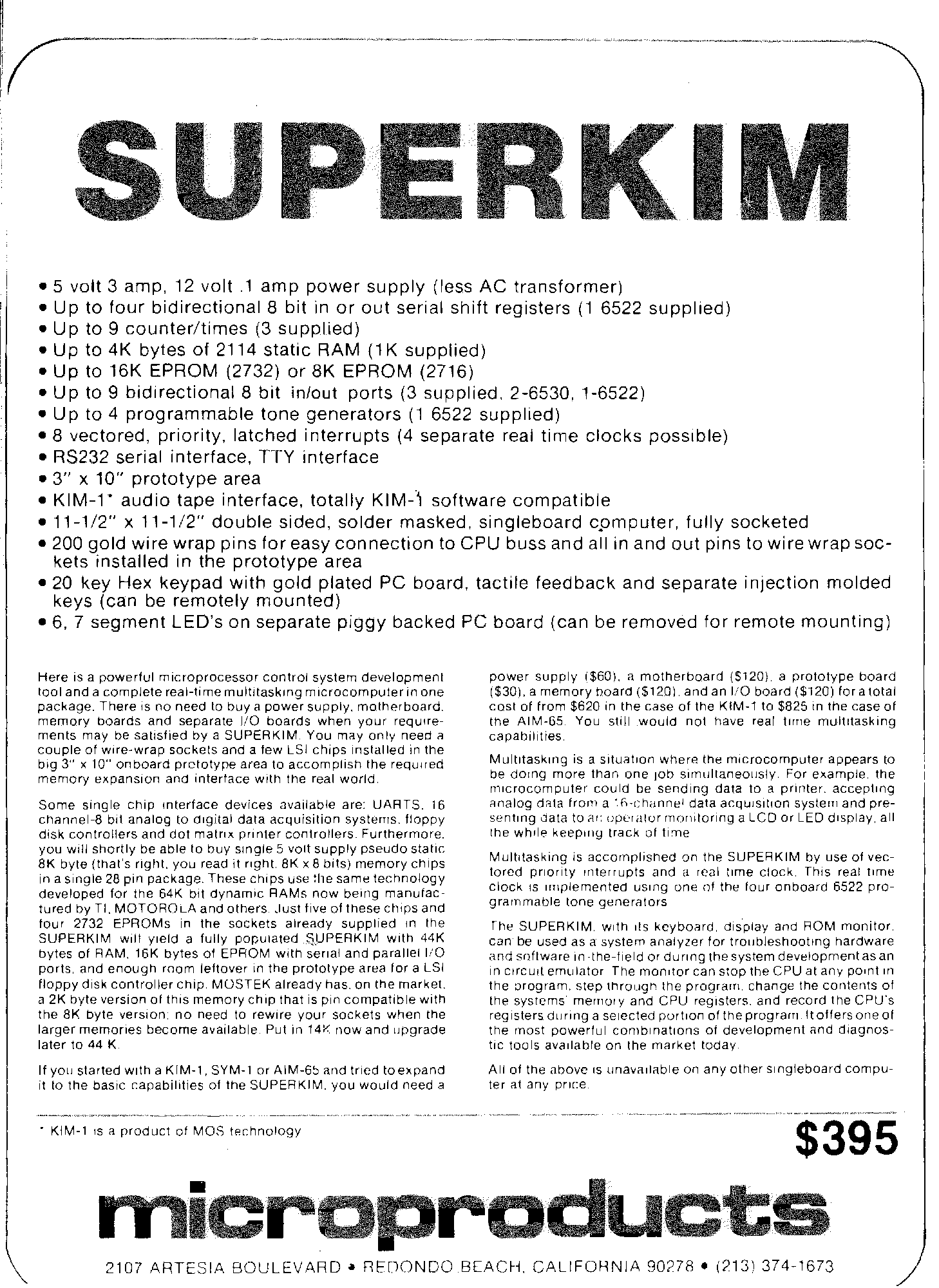
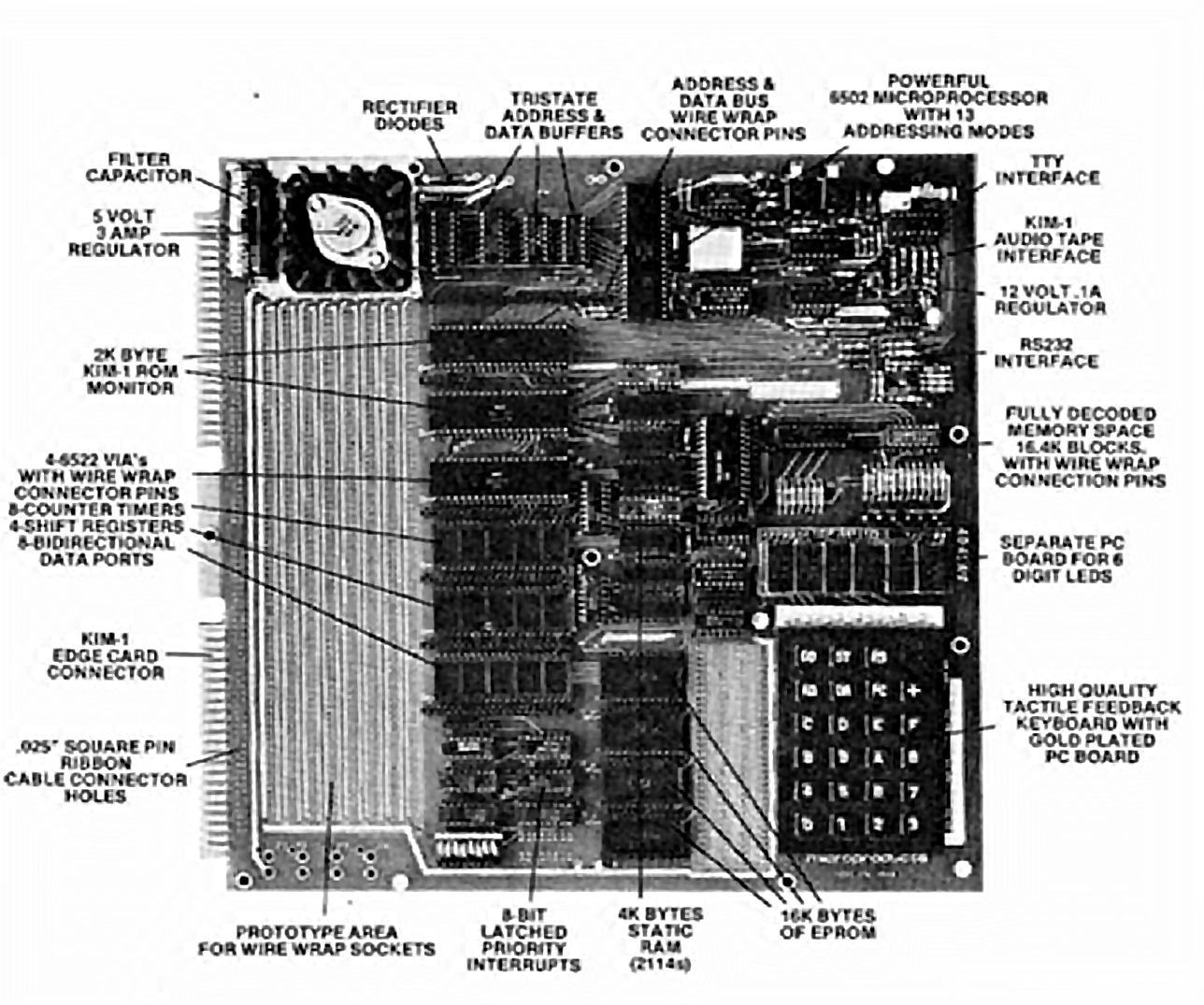
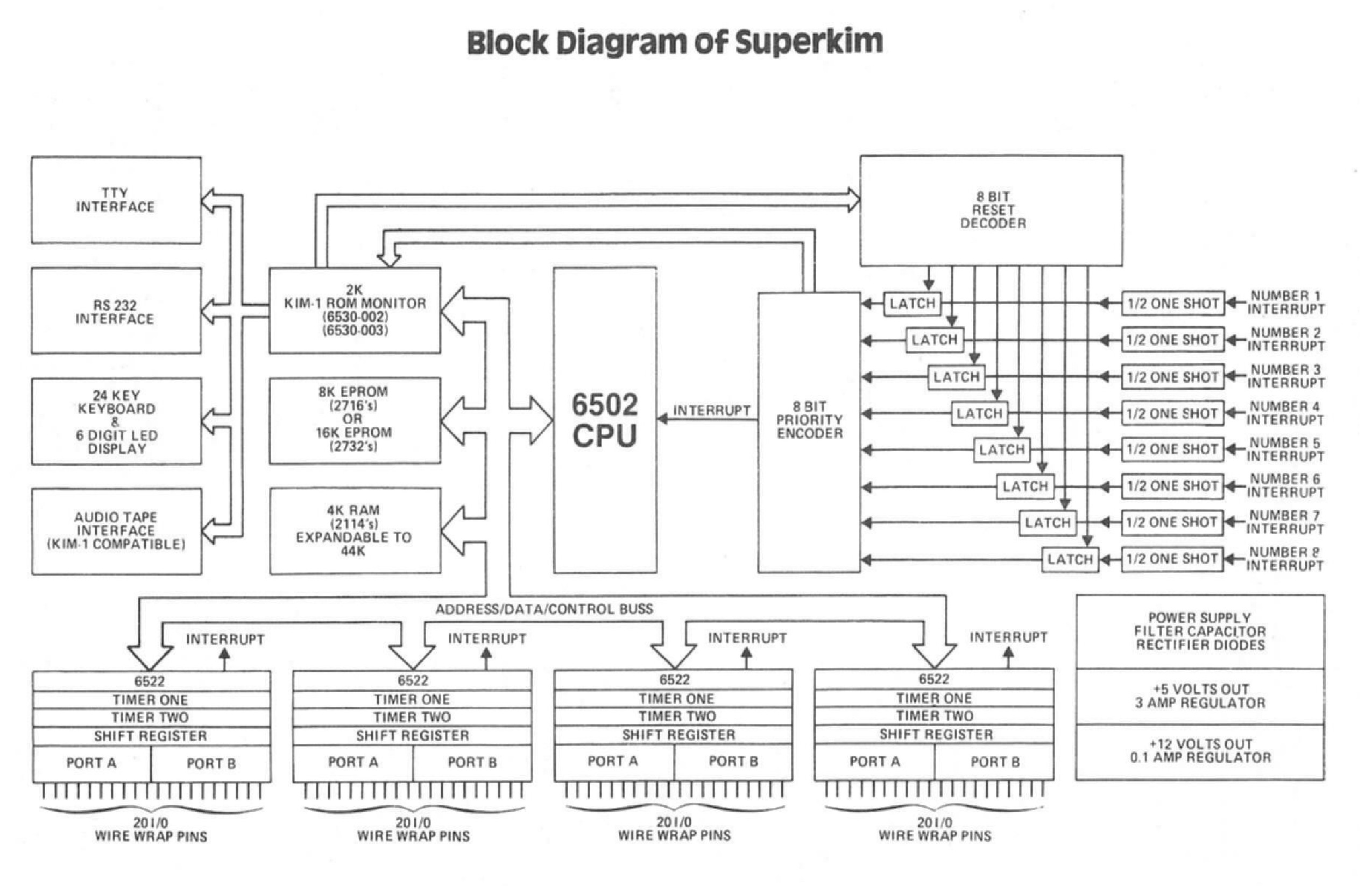
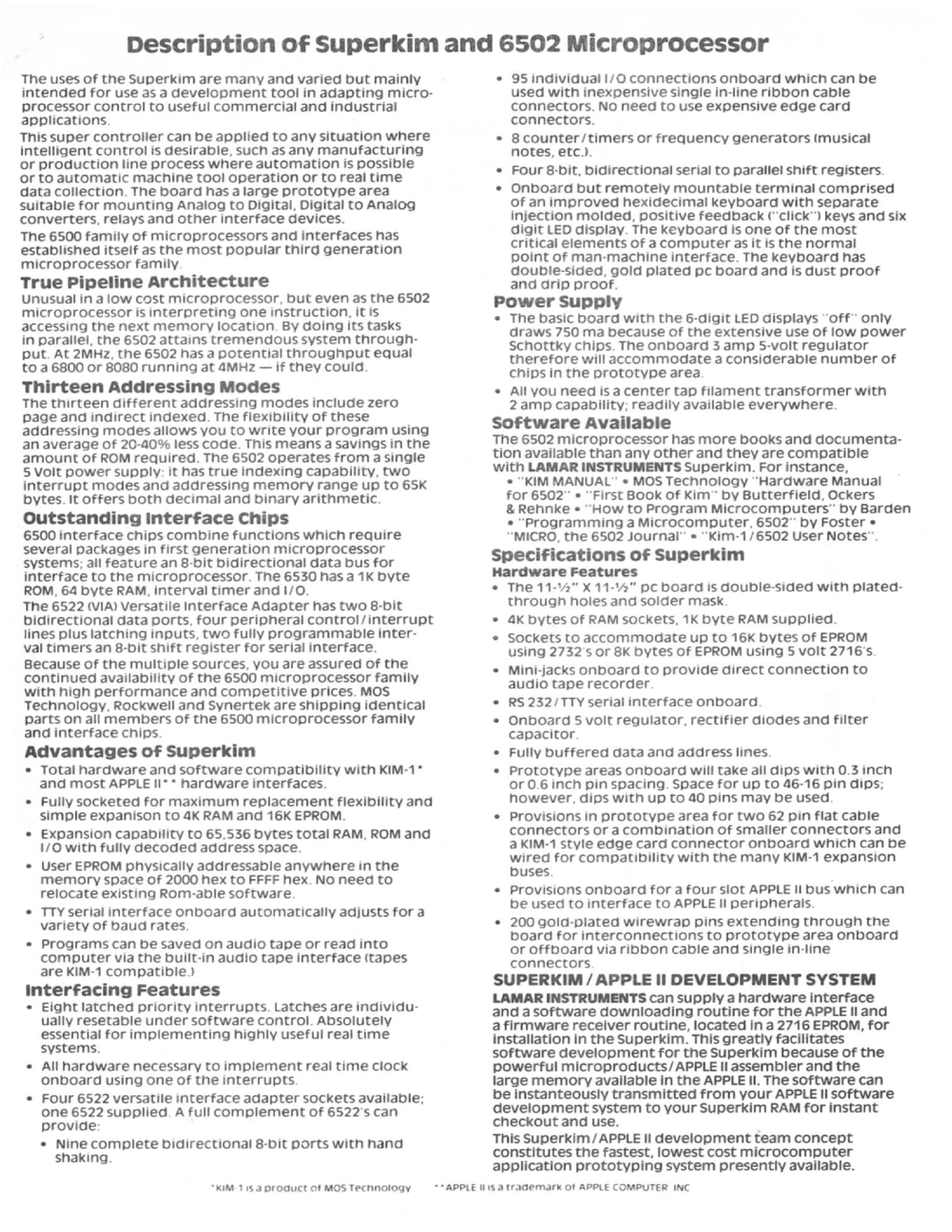
A true KIM clone with both 6530 RRIOTs, 4K Bytes RAM (8x 2114), 8 bit latched priority interrupts, 4 6522 VIAs, 16K Bytes EPROM (4x 2732), Power supply on board, tri-state address and databus buffers, KIM-1 edge card connectors.

Read here more about the SUPERKIM
With the name SUPERKIM an engineer called Paul Lamar designed a SBC around the 6502.
The main design decisions were to be a superset of the KIM-1, requiring no alteration of KIM-1 programs or user interface (the keyboard/display!) but with much more extendable resources. And the result is just right, it Is a KIM-1 with many improvements!
I have never seen this system in real life here in the Netherlands, only advertisements in the then current, dedicated to the 6502, magazines.

The heart of the system is the 6502 at 1 MHz and the well-known KIM-1 RRIOT’s 6530-002 and 6530-003,  the six  seven segment led  displays, a keyboard equivalent tot the KIM-1, the cassette interface and RS-232-C serial interface.  Extra are 4kRAM (from 1K on the KIM-1), 4×6522 VIA’s, 8K EPROM , all socketed and not populated by default. A 8 bit priority encoded IRQ and space for wire wrapping on the board. Also included are fully decoded address map lines, tri-state buffers for address and data bus on wire wrap headers and a power supply for 12V, 1A input ging 5V and 12V.

The KIM-1 ’emulation’  is complete, since the KIM-1 6530’s are there, at the default location and relevant KIM-1 hardware like seven segment display and keyboard, audio cassette interface and tty interface and edge connector.

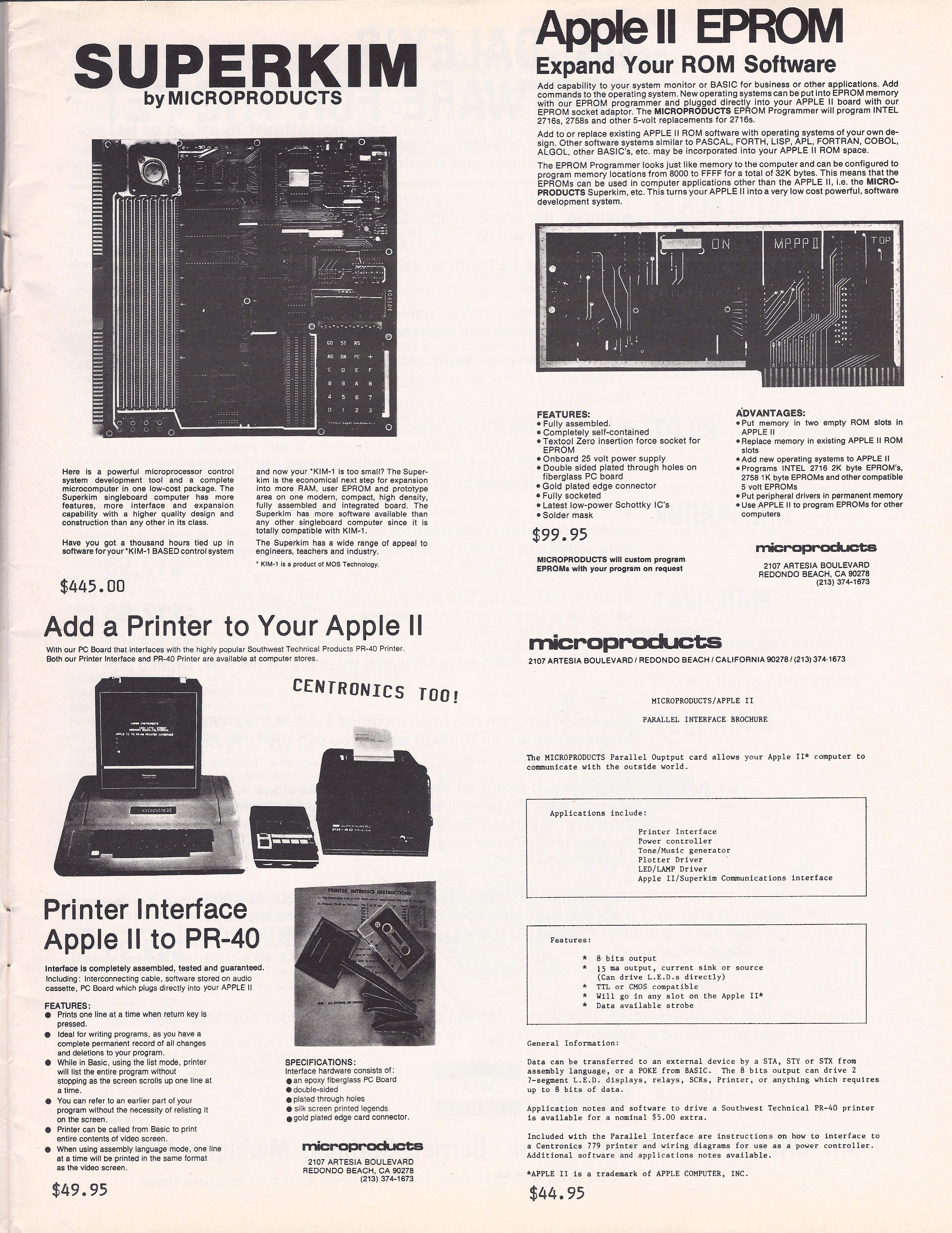
The SUPERKIMwas sold by Microproducts as shown in this advertisement page in the magazine Micro, issue 13 June 1979:

Paul Lamar initially developed Road Test Systems with the KIM-1 and the limitations in resources made him develop the SUPERKIM.

Articles describing the use of the SUPERKIM in robots and Road Test systems:

IEEE: Microprocessor based System for roll-down and acceleration tests. LA-UR 78-3234 D.K. Lynn, C. Derouin and P. Lamar

Articles about the Computerized Road Test System from Lamar Instruments

From the blog of Dennis Simanaitis:

TRACK TESTING, POST-TAPLEY METER, PRE-WHIZBANG

I came upon some photos summarizing automotive testing as practiced when I arrived at R&T in the late 1970s. One photo brought back memories of the excitement, the technical expertise, the glamor.
Weighing a test car, c. 1979.
We weighed our test cars at a local builders supply. The idea of having our own scales capable of obtaining individual corner weights was far off in a digital future. Rough and ready though the scene appeared, the supply-yard scales were California-certified and nearby.
Track testing took place at Orange County International Raceway, a local drag strip with abbreviated road course. A fabled place: Bob Bondurant used it for his first driving school, opened in February 1968. The second week, Bob had two students: actors Paul Newman and Robert Wagner, both preparing for the movie Winning. P.L. Newman continued, racing and winning.
In 1977, R&T’s John Dinkel, my predecessor as engineering editor, asked a fellow named Paul Lamar whether any new computerized gizmos might be employed in gathering acceleration and braking data.

John Dinkel, at the wheel, and Paul Lamar examine computerized data. (That’s their story; and they’re sticking to it.) This and other images from R&T, May 1977.

Paul is a cool guy. Beginning in 1966, he worked with Texan Jim Hall in developing the Chaparrals 2C, 2D and 2F. (Paul was responsible for most of the body design of the 2F.) After that, he set up his own company doing race car development and equipment design. For a long time, he has been active with aircraft applications of Mazda rotary engines, at a website proudly “Powered by Linux!”

Back in 1977, Paul said to JD (as Dinkel was known), “I recommend you consider a microprocessor. It’s the coming thing in electronics.” Paul followed up on his recommendation with devising the first computerized test equipment used by an auto magazine. Hitherto, acceleration testing was a two-person task, one driving, the other punching an array of stopwatches based on measurements of a bulky 5th-wheel.
Another gizmo, the sainted R&T Tapley Meter used to give impressive data with which we younger readers were highly impressed (“Wow! Off-scale!”), though we never really understood what it was measuring. (It turns out the Tapley Meter was a pendulum-driven accelerometer.)
When I began at R&T in early 1979, Paul’s computerized black box became an everyday part of my track testing. Its heart was an MOS Technology MCS 6502 Microprocessor Array.
The “sixty-five-oh-two” was pivotal in the computer industry: Its price was one-sixth that of comparable products and brought about a rapid decrease in competitors’ pricing and a dramatic increase in microprocessor availability. In retrospect, it likely had the computing power of a toy digital clock operated by a potato battery, but at the time it was state-of-the-art.
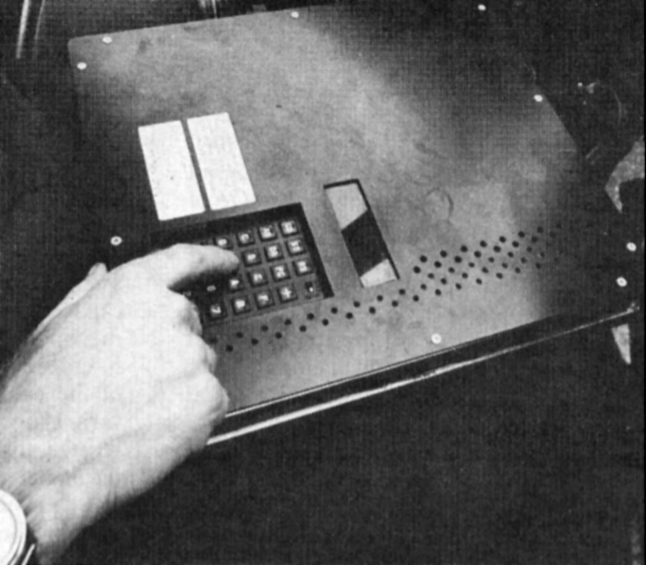
The Lamar black box had a keyboard for programming. (How’s your base-16? Mine is sketchy at best.)
The Lamar black box’s keyboard was one of its ways for entering a program—in hexadecimal (base-16) code! Fortunately, once debugged, the acceleration and braking programs were stored on a separate Sony
cassette tape recorder and played back into the 6502 when changing from one test to the other.
Alas, the black box had insufficient memory to store them. Also, reprogramming turned out to be occasionally heat-sensitive: I would do the acceleration testing, say, then turn on the car’s a/c to cool off the interior for a bit. Only then would the Sony convey its bops and beeps successfully to the black box.
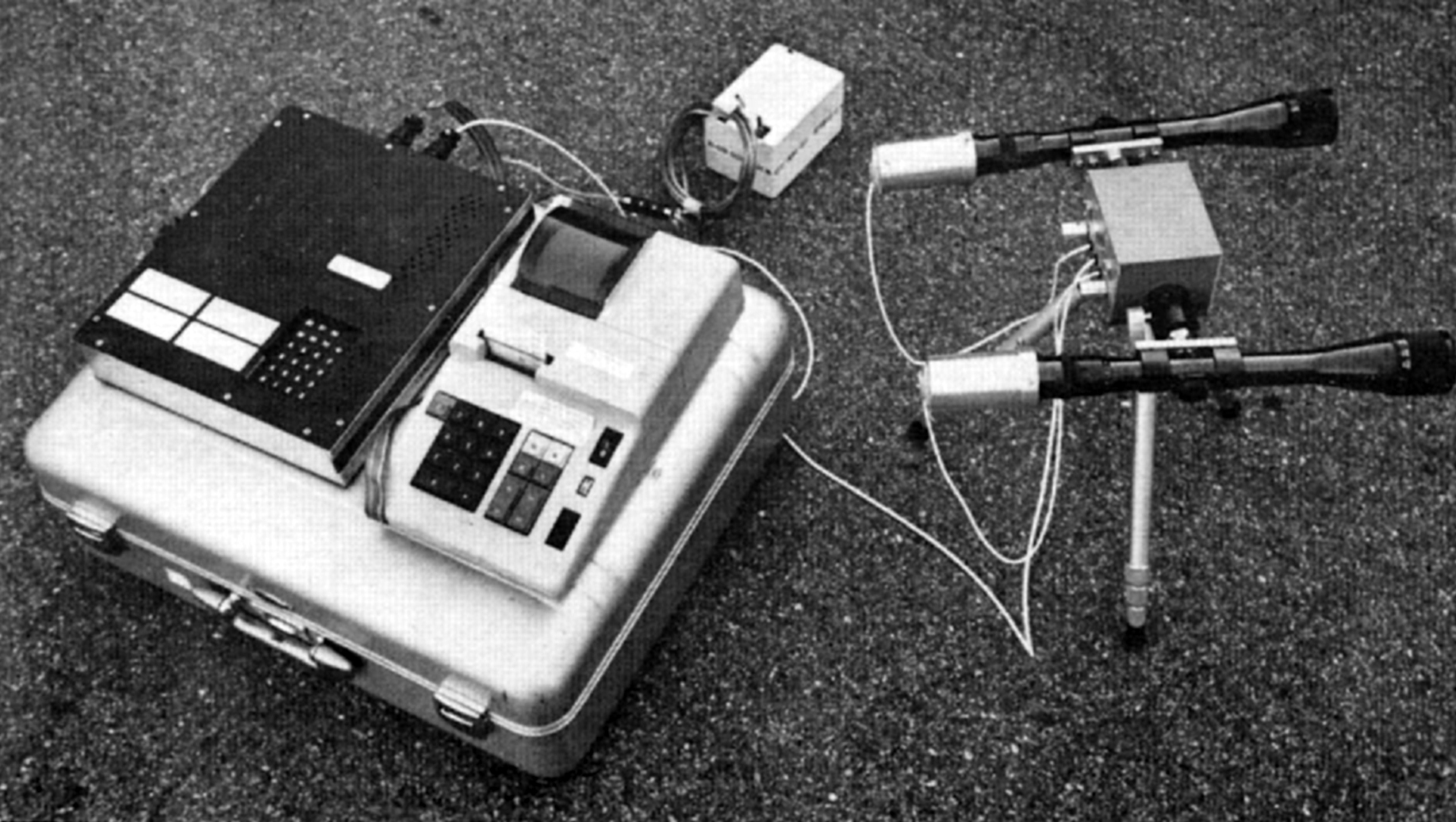
The 6502’s liquid crystal displays gave information on time, car speed and distance traveled. The Sony cassette tape recorder to its right swapped the 6502’s programs.
Sensitive though it could be, the setup was more accurate than stopwatch-punching and it was a one-person operation. Results were printed on a strip of paper by a separate device, a modified Addo desk calculator residing on the passenger seat. (Paul’s second-gen black box had a built-in printer and enough memory to eliminate the pesky reprogramming.)
Typical results from a separate printer, a modified Addo desk calculator.
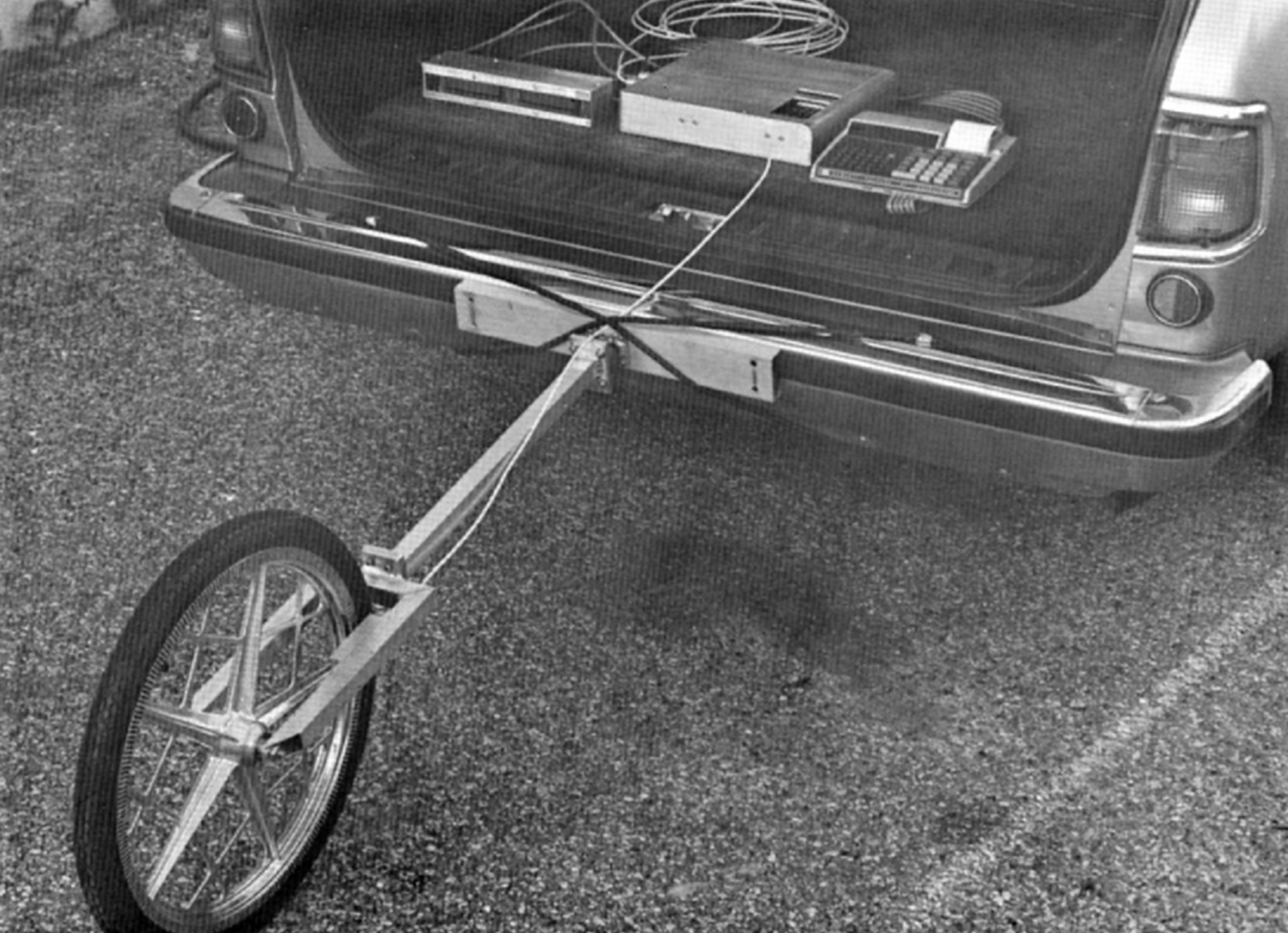
The Lamar 5th-wheel was decidedly easier to use than its traditional counterpart. It weighed 20 lbs. versus the clunky one’s 40 lbs. and attached with bungee cords, not potentially bumper-damaging clamps.
The Lamar 5th-wheel compared favorably with its traditional counterpart. It could also be disassembled for shipping.
In 1986, I documented our testing procedures in a presentation to the Society of Automotive Engineers, SAE Paper 861114, “A Magazine’s View on Automotive Testing.” The paper was accompanied by a short film completely produced by R&T, a story in itself. This was back before video cameras—and ages before smart phone imaging.
R&T’s Cecil B. “Joe” DeRusz shot the flick using an Arri Arriflex 16-mm camera, the best of its kind, rented from a Hollywood outlet. We had a vague shooting script based on the technical details of the SAE Paper. But I have vivid memories of Rusz figuring out angles, the entries into frame and exits out of it. I recall we produced the film in a few days of on-again/off-again shooting. Likely over budget. There were lunches after all.

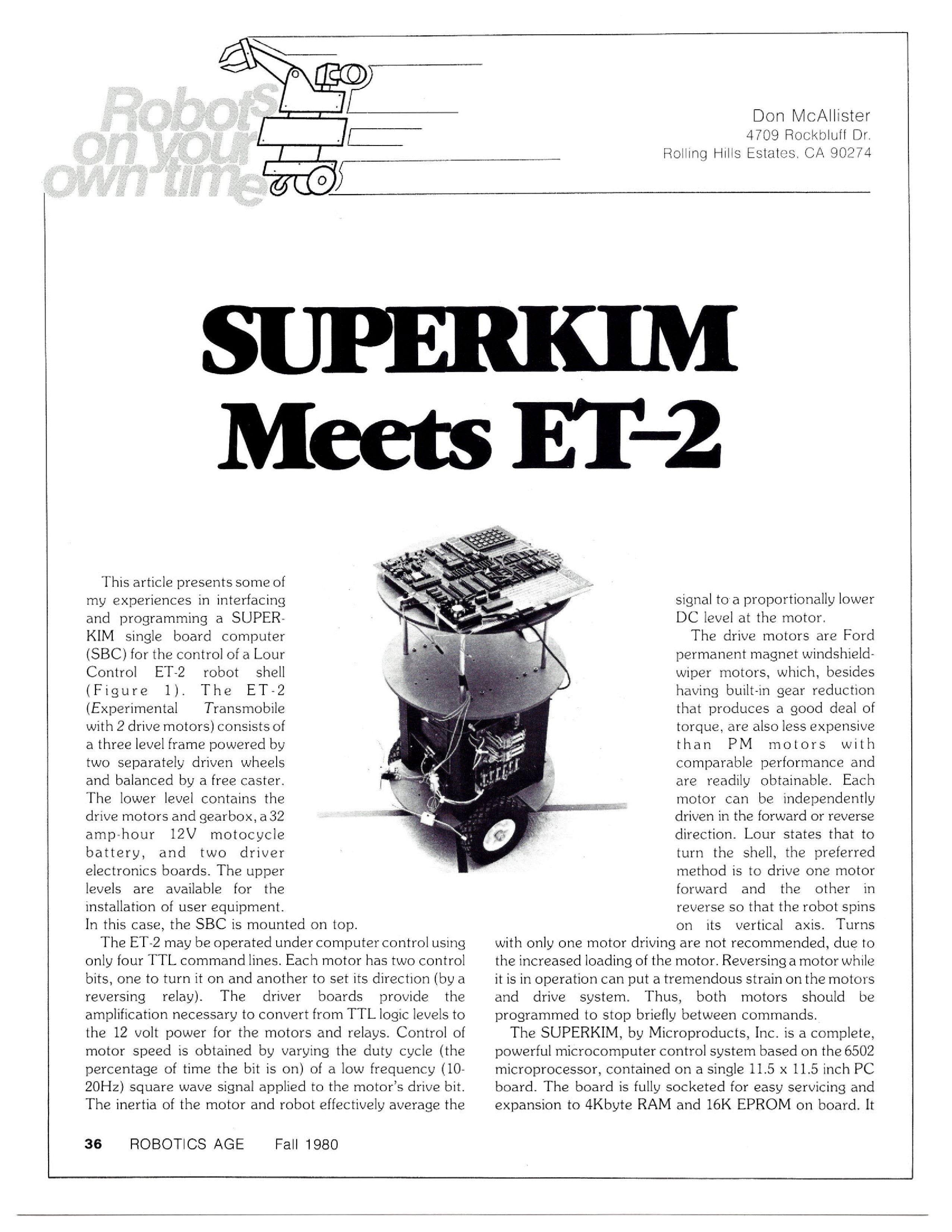
SUPERKIM meets ET-2

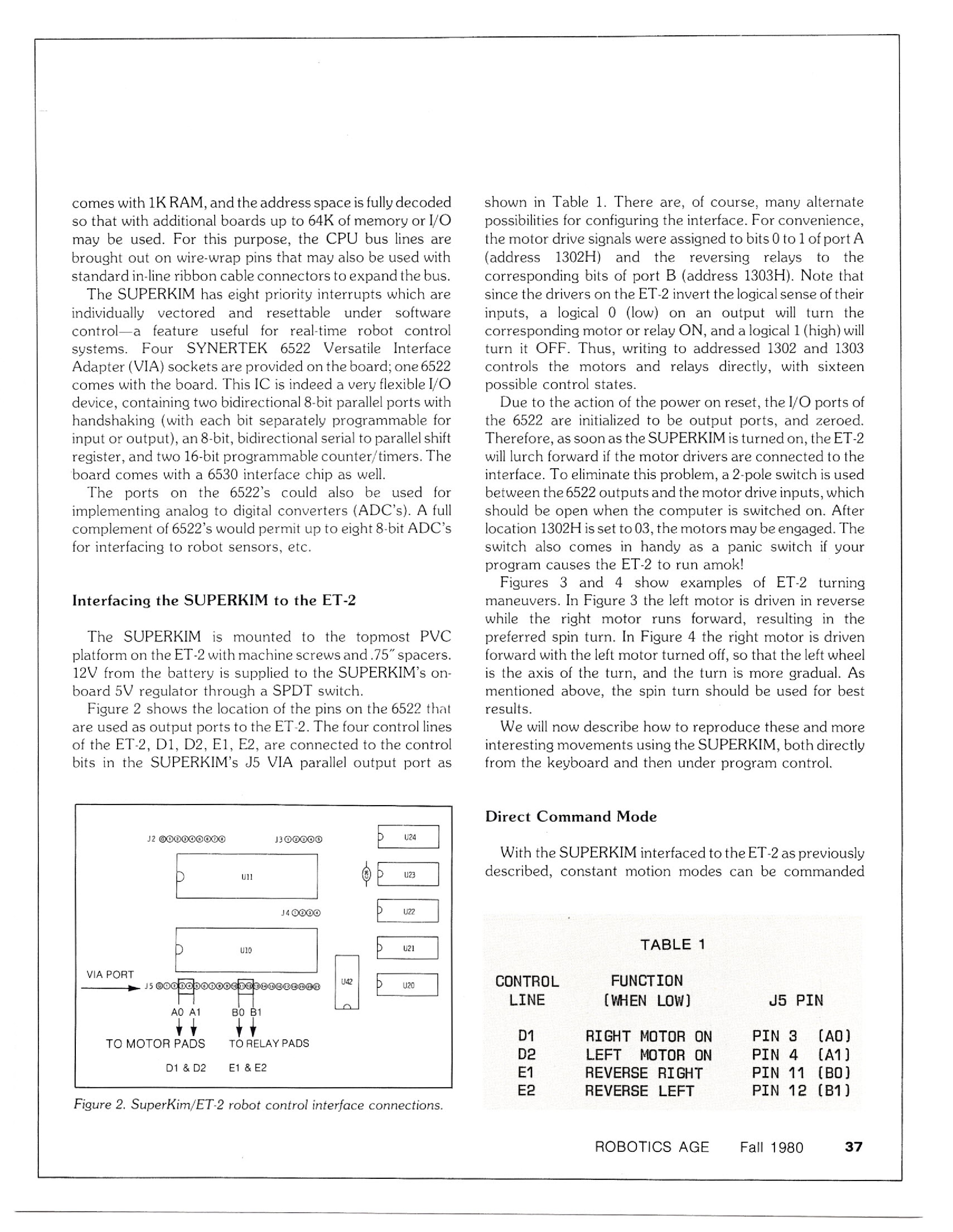
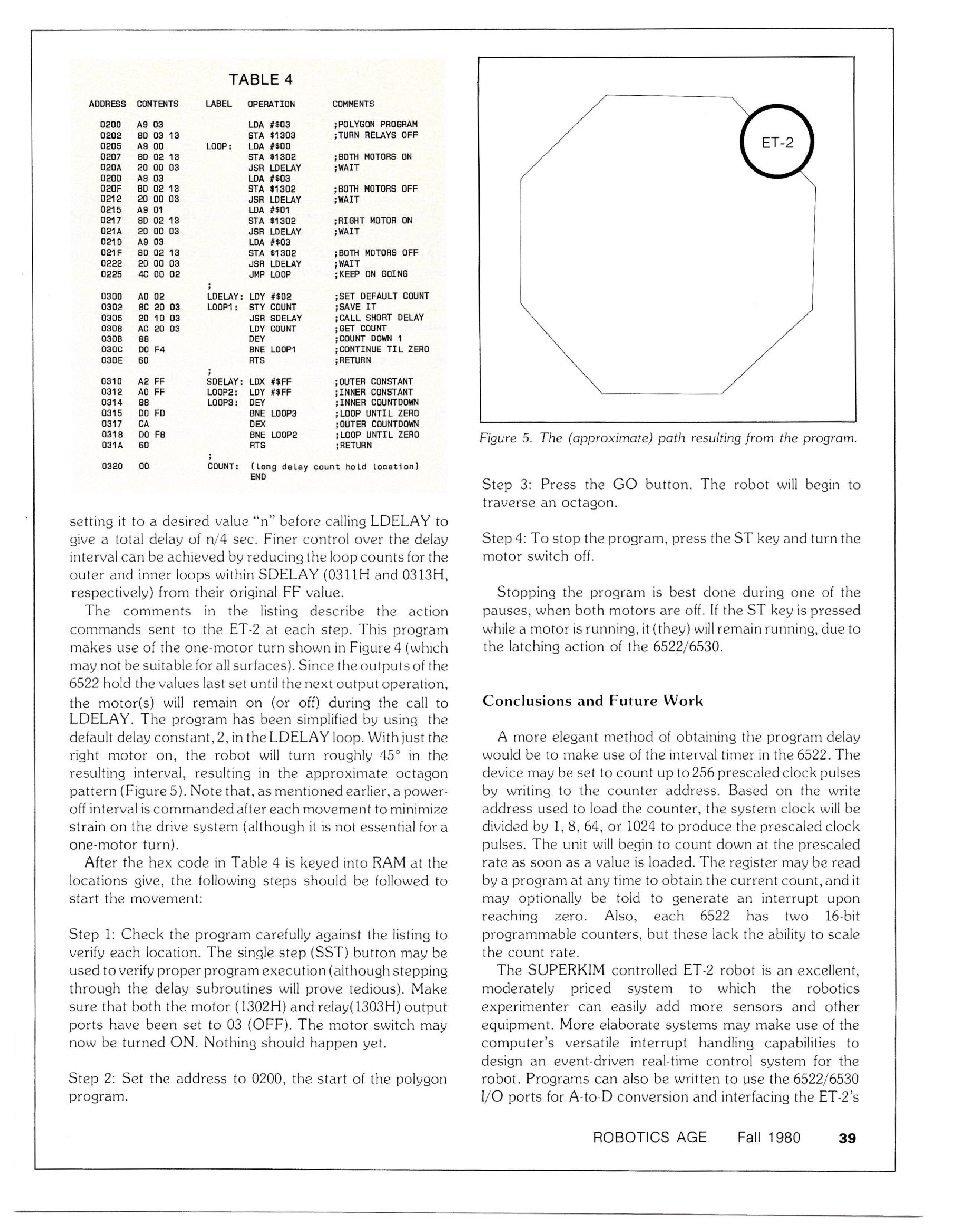
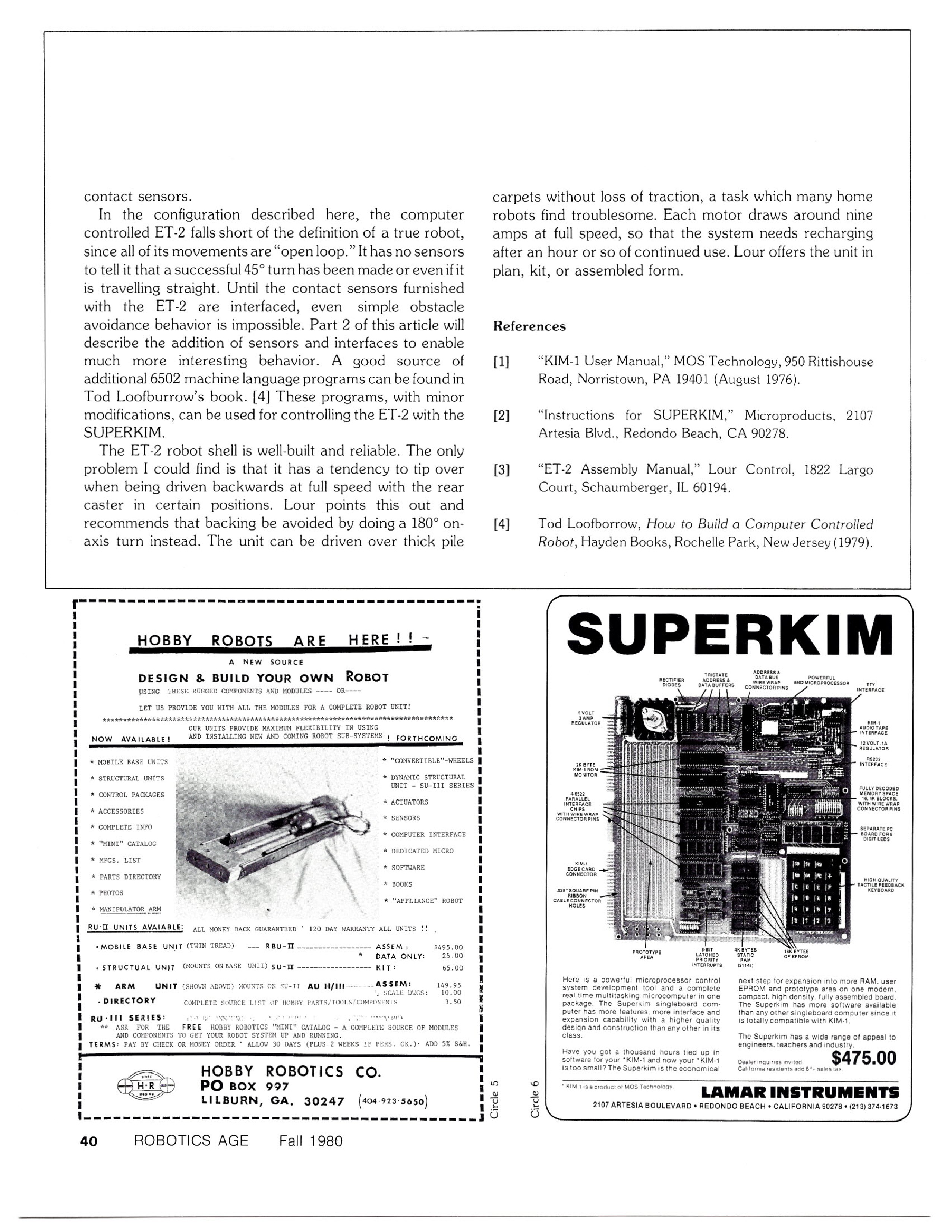
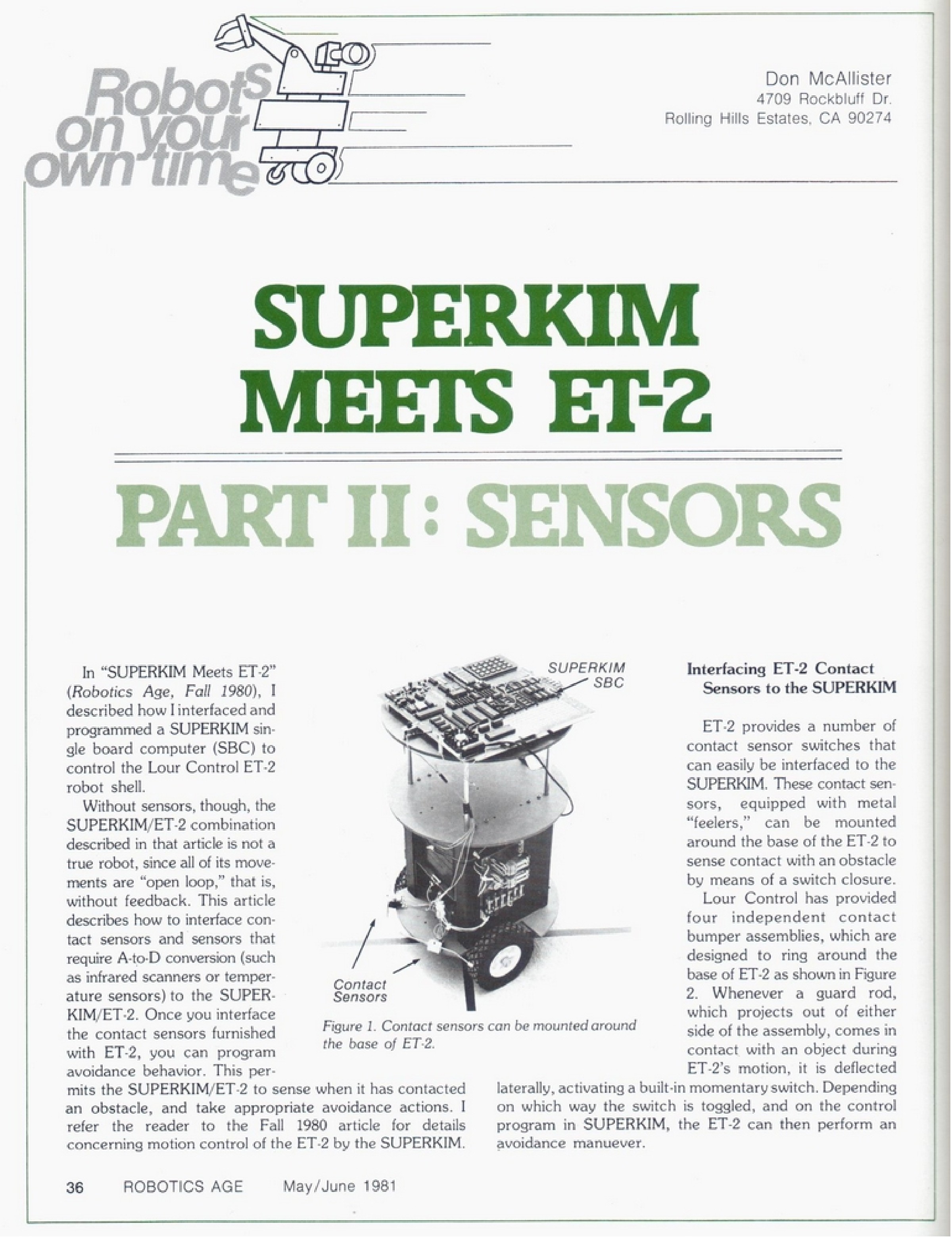
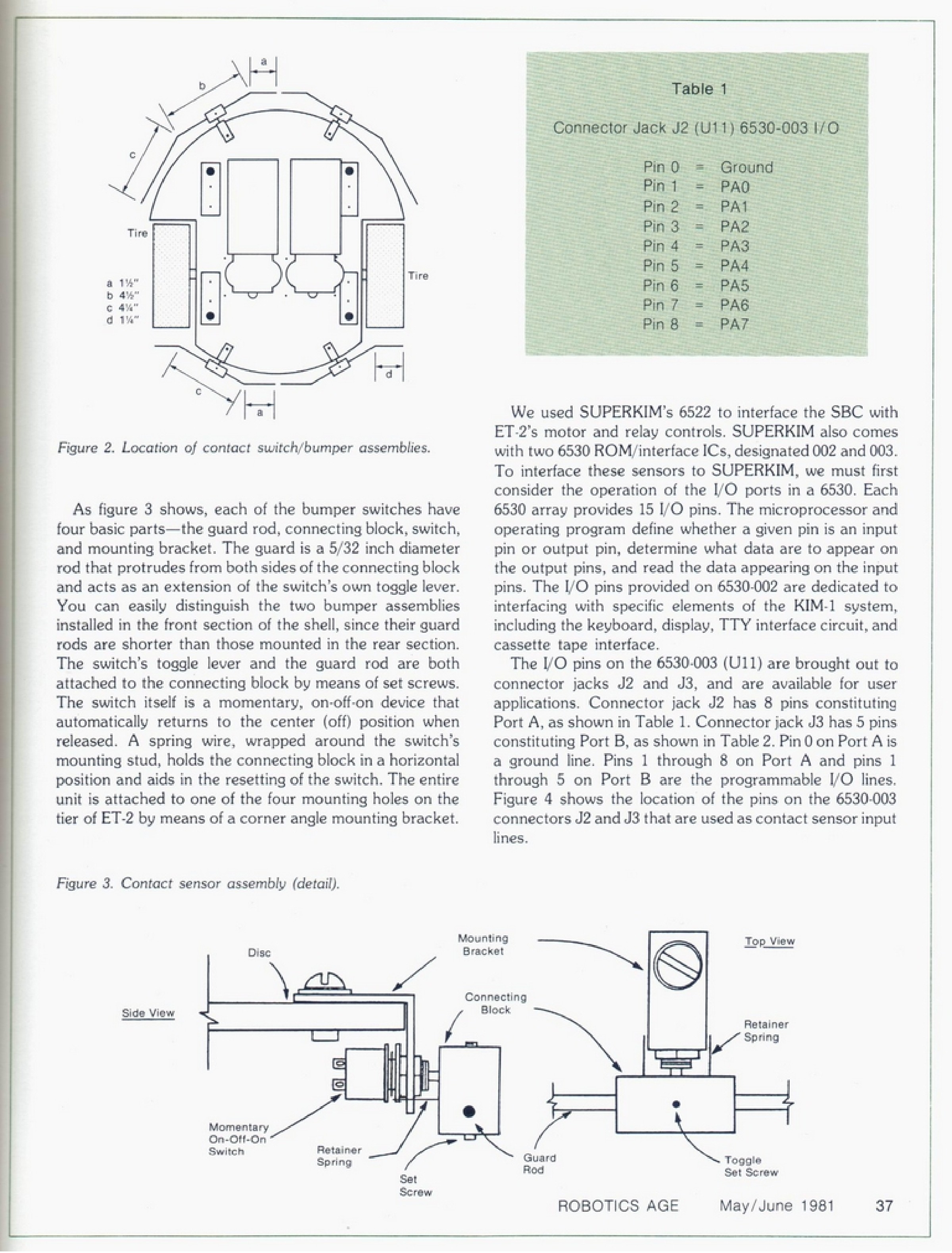
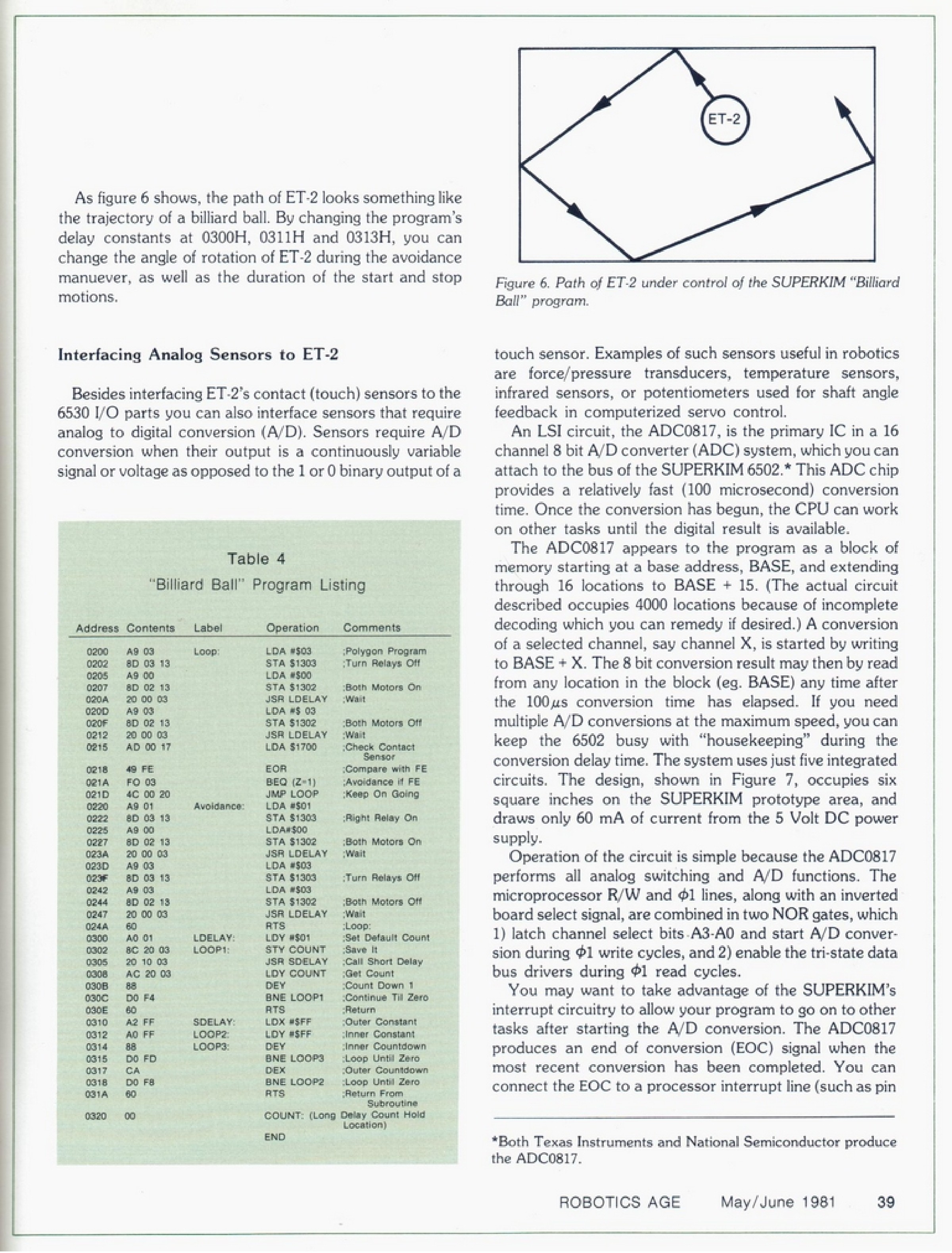
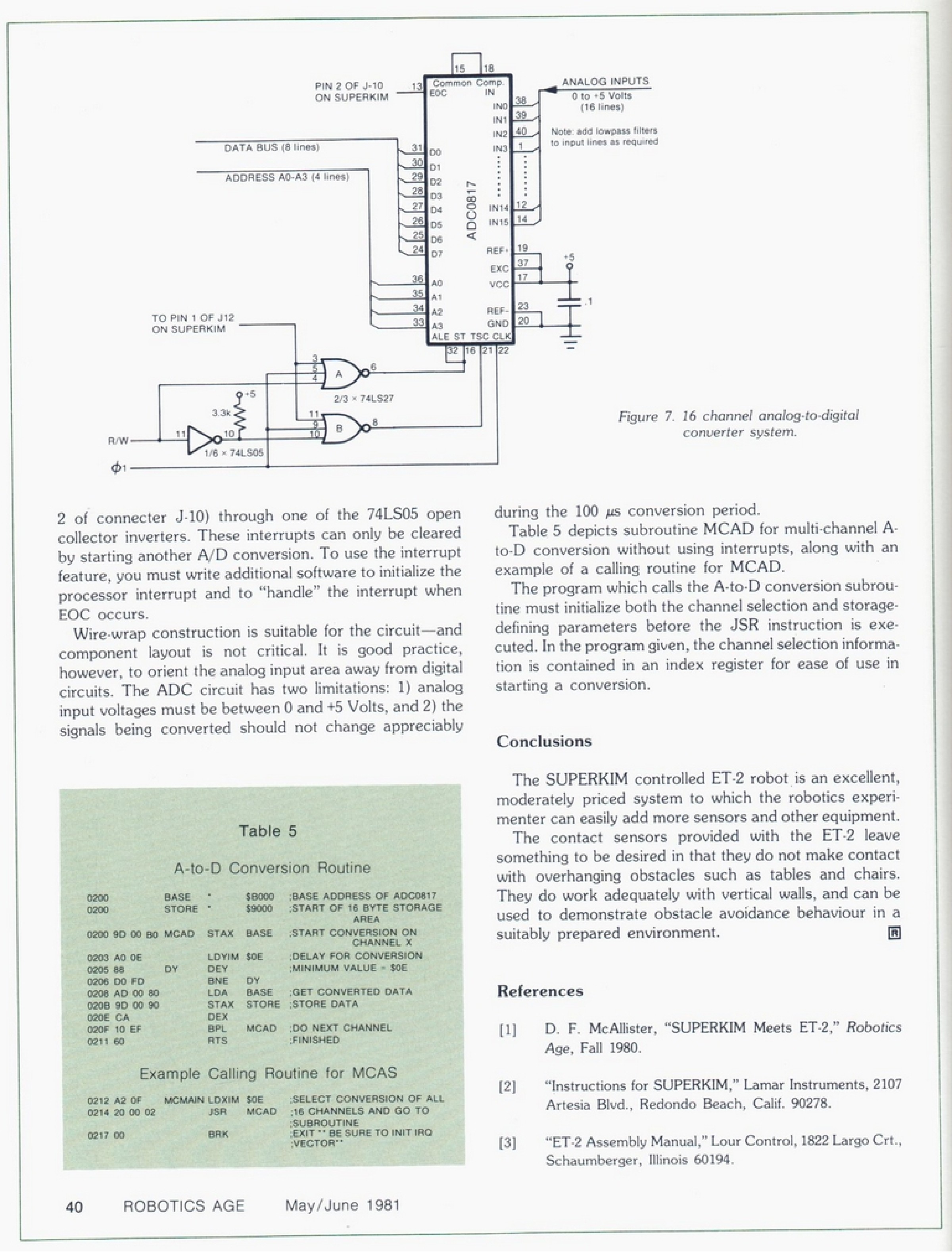
In a two part article in the magazine Robotis Age 1980-1981, Don McaAllister describes the interfacing an programming of the SUPERKIM for the control of the Lour Control ET-2 robot shell.


post

The Computerist

http://retro.hansotten.nl/6502-sbc/the-computerist/

post

The Computerist Hard- and Software

The Computerist was a company founded by Robert M. Tripp.

  • Distributor of software like  Microchess, this is where my copy originated from (via Ing Bureau Koopmans in The Netherlands).
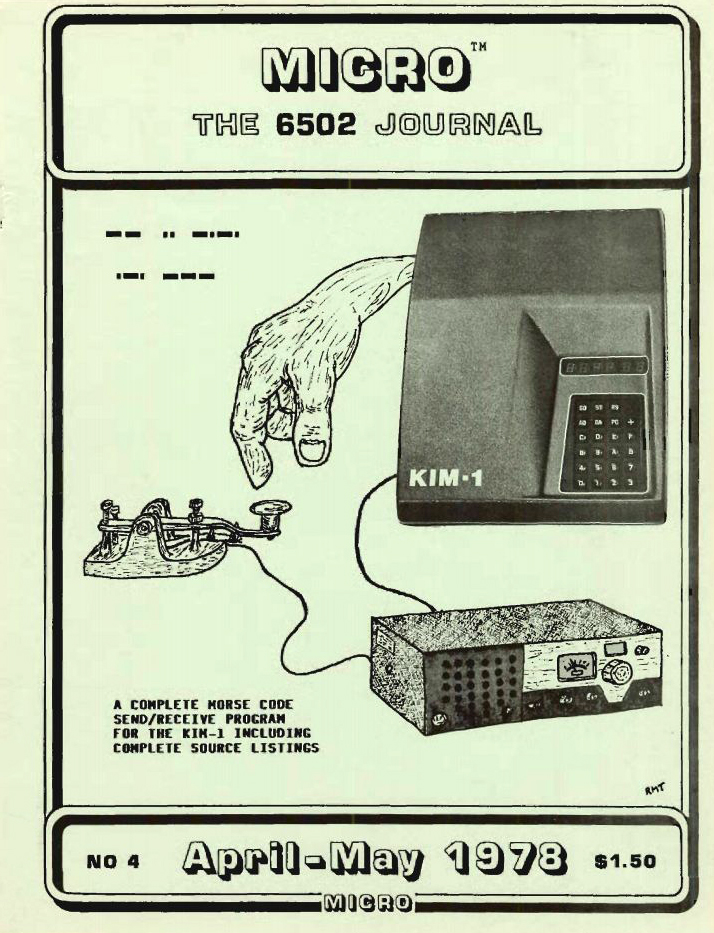
  • MICRO: the 6502 Journal was a 6502 dedicated magazine published by Robert M. Tripp.
  • Producer of hardware like the PLUS series
  • Software like the PLEASE package

On this page information on the PLUS hardware for KIM-1, AIM 65, SYM-1.. Updated April 2022 with contributions by Friedrich Hofmann.

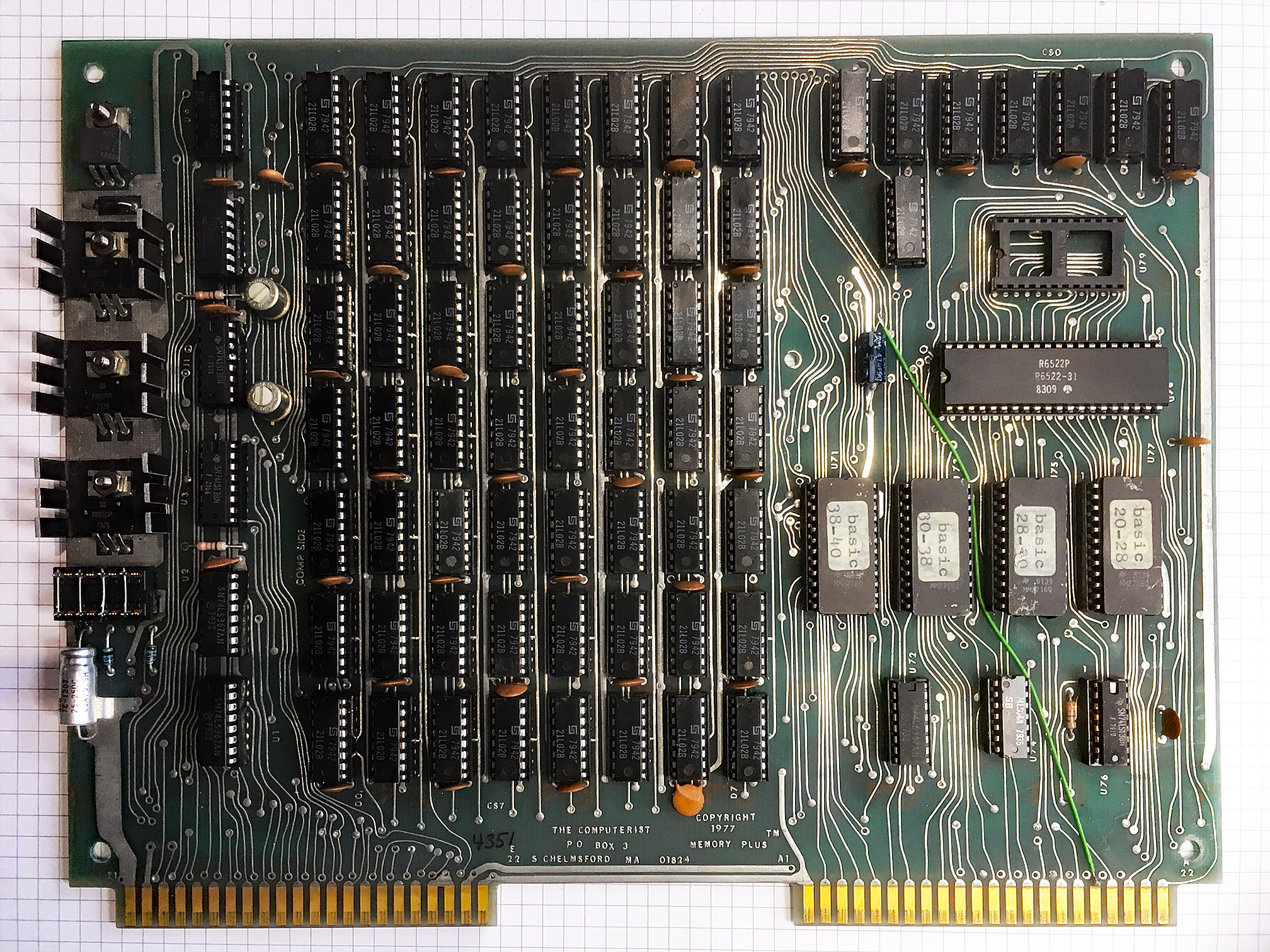
Memory PLus van Dirk Dral, met 8K Basic in EPROM.

MICRO the 6502 Journal

Archive of the magazine Micro here.

From apple2history.org description of MICRO 6502 Journal:
Robert M. Tripp got his start with computers in 1960 as an undergraduate in an unrelated field. He found the computer programming so interesting that he became a programmer in 1969, and started with the 6502 microprocessor in 1976, initially with the KIM-1 trainer sold by MOS Technology. He started a business, “The COMPUTERIST”, and sold the KIM-1 computers, as well as software and accessories for it. He started a magazine under the umbrella of his business, and named it Micro. It began publication in October of 1977, and was released on a bimonthly basis initially, going monthly in February of 1979. The first three issues were printed using his KIM-1 and he did the paste-up for the magazine on his kitchen table. He later began to use a local publishing company to create the magazine. By early 1980 the publisher name had changed to MICRO-INK, Inc.

The magazine covered the 6502 microprocessor (and later the 6809) in all the various computers that used it, including the KIM-1, the AIM-65, the C1P, the Commodore PET, the Ohio Scientific, the Atari 800, and, of course, the Apple II. It was an excellent source for machine level code for the 6502, eventually including more and more articles that applied specifically to the Apple II. Ultimately, about half of the articles in each issue dealt with the Apple II.

Many general-purpose machine language articles appeared in its pages, such as “Improved nth Precision” (code optimization for the 6502), “Precision Programming”, and “Computer Assisted Translation Of Programs From 6502 to 6809″. They also carried do-it-yourself hardware articles, such as “C1P To Epson MX-80 Printer Interface”, “PET/CBM IEEE 448 To Parallel Printer Interface”, and “Apple II Digital Storage Oscilloscope”.

PLEASE Package

PLEASE is a very small package for a standard KIM-1. It has a tiny monitor, command interpreter and many handy subroutines.

PLEASE INSTRUCTIONS
PLEASE LISTING first version
PLEASE LISTING Second Edition, higher quality
PLEASE Package sources and binaries

Hardware by The Computerist

The Computerist, led by Robert Tripp, not only sold software like MicroChess,  published the Micro Magazine, also designed and sold hardware and software.

The Dutch company, Ing. Bureau Koopmans (a one man company, active in the early years with KIM-1, OSI Scientific and such) represented The Computerist in the Netherlands, and he showed me in 1979 some of the Plus hardware series for the KIM-1, SYM-1 and AIM-65 systems:
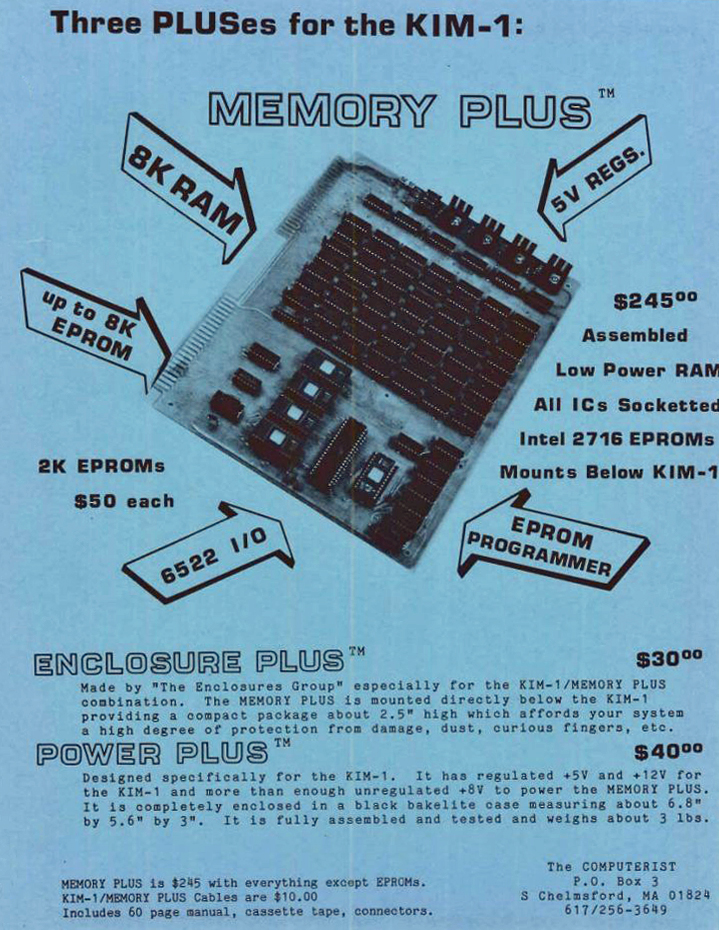
– MEMORY PLUS: 8K RAM, 8K ROM, VIA 6522, 2716 EPROM programmer
– Proto Plus, a DIY board
– VIDEO PLUS, a glass teletype video card

I did a review of the Memory Plus in May 1979, see also the dutch magazine Radio Bulletin page.

PLUS Hardware

A range of hardware was developed and sold by the Computerist, under the brandname PLUS.


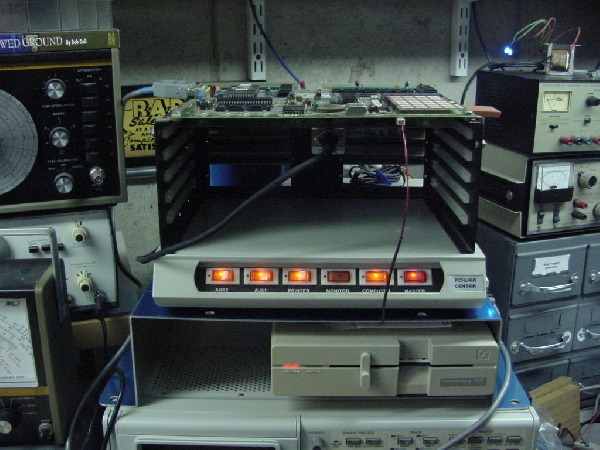
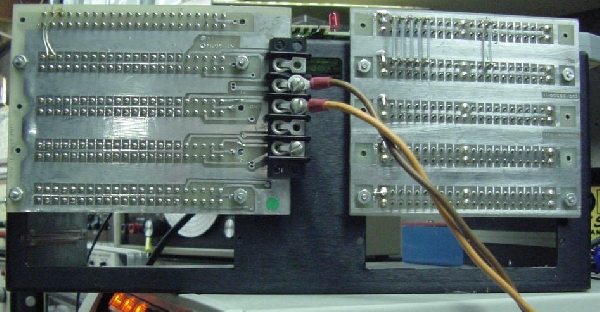
Motherboard Plus

A backplane for KIM-1/SYM-1/AIM 65. Accepts the Plus boards described below.

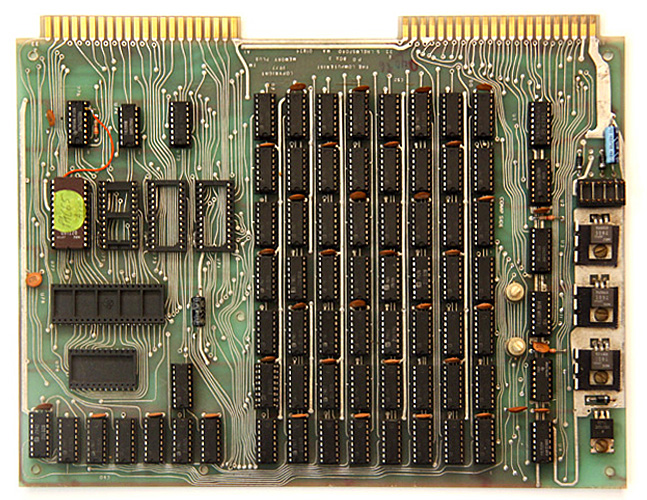
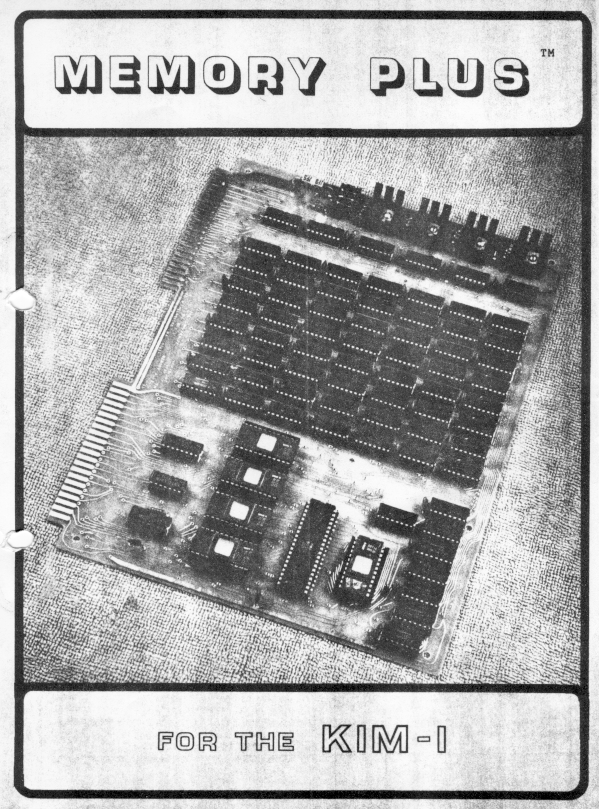
Memory Plus

The MEMORY PLUS board is a RAM/ROM expansion board for  KIM-1, SYM-1 or AIM65. Made by the The Computerist.

With up to 8k of RAM, 8k of (EP)ROM and the ability to program EPROMs (2716) this was quite the must have upgrade for anyone who could afford it.

Here The Manual in HTML format, original OCRed by Lee Davison, corrected and enhanced with Appendix A Circuit Diagram and Application Note #1 by Hans Otten.

Scanned by Dirk Dral, high quality scan.

And here the MEMORY PLUS manual in PDF format, Appendix A, the circuit diagrams  foldout Application Note #1 is now included, added by Hans Otten.

How to decode the 8K RAM in 4K space, an article from Micro July 1979, for AIM 65 and SYM-1 

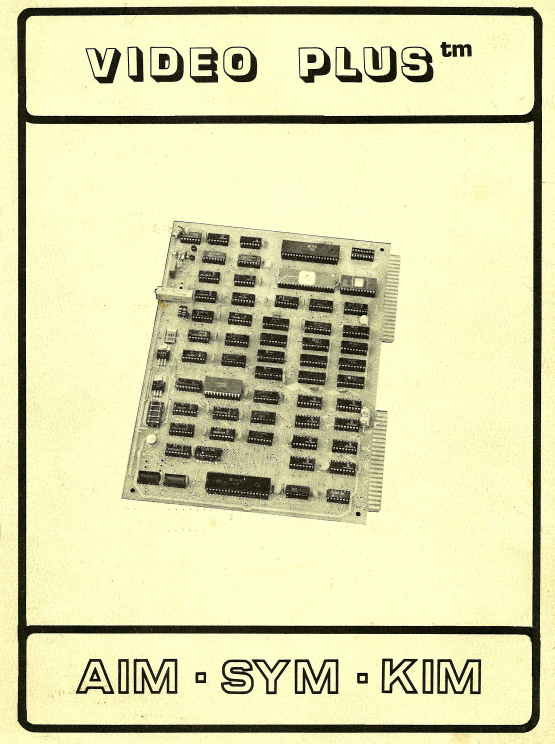
Video Plus

VIDEO PLUS is designed to work with the KIM-1, SYM-1 and the AIM 65 computers. It offers:

  • Up to 4K  display RAM and 2K Programmable Character generator
  • 2K EPROM
  • 6845 CRT controller
  • ASCII keyboard interface
  • Composite monochrome video PAL or NTSC

The following documents are available:

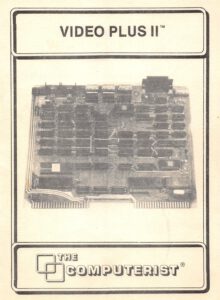
Video PLUS II

Video PLUS II is an updated Video PLUS, a Versatiel Video Expansion Board, with:

  • Programmable Screen format
  • PRogrammable Character Generator
  • Uo to 4K Display Memeory
  • Supports ASCII Keyboard
  • Stand-Alone Option
  • AIM/SYM/KIM Software
  • 6845 video controller, 6522 VIA, RS232

The following documents are available:

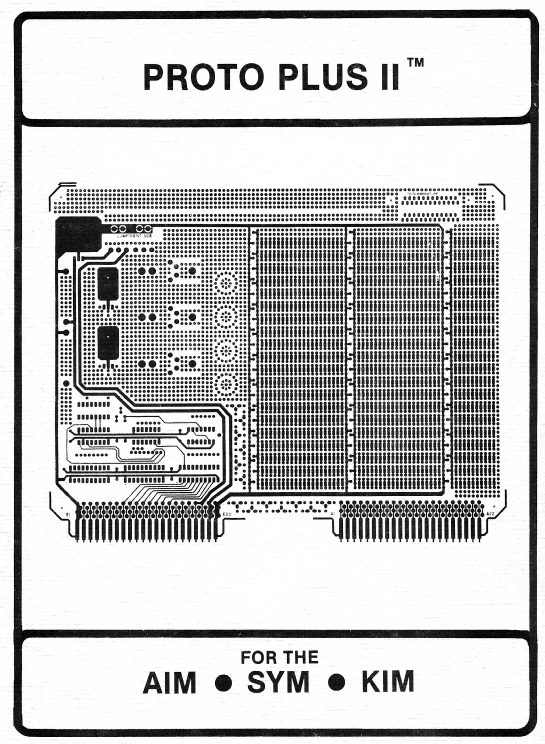
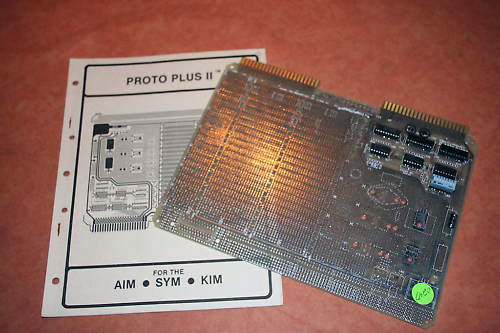
PROTO PLUS II

The PROTO PLUS II is a board to interface digital logic to a KIM-1, SYM-1 or AIM 65. A large breadboard area is available.

The board has the standard KIM-1 44 pin edge connector. A power regulator for 8V to + 5V is on the board.

The board has  address, data bus and signal bus buffering and address decoding for tom select a 8K page in memory and kIM-1 8K decoding. 3 gates of a 74LS32 is available for general use.

Here the PROTO PLUS II manual, with circuit diagram.


DRAM Plus

DRAM Plus is a Multi-purpose Expansion Board for AIM 65/SYM-1/KIM-1 with

  • 16/32K dynamic RAM
  • 8/16K EPROM 2716/2516/2732/2532/2332
  • I/O Ports and Timers VIA 2x 6522
  • Prototyping Area
  • EPROM Programmer

DRAM PLUS manual, includes circuit diagram and software

Files for the VIDEO and PROTO PLUS: Thanks to Dave Colglazier at Original Woodworks.

Video PLUS II and DRAM PLUS: thanks to Friedrich Hofmann

Micro-KIM

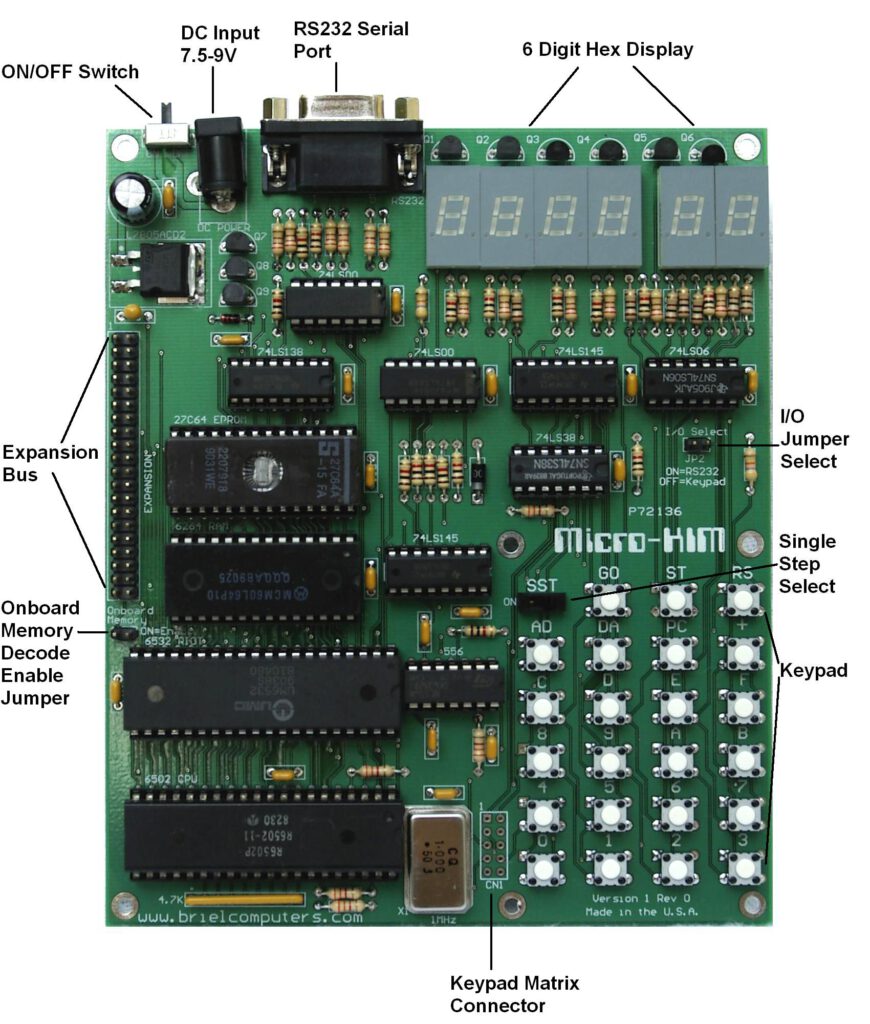
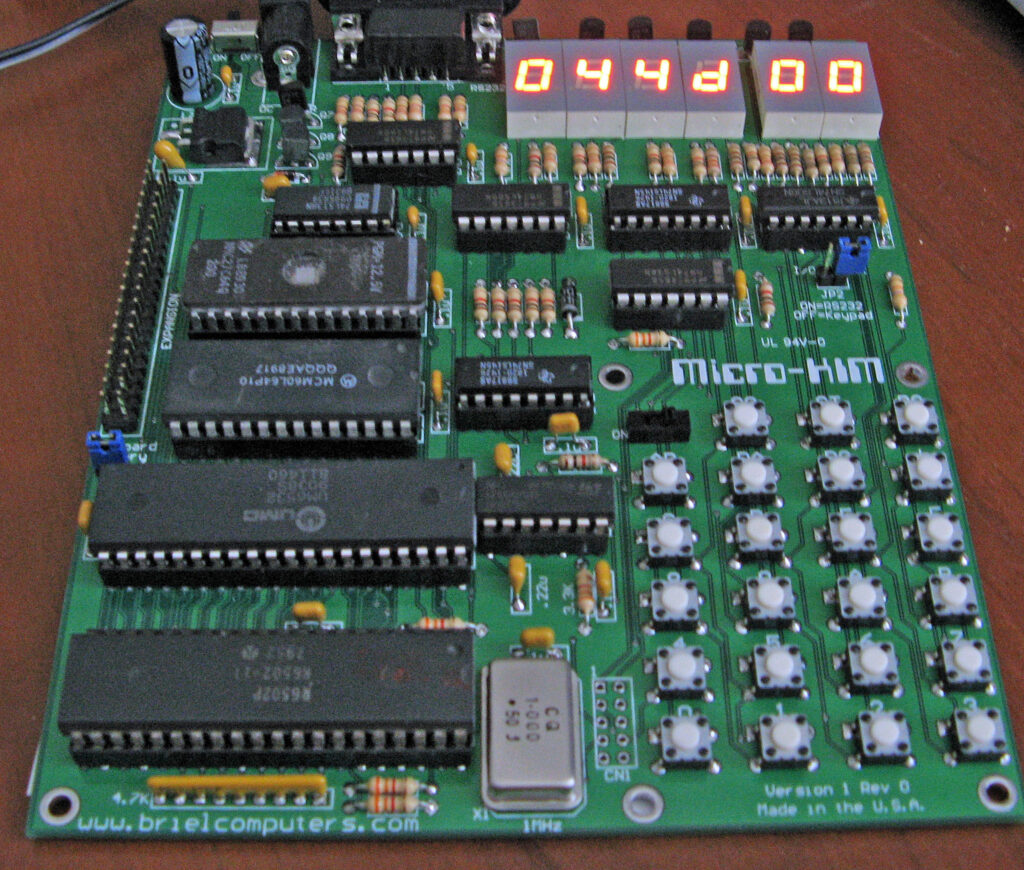
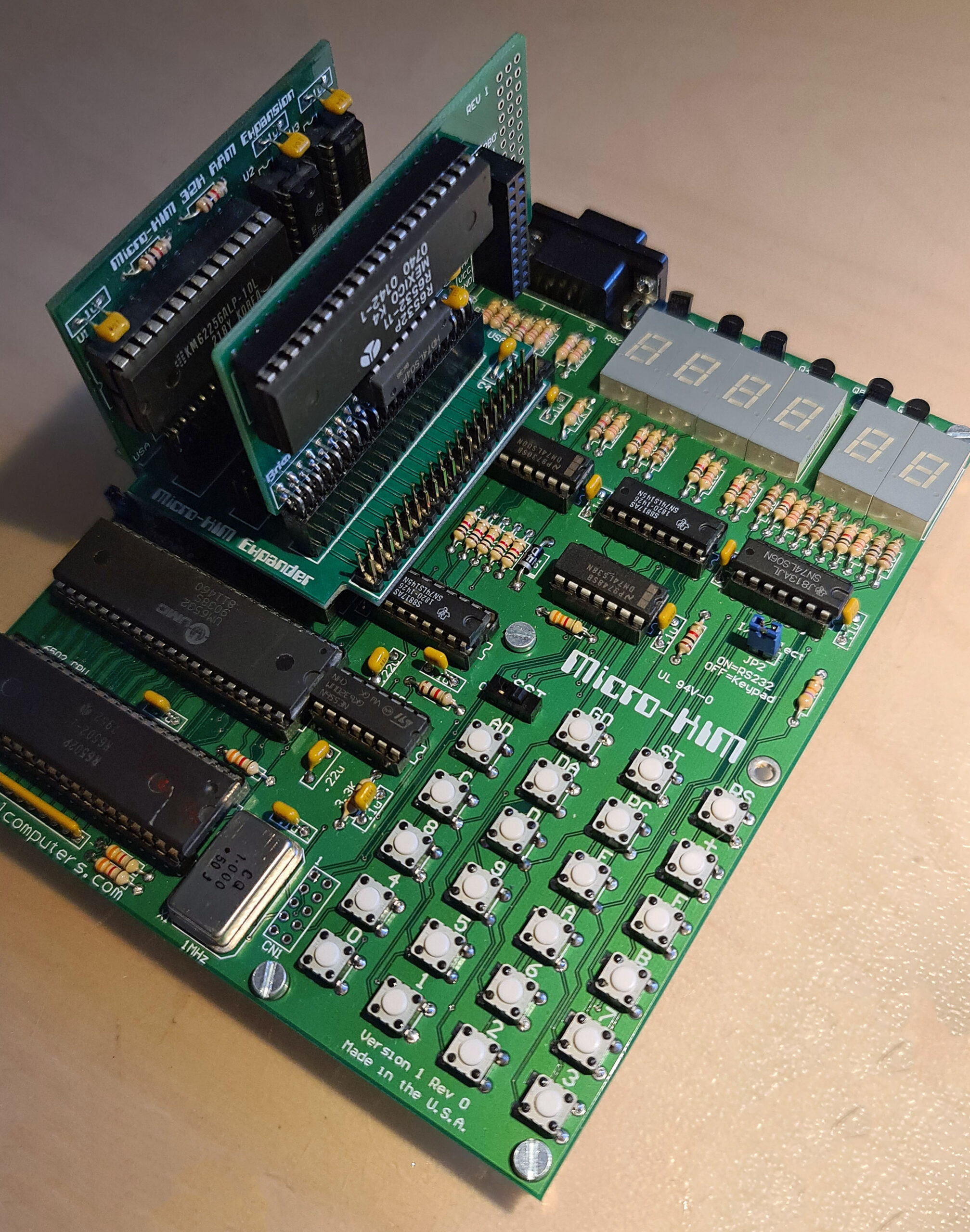
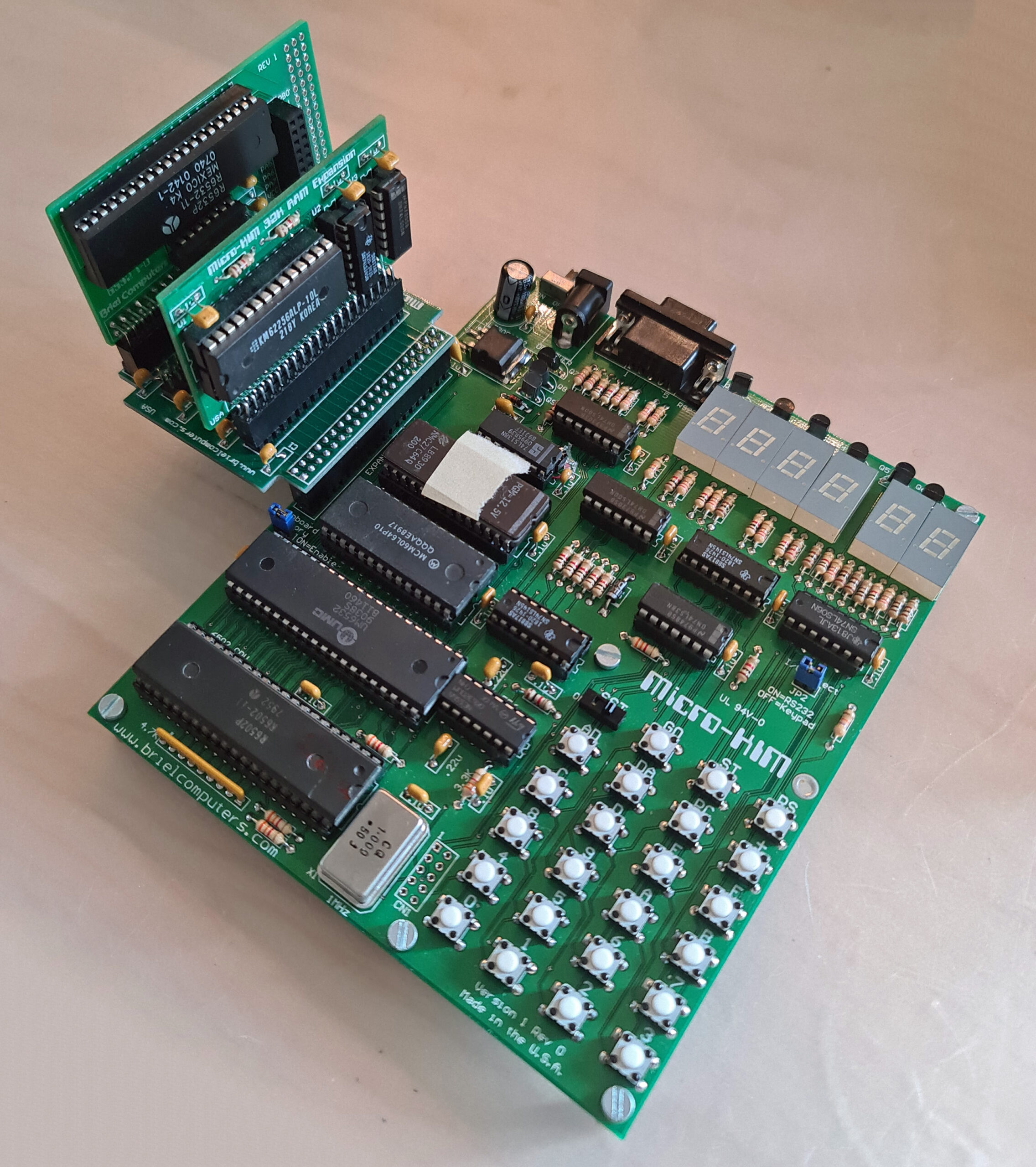
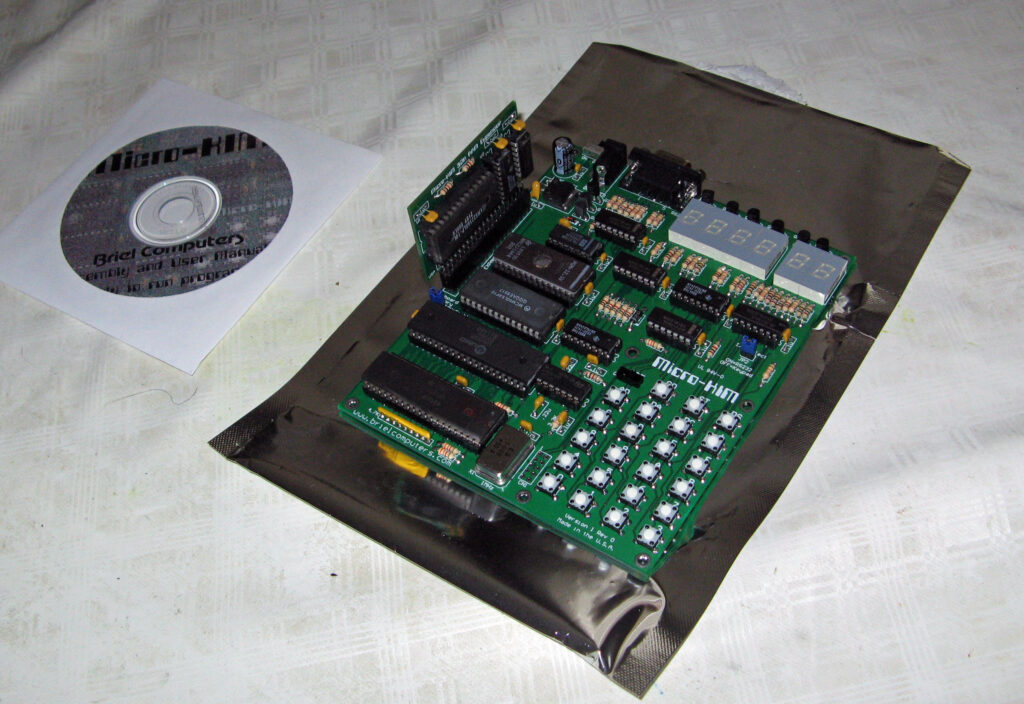
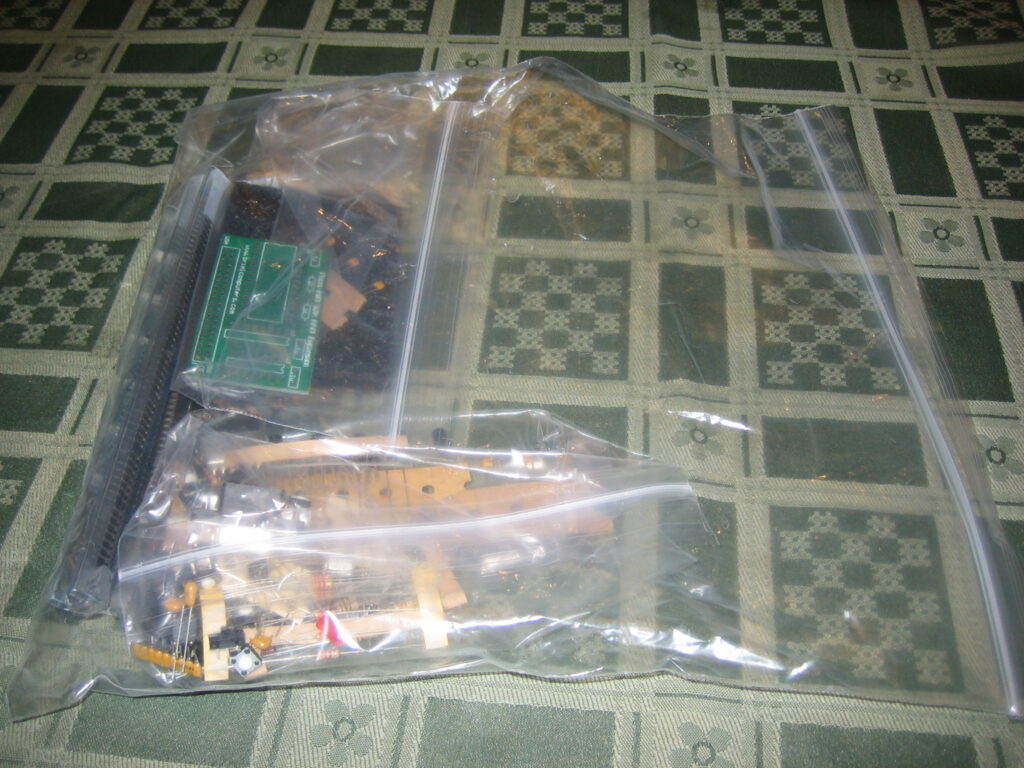
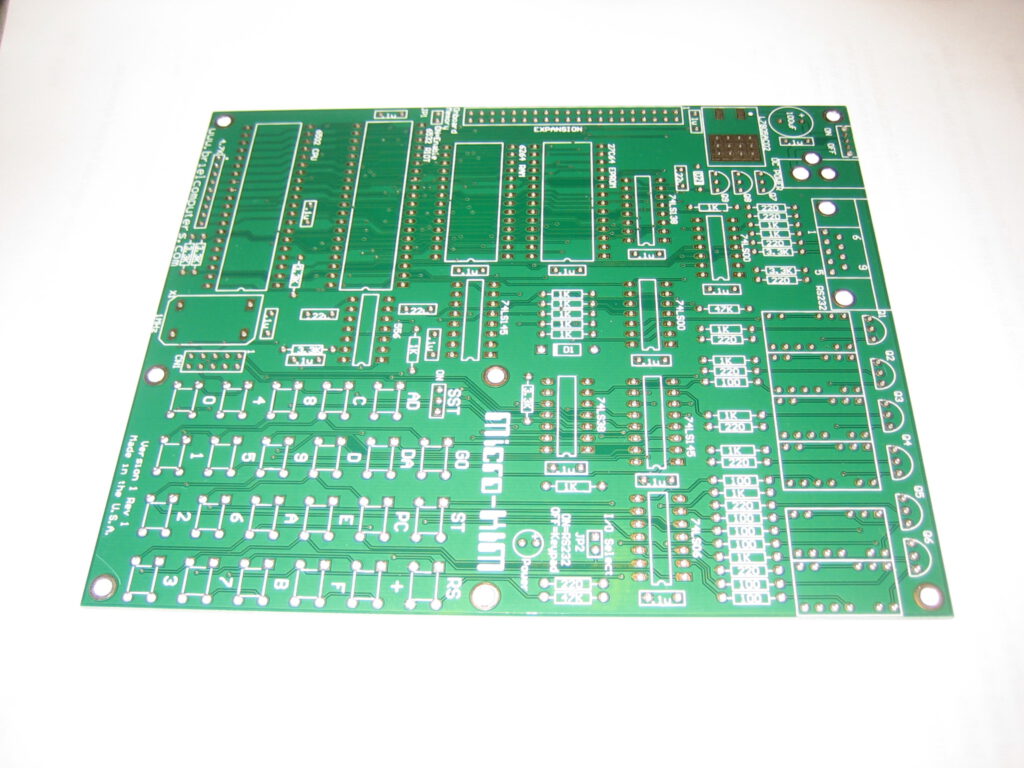
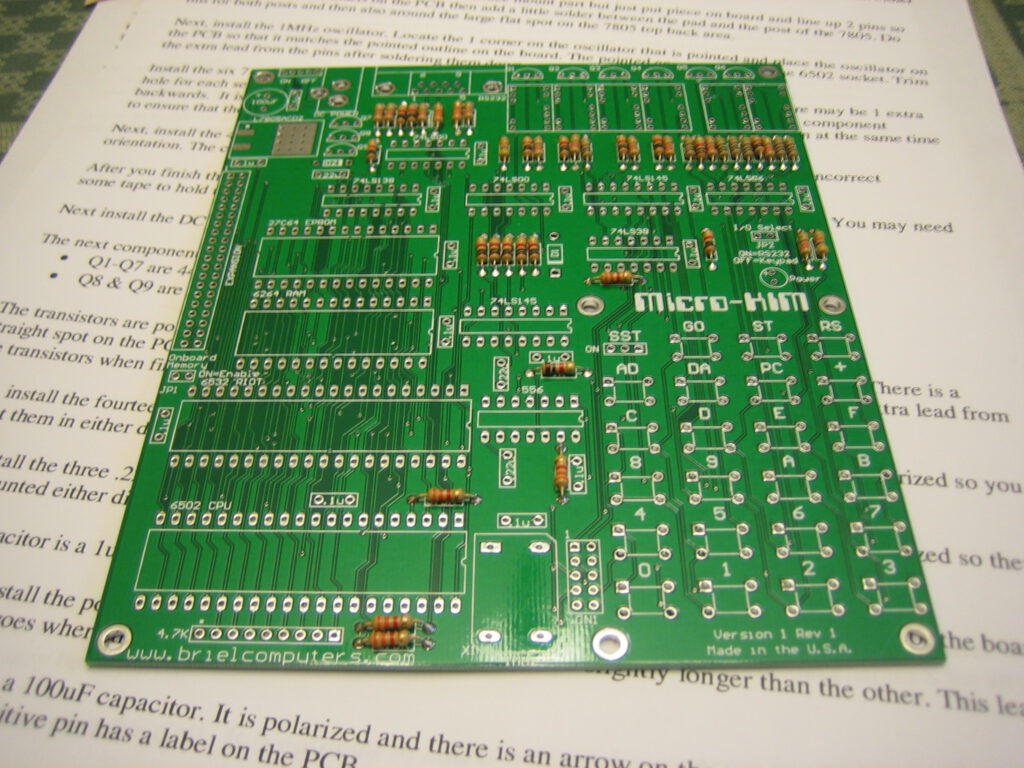
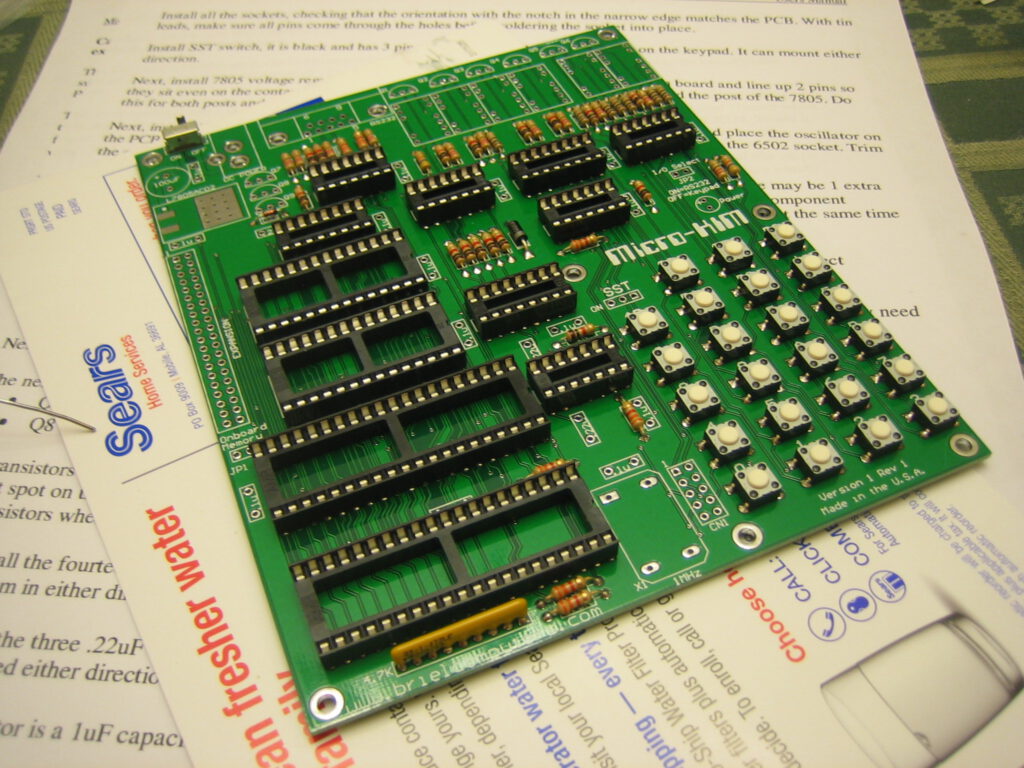
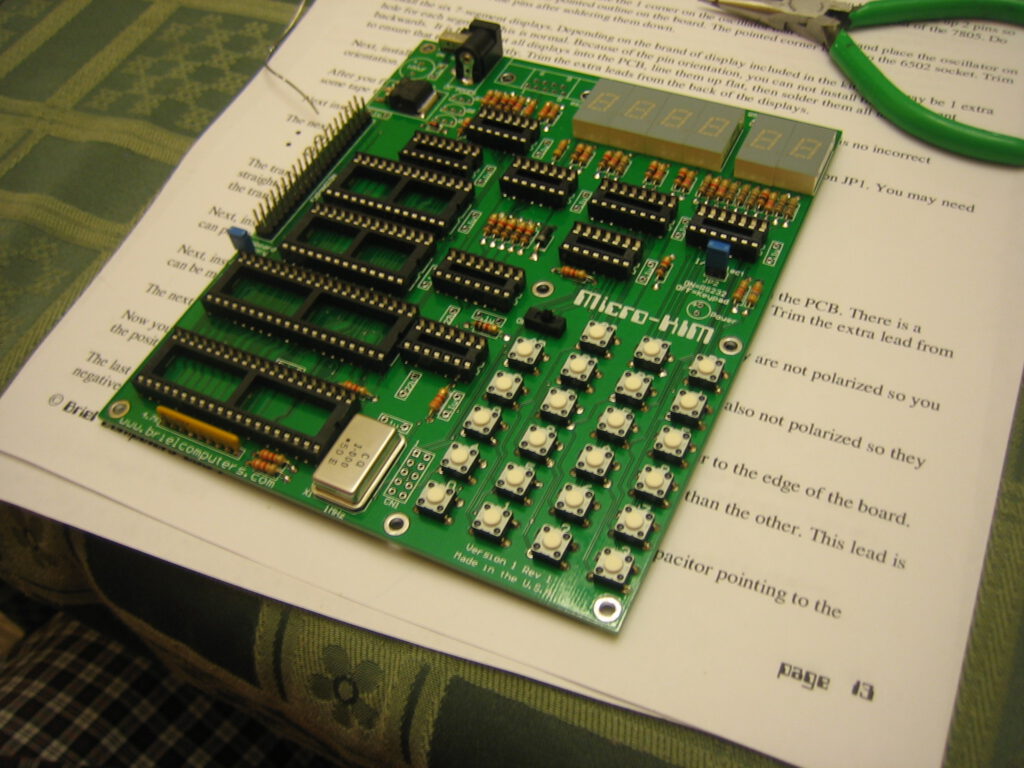
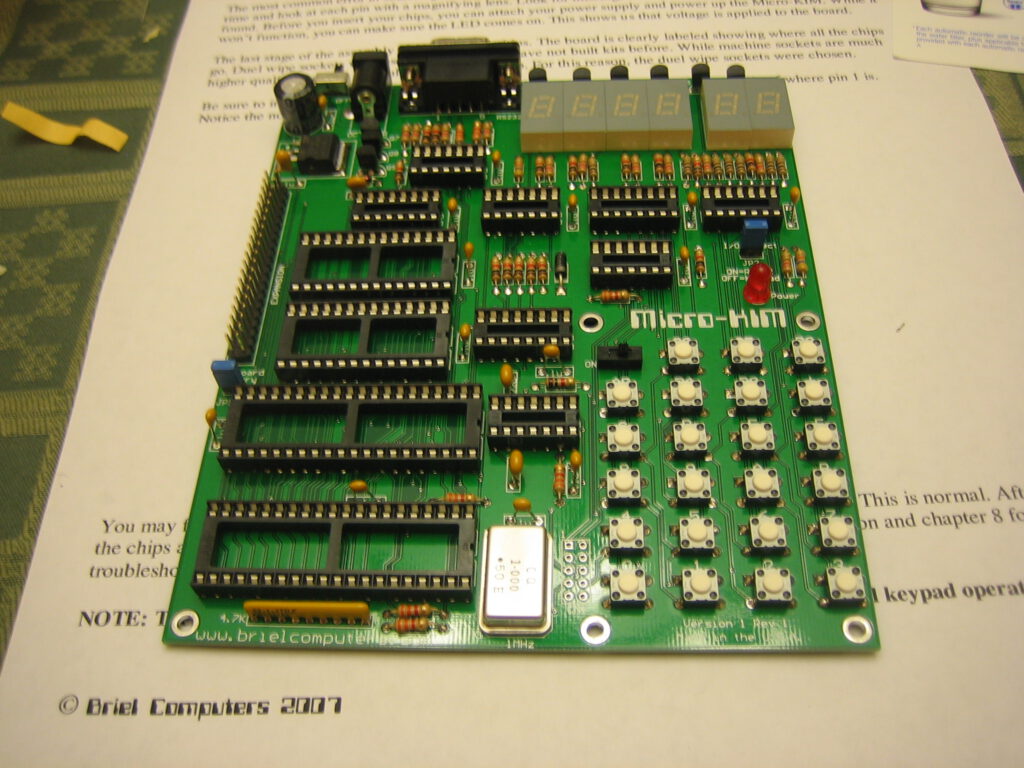
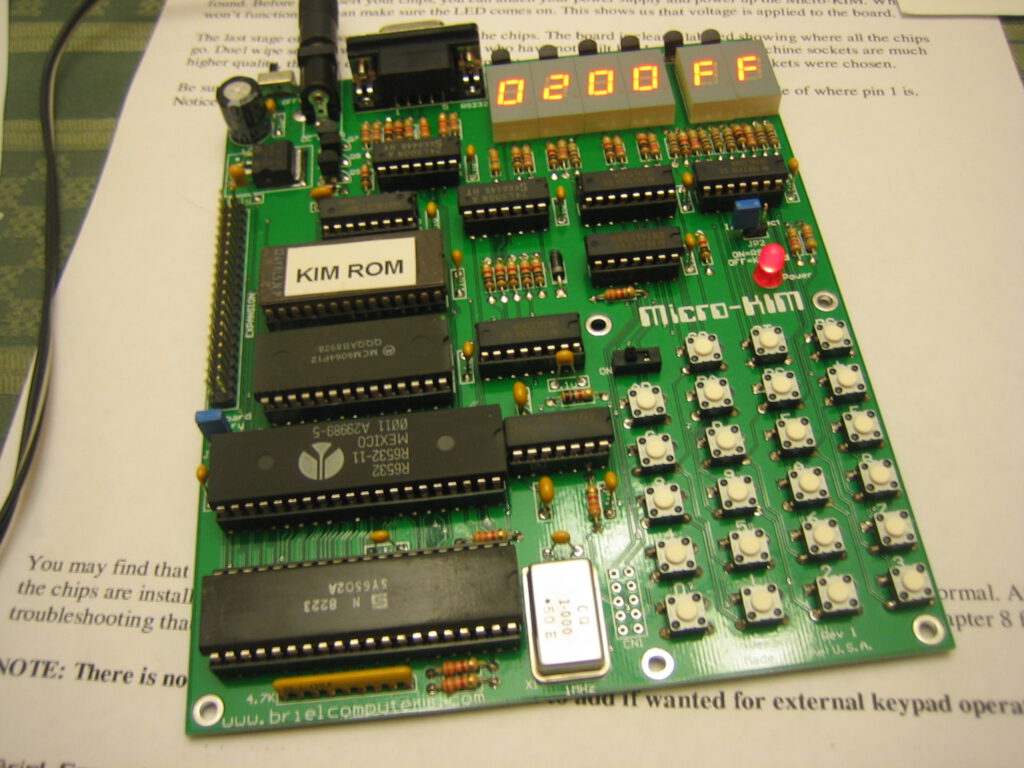
The Micro-KIM is a SBC designed and built by Vince Briel. First sold in 2007 and alas not available anymore.

Update 2025: Vince Briel has released all design documents on his Retrotink website.
I have duplicated the contents below.

Based upon the ideas of Ruud Baltissen> how to replace the 6530 with a 6532, it was the first KIM-1 clone that was running the unmodified KIM-1 ROM.

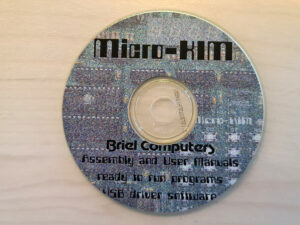
Manuals, circuit diagrams, single step fix, tape devices, support Cd images
Photos
Videos


Specifications

  • 6502 CPU running at 1Mhz
  • 2K EPROM replacing built in ROM on 6530s
  • 5K RAM using the KIM-1 memory map
  • RS232 interface made to work with TIM built in KIM-1
  • Single-Step mode for debugging
  • debounced RESET and STEP switches
  • 40 pin header for future expansion
  • Expansion board for expansion connector with four slots available
  • 32K RAM card
  • Second 6532 board
  • The I/O of the 6 digit display and keyboard are memory mapped exactly like the KIM-1 for full program compatibility

See the KIM-1 page for more KIM-1 info and programs.

First impressions

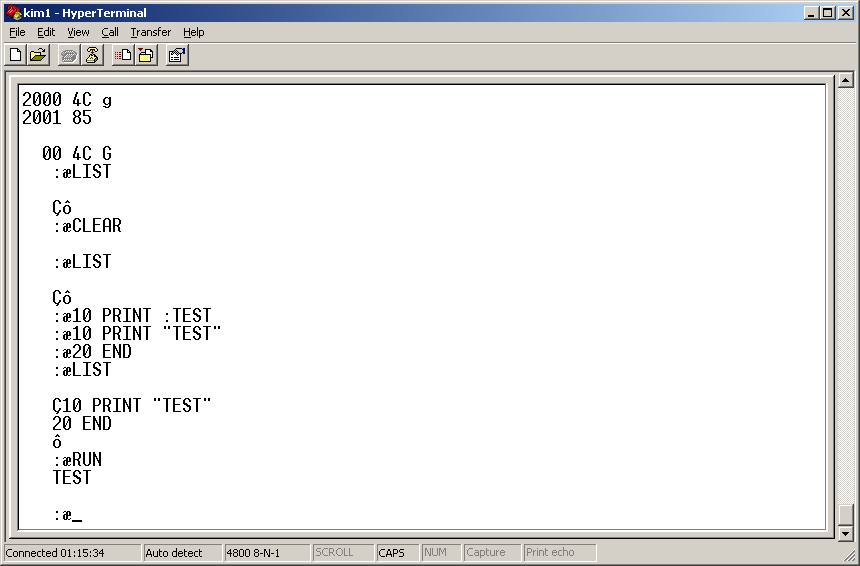
  • It really feels like a KIM-1. Smaller, but just as simple to operate. Easy to connect a serial RS232 (USB) cable and connect to a terminal program. Minicom on Linux, Realterm on Windows e.g., no high demands on terminal emulation, just plain simple teletype at 9600 baud or less and the ability to capture output to a textfile or send a text file via the terminal
  • No cassette port. This means the programs with real nostalgic value like the editor/assembler Micro Ade will not have much sense.
  • Second 6532 is an option(though the 6530-002 and 003 ROM is present!).
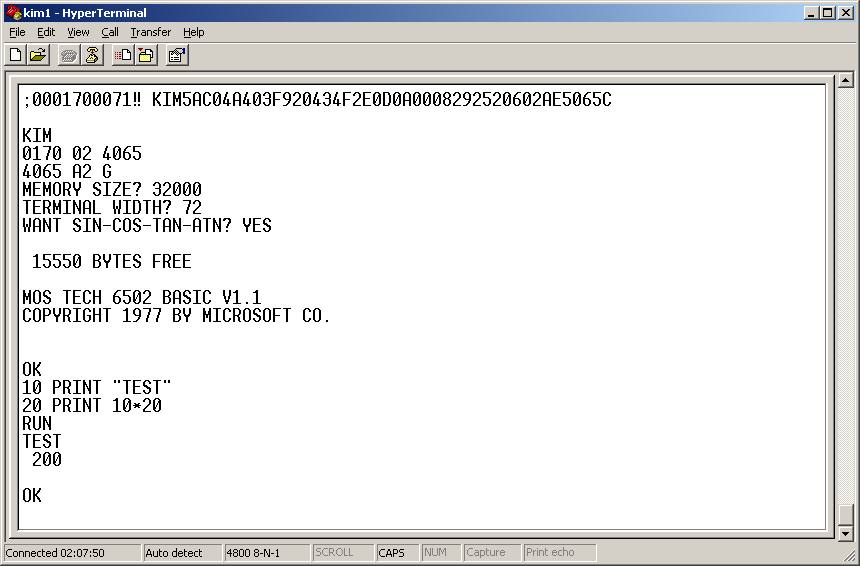
  • 32K RAM extension option. Yes, this makes the machine worthwhile! Now you can run KB9 Microsoft Basic or other KIM-1 software.
  • Some small mistakes are on the version 1 Rev 0 board, fixed in the later version rev 1, this needs three hardware fixes to be made, so I have to get the soldering iron into action. Simple fixes, see below.
  • Loading programs via the serial interface by sending a text file in papertape format is slow. But it works! Fun to test all those KIM-1 programs. KIMTAPE and KIMPAPER help a lot here also look at the 8 bit hex file conversion program there.

Tested programs

Most of the First Book of KIM programs work. Some require the presence of the second 6530 (6532 here).
See the KIM-1 software and manual pages. Also see the photos section for TinyBasic and KB 9 Basic.

See the PC utilities page for papertape and other conversion utilities.

Memory map

Micro-KIM KIM-1
$0000-$03FF 1024 Bytes of RAM $0000-$03FF 1024 Bytes of RAM
$0400-$07FF 1024 Bytes of RAM $0400-$07FF Optional Memory Area
$0800-$0BFF 1024 Bytes of RAM $0800-$0BFF Optional Memory Area
$0C00-$0FFF 1024 Bytes of RAM $0C00-$0CFF Optional Memory Area
$1000-$13FF 1024 Bytes of RAM $1000-$13FF Optional Memory Area
$1400-$16FF Optional Memory Area $1400-$16FF Optional Memory Area
$1700-$173F Optional 2nd 6532 I/O, Timer $1700-$173F 6530-002 I/O, Timer
$1740-$177F 6532 I/O and Timer $1740-$177F 6530-003 I/O, Timer
$1780-$17BF 64 Bytes RAM from 6532 $1780-$17BF 64 Bytes from 6530-003
$17C0-$17FF 64 Bytes RAM from 6532 * $17C0-$17FF 64 Bytes from 6530-002
$1800-$1BFF 1024 Bytes of EPROM $1800-$1BFF 1024 Bytes of ROM in 6530-003
$1C00-$1FFF 1024 Bytes of EPROM $1C00-$1FFF 1024 Bytes of ROM in 6530-002
$2000-$FFFF Unused memory $2000-$FFFF Unused memory or 32K RAM baord

* The 6532 has 128 bytes of RAM vs. only 64 bytes on the 6530. The Micro-KIM utilizes all 128 bytes from
the single onboard 6532 so all original memory locations are available.

Manuals, circuit diagrams, notes and support Cd images

Micro-KIM Design files, build your own Micro-KIM
Vince Briel has released all design documents on his Retrotink website.
Micro-KIM setup and Users Manual July 2007 Rev 0 Ed 1
Micro-KIM setup and Users Manual September 2007 Rev 1 Ed 2
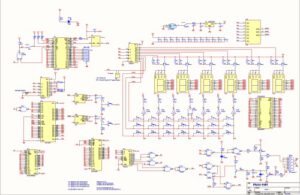
Circuit diagram Micro-KIM rev 0, has serious errors
Circuit diagram Micro-KIM Rev 1
Support Cd contents Rev 0 July 2007
Support Cd contents Rev 1 September 2007
Fix for Micro-KIM Rev 0 for second 6532
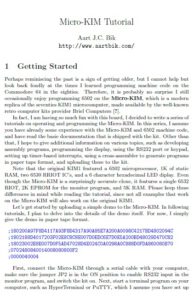
Aart Bik’s programming the Micro-KIM, see also his KIM page

Extensions and audio interface solutions

65C02 Single step fix by Timali

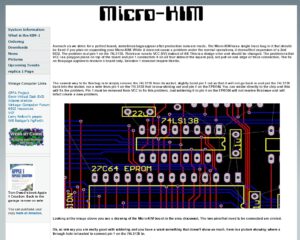
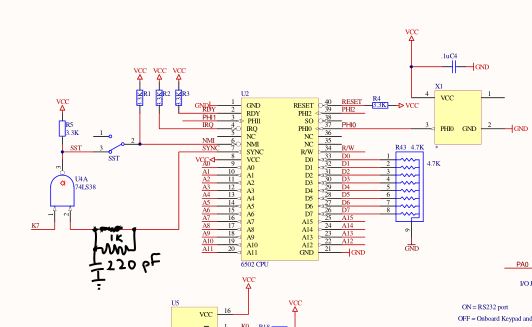
My Micro-KIM shipped with a 65C02, and apparently there is a timing issue which prevents single-step from working with the 65C02. I tried an original NMOS 6502, and single-step worked ok with it, but not with any of my 65C02s. I did some debugging with my scope and determined that there is a small timing difference causing the SST signal to be erroneously asserted (pulled low) for 100-200 ns during EEPROM accesses with the 65C02, which is just enough to cause a problem. The easiest way I could think of to fix this was to delay the SYNC signal briefly with a small RC circuit, which prevents the glitch in the SST signal. I cut a trace on the back side of the board and added a small resistor and capacitor, and single-step is now working correctly with my 65C02’s. It still works with the original 6502, also. Click on the image to see a larger picture.

Photos

Tiny Basic

Microsoft Basic KB9


Videos


https://www.youtube.com/watch?v=R_zD5T_khKs


KIM 6530 to 6532 for a KIM-1 clone

Replace the 6530-002 and -003 in a KIM-1: a KIM-1 clone.

The base for all ‘modern’ KIM clones, KIM reproductions, MICRO KIM, PAL-1 and more.

Credits to Ruud Baltissen for the idea and details. The ‘I’ is Ruud from here in this page!

RRIOTs are mask programmed for address selection, choices are:

– Pin 18 PB6 or CS1
– Pin 19 PB5 or CS2
– Pin 17 PB7 can have a pullup
– ROM selection on RS0, CS1 und CS2 s
– RAM on RS0, CS1, CS2, A9, A8, A7 and A6
– I/O on RS0, CS1, CS2, A9, A8, A7 and A6

See the various 6530/6532 datasheets for (some) more detail.

The troublemaker: 6530, detailed background information

The KIM-1 has two 6530s on board. For more info about this IC, please read the datasheet. Anybody who is a little bit familiar with the hardware market can tell you that you cannot buy the 6530 anymore. Happily enough there is another IC available which you could call its brother: the 6532. The 6532 has 16 I/O-lines, an internal timer and 128 bytes of RAM on board, but no ROM. The internal ROM of the 6530 can be selected independently from the I/O. So for this project we’ll use an external EPROM as replacement. The pin out of the 6532 is completely different but that should not be a problem.

The next difference is the fact that the 6532 has a separate IRQ and PB7 line. As we will see, the functionality of both lines is the same as with the 6530. To create the same circumstances we only have to connect them together.

The third difference is the availability of PB6 with a 6532. See it as a bonus as I haven’t found any reason how it could jeopardize our project.
The fourth difference is that it is possible to generate an interrupt depending on the behaviour of PA7. But this is an option, which is out of function by default after a reset.

The last and major difference however lays in the way the registers are selected:

function:       RS:  A6:  A5:  A4:  A3:  A2:  A1:  A0:  R/W: 
                                                            
RAM              0    x    x    x    x    x    x    x    x   
                                                            
DRA              1    x    x    x    x    0    0    0    x     A
DDRA             1    x    x    x    x    0    0    1    x     B
DRB              1    x    x    x    x    0    1    0    x     C
DDRB             1    x    x    x    x    0    1    1    x     D
                                                            
PA7, IRQ off,                                               
      neg edge   1    x    x    0    x    1    0    0    0     F
PA7, IRQ off,                                               
      pos edge   1    x    x    0    x    1    0    1    0     G
PA7, IRQ on,                                                
      neg edge   1    x    x    0    x    1    1    0    0     H
PA7, IRQ on,                                                
      pos edge   1    x    x    0    x    1    1    1    0     I
                                                            
read interrupt                                              
       flag      1    x    x    x    x    1    x    1    1     E
                                                            
read timer,                                                 
       IRQ off   1    x    x    x    0    1    x    0    1     J
read timer,                                                 
       IRQ on    1    x    x    x    1    1    x    0    1     K
                                                            
Clock / 1,                                                  
       IRQ off   1    x    x    1    0    1    0    0    0     L
Clock / 8,                                                  
       IRQ off   1    x    x    1    0    1    0    1    0     M
Clock / 64,                                                 
       IRQ off   1    x    x    1    0    1    1    0    0     N
Clock / 1024,                                               
       IRQ off   1    x    x    1    0    1    1    1    0     O
                                                            
Clock / 1,                                                  
       IRQ on    1    x    x    1    1    1    0    0    0     P
Clock / 8,                                                  
       IRQ on    1    x    x    1    1    1    0    1    0     R
Clock / 64,                                                 
       IRQ on    1    x    x    1    1    1    1    0    0     S
Clock / 1024,                                               
       IRQ on    1    x    x    1    1    1    1    1    0     T

In total 5 address lines are used, meaning 32 registers. 
But 11 of the 19 registers have one or more mirrors.
Read:        J E J E       K E K E       J E J E       K E K E 
Write:       F G H I       F G H I       L M N O       P R S T 
R/W:         A B C D       A B C D       A B C D       A B C D       

As we can see, the last 16 registers equal the 16 of the 6530 itself.
So now we have to develop some logic which will do the following:

  • The 6532 is only visible within a range of 128 bytes
  • The first 16 bytes represent register 16 to 31
  • The next 48 bytes are mirrors of the first 16
  • The last 64 bytes appear as RAM

Conclusion:

  • Input A6 won’t be used and can be tied to GND
  • Input A4 is connected to address line A4 of the 6502 via an inverter.
  • A 74LS138/74LS08 construction or equivalent enables the RS- and CS-lines at the right moment.

ROM and RAM

Here we have a luxury problem. We only need 2K of (EP)ROM like the 2716. The problem is that the 2716 is hard to find and more expansive then the 2764 or its bigger brothers. When we use a bigger EPROM we only have to tie the unused address lines to GND. The same problem occurs with the RAM.

If we have to use bigger RAMs or EPROMs anyway, it is quite easy to use other parts of that chip by OR-wiring the CS-line with more Kx-outputs of the main 74145. (Don’t forget the address lines!) In case of the EPROM we also can tie switches to the surplus address lines and have the advantage of a multi-KERNAL system.

Schematics of the new KIM-1
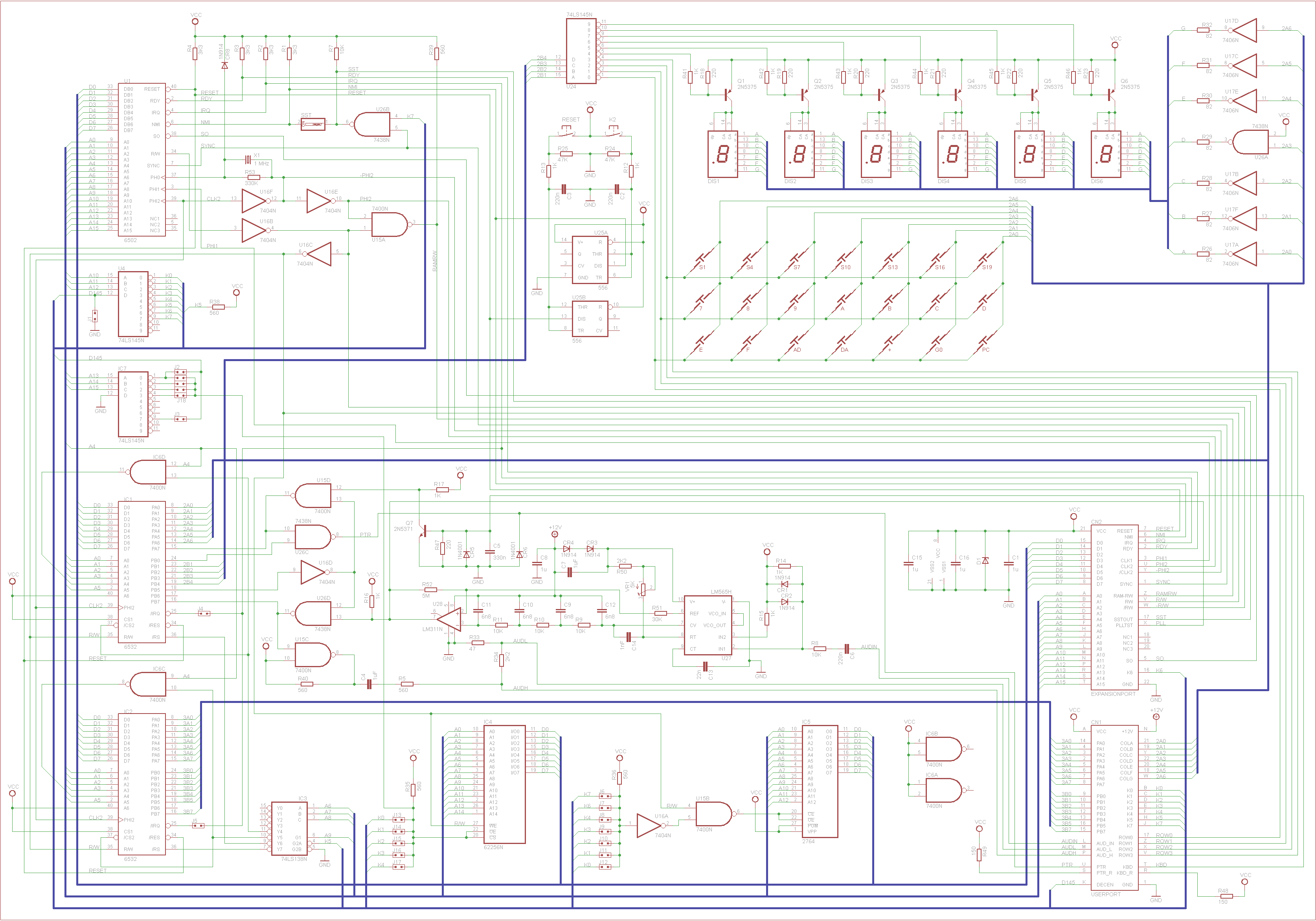
What are the major differences with the original circuit:

  • Replacement of the 6530s by 6532s.
  • Replacement of the 6108 RAM-ICs by one 6264 or equivalent 8K*8 SRAM.
  • Adding an EPROM.
  • Adding a 74LS138 to decode the RAM and I/O of the 6532s.
  • Combining K6 and K7 to one line, dropping the resistor for K6.
  • Adding jumpers to enable combining other K-lines as well.

You may notice that Ruud did not change things which are more or less obvious like replacing the clock circuit by a module or replacing the various 74XX TTL-ICs by their LS or HCT equivalents.

6530’s KIM-1 specification

(Thanks to J Coville)
Back in the day, a designer ordering a custom 6530 would have to specify certain parameters in addition to the ROM contents. During my KIM-1 restoration effort, I found a datasheet for the Synertek version of the part. The datasheet has quite a bit of information describing how to provide the ROM contents. There is also a form for “Additional Pattern Information” (tables to describe the desired chip-select and addressing information). They look like this:

Chip Select Code (Check one square in each block)

CS1
PB6
CS2
PB5
Pull-up on PB7
YES
NO

ROM/RAM/I-O SELECTS (Specify H or L or N (don’t care) in each box.)

RS CS1 CS2 A9 A8 A7 A6
ROM Select N N N N
RAM Select
I/O Select

As best as I can determine, the designers of the KIM-1 filled out the tables for the RRIOTs like so:

6530-002:

CS1 X
PB6
CS2
PB5 X
Pull-up on PB7
YES
NO X
RS CS1 CS2 A9 A8 A7 A6
ROM Select L H N N N N N
RAM Select H L N H H H H
I/O Select H L N H H L H

6530-003:

CS1 X
PB6
CS2
PB5 X
Pull-up on PB7
YES
NO X
RS CS1 CS2 A9 A8 A7 A6
ROM Select L H N N N N N
RAM Select H L N H H H L
I/O Select H L N H H L L

In a KIM-1, K5 is asserted low by addresses 1400-17FF. It is connected to the CS1 lines of both the 6530-002 and 6530-003. A9 and A8 need to be 1 for all I/O and RAM, and A6 and A7 determine which chip and I/O or RAM you get:

0001 0111 00XX XXXX = 1700 – 173F = 6530-003 I/O
0001 0111 01XX XXXX = 1740 – 177F = 6530-002 I/O
0001 0111 10XX XXXX = 1780 – 17BF = 6530-003 RAM
0001 0111 11XX XXXX = 17C0 – 17FF = 6530-002 RAM

The RS lines are connected to different select lines, K6 for 6530-003 and K7 for 6530-002, this gives:
0001 10XX XXXX XXXX = 1800 – 1BFF = 6530-003 ROM (1k)
0001 11XX XXXX XXXX = 1C00 – 1FFF = 6530-002 ROM (1k)

All these values agree with the KIM-1 memory map documentation.

K0 $0000 – $03FF 1024 bytes of RAM (8*6102)
K1 $0400 – $07FF free
K2 $0800 – $0BFF free
K3 $0C00 – $0FFF free
K4 $1000 – $13FF free
K5 $1400 – $16FF free
$1700 – $173F I/O, timer of 6530-003
$1740 – $177F I/O, timer of 6530-002
$1780 – $17BF 64 bytes RAM of 6530-003
$17C0 – $17FF 64 bytes RAM of 6530-002
K6 $1800 – $1BFF 1024 bytes ROM of 6530-003
K7 $1C00 – $1FFF 1024 bytes ROM of 6530-002

K0..K7 = output lines from 74145

post

KIM 6530 replacement

Have a KIM-1 with faulty 6530? Look here for replacement with 6532 and some.

post

KIM-1 6530 Replacements

On this page two KIM-1 replacements are presented.

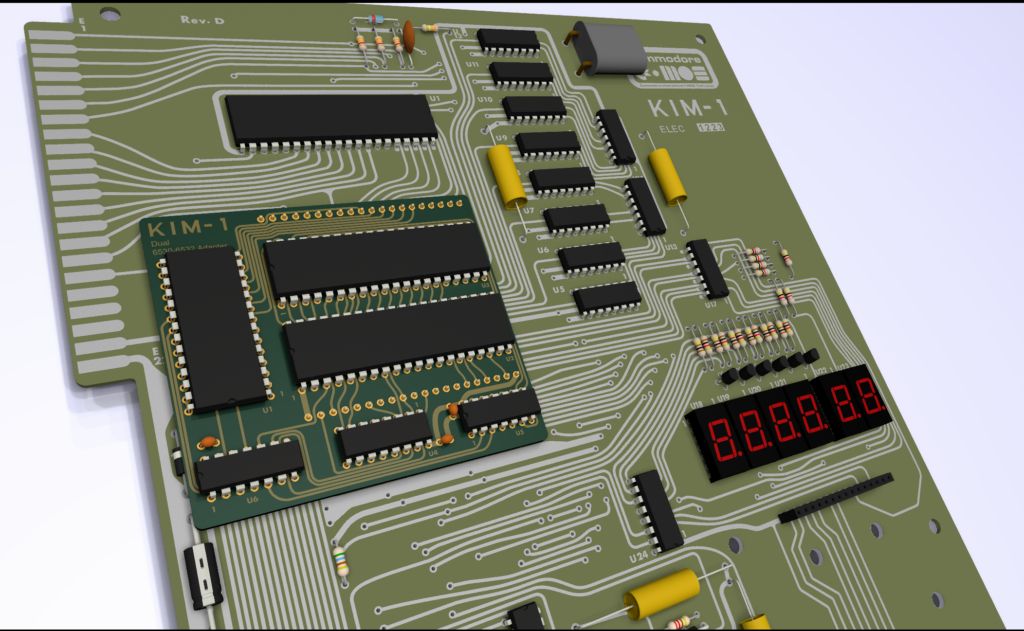
Based on the same design principles of 6530 with a 6532 + ROM and glue logic, as also used in .

Both solutions are made up of a PCB with 6532 + ROM and glue logic. The defective 6530(s) need to be replaced with an IC socket, the replacement board is fitted in the IC socket on top of the KIM-1.
Which one you choose depends on the state of the KIM-1. If only one of the 6530s is damaged, the Corsham solution is the right one. If both 6530s need replacement the Eduardo Casino design is the appropiate solution.

post

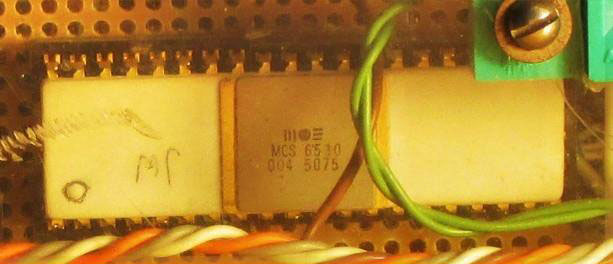
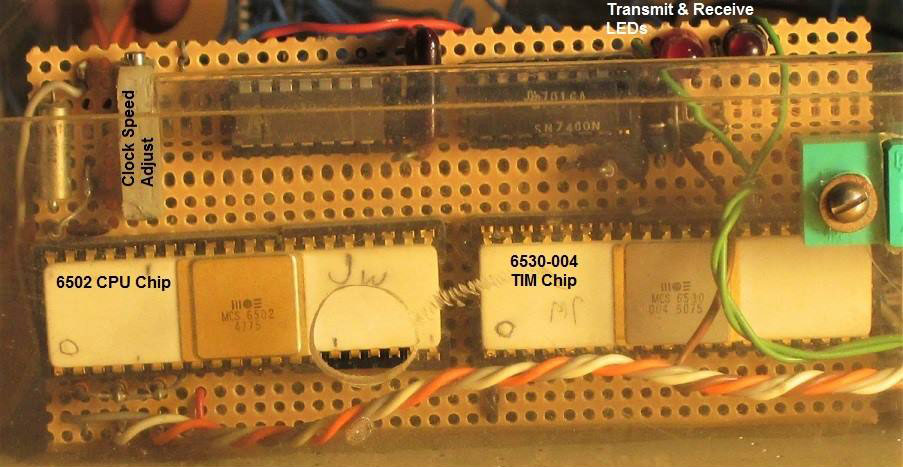
TIM 1 System by Joseph Watson

In the Facebook group ‘6502 programming’ Joseph Waton published a story about his TIM 1 system and photos.

13902788_1297285456956011_4038706379477634999_n

post

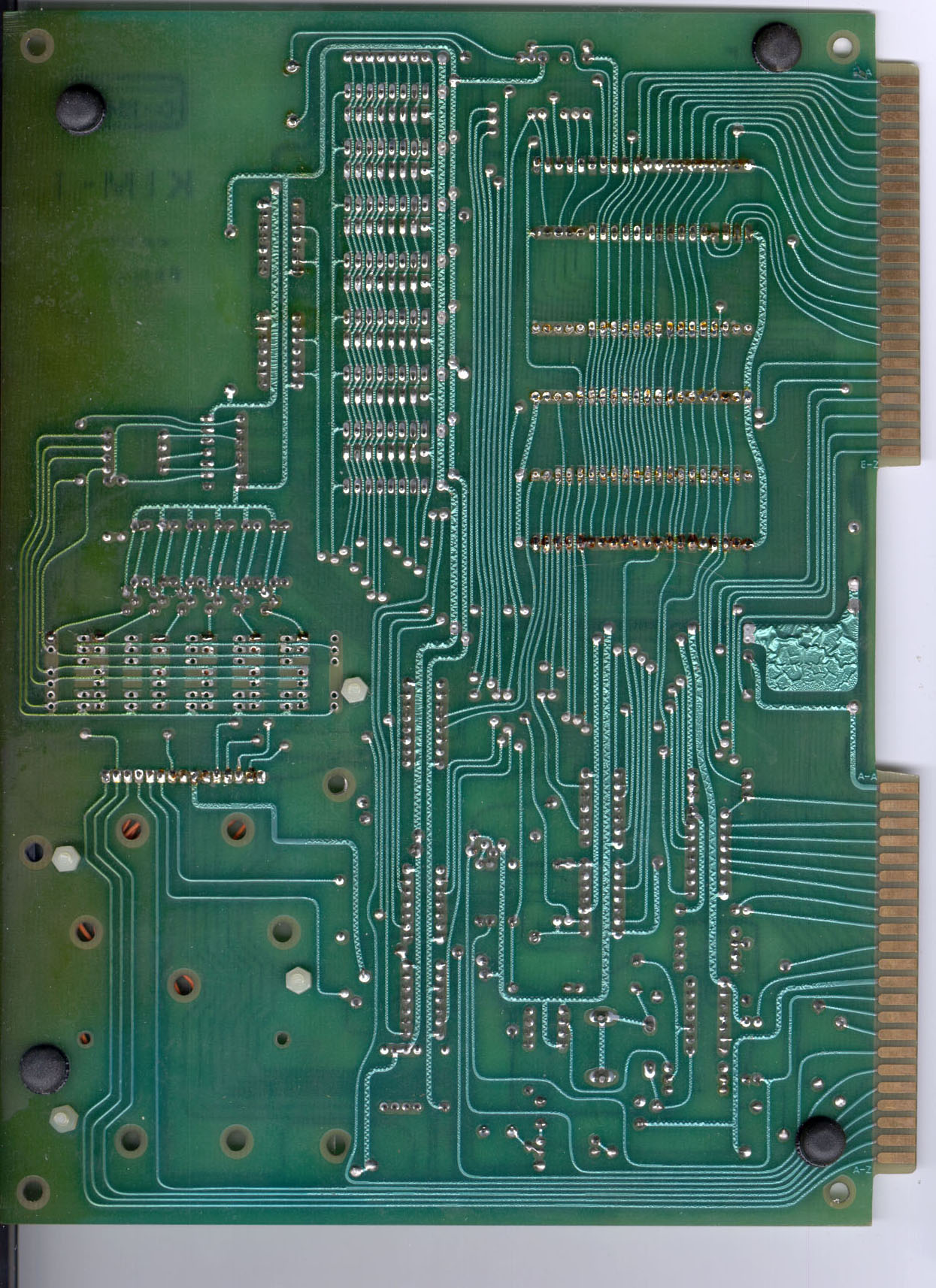
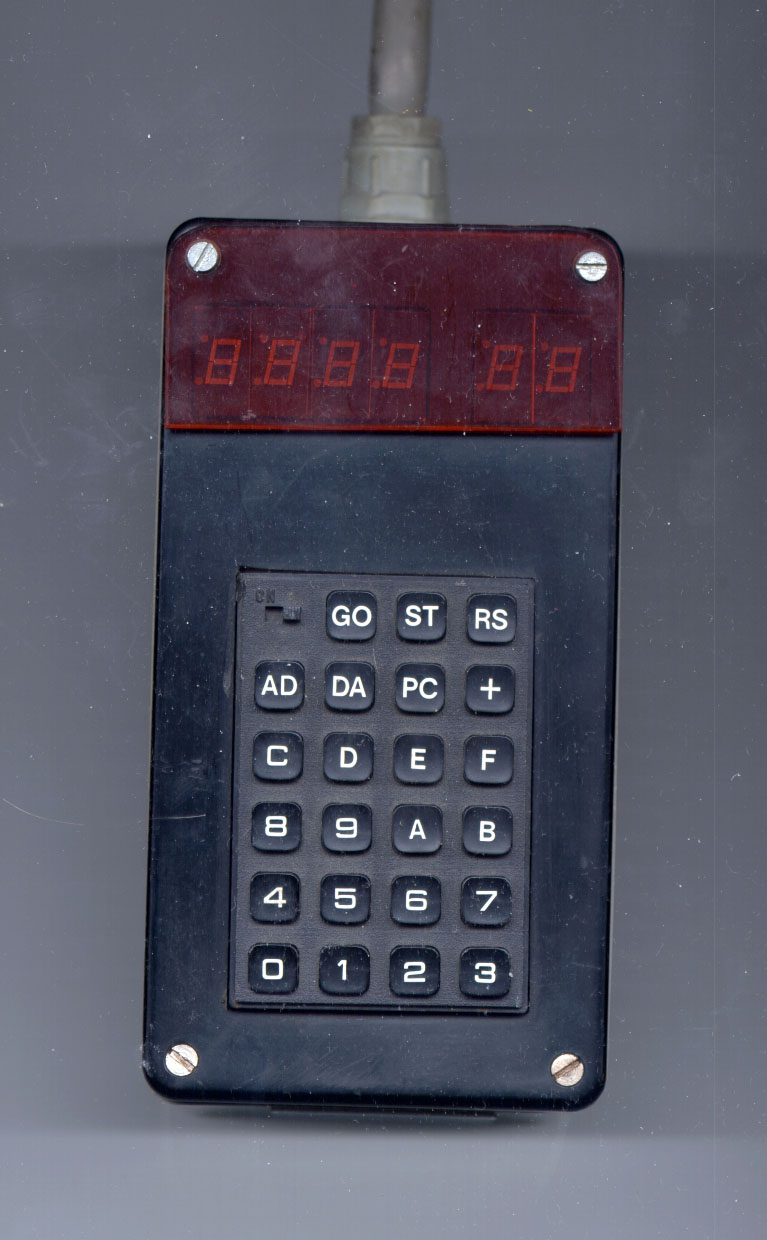
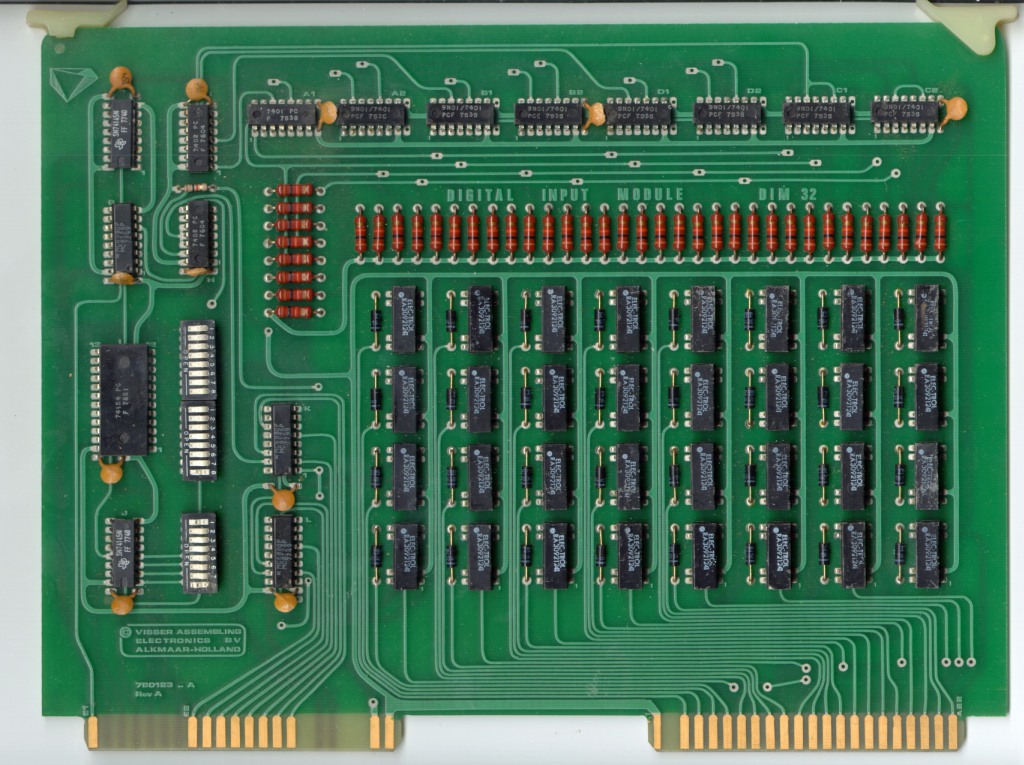
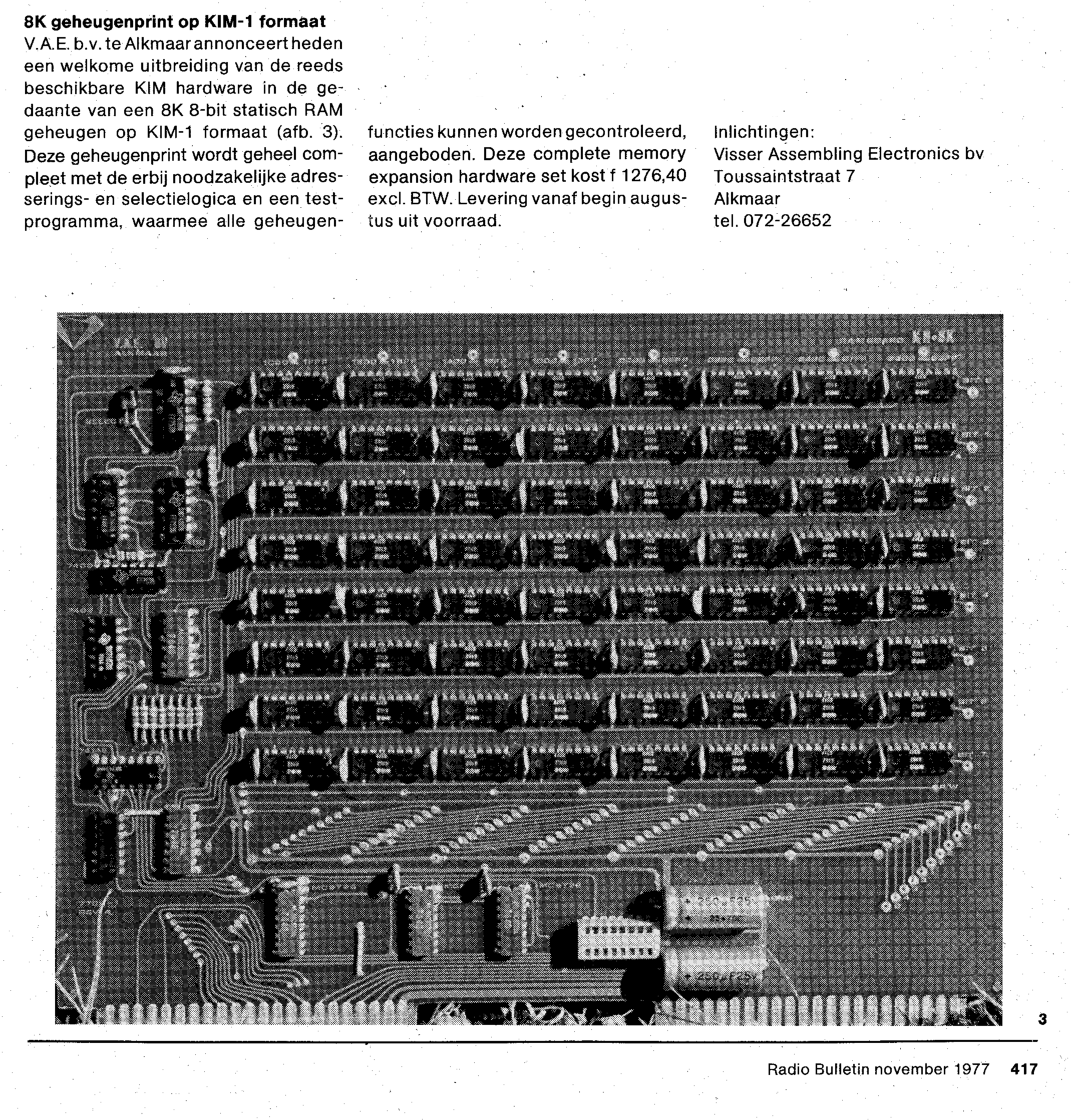
VAE T4 system

The dutch company Visser Assembling Electronics, Alkmaar, working for and in cooperation with the dutch carpet-factory Forbo Krommenie, developed a system based upon the KIM-1.
The T4 system consist of a large portfiolio of RAM, ROM, EPROM, input (Analog and Digital) and Output boards. Also a videoram card was developed.

Scanned documentation and all photos of the system

kim

kim

kim

kim