post

Elektor Elektuur Junior

The Junior computer design was published by Elektuur/Elektor from 1980 on. It was published in a series of magazine articles, four books and several so called paperware A4 booklets. And the ESS Elektor Software Services for the ROMs.
Loys Nachtmann designed and developed the Junior Computer, G.H. Nachbar did the Dutch translation of the German books. The 4 Junior books were translated into English, German, Spanish, Italian and French.

The Junior design is in fact heavily inspired by the hardware of the KIM-1 (or you can call it a copy!), the floppy disk interface design is a copy of the Ohio Scientific floppy disk interface design. Though I am not aware of copyright claims by MOS Technology/Commodore or Ohio Scientific, the inspiration is clearly visible.

It was delivered as a kit by shops or could be be built from the PCB’s (and later the ROMs) sold by Elektuur. Many hobbyists have build one, it was cheap and well documented.
Later extended with video card and an adapted version of the 8K KB9 Basic and even a disk operating system (Ohio Scientific DOS OS65D V3).

Articles in the Elektuur magazine and books (1-4), a 6522 book in the same series, in Dutch, English, French, German, Italian and Spanish were published.

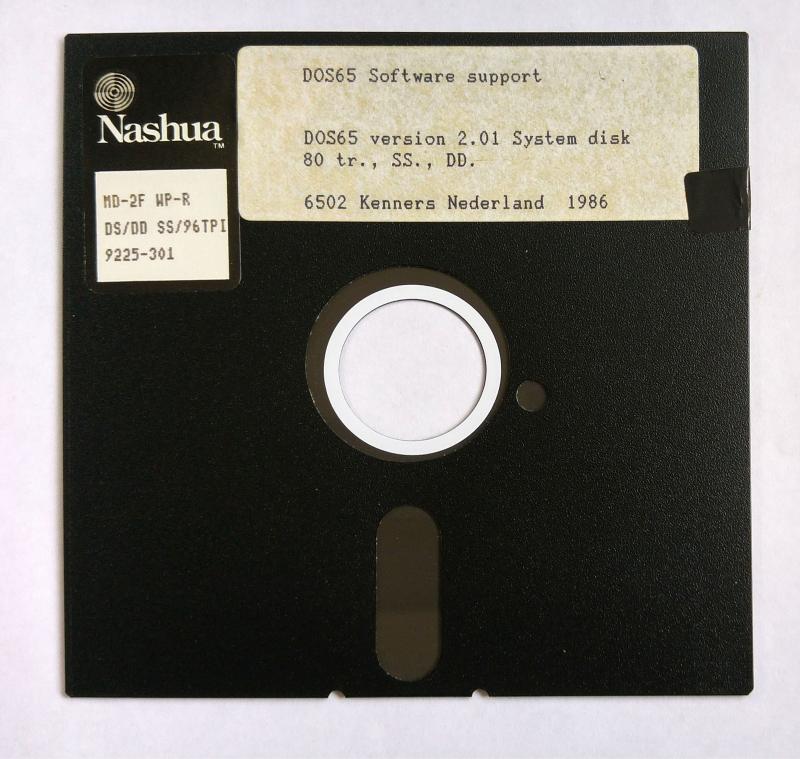
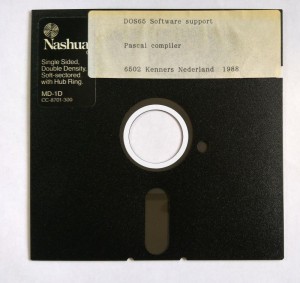
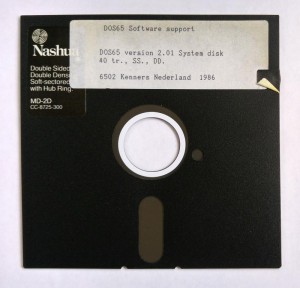
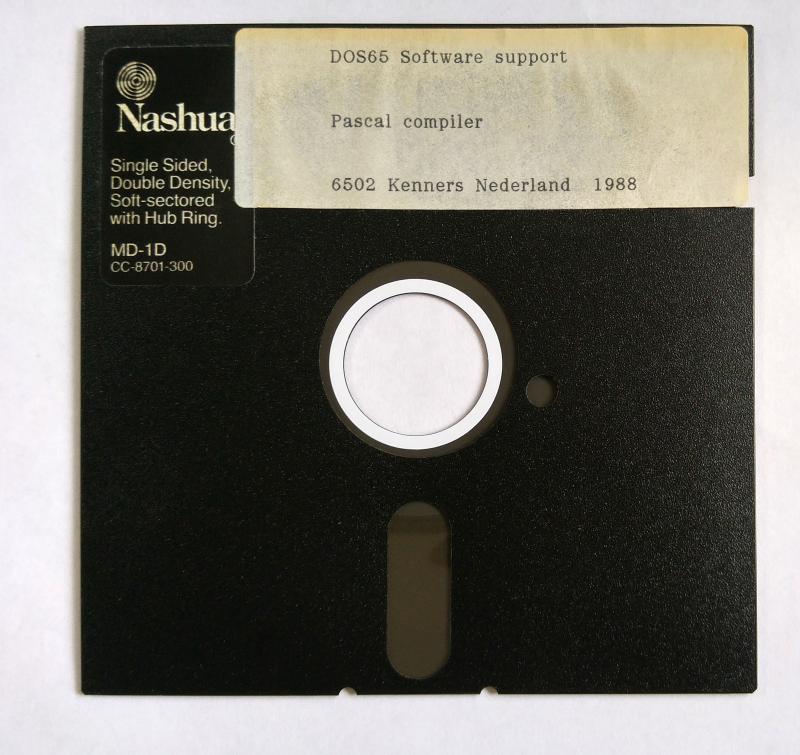
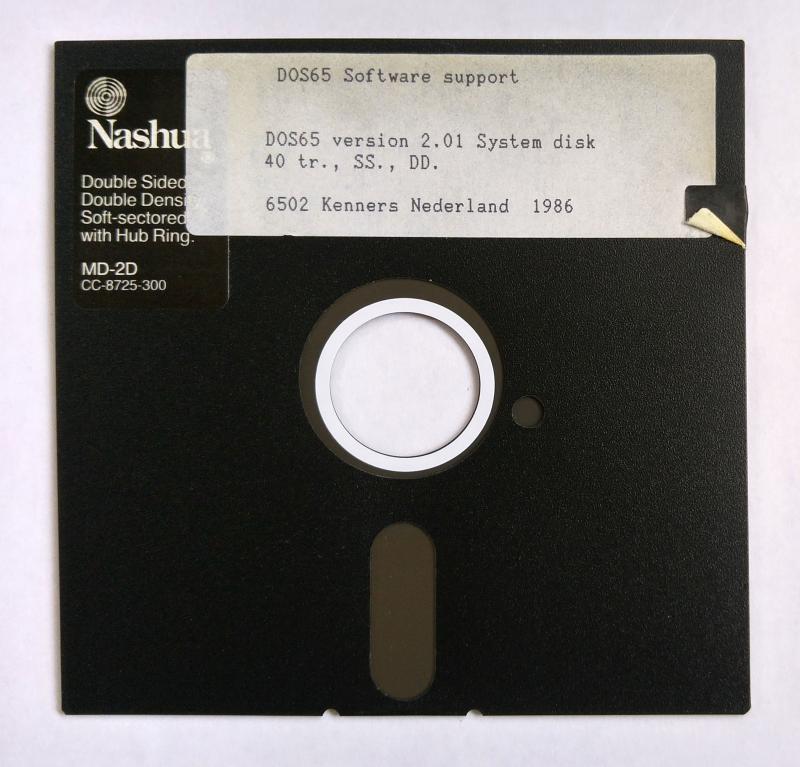
Quickly adopted by the Dutch KIM Gebruikers Club because it was so close to the KIM-1. In the later days the number of Junior Computer users exceeded the KIM-1 users and changed the nature of the club from professional users to a hobby club. It also led to the DOS65 operating system for the Elektuur 6502 CPU board

The magazine Elektuur (the Dutch name) and Elektor (the name in the rest of teh world surprised us in 1980 with the publication of a build-yourself 6502-based SBC. It is a design in the tradition of the KIM-1 and SYM-1: a hexadecimal keyboard, six hexadecimal led displays and KIM-1 compatible tape format.
Many Junior Computers were built, either from the PCB made by Elektuur and separate components or as a complete kit. And after we (Anton Muller and me) sent a letter to the Elektuur magazine that got published about the KIM Gebruikers Club, many hundreds Junior users joined the club.
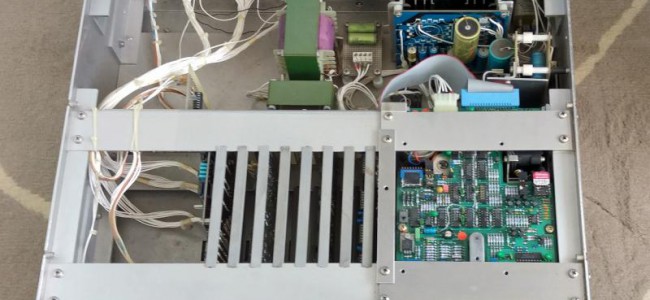
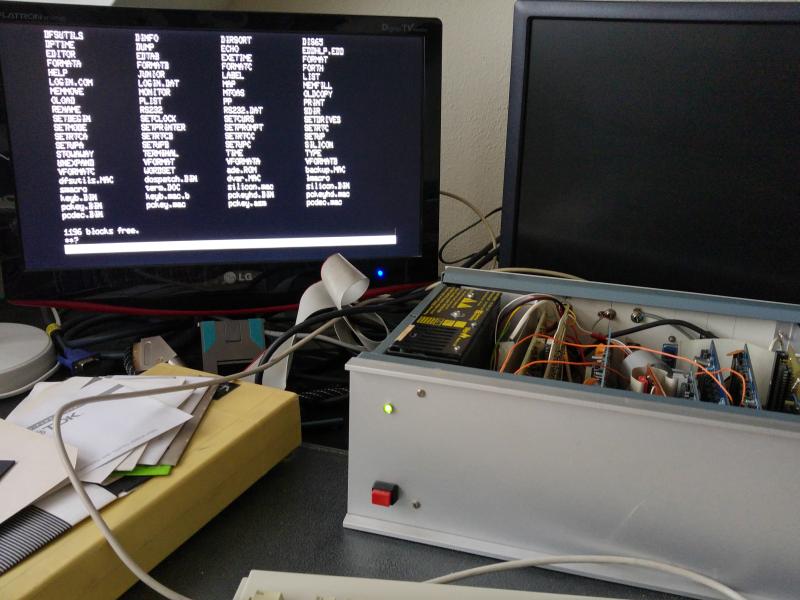
Developments after the Junior design was published in Elektuur led to the EC65(K) (see the Elektor Computing books) and the KIM Club DOS65, documented on this page.

What you can find here:


post

KIM-1

Developed by Mos Technology. later acquired by Commodore, to show the possibilities of the 6502 microprocessor but quickly discovered as the first mass-produced personal computer. Easy to extend, lots of detailed documentation. With assembler/editors, first Microsoft Basic on cassette and even a Pascal compiler, it could do a lot. The first have an original Mos Technology logo, later versions have the Commodore logo on the board, small technical differences other than more recent 6502 IC’s without the infamous ROR omission.
IMG_9755
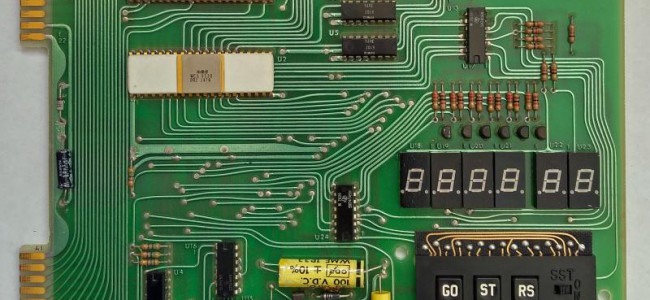
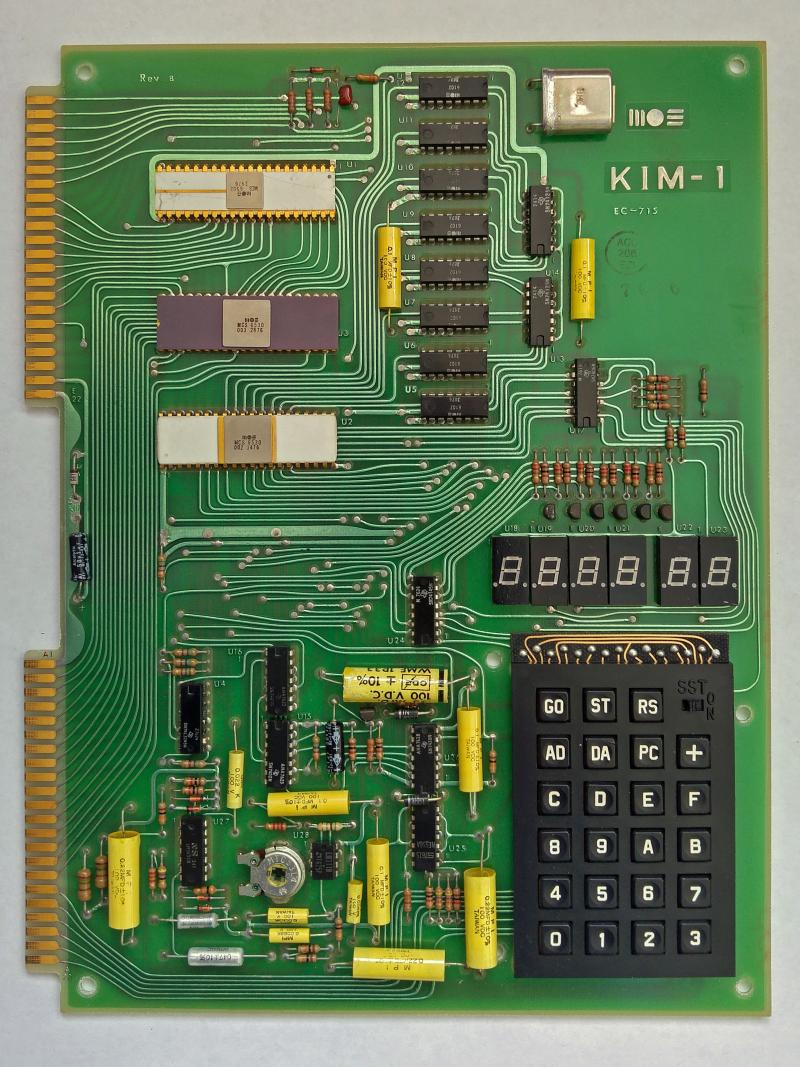
This prehistoric computer has no “real” keyboard and no video output, program are entered by the small hexadecimal keyboard (located in the lower right part of the picture) and results are displayed on the small LED “screen” (it can display only 6 digits). It has a simple monitor that allows one to examine, modify memory, load and save paper tape, load and save cassette tape, run and debug programs through a ‘single step’ mode. The monitor works with the built in keypad and LEDs, or a terminal like the Teletype ASR33. This 20 mA current loop is easy to adapt to RS232C and so any videoterminal can be used.

The KIM-1 design inspired many designers of 6502 systems, mimicking either the unique LED and keypad setup or by having the same application and expansion connector
Notable are:
SYM-1 Application and expansion connector, LED and keypad display, tape format
AIM 65 Application and expansion connector, tape format
MCS Alpha 1 LED and keypad display, tape format
Elektor Junior LED and keypad display, tape format

Information on the KIM-1, also reachable from the menu on the right:

Prototype KIM-1

On team6502  I found a photo of a prototype KIM-1 at MOS Technology, Terry Holdt has this in his office.
The layout is different from the final product, everything seems to be present on this prototype.

KIM in test frame at a MOS Technology facility (John Feagans)

MOS Technology 6502

The 6502 CPU, from MOS Technology, has been widely used since its debut in 1975. Designed by a group of people at MOS Technology led by Chuck Peddle, later of Commodore fame, and used in machines like the PET and C64. Also quickly adapted by computer designers like Steve Wozniak in the Apple series, the 1 and ][ and 2 and 2e and 2c and 3. And many others followed!

300px-MOS_6502AD_4585_top

My collection of 65XX ICs is here.

For more 6502 IC photos: look at the cpu-collection page.
For an introduction to the 6502 family go to this wikipedia page.
An introduction on the 6502 programming can be found in this wikibook on 6502 assembly.

The 6502 turned out to be an affordable, yet powerful CPU, easy to interface and easy to understand. Many single board computers were designed with the 6502, most often becoming the heart of largely expanded systems.

The KIM-1, developed by MOS technology as a design example, became such a hit. Many were sold, not only to the original target audience, but also to  hobbyists and electronic engineers and system integrators. A new industry was born, based on the microprocessor as the heart of electronic devices. And also the birth of the personal computer, the Apple 2.Nowadays the 6502 is not much more than a memory for most. But the 6502 core is still found in many embedded applications, as sold by the Western Design Centre.

Books in pdf format for download to get started, more books here

post

Home

Latest Posts
KIM-1 replica keypad

KIM-1 replica keypad

A spare KIM-1 keypad is even rarer than a KIM-1 itself. With this guide you can build a reasonable replica ...

Read More

My A-ONE collection

A-ONE Apple 1 replica family 2025

In 2025 Franz Achatz revived the A-ONE Apple 1 replica. The excellent design is refreshed, a new family member added: ...

Read More

Proton Electronics

Proton Electronics

The Dutch based firm Post Electronics produced and sold lots of electronic components and computer systems.Like the 6502 based PC-1, ...

Read More

PIM-1 Proton 6502 system

Gerben Voort acquired a microprocessor development system PIM-1 developed by Proton, of PC-1 fame.Here his photos of the system after ...

Read More

KEMPAC system eurocards and microcomputers

Under the name KEMPAC SYSTEM Eurocards and Microcomputers for Industrial Automation a 19 inch rack system was developed in the ...

Read More

EMUF 6504 remake

A remake by Klaus Loy of the 6504 based EMUF 6504 as published in MC, see for the ...

Read More

KIM-1 Rev D White

New project, cleanup and restore this KIM-1 . Poor thing still works but had a rough life. KIM-1 collection complete ...

Read More

AIM 65 updates: power supply, PL/65 cover, images AIM 65 to RM 65 MACH-9

AIM 65 updates: power supply, PL/65 cover, images AIM 65 to RM 65 MACH-9

A65-004-03 Power SupplyInput 110/115/215/230 V AC n47-63 HzOutput 1 : 5V DC 3.0AOutput 2 : 24 V DC .5A, 1.5A ...

Read More

KIM-1 Simulator also available for macOS

KIM-1 Simulator also available for macOS

Thanks to Eduardo Casino version 1.6.0 is also available on macOS. Get the setup archive here.1. Unzip the file2. Move the ...

Read More

PLEASE Package

PLEASE PackagePLEASE is a very small package for a standard KIM-1. It has a tiny monitor, command interpreter and many ...

Read More

PicoSYM, a SYM-1 emulator on a Raspberry Pico

Emulation of a Synertek Sym-1 on a Raspberry Pi Pico 1 (W).By andysa on the emulation forum on 6502.orgHere is ...

Read More

KIM-1 Mod. A real KIM-1 in portable format!

KIM-1 Mod. A real KIM-1 in portable format!

Small enough to take with you traveling, battery powered and thanks to the FRAM the contents of RAM are kept ...

Read More

2N5371 pinout

Amazing it works: transistors placed wrong and they still work in the KIM-1

After publishing the photos of the transistors used in the KIM-1 a discussion started on forum64.de in the 'Instandsetzung und ...

Read More

Which transisors are used in the KIM-1?

Which transisors are used in the KIM-1?

Even a microprocessor based computer as the KIM-1 required some simple transistors.To drive the LEDs some extra current is needed, ...

Read More

Last KIM-1 production date: KIM is Dead!!! Long live KIM!!!

Last KIM-1 production date: KIM is Dead!!! Long live KIM!!!

While we may date the first commercial shipping of the KIM-1 to January 1976 (date of the first edition of ...

Read More

50 years of KIM-1: a demo to celebrate

A demo by friend Nilshttps://www.youtube.com/watch?v=aikJvjdEDto&t=208ssource@github: https://github.com/netzherpes/KIM1-Demo

Read More

Why the KIM-1? Jim Butterfield has a good explanation

Jim ButterfieldAug 19, 1999, 9:00:00 AMtoJoe Forster/STA wrote:>> Can you, please, explain me in short what this KIM-1 machine> is: CPU, ...

Read More

50 years of KIM-1 and me

With any product it is not always easy to establish a 'day of birth'.For the 6502 it is the WESCON ...

Read More

10 PRINT for KIM-1 and AIM 65

Michael Doornbos (of https://imapenguin.com/) posted two "10 PRINT" articles for our beloved small 6502 SBC's. The KIM-1 version displays on ...

Read More

Replica of the MTU K‑1002 audio card  and software by Eduardo Casino

Replica of the MTU K‑1002 audio card and software by Eduardo Casino

A faithful replica of the K‑1002 8‑bit audio Digital‑to‑Analog Converter card and software for the KIM‑1, SYM‑1, and AIM‑65 computers, ...

Read More

This page is about my interest in retro 8-bit small computer systems computing and electronics. And the role of Dutch electronic magazines like Elektuur and Radio Bulletin in the eighties of the 20th century. Also the Dutch users club, called KIM Gebruikersclub, which I joined in 1978 and contributed to as member of the board and as chief editor of the magazine issue 11 to 25.
The retro computing pages are documenting my experiences with 8-bit systems like the KIM-1 and its relatives such as the Apple 1 and the Junior. And various small Z80 and other systems.
I set up this archive as my personal archive of what I research on the subject. If it is of any use for others, fine, enjoy!

Magazines

In the early days of computing, magazines about popular electronics played a big role in making microprocessors available for the beginner, whether the professional or hobby electric engineer. The magazines featured here are the dutch magazines Elektuur and Radio Bulletin. From 1977 until 1996 I worked as technical editor for Radio Bulletin and published about microcomputers and more general electronics.  Elektuur published also articles on these subjects, many are available here.

What is a SBC for me?

A SBC, short for Single Board Computer can be defined as a computer system, based on a microprocessor, on one printed circuit, with keyboard and display, programmable I/O ports, expansion connectors and without a casing. The ‘operating system’ is stored in a (EP)ROM, an often small amount of RAM is available to store programs and data These were the first microprocessor based computers with affordable prices for hobbyists in the late seventies of the previous century. For professionals a way of getting acquainted with the new hardware and learning the basics of programming at a (very!) low level.

IMG_9928
Though it is a complete computer, it has a CPU, memory and I/O, it is also a very limited one. The I/O is often not more than a small keyboard with hexadecimal functions. The display is often not more than 6 or 8 seven segment LED displays, just enough to show, in hexadecimal format, addresses and data. The operating system allows entering and examining of data in memory locations, and start and stop a program. Loading and saving data is limited to either papertape readers and punches, quite common in these days, or via some modulation as data files on audio cassette recorders. Also common is the ability to attach a teletype like the ASR33.

A good example of such a SBC is the KIM-1, shown below. 2K ROM, 1K RAM, many I/O lines free, six LED displays and a keyboard with hexadecimal keys and some function keys.
Why these SBCs like the KIM-1 became so popular? One reason was the low price ($ 280 for a KIM-1, I paid 795 guilders ), so it was in the price range of the average student and hobbyist. Another is the design being open, the complete hardware description and detailed listing of the ROM was included. And it is not the frightening computer, but more a programmable piece of hardware. Because it was so easy accessible and low speed, adding and changing hardware is not hard also. Programming was not easy, but editors/assemblers that could run with some added hardware like RAM and a video terminal made that possible. The nowadays common practice of cross compiling was not available for the hobbyist then.

Besides playing with the SBC, to learn what the microprocessor is capable of, many SBCs were put to work as a sort of PLC, controlling devices in the real world.
What changed the popularity of SBCs was the wish to transfer it to a computer with a better user interface, like graphics on a video screen, a full blown keyboard, a real operating system with mass storage such as floppy drives, and a higher fun factor, a.k.a. games. Or to make it a serious computer fit for business. So SBCs became extinct fast in the mainstream hobby world when the hobbycomputer appeared on the market, like the TRS-80, PET and later the C-64, MSX etc. Even later the boring business PC killed the hobby computer, but that is another story.
It seems the SBC’s are back though: Arduino and Raspberry Pi Contact form to contribute to this fascinating hobby!
IMG_9755