
The 6502 has an 16 bit address bus, so it can access 64KB of memory, made up of RAM, ROM and I/O devices.
Address decoding is the hardware that enables the devices in that memory space at the desired address.
The basic address decoding is made up of a 74145, a TTL IC that decodes 4 bit to 10 bits, here used as 3 to 8 decoder. Te 74145 has open collector outputs, so outputs can be tied together.
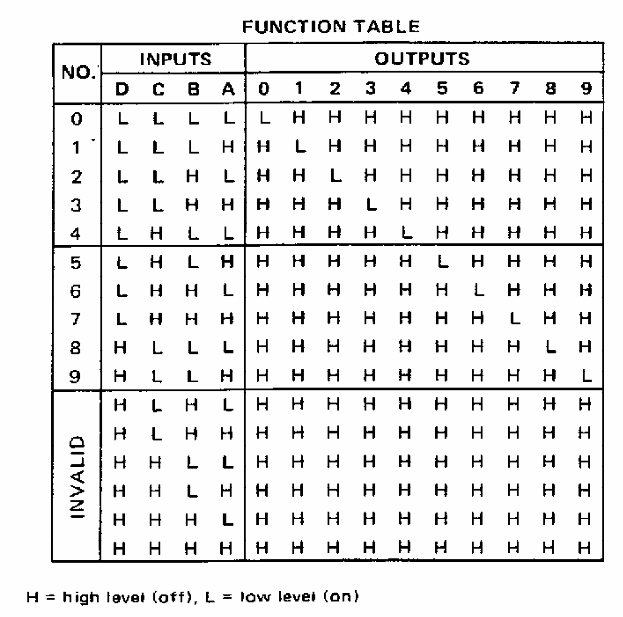
74145 function table
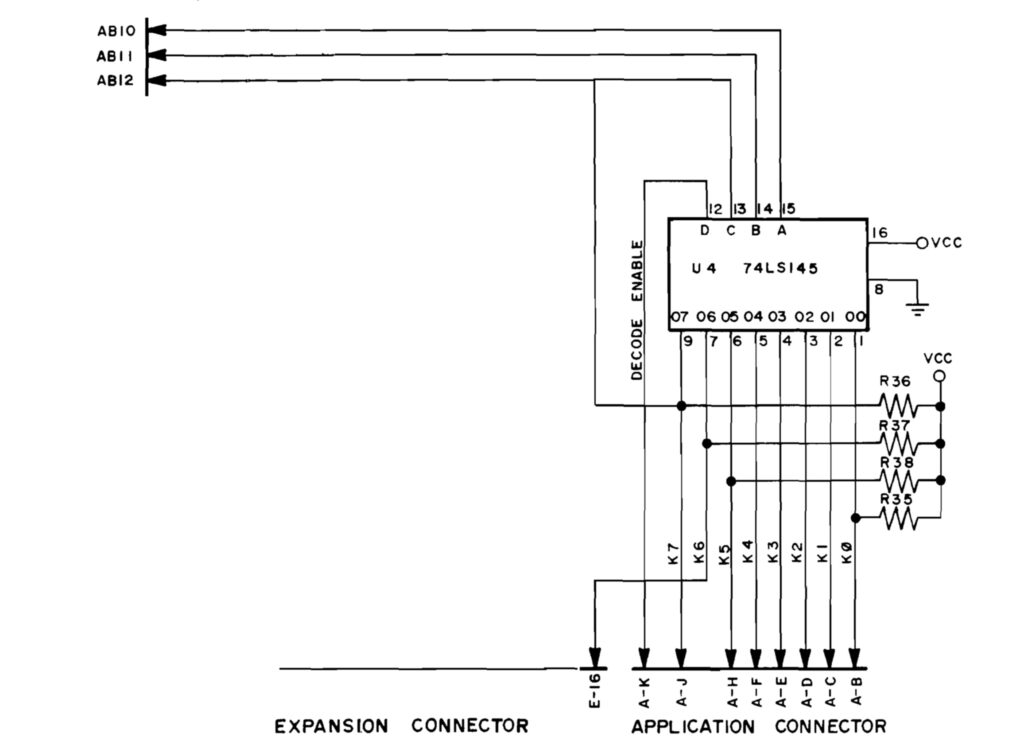
Memory decoder in the KIM-1
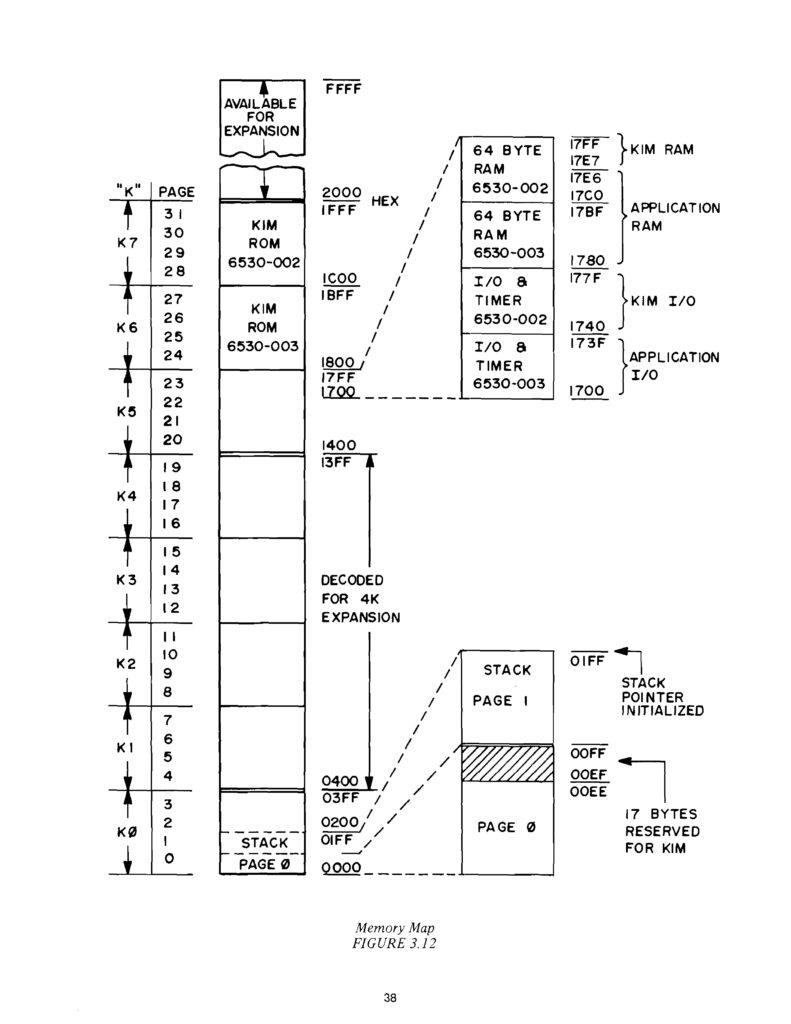
According the User manual this leads to the memory layout as shown above. Note the K0-K7 signals that are connected to the hardware devices such a RAM, and the RRIOTs.
The Kx signal covers a 1KB block of memory, a ‘Page’ is 256 bytes, 4 pages in a Kx block. So K0 addresses pages 0..3, K5 has page 23 which you will see mentioned in the source as the RAM locations in use by the monitor.
Incomplete memory decoding
The picture from the user manual above is a bit misleading. Since address A13, A14 and A15 are not included in the decoder, they are effectively ignored. The KIM-1 sees a maximum of 8K memory this way 0000-1FFF. Why still using 16 bit addresses? In fact since the higher address lines are ignored, address 0000 is also address 2000, 4000 etc with 8K steps to E000.
And the vectors at address 1FFA in the KIM ROM are also found at FFFA, so the RESET vector works. Simple and effective.
The KIM-1 in its basic form of address decoding is limited to 8K address space, repeated 8 times in the 64K address space.
DE Decode enable
The fourth input D of the 74145 is connected to pin A-K of the Application connector. For the basic address decoding as 3 to 8 decoder pin D of the 74145 has to be connected to ground.
This is the essential wire on the Application connector to let a KIM-1 function.
DE is essential for external devices to take over the 6502 address space and allow expansion utilizing the full address space.
Conclusion
The KIM-1 has access to a 8K memory space. Any address is truncated to 13 bits in hardware, so if you use an address 2000 and up it is mapped into 0000-1FFF.
Further reading
Chapter 6 of the User manual has good advice on the memory decoding.
On the next page, Expand the KIM-1, you will see how to add RAM, ROM and I/O to the KIM-1 and use the full address space, with full decode and using Decode Enable.