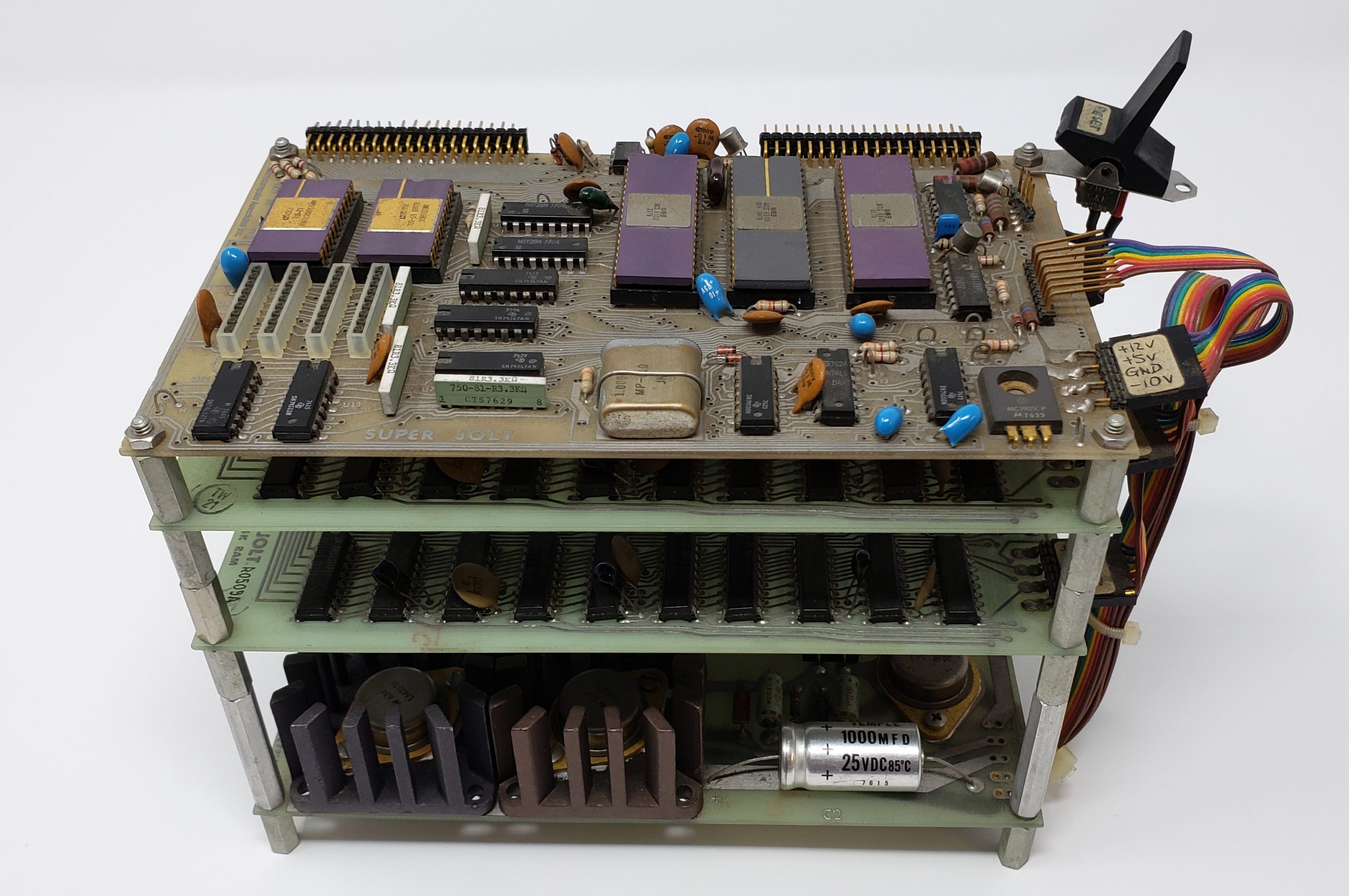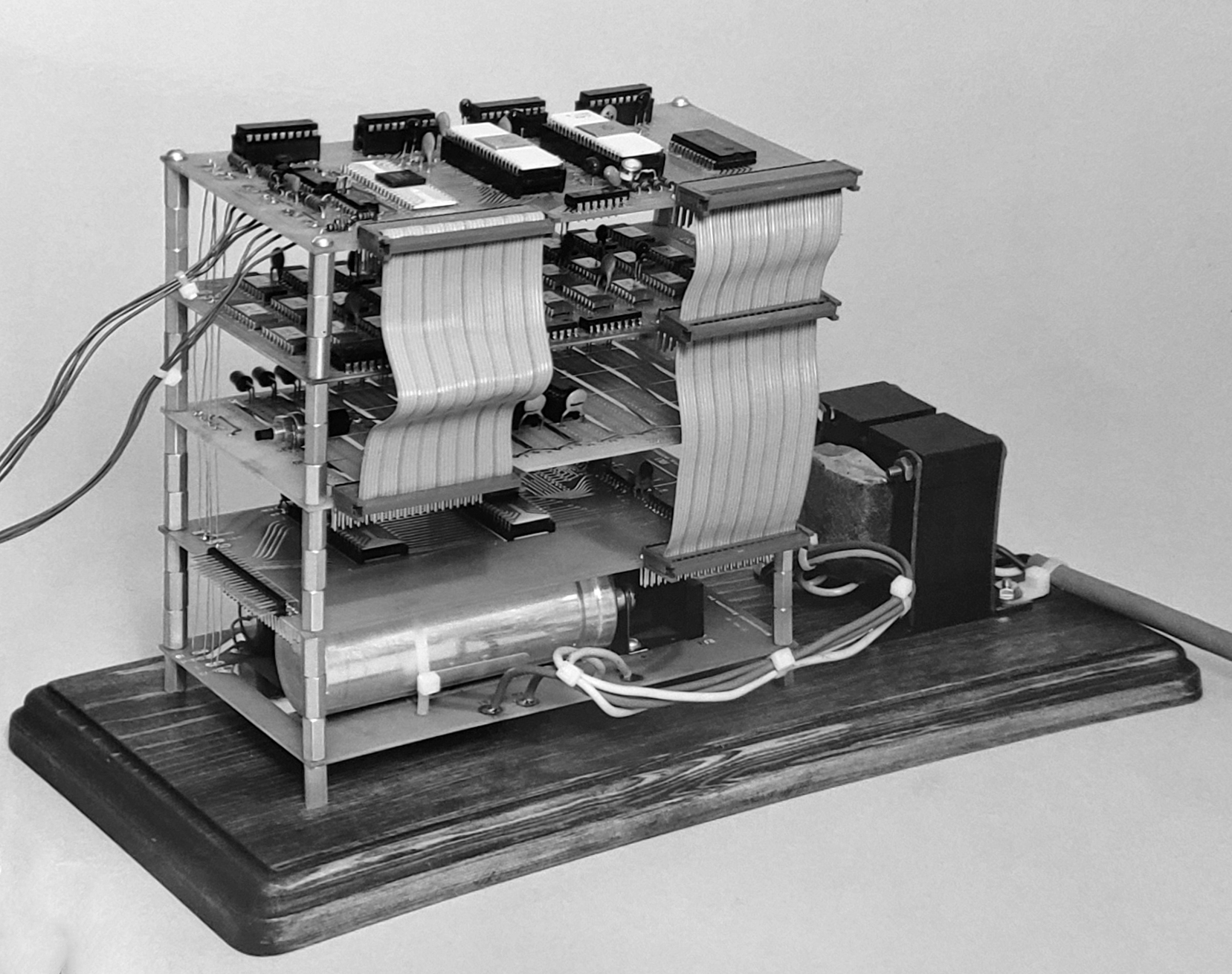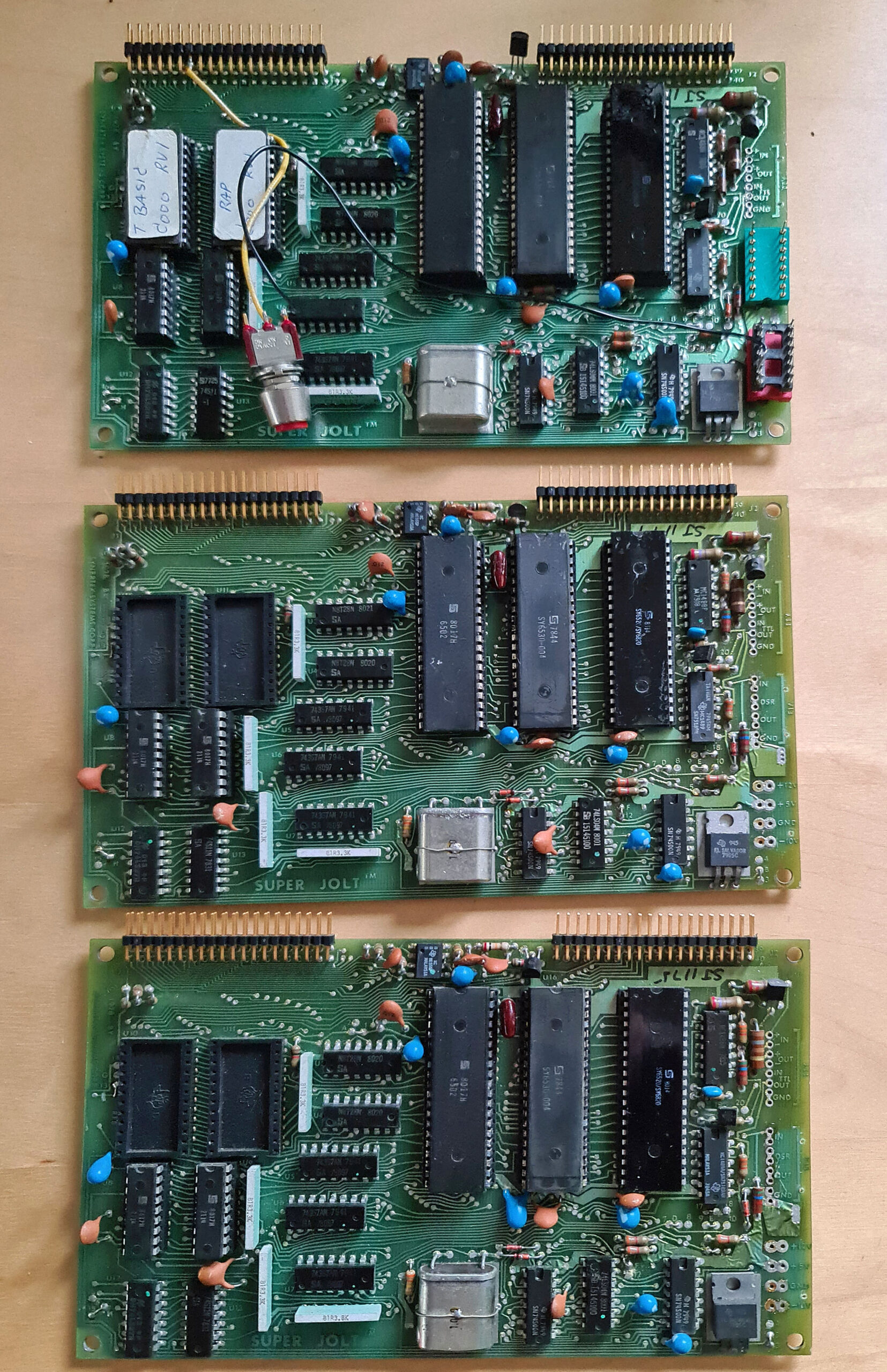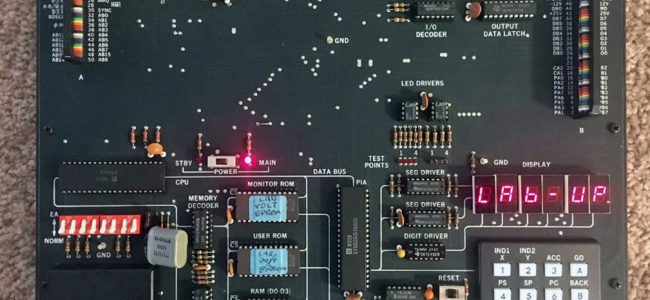
KIM 6530 to 6532 for a KIM-1 clone

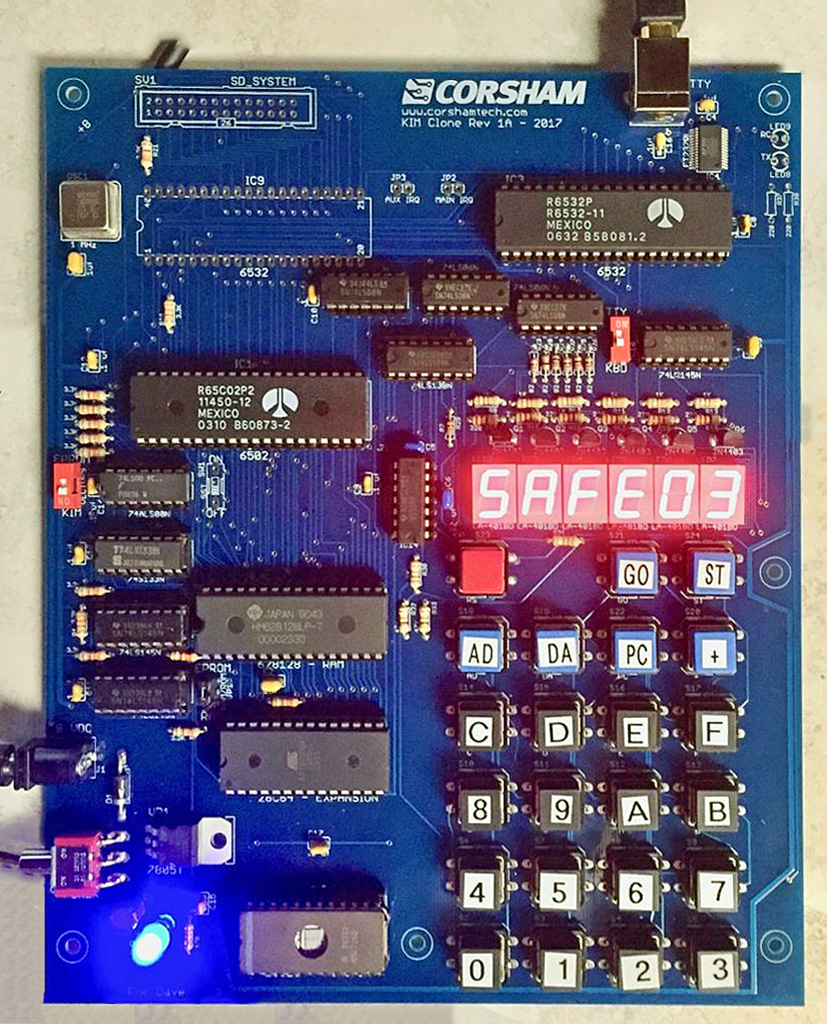
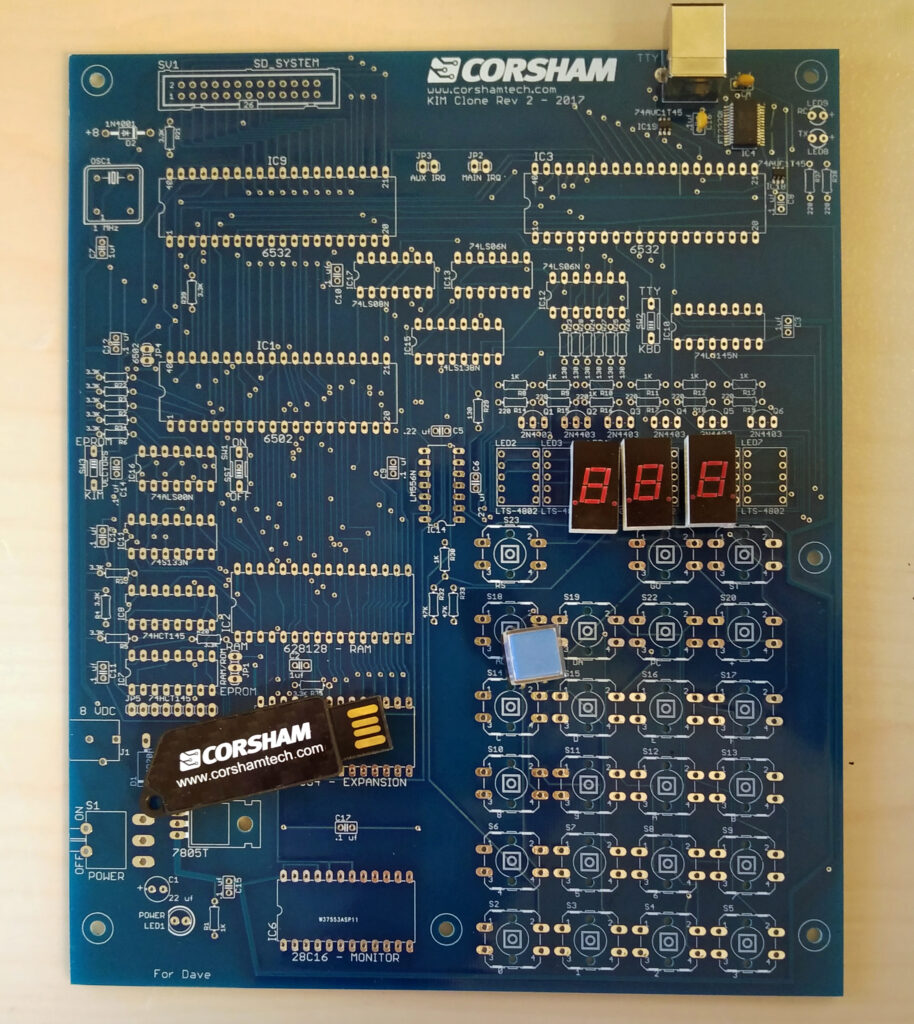
Replace the 6530-002 and -003 in a KIM-1: a KIM-1 clone.

The base for all ‘modern’ KIM clones, KIM reproductions, MICRO KIM, PAL-1 and more.

Credits to Ruud Baltissen for the idea and details. The ‘I’ is Ruud from here in this page!

RRIOTs are mask programmed for address selection, choices are:

– Pin 18 PB6 or CS1
– Pin 19 PB5 or CS2
– Pin 17 PB7 can have a pullup
– ROM selection on RS0, CS1 und CS2 s
– RAM on RS0, CS1, CS2, A9, A8, A7 and A6
– I/O on RS0, CS1, CS2, A9, A8, A7 and A6

See the various 6530/6532 datasheets for (some) more detail.

The troublemaker: 6530, detailed background information

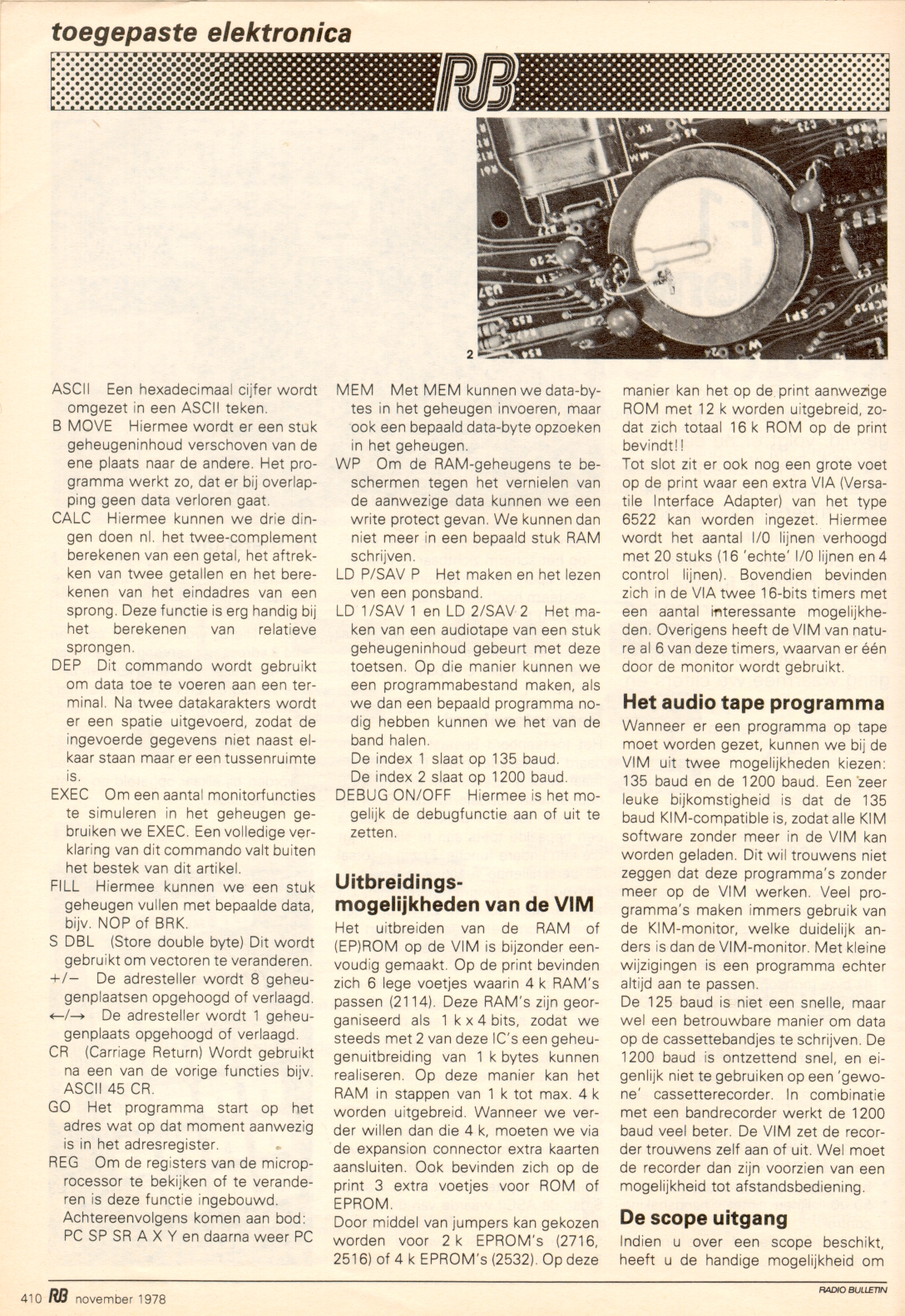
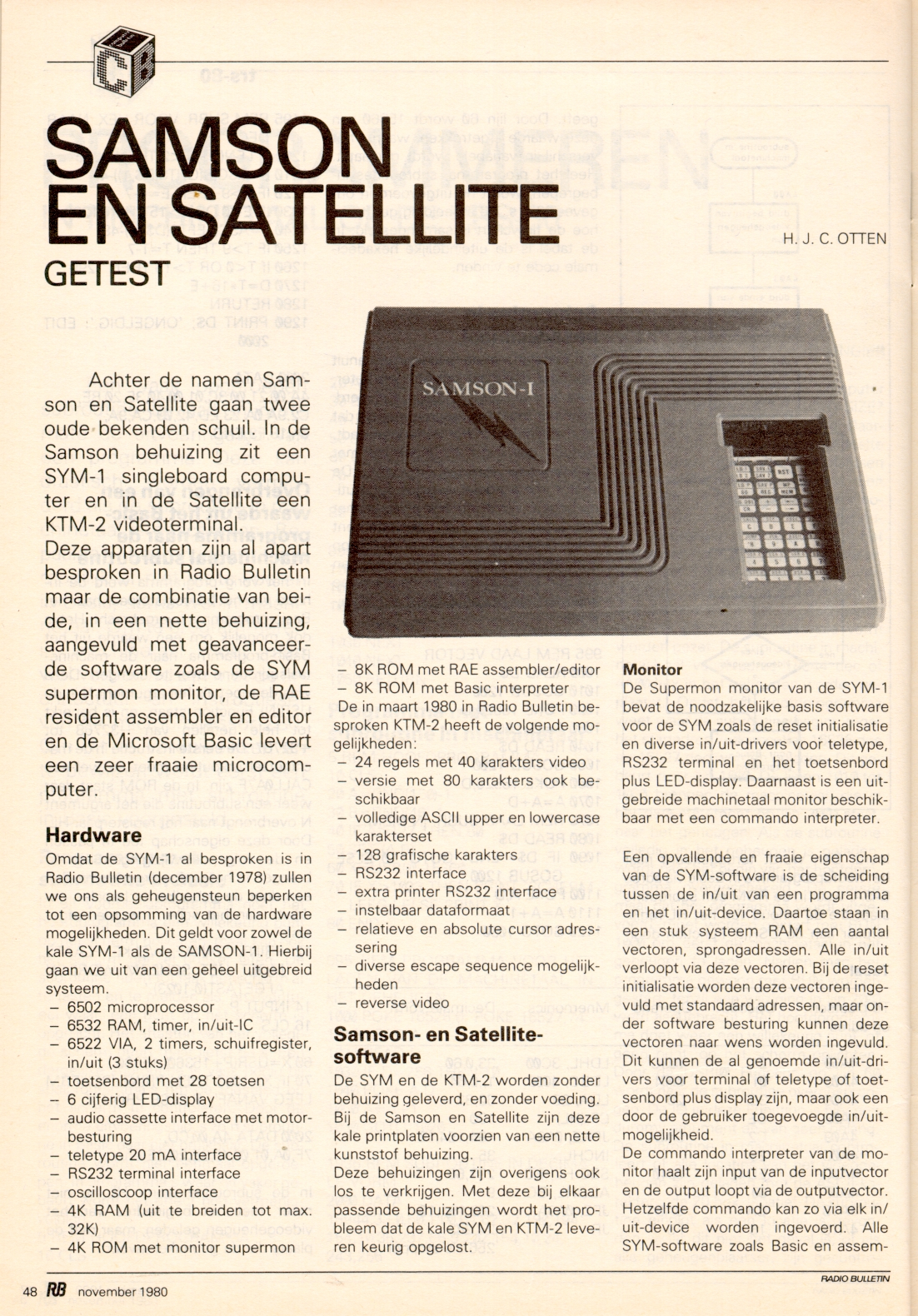
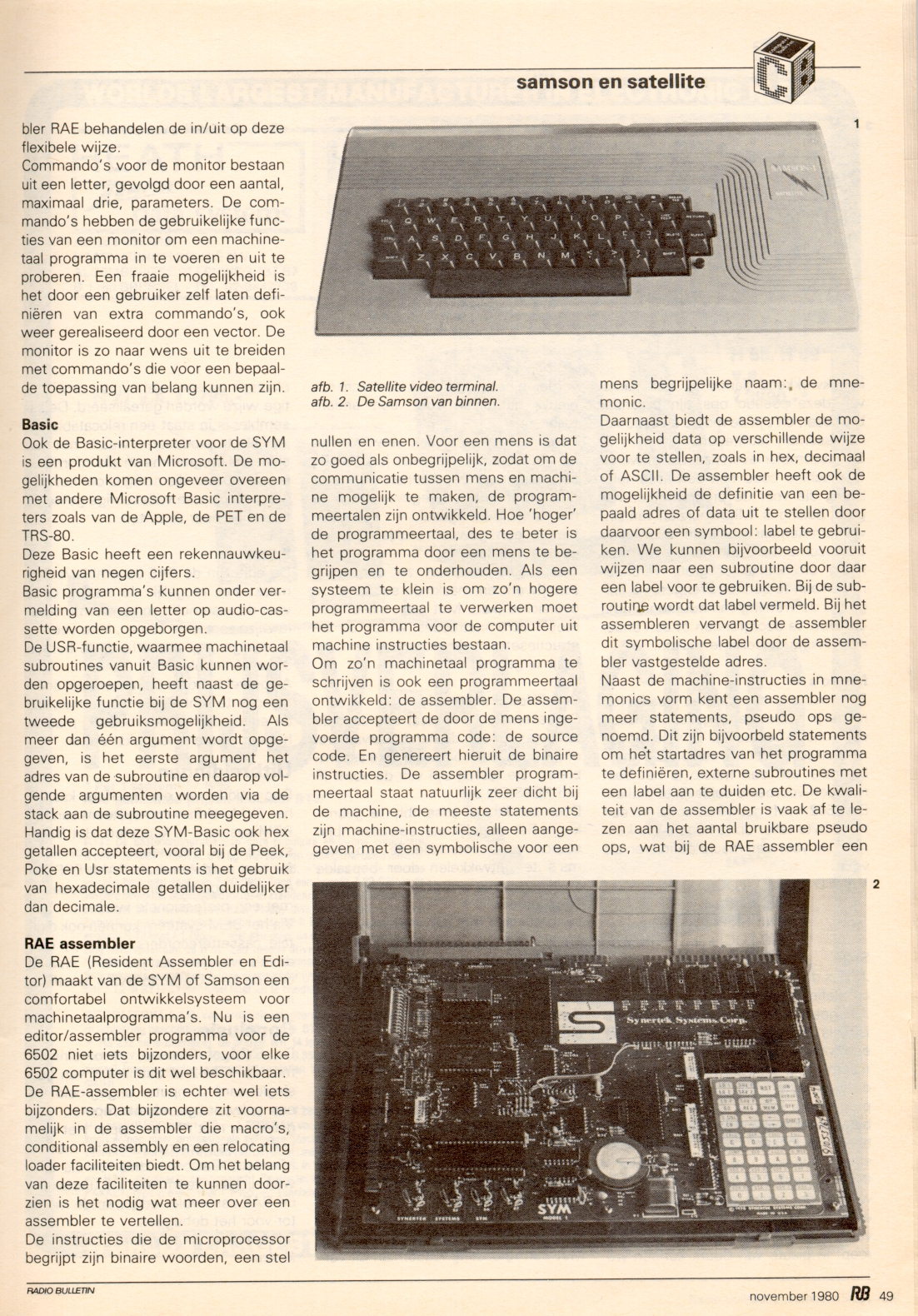
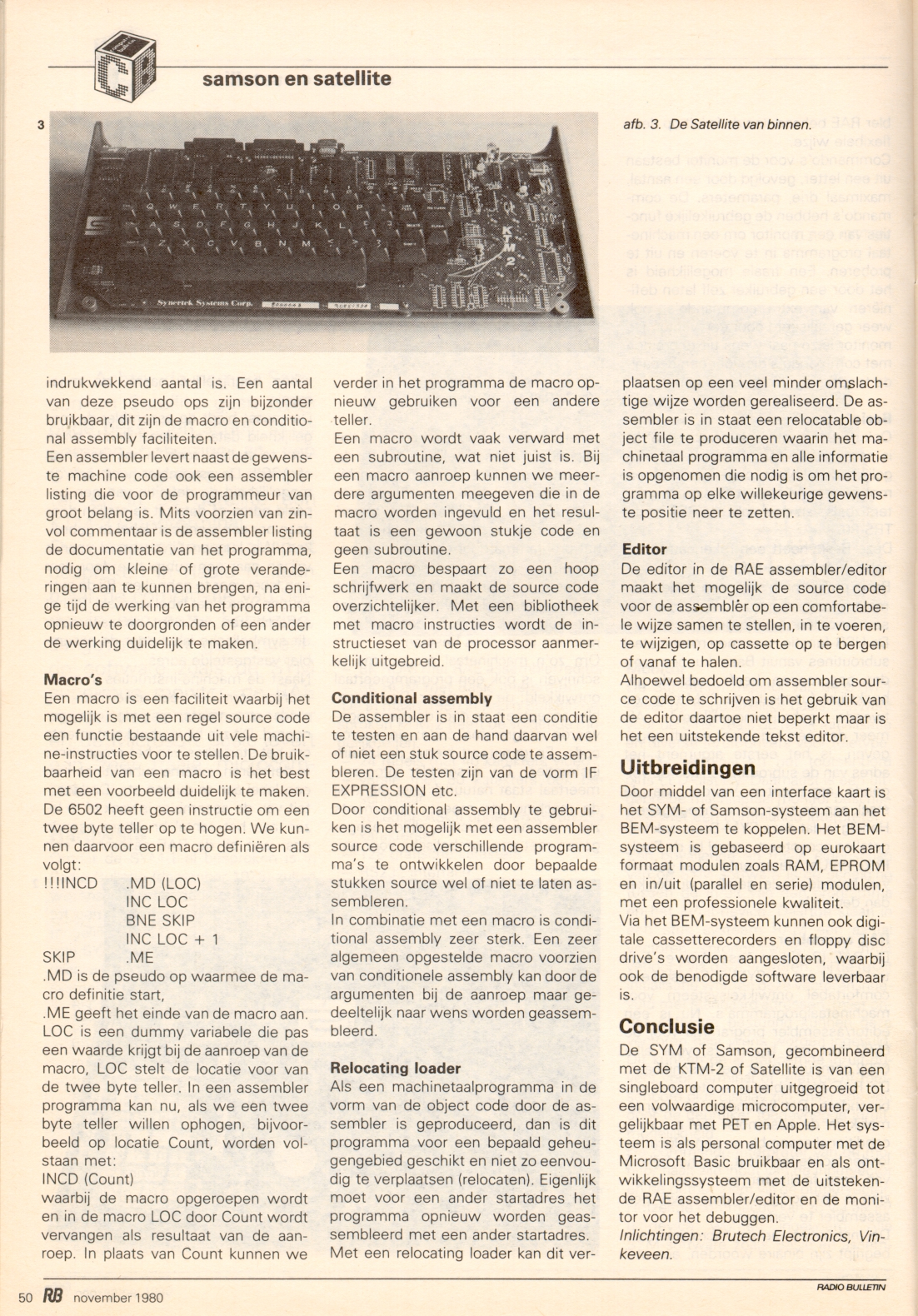
The KIM-1 has two 6530s on board. For more info about this IC, please read the datasheet. Anybody who is a little bit familiar with the hardware market can tell you that you cannot buy the 6530 anymore. Happily enough there is another IC available which you could call its brother: the 6532. The 6532 has 16 I/O-lines, an internal timer and 128 bytes of RAM on board, but no ROM. The internal ROM of the 6530 can be selected independently from the I/O. So for this project we’ll use an external EPROM as replacement. The pin out of the 6532 is completely different but that should not be a problem.

The next difference is the fact that the 6532 has a separate IRQ and PB7 line. As we will see, the functionality of both lines is the same as with the 6530. To create the same circumstances we only have to connect them together.

The third difference is the availability of PB6 with a 6532. See it as a bonus as I haven’t found any reason how it could jeopardize our project.
The fourth difference is that it is possible to generate an interrupt depending on the behaviour of PA7. But this is an option, which is out of function by default after a reset.
The last and major difference however lays in the way the registers are selected:
function:       RS:  A6:  A5:  A4:  A3:  A2:  A1:  A0:  R/W: 
                                                            
RAM              0    x    x    x    x    x    x    x    x   
                                                            
DRA              1    x    x    x    x    0    0    0    x     A
DDRA             1    x    x    x    x    0    0    1    x     B
DRB              1    x    x    x    x    0    1    0    x     C
DDRB             1    x    x    x    x    0    1    1    x     D
                                                            
PA7, IRQ off,                                               
      neg edge   1    x    x    0    x    1    0    0    0     F
PA7, IRQ off,                                               
      pos edge   1    x    x    0    x    1    0    1    0     G
PA7, IRQ on,                                                
      neg edge   1    x    x    0    x    1    1    0    0     H
PA7, IRQ on,                                                
      pos edge   1    x    x    0    x    1    1    1    0     I
                                                            
read interrupt                                              
       flag      1    x    x    x    x    1    x    1    1     E
                                                            
read timer,                                                 
       IRQ off   1    x    x    x    0    1    x    0    1     J
read timer,                                                 
       IRQ on    1    x    x    x    1    1    x    0    1     K
                                                            
Clock / 1,                                                  
       IRQ off   1    x    x    1    0    1    0    0    0     L
Clock / 8,                                                  
       IRQ off   1    x    x    1    0    1    0    1    0     M
Clock / 64,                                                 
       IRQ off   1    x    x    1    0    1    1    0    0     N
Clock / 1024,                                               
       IRQ off   1    x    x    1    0    1    1    1    0     O
                                                            
Clock / 1,                                                  
       IRQ on    1    x    x    1    1    1    0    0    0     P
Clock / 8,                                                  
       IRQ on    1    x    x    1    1    1    0    1    0     R
Clock / 64,                                                 
       IRQ on    1    x    x    1    1    1    1    0    0     S
Clock / 1024,                                               
       IRQ on    1    x    x    1    1    1    1    1    0     T

In total 5 address lines are used, meaning 32 registers. 
But 11 of the 19 registers have one or more mirrors.
Read:        J E J E       K E K E       J E J E       K E K E 
Write:       F G H I       F G H I       L M N O       P R S T 
R/W:         A B C D       A B C D       A B C D       A B C D       

As we can see, the last 16 registers equal the 16 of the 6530 itself.
So now we have to develop some logic which will do the following:

  • The 6532 is only visible within a range of 128 bytes
  • The first 16 bytes represent register 16 to 31
  • The next 48 bytes are mirrors of the first 16
  • The last 64 bytes appear as RAM

Conclusion:

  • Input A6 won’t be used and can be tied to GND
  • Input A4 is connected to address line A4 of the 6502 via an inverter.
  • A 74LS138/74LS08 construction or equivalent enables the RS- and CS-lines at the right moment.

ROM and RAM

Here we have a luxury problem. We only need 2K of (EP)ROM like the 2716. The problem is that the 2716 is hard to find and more expansive then the 2764 or its bigger brothers. When we use a bigger EPROM we only have to tie the unused address lines to GND. The same problem occurs with the RAM.

If we have to use bigger RAMs or EPROMs anyway, it is quite easy to use other parts of that chip by OR-wiring the CS-line with more Kx-outputs of the main 74145. (Don’t forget the address lines!) In case of the EPROM we also can tie switches to the surplus address lines and have the advantage of a multi-KERNAL system.

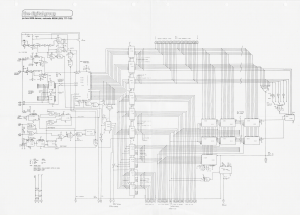
Schematics of the new KIM-1

What are the major differences with the original circuit:

  • Replacement of the 6530s by 6532s.
  • Replacement of the 6108 RAM-ICs by one 6264 or equivalent 8K*8 SRAM.
  • Adding an EPROM.
  • Adding a 74LS138 to decode the RAM and I/O of the 6532s.
  • Combining K6 and K7 to one line, dropping the resistor for K6.
  • Adding jumpers to enable combining other K-lines as well.

You may notice that Ruud did not change things which are more or less obvious like replacing the clock circuit by a module or replacing the various 74XX TTL-ICs by their LS or HCT equivalents.

6530’s KIM-1 specification

(Thanks to J Coville)
Back in the day, a designer ordering a custom 6530 would have to specify certain parameters in addition to the ROM contents. During my KIM-1 restoration effort, I found a datasheet for the Synertek version of the part. The datasheet has quite a bit of information describing how to provide the ROM contents. There is also a form for “Additional Pattern Information” (tables to describe the desired chip-select and addressing information). They look like this:

Chip Select Code (Check one square in each block)

CS1
PB6
CS2
PB5
Pull-up on PB7
YES
NO

ROM/RAM/I-O SELECTS (Specify H or L or N (don’t care) in each box.)

RS CS1 CS2 A9 A8 A7 A6
ROM Select N N N N
RAM Select
I/O Select

As best as I can determine, the designers of the KIM-1 filled out the tables for the RRIOTs like so:

6530-002:

CS1 X
PB6
CS2
PB5 X
Pull-up on PB7
YES
NO X
RS CS1 CS2 A9 A8 A7 A6
ROM Select L H N N N N N
RAM Select H L N H H H H
I/O Select H L N H H L H

6530-003:

CS1 X
PB6
CS2
PB5 X
Pull-up on PB7
YES
NO X
RS CS1 CS2 A9 A8 A7 A6
ROM Select L H N N N N N
RAM Select H L N H H H L
I/O Select H L N H H L L

In a KIM-1, K5 is asserted low by addresses 1400-17FF. It is connected to the CS1 lines of both the 6530-002 and 6530-003. A9 and A8 need to be 1 for all I/O and RAM, and A6 and A7 determine which chip and I/O or RAM you get:

0001 0111 00XX XXXX = 1700 – 173F = 6530-003 I/O
0001 0111 01XX XXXX = 1740 – 177F = 6530-002 I/O
0001 0111 10XX XXXX = 1780 – 17BF = 6530-003 RAM
0001 0111 11XX XXXX = 17C0 – 17FF = 6530-002 RAM

The RS lines are connected to different select lines, K6 for 6530-003 and K7 for 6530-002, this gives:
0001 10XX XXXX XXXX = 1800 – 1BFF = 6530-003 ROM (1k)
0001 11XX XXXX XXXX = 1C00 – 1FFF = 6530-002 ROM (1k)

All these values agree with the KIM-1 memory map documentation.

K0 $0000 – $03FF 1024 bytes of RAM (8*6102)
K1 $0400 – $07FF free
K2 $0800 – $0BFF free
K3 $0C00 – $0FFF free
K4 $1000 – $13FF free
K5 $1400 – $16FF free
$1700 – $173F I/O, timer of 6530-003
$1740 – $177F I/O, timer of 6530-002
$1780 – $17BF 64 bytes RAM of 6530-003
$17C0 – $17FF 64 bytes RAM of 6530-002
K6 $1800 – $1BFF 1024 bytes ROM of 6530-003
K7 $1C00 – $1FFF 1024 bytes ROM of 6530-002

K0..K7 = output lines from 74145

post

KIM 6530 replacement

Have a KIM-1 with faulty 6530? Look here for replacement with 6532 and some.

post

KIM-1 6530 Replacements

On this page two KIM-1 replacements are presented.

Based on the same design principles of 6530 with a 6532 + ROM and glue logic, as also used in .

Both solutions are made up of a PCB with 6532 + ROM and glue logic. The defective 6530(s) need to be replaced with an IC socket, the replacement board is fitted in the IC socket on top of the KIM-1.
Which one you choose depends on the state of the KIM-1. If only one of the 6530s is damaged, the Corsham solution is the right one. If both 6530s need replacement the Eduardo Casino design is the appropiate solution.

post

DOS65 information now complete

The DOS65 information is now complete. Last year I did document most of the system. And now I scanned the large pile of paper with manuals and source listings that were waiting to be added. Source listings of ROM, the Operating system and the Monitor and other documents. Most are in English! Enjoy!

post

6502 manuals in html format

I have added the excellent html formatted manuals by Erik van den Broek to the KIM-1 Manuals page.

6502 illegal opcodes list

Groepaz from the VICE emulator team and the C64 demo group Hitmen just released an updated PDF of 6502 illegal or perhaps more accurately called unintentional opcodes.

I would say this document and the use of illegals are for advanced programmers but they can come in very handy for generating smaller or faster code at times.

Some illegal opcodes can be unstable on certain chips

NMOS 6510 Unintended Opcodes no more secrets (v0.91 – 24/12/16)

SB-Assembler 3 released

San Bergmans has released SB-Assembler 3

Download here.

Now written in Python 3, runs on Windows, Linux, Max OS.

New Features Of The SB-Assembler 3

  • Will now run on Linux, MAC and Windows machines.
  • Written in Python3, a modern multi-platform programming language.
  • Source files will be included, allowing you to create your own cross overlays.
  • Local labels from other global labels can now be accessed.
  • Can now generate warning messages where errors would be inappropriate.
  • Include source files can now be nested as deep as you like.
  • Separate target spaces for code memory, RAM memory and EEPROM memory.
  • The .TA directive can be used to map generated code to the ROM address map easily.
  • More room, we can now use Giga bytes, in stead of some 550k bytes to do the job.
  • As from Version 3.01 label and macro names may also start with an underscore.

Read More

post

R65C24, new in my collection

On its way from China, the R65C24. A dropin for a PIA, with a timer.
r65c24

Part of the IC collection!

post

Lee Davison’s website

On this page I have tried to reconstruct the website of Lee Davison, the last version was on mycorner.no-ip.org.
This reconstruction and interpretation is based upon my last capture of January 2009.
EHBASIC versions are the latest, as they were saved in multiple locations on the web.
Layout and adaptions/corrections/enhancements are mine, to keep it relevant and inline with intentions of this website.

This version contains only the 6502 pages.

Enjoy and remember a gifted and nice person, Lee Davison!

6502 based projects.

By Lee Davison.

Software

Hardware

Other

6502 Microcontrollers

Project examples

During many years I have communicated with Lee Davison, an engineer from Wales. Known for EHBASIC (6502 and 68000 version) and a wide interest in 6502 hardware and software.

Lee passed away at age 49, 27th of September 2013.
His website was quite impressive. But alas lost. Over the years I did download some contents, in 2007 and 2009 I made a complete dump. Of course many items entered after 2009 are now lost,  archive.org shows the pages but not the images and files.

post

TIM 1 System by Joseph Watson

In the Facebook group ‘6502 programming’ Joseph Waton published a story about his TIM 1 system and photos.

13902788_1297285456956011_4038706379477634999_n